Electronic components distributors · Content marketing
Write the pages an engineer reads before sending the BOM to anyone.
Content marketing for a components distributor is publishing the guides, comparisons and part notes that a design engineer or purchaser reads while choosing what to buy and from whom. GullySales writes them from the knowledge already at your counter, so each piece comes from a real question.
Scope, fee, reporting and term are agreed in writing after we have read your brief and spoken to you.
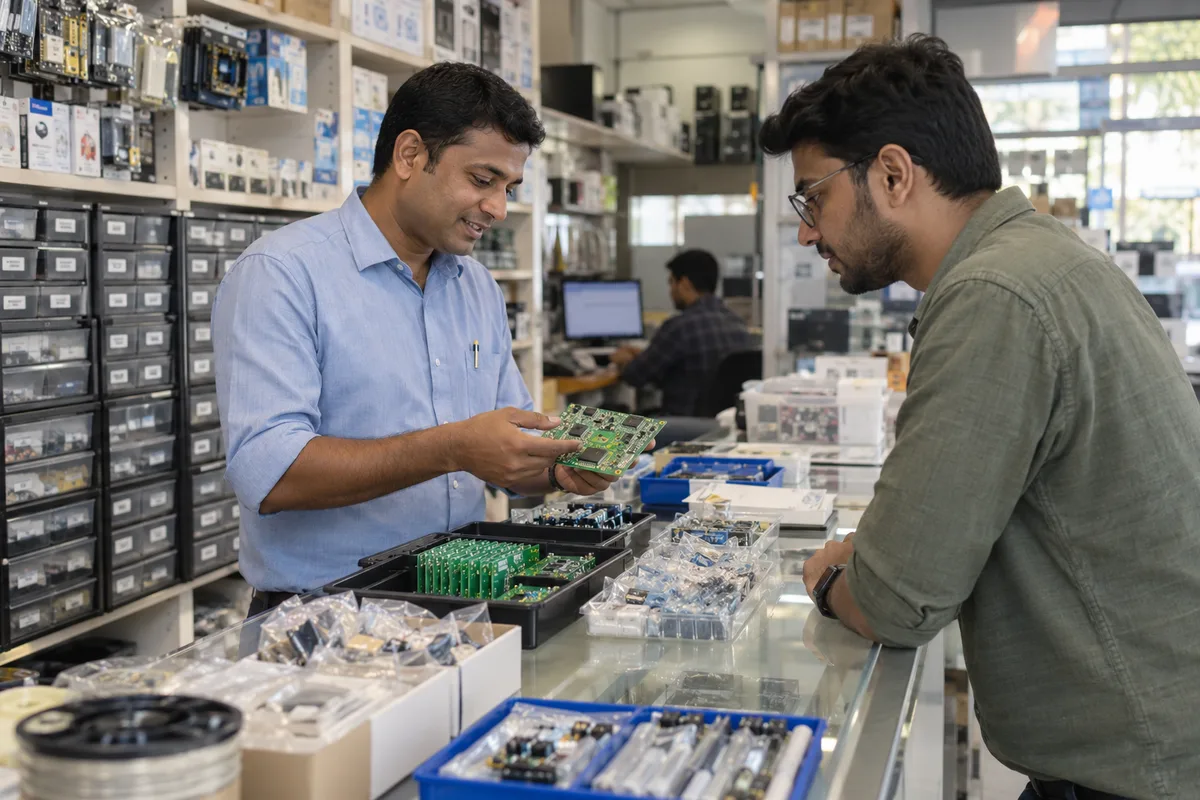
What content marketing means
Content marketing is writing articles, guides and pages that answer the questions buyers search before they are ready to enquire. This makes your business visible and trusted before the first call. GullySales plans this content from the first conversation onward, choosing topics that match real search demand rather than guesses.
Also for electronic components distributors
- Social media marketing for electronic components distributors
- SEO for electronic components distributors
- Lead generation for electronic components distributors
- Email marketing for electronic components distributors
- CRM for electronic components distributors
- WhatsApp marketing for electronic components distributors
- Sales process for electronic components distributors
- Website development for electronic components distributors
Sales and marketing for electronic components distributors, the overview.
Last updated 6 Oct 2026.
For electronic components distributors
Where it usually goes wrong, and what we would do.
“The best content is already in the counter's memory”
Your senior salesperson has told a hundred buyers why one regulator replaces another, or why a connector pitch matters. Written once, that answer works for every buyer who asks it later without phoning.
“A datasheet is not a buying guide”
A buyer holding a datasheet still has to choose between three variants, two brands and a lead time. A short note that compares them in plain words, and says what you hold, does the job a datasheet does not.
“Content must avoid claims you cannot back”
A page that calls a part original or genuine without proof invites exactly the doubt careful buyers carry. Stating the brand line, the source and the paperwork is more convincing than any adjective.
“A sourcing guide answers the customs question”
A startup weighing a global listing against a local counter wants to know what the landed cost and wait really involve. An honest comparison, with your stock and GST invoice set against the rest, earns the buyer.
What we do
What we deliver for electronic components distributors.
Every deliverable, what it covers for you, and the result it is there to produce. Nothing here is an extra.
Substitute and cross-reference guides
Plain notes on which parts replace which, with the differences a designer must check, written from questions your counter has answered.
Result: Engineers searching an alternative find your page.
Part family explainers
Short guides to families you hold in depth, such as connectors, sensors or power modules, with how to choose between variants.
Result: A buyer learns what to ask for before requesting a quote.
A local versus global sourcing comparison
An even-handed page on stock today, GST invoice, cut quantities and credit set against a global listing.
Result: The comparison the buyer is already making is made on your page.
A paperwork and source explainer
A page stating your authorised lines, where other stock comes from and what documents travel with an order.
Result: Quality teams see the source before they ask.
A content calendar from your enquiry log
Topics ordered by the part numbers and questions that actually reach you, with an owner for each piece.
Result: Nothing is written that nobody asked about.
How the result is measured
- Pages published
- Organic traffic
- Enquiries from content pages
Recorded as a baseline before work starts, so every later report has an honest comparison.
Pieces worth writing
Write the pages an engineer reads before sending the BOM out.
- Cross-reference of a discontinued IC
- A guide naming the old part, the replacements and the differences, written by someone at the counter who has sold both.
- Choosing a capacitor type for a power supply
- A part family explainer for design engineers, accurate to the datasheets and reviewed by a technical person on your team.
- Local stock versus global listing
- A comparison for a purchaser, covering lead time, minimum order and source documents, without claiming a price advantage.
- What the invoice and source papers show
- A paperwork explainer for purchasers who need to know where a part came from and what documents come with it.
- Calendar from the enquiry log
- A plan that builds each piece from a question that came to the counter, so topics match what buyers ask.
Who it is for
This is written for these electronic components distributors.
- Authorised distributors for one or two brand lines
- Multi-brand stockists of ICs, passives and connectors
- Independent and excess-stock traders
- Development board, module and sensor suppliers for startups and colleges
- BOM sourcing and kitting firms for contract manufacturers
- Repair spares and service parts counters
- Relay, transformer, battery and power component suppliers
- Importers who source against a customer's RFQ
Not for
It is not the right fit if.
- Nobody with technical knowledge will review the pieces, and a wrong equivalent published could cost a buyer a board.
- You plan to copy text from datasheets and brand sites, which is neither useful nor yours to republish.
- The counter does not log the questions it hears, so topics would be guesses.
How it works
How the content marketing work runs
The work itself, in order. How an engagement starts, from your brief to a written scope, is set out on our method page.
- 1
Agree the plan
Topics and formats come from the content strategy and the buyer-question list. The volume goes into the written scope, agreed with you, not into a number quoted on a call.
- 2
Brief and draft
Each piece starts from its one-page brief and a short conversation with your technical person, recorded if they allow it, so the draft uses their words.
- 3
Check the facts
Your person marks the draft for accuracy and we correct it. Regulated subjects also go to your own adviser, because restrictions on claims apply to articles as much as to advertisements.
- 4
Publish and distribute
The piece goes live on your site, then out through the channels where your buyers already are.
- 5
Read the enquiries and adjust
Results are reported against the baseline recorded before work began. Topics that brought readers but no enquiries are changed or dropped. How often you are reported to is agreed in writing.
Where this fits
Three pieces of sales work, in this order.
This work sits inside sales process design, at stage 0, foundation. The audit comes before it, and sales management keeps it running.
Step 1
Sales audit
Find where deals are being lost and what to fix first.
Start here if you cannot say where orders are lost.
Step 2 · you are here
Sales process design
One written way to sell, from first enquiry to repeat order.
Start here if every salesperson sells differently.
Step 3
Sales management
A target, a review routine and someone who owns the number.
Start here if the team has targets and no routine.
FAQ
Questions owners ask before they call.
Not here? More answers, or ask on WhatsApp.
Do we need a blog to do content marketing?
Who checks the technical accuracy?
Can we copy text from datasheets and brand sites?
What claims should a distributor avoid on these pages?
How much does it cost?
How long is the contract?
How soon will we see results?
Who will actually do the work?
What do you need from us?
What if we are not happy with the work?
From the blog
Further reading for electronic components distributors.
 6 min read · 6 Oct 2026How trade buyers pick a dealer when the brands matchWhen every counter in town carries the same brands, trade buyers choose on stock, delivery, paperwork and returns. This post sets out how contractors, electricians, plumbers and purchase managers compare dealers.
 5 min read · 6 Oct 2026How electronic components distributors answer a BOM enquiryAnswer a BOM in the buyer's own line order, saying for each part whether you hold it, how many, from which source and by what date, and send the firm lines before the open ones.
More for electronic components distributors
Everything else we would do for you.
Closest to this: content and social
Also for electronic components distributors
- SEO for electronic components distributors
- Lead generation for electronic components distributors
- Email marketing for electronic components distributors
- CRM for electronic components distributors
- WhatsApp marketing for electronic components distributors
- Sales process for electronic components distributors
Or start from the overview: sales and marketing for electronic components distributors.
Your next practical step
Tell us what you are trying to grow, and we will read it before we call.
Eight short steps, mostly taps. Skip anything you would rather answer on the call.