Ethnic wear stores · Pinterest marketing
Pin the outfit a family is planning for, and send them to the shop that stocks it.
Pinterest marketing for an ethnic wear store turns your outfit photographs into searchable pins that families save while they plan a function, and links each pin to a page showing where to see and try it. GullySales builds the boards, pins and destination links, and records the visits and enquiries that follow.
Scope, fee, reporting and term are agreed in writing after we have read your brief and spoken to you.
What Pinterest marketing means
Pinterest marketing uses searchable images and website links to put your products or finished work in front of people planning a purchase or project. GullySales organises your boards, creates pins from your photographs, and tracks the visits and enquiries they bring, so you can judge Pinterest by more than saves.
Last updated 14 Nov 2026.
For ethnic wear stores
Where it usually goes wrong, and what we would do.
“Families search by colour, cut and function, not by shop”
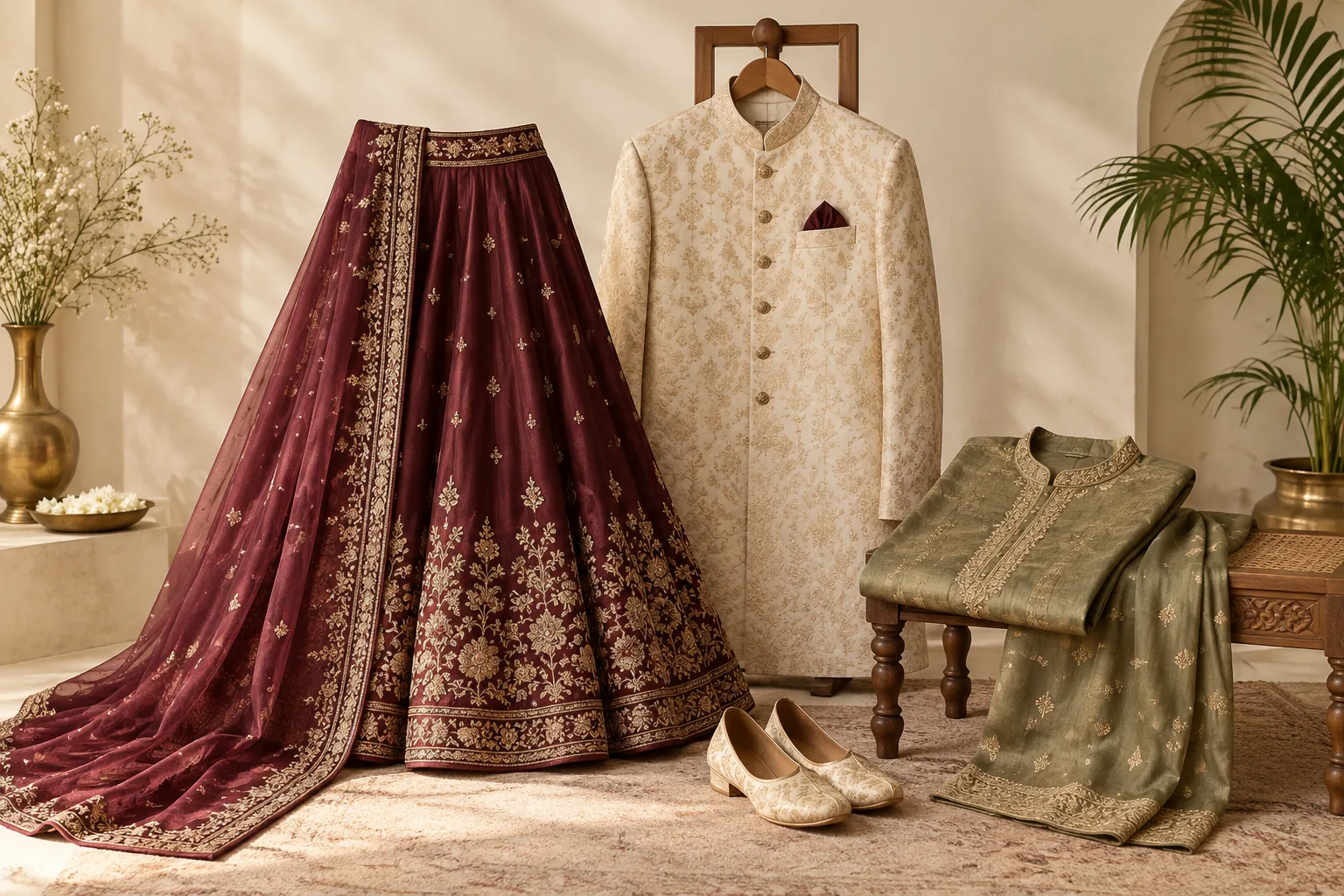
Someone planning a cousin's wedding types a colour with a garment, such as a mint lehenga or an ivory sherwani, and saves what they like long before choosing a store. A shop that posts photographs only by launch date has nothing under those searches. Boards named for the garment, the colour family and the occasion put your stock where the planning happens, in the weeks before the family walks in.
“A saved pin is not a shop visit”
A pin of a lehenga that opens the home page leaves the buyer to find the outfit again, and the buyer who cannot find it leaves. The pin needs to land on a page that shows that outfit or a close shortlist, tells the family which sizes can be tried, and says how to reach the store. Without that page, saves count as interest and never reach the counter. The destination page can be a simple shortlist of related outfits with the shop address, rather than a full product page.
“Planning starts well ahead of the festival”
Buyers collect festival and wedding outfits while the occasion is still far off, so a pin posted in the festival week reaches people who have already chosen. The publishing plan has to work backwards from the dates the store is busiest, and it has to rest on stock you will actually hold then, because a pin for an outfit that has sold out sends families to a shelf that is bare.
“Photographs belong to someone”
Ethnic wear photography carries a designer's name, a model's likeness or a photographer's terms, and a store that pins a supplier's catalogue image without permission puts the account at risk. Pins should be made from photographs the store holds the rights to, or from supplier images the supplier has cleared for this use, and your team should be able to say which is which.
What we do
What we deliver for ethnic wear stores.
The work available for this need. We agree the deliverables and responsibilities for your engagement in writing.
Business profile and website claim
The store's business profile set up or corrected, with the shop name, description and linked domain checked by you. Where access permits, the website is claimed so that pins show your store as their source.
Result: The profile names the shop and links to your own site.
Board map by occasion and garment
A list of boards built from what families search, such as lehengas for a bride's side, kurta sets for a festival or cousin-matching outfits, each with a name and description. You strike out any board for a garment you do not stock.
Result: Every board matches a garment or a function your shop sells.
Pin artwork from your photographs
Vertical pin images made from photographs you hold the rights to, with the garment shown clearly and any text readable on a phone. Stock images and supplier catalogue pictures are used only where you confirm the right to do so.
Result: Each pin shows an outfit you can show in the shop.
Pin titles, descriptions and link list
Written titles and descriptions for each pin in the language your buyers use, paired with the exact page each one opens. Your team checks fabric, colour names and sizes against what is on the rail.
Result: Every pin links to a page that matches the outfit shown.
Shortlist page check
A review of the pages pins will open: whether a family can see the garment, the sizes to try, the shop address and a way to message you. We report what needs changing and pass it to whoever looks after your website.
Result: A family can go from pin to enquiry without searching again.
Source tags and results record
Tagged links for each board and a record kept against the starting counts taken from your own enquiries. Saves, visits and enquiries traced to Pinterest are shown apart, with gaps in tracking stated plainly. Boards that bring only saves are reviewed and either reworked or retired.
Result: You can see which boards brought visits and which brought enquiries.
How the result is measured
- Saves and outbound clicks by pin, treated as activity rather than sales
- Website visits traced to Pinterest and the pages reached
- Enquiries attributed to Pinterest where records permit
Recorded as a baseline before work starts, so every later report has an honest comparison.
Who it is for
This is written for these ethnic wear stores.
- Kurta set and salwar suit stores for women
- Lehenga and gown shops for functions
- Sherwani and Indo-western menswear shops
- Family ethnic wear stores selling for all ages
- Festival-led stores for Navratri, Eid and Pongal
- Ethnic wear shops with in-house alteration
- Rental and buy ethnic wear stores
- Group and cousin-set order specialists
Before you decide
Agree the work. Know how to judge it.
Pinterest marketing for ethnic wear stores: use these checks to prepare, choose the scope, and review what changes.
Bring the right evidence
Review the posts that produced useful conversations, not only the ones with the most views. Gather buyer questions and decide which team member can contribute credible material.
Make the scope clear
Choose the audience and channel before setting a posting volume. Agree who supplies material, approves posts, and handles messages, including complaints or questions the agency cannot answer.
Check the work in use
Follow a post through to the profile, website, and response. A useful report explains the quality of conversations and enquiries, alongside reach and engagement.
Know when to change course
If publishing takes time away from unanswered buyer messages, fix the response routine first. Do not expand to another channel without a clear reason for being there.
These are discussion points, not a fixed package. GullySales confirms the deliverables, responsibilities, fee, and term in writing after reading your brief and speaking with you.
Before we start
What to have ready before the work starts.
The records, access and decisions this work needs from ethnic wear stores. Anything missing is noted in the written scope, with who will supply it.
- Rights to your outfit photographs
- A pin built on a picture the shop does not own can be taken down, and the account can be warned. We need to know which photographs are yours, which come from suppliers and what each supplier has allowed before we design anything.
- A list of the stock you hold
- Garment, colour, size range and whether alteration is offered. Pins for outfits that are not on the rail send families to a shop that cannot serve them, so the list is how we choose what to pin.
- Someone to answer pin enquiries
- A person in the shop must reply to messages that arrive from pins, in the language the family writes in. When nobody owns the replies, the family who asked about a sherwani is answered after they have chosen another shop. A shared inbox or a single phone number for the shop is enough, as long as someone checks it through the working day.
- Your last season's enquiry notes
- A record of the garments and occasions families asked about gives the first board names and the baseline. Without it, we guess at what families search, and the results cannot be read against anything.
- Access to the website and profile
- Claiming the website and tagging links needs login access held by you or your web person. Without it, pins cannot show the store as their source and visits cannot be traced to a board.
How it works
How the pinterest marketing work runs
The work itself, in order. How an engagement starts, from your brief to a written scope, is set out on our method page.
- 1
Stock and photograph audit
You show us the outfits you hold, the photographs you took and the rights attached to supplier images. We mark which garments have clear photographs and which would need new ones, and we agree that a pin is made only for stock you can show. This audit is also where we ask how families describe an outfit, so the pin text uses their words.
- 2
Deciding whether Pinterest fits
We ask where your buyers first look, check whether families already arrive saying they saw an outfit online and read the enquiry sheet. If your buyers choose mainly by walking past the shop, we say so and suggest where else to spend effort.
- 3
Board and pin approval
We send the board map and sample pins for sign-off. A named person in your shop approves the garment names, colour words and any text on the image, because they know what a family will ask on seeing the pin.
- 4
Destination pages and enquiry route
Before any pin goes live, we confirm each link opens the right page on a phone and that a message sent from it reaches someone who will answer. Changes to your website go to the person who manages it as a written list.
- 5
Publishing against the occasion calendar
Approved pins are published to a plan built backwards from the weeks families choose, using the dates your own enquiry sheet shows. If stock changes, the plan changes, and a pin for sold-out outfits is removed.
- 6
Reading results against the baseline
We compare traced visits and enquiries with the counts recorded before the work began and list which boards deserve more effort and which should stop. The dates of each review are agreed in writing, and a weak result can lead to a smaller scope.
Where this fits
Three pieces of sales work, in this order.
This work sits inside sales process design, at stage 0, foundation. The audit comes before it, and sales management keeps it running.
Step 1
Sales audit
Find where deals are being lost and what to fix first.
Start here if you cannot say where orders are lost.
Step 2 · you are here
Sales process design
One written way to sell, from first enquiry to repeat order.
Start here if every salesperson sells differently.
Step 3
Sales management
A target, a review routine and someone who owns the number.
Start here if the team has targets and no routine.
FAQ
Questions owners ask before they call.
Not here? More answers, or ask on WhatsApp.
Is Pinterest right for an ethnic wear store?
How is this different from our Instagram work?
Will pins bring families to the shop?
Can we pin outfits from our supplier's catalogue?
Do you run paid pins?
Will you rebuild our website?
How much does it cost?
How long is the contract?
How soon will we see results?
Who will actually do the work?
More for ethnic wear stores
Related work to consider.
Closest to this: content and social
Also for ethnic wear stores
Or start from the overview: sales and marketing for ethnic wear stores.
Your next practical step
Tell us what you are trying to grow, and we will read it before we call.
Eight short steps, mostly taps. Skip anything you would rather answer on the call.