Ethnic wear stores · Search engine optimisation
Rank for the garment and the occasion a family types, not for the word fashion.
SEO for an ethnic wear store is writing and structuring pages so that a search such as a lehenga for a reception or a sherwani for a groom finds your shop. GullySales works on the pages, the product names and the structure that tie each garment to the occasion it is bought for.
Scope, fee, reporting and term are agreed in writing after we have read your brief and spoken to you.
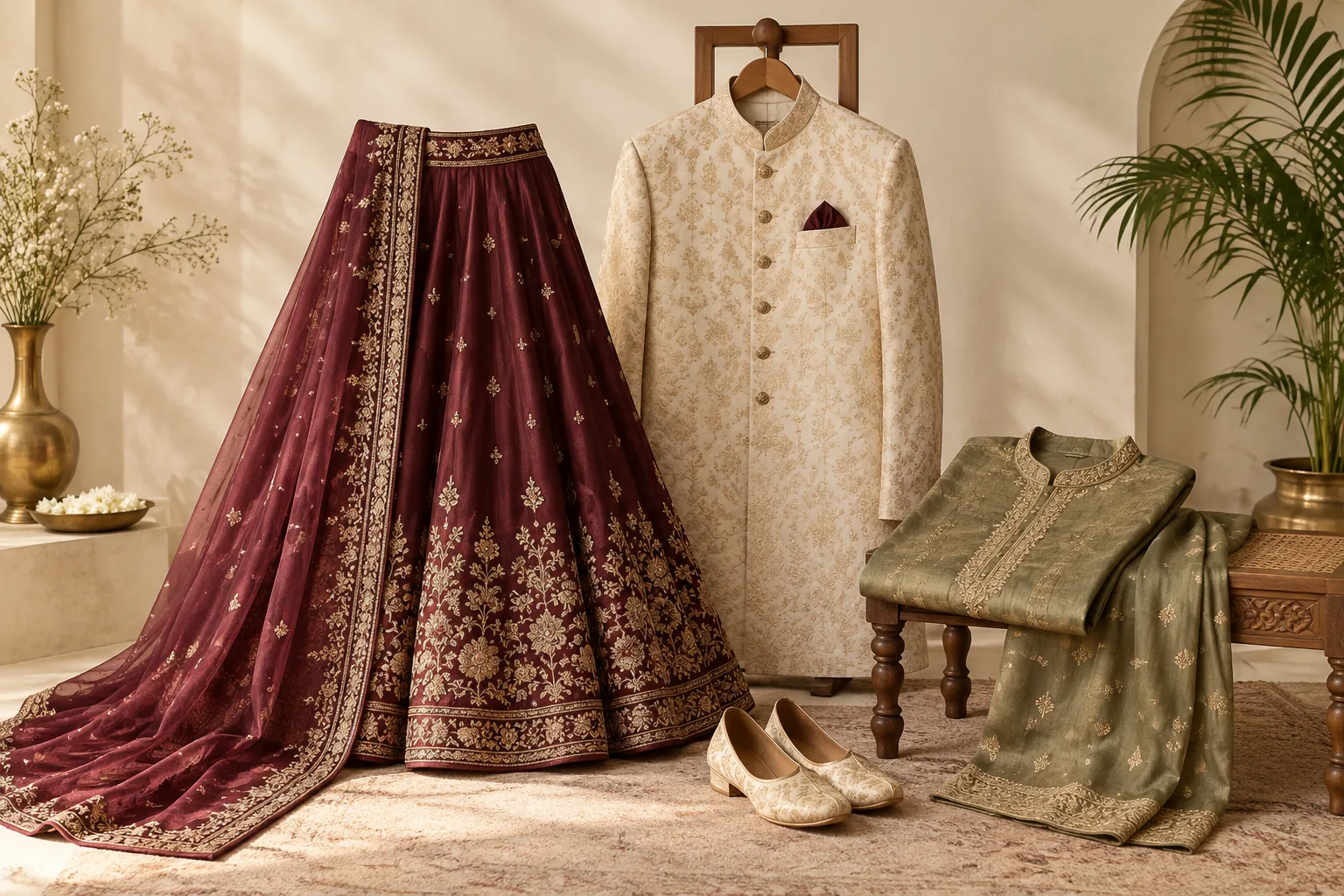
What search engine optimisation means
Search engine optimisation (SEO) is the work of getting your website to appear when a buyer searches Google for what you sell. GullySales builds pages around real search terms, fixes technical issues that block ranking, and tracks which searches actually bring enquiries.
Also for ethnic wear stores
- Local SEO for ethnic wear stores
- Website for ethnic wear stores
- Shopify store design and setup for ethnic wear stores
- Lead generation for ethnic wear stores
- Social media marketing for ethnic wear stores
- Content marketing for ethnic wear stores
- Buyer personas for ethnic wear stores
- CRM for ethnic wear stores
Sales and marketing for ethnic wear stores, the overview.
Last updated 14 Nov 2026.
For ethnic wear stores
Where it usually goes wrong, and what we would do.
“Buyers search by garment and function together”
A search for a sherwani for a wedding in a named city is different from a search for men's clothes. Pages built around the garment and the occasion match what the buyer typed, while a general fashion page matches neither.
“Product names on the shelf are not the words searchers use”
The store calls it a bandhgala set, and the buyer types Indo-western jacket. Keeping the shop's own names and adding the plain phrase on the page means both the staff and the searcher are understood.
“Festival searches arrive in a short window”
Navratri chaniya choli and Eid kurta searches rise ahead of the festival and drop away after it. A page built and indexed only when the festival starts misses the weeks in which families are choosing.
“Photographs carry the page but say nothing to a search engine”
A gallery of outfits with file names like image one tells the search engine nothing. Each photograph needs a plain description of the garment, the colour, the fabric and the occasion it suits.
What we do
What we deliver for ethnic wear stores.
The work available for this need. We agree the deliverables and responsibilities for your engagement in writing.
Garment and occasion pages
Separate pages for lehengas, sherwanis, kurta sets and festive wear, each written around the function it is bought for.
Result: Each major garment has its own page that names the occasion.
Product naming list
A sheet matching your in-store names to the words buyers type, used in titles, headings and descriptions.
Result: Page titles use the phrases a family would type into a search box.
Festival pages built ahead
Pages for Navratri, Eid, Diwali and Pongal prepared and linked from the site before each festival starts.
Result: The festival pages are live and indexed before families begin choosing.
Image descriptions
Plain-language file names and descriptions for each photograph covering garment, colour, fabric and occasion.
Result: Photographs are described the way a searcher would describe them.
A search report in plain words
A readable summary of which searches brought visitors to which pages, using the site's own search data.
Result: You can see which garments and occasions are bringing people in.
How the result is measured
- Ranking positions
- Organic traffic
- Enquiries from organic search
Recorded as a baseline before work starts, so every later report has an honest comparison.
Searches your buyers type
What a family types when looking for an outfit, and the page on the shop's site that answers it.
- lehenga for sister's wedding
- An occasion page showing lehengas in the colours and price range you hold, with notes on fit, blouse alteration and how far ahead to book a fitting.
- sherwani for groom near me
- A garment and area page with photographs of sherwanis in your shop, the fabrics, the accessories sold alongside and a way to book a trial.
- kurta set for Diwali puja
- A festival page, built before the season starts, showing family sets for the pooja and the evening, with a price range and sizes in stock.
- Indo-western gown for reception
- A page that explains the difference between a gown, a saree gown and a cape lehenga in plain words, with your own photographs, not supplier images.
- ethnic wear alteration service
- An alteration page that states what the shop alters, what it does not, and how a booking is made. Promise only what the tailor can keep.
- matching family outfits for wedding
- A group page showing coordinated sets for parents, siblings and children, and the way to request a combined quote on one chat.
Who it is for
This is written for these ethnic wear stores.
- Kurta set and salwar suit stores for women
- Lehenga and gown shops for functions
- Sherwani and Indo-western menswear shops
- Family ethnic wear stores selling for all ages
- Festival-led stores for Navratri, Eid and Pongal
- Ethnic wear shops with in-house alteration
- Rental and buy ethnic wear stores
- Group and cousin-set order specialists
Before you decide
When this may not be the right fit.
- You have no photographs of your own pieces, and a page of supplier images would not be your shop
- The shop does not yet take enquiries on chat or phone for a garment page to send people to
Before you decide
Agree the work. Know how to judge it.
SEO for ethnic wear stores: use these checks to prepare, choose the scope, and review what changes.
Bring the right evidence
Bring the pages for the products or services you want to sell, the search queries available in your reports, and examples of enquiries from search. Separate branded searches from buyers discovering you for the first time.
Make the scope clear
Agree which pages and technical fixes come first, who can publish changes, and who supplies subject knowledge. Link search work to a relevant enquiry route on each priority page.
Check the work in use
Follow the trail from a relevant query to its landing page and then to an enquiry. Review whether those enquiries fit your offer, alongside indexing and search visibility.
Know when to change course
A ranking movement alone is not a buying signal. If traffic grows but relevant enquiries do not, revisit page intent and the offer before producing more pages.
These are discussion points, not a fixed package. GullySales confirms the deliverables, responsibilities, fee, and term in writing after reading your brief and speaking with you.
Before we start
What to have ready before the work starts.
The records, access and decisions this work needs from ethnic wear stores. Anything missing is noted in the written scope, with who will supply it.
- A walk along the shelves with the owner
- The garment list comes from the shop itself. Set aside time for the owner to walk the floor with us and name what sells. If the owner cannot, a senior staff member with the same knowledge must. Without it, our list reflects a catalogue, not your stock.
- Photographs, or permission to take them
- Pages need clear pictures of what you sell. Bring what you have, and let us know if a session can be held. If staff photographs are blurred or taken against a busy wall, we say so and plan the shoot before pages are published.
- The supplier names you may mention
- Some suppliers allow shops to name them, others do not. Bring any agreement or message that says so. Without confirmation, pages describe the garment and leave the maker's name out.
- Access to the website or the page host
- Pages need somewhere to live: your website, a simple page host or a shop profile. Name who holds the login. If there is no site, the first piece of work is to set one up, and the SEO plan is shorter.
- This year's festival dates
- Festival dates move each year. Bring the dates you plan around, and the stock you expect to hold for each. Without them, pages carry no date and the festival work is left to the owner to confirm.
How it works
How the search engine optimisation work runs
The work itself, in order. How an engagement starts, from your brief to a written scope, is set out on our method page.
- 1
List the garments as families name them
We sit with the owner at the shelf and write down every garment type the way families say it, in English and the local language: anarkali, lehenga, sherwani, Nehru jacket, dhoti kurta. Next to each we note the occasion it is bought for. This list, not a keyword tool, is where the pages begin, and the owner marks the pieces the shop is proudest of.
- 2
Rename the stock for a searcher
Shelf names such as 'Design 214' tell a searcher nothing. We write plain names that combine garment, fabric, colour and occasion, for example a silk lehenga in wine for a reception. The owner and staff correct the names where they would not recognise the piece. We agree the pattern before any page is written.
- 3
Photograph for the page, not only the shelf
We plan a photograph session at the shop: the garment on a hanger, in detail, and on a person if the shop has a willing model. Each picture is saved with a plain file name. You supply the permission of anyone who appears, and we add a short description for every image that a search engine and a screen reader can read.
- 4
Build the garment and occasion pages
With the owner we write the page for each garment-and-occasion pair that matters, such as sherwani for a groom or kurta sets for Navratri. Each page gives fabric notes, sizes that are stocked, whether alteration is offered and how to visit the shop. Sentences are written from what is on the shelf, never copied from a supplier catalogue.
- 5
Prepare the festival pages ahead of the date
Festival searches arrive in a short window, so pages for Navratri, Eid or Pongal must be live before the buying starts. We agree the festival list with the owner, write each page with this year's stock in mind and set the review date. The owner approves before any page goes out.
- 6
Read searches against the earlier counts
After the pages have been live for a season, we read the search report in plain words: which pages brought visits, which brought calls or walk-ins. We compare with the figures recorded before the work and ask the floor staff how many families said they found the shop through search. You choose which pages to extend.
Where this fits
Three pieces of sales work, in this order.
This work sits inside sales process design, at stage 1, prospecting and lead generation. The audit comes before it, and sales management keeps it running.
Step 1
Sales audit
Find where deals are being lost and what to fix first.
Start here if you cannot say where orders are lost.
Step 2 · you are here
Sales process design
One written way to sell, from first enquiry to repeat order.
Start here if every salesperson sells differently.
Step 3
Sales management
A target, a review routine and someone who owns the number.
Start here if the team has targets and no routine.
FAQ
Questions owners ask before they call.
Not here? More answers, or ask on WhatsApp.
Can the store be found in search without an online shop?
Should we write for the city or for the garment?
Can we copy descriptions from a supplier's catalogue?
What if we sell the same style as the shop next door?
Does the shop need an online store for search to work?
Can one page carry all our garments?
How much does it cost?
How long is the contract?
How soon will we see results?
Who will actually do the work?
More for ethnic wear stores
Related work to consider.
Closest to this: search and visibility
Also for ethnic wear stores
Or start from the overview: sales and marketing for ethnic wear stores.
Your next practical step
Tell us what you are trying to grow, and we will read it before we call.
Eight short steps, mostly taps. Skip anything you would rather answer on the call.