Ethnic wear stores · Website
Build a site that shows the outfits and tells the family where to try them.
A website for an ethnic wear store is a showroom a family can browse from home, with garments by occasion, price ranges and the way to book a trial. GullySales works on the structure, the photographs and the contact route, aiming at a visit or a chat more than a checkout.
Scope, fee, reporting and term are agreed in writing after we have read your brief and spoken to you.
What website means
A website is the page a customer lands on after searching, clicking an advert or scanning a code, and it decides whether they call or leave. GullySales builds and maintains sites that load quickly, explain the offer plainly and make the enquiry form or phone number easy to find.
Last updated 14 Nov 2026.
For ethnic wear stores
Where it usually goes wrong, and what we would do.
“Families judge the shop by the photographs”
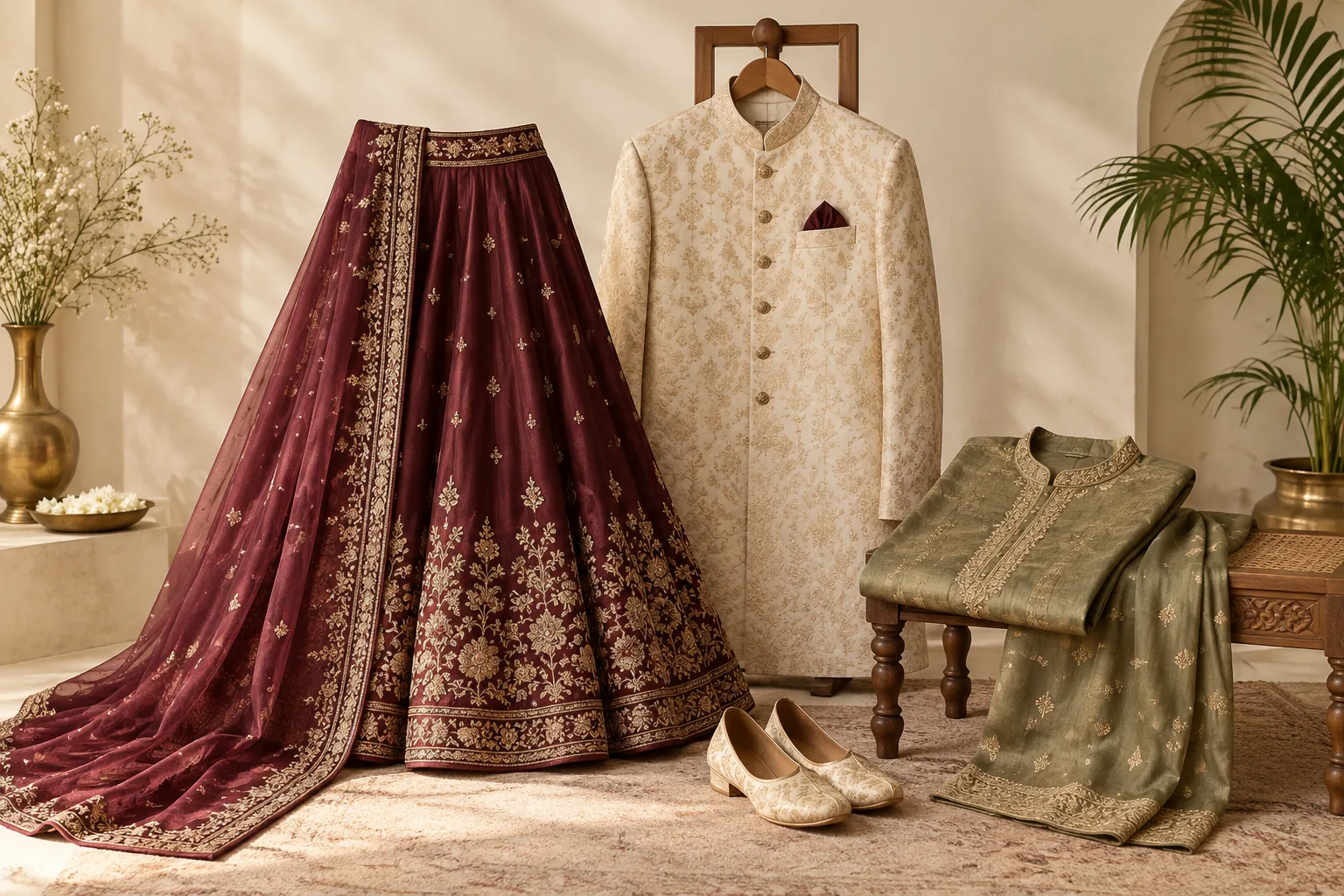
Dim, cropped or supplier-supplied pictures make the store look like a stockist. Clear photographs of real stock, with the embroidery visible, tell a family the store is worth the journey.
“A page full of outfits and no route to the shop”
A gallery without an address, a map, hours or a booking button leaves the buyer to search again. The site should say where to go and how to reserve a trial.
“Prices hidden entirely drive buyers away”
A family comparing stores wants an idea of the range. Showing a range by garment type, with a note that final prices depend on work and fit, sets expectations without fixing numbers.
“The site works on a laptop and fails on a phone”
Families open the page on a phone, in a group chat. Slow image loading or tiny buttons mean the page is closed before the outfits are seen.
What we do
What we deliver for ethnic wear stores.
The work available for this need. We agree the deliverables and responsibilities for your engagement in writing.
Occasion and garment pages
A site arranged by lehenga, sherwani, kurta set and festive wear, with each page tied to the functions it suits.
Result: A family can reach the outfit type in a tap or two.
A photograph standard
A shot list and editing guide so every outfit is photographed in the same light, with detail close-ups.
Result: Photographs across the site look consistent and honest.
Visit and booking details
The address, map, hours, parking note, trial and alteration information on every page footer and a contact page.
Result: Every page tells the buyer how to get to the shop.
A price range note
Price ranges per garment type with a plain note on what changes the final figure.
Result: Buyers see a range before they contact the shop.
A phone-first layout
Pages built for a phone screen, with a call and chat button always in reach.
Result: The site works for a family reading on a phone in a group chat.
How the result is measured
- Page load time
- Bounce rate
- Enquiries from the website
Recorded as a baseline before work starts, so every later report has an honest comparison.
Searches your buyers type
What a family types on a phone, and the page of the shop's site that should answer it.
- lehenga collection with price
- A page grouped by occasion that shows a price range for each style, the sizes held and a button to book a trial or send a chat message.
- sherwani designs for groom
- A page with photographs of sherwanis in your shop, the fabrics, matching stoles and the fitting process, with a visit booking.
- ethnic wear shop address and timings
- A visit page with the address, hours, parking note, a map link and phone. Update it when festival hours change.
- book trial for bridal outfit
- A short booking form asking for the date of the function, the number of people and a phone number. It reaches a named person at the shop.
- alteration and return policy
- A plain page stating which alterations the shop makes, how a promised date is set and what happens on a return. State only what the shop will do.
Who it is for
This is written for these ethnic wear stores.
- Kurta set and salwar suit stores for women
- Lehenga and gown shops for functions
- Sherwani and Indo-western menswear shops
- Family ethnic wear stores selling for all ages
- Festival-led stores for Navratri, Eid and Pongal
- Ethnic wear shops with in-house alteration
- Rental and buy ethnic wear stores
- Group and cousin-set order specialists
Before you decide
When this may not be the right fit.
- The shop has no one to read the booking form when it arrives, so the form would leave families waiting
- Stock changes daily and nobody can update the pages, so the site would show outfits already sold
Before you decide
Agree the work. Know how to judge it.
Website for ethnic wear stores: use these checks to prepare, choose the scope, and review what changes.
Bring the right evidence
List the pages that support a buying decision and the actions visitors must complete. Keep examples of failed forms, unclear product information, and questions your team answers repeatedly.
Make the scope clear
Agree the page list, content ownership, integrations, and who controls the domain and hosting. Include redirects and existing search traffic in a redesign brief, before changing addresses.
Check the work in use
Complete a real enquiry journey on a phone and a laptop. Check that the confirmation appears, the enquiry reaches the right person, and tracking records the action once.
Know when to change course
If visitors can enquire but the team does not follow up, start with the sales handover. A larger website will not resolve that delay.
These are discussion points, not a fixed package. GullySales confirms the deliverables, responsibilities, fee, and term in writing after reading your brief and speaking with you.
Before we start
What to have ready before the work starts.
The records, access and decisions this work needs from ethnic wear stores. Anything missing is noted in the written scope, with who will supply it.
- Outfits to photograph, on hangers
- The site shows what you stock. Choose the garments for the first photographs and keep them ironed and available for the session. If stock is moving fast, tell us which pieces will remain. Mark any piece that will be sold or hired out before the site goes live, so it is not shown.
- Domain and hosting logins
- We need access to the domain and any existing hosting. If you have never held a site, say so, and we set it up in the shop's name, not ours.
- A decision on prices
- Say whether the site shows a starting range, a note on what drives price, or nothing. Buyers distrust silence, but the choice is yours. If you hold back, we write why prices vary instead. We can show a range and a line on what moves a price, without naming any single piece.
- A person to update the site
- Stock changes with the season. Name who adds and removes outfits, and teach them. If no one will, the site shows fewer items and changes only when we are called in.
- Your visit rules, written down
- Decide how many people may come to a trial, whether appointments are needed and what the alteration notice is. Without written rules, the visit page says only the address and timings.
How it works
How the website work runs
The work itself, in order. How an engagement starts, from your brief to a written scope, is set out on our method page.
- 1
Walk the shop and choose what to show
We visit the shop with the owner and choose the garments, rooms and services to feature on the site: bridal, groom, festival, alteration, trial room. We note the stock that will be there through the year and what is seasonal. The owner decides how many outfits the site shows, because a site that cannot be updated should show less.
- 2
Photograph to a single standard
We agree one way of photographing outfits: the same wall, light and angles, with a detail shot of the embroidery. A guide goes to staff for later additions. The owner approves a trial set. Pictures that do not meet the standard stay out of the site. The owner also names the pieces never to be shown, such as a customer-commissioned outfit.
- 3
Draw the pages by occasion and garment
We sketch the sitemap: a home page that asks what the family is dressing for, pages for each occasion and garment, a page on alterations and trials, and a page for visiting. The owner approves the sketch and decides the price range note. Each page ends with a way to visit or chat. Pages are ordered so that the occasion the family is dressing for is the first choice they make.
- 4
Write the visit and booking details
We write how to find the shop, parking, timings, how a trial is booked, how many people may come and what to bring for alteration. The floor lead checks each line against what really happens. The contact route is tested with a real call and a real message.
- 5
Check the build on a phone
Families browse on phones while travelling or sitting with relatives. We test every page on two phones, including a slow connection, and list what is hard to read or slow. The owner and one staff member try to book a trial. Fixes are made before launch, and the owner signs off the final list of changes.
- 6
Launch, hand over, and read the visits
We launch with the owner's approval, check forms and contact links on the live site, and hand over the logins and instructions for adding outfits. After a season we compare calls, messages and visits with the starting figures and ask staff which families mentioned the site. The owner chooses what to add. The owner is also shown how to read the number of calls and chat openings from the site.
Where this fits
Three pieces of sales work, in this order.
This work sits inside sales process design, at stage 1, prospecting and lead generation. The audit comes before it, and sales management keeps it running.
Step 1
Sales audit
Find where deals are being lost and what to fix first.
Start here if you cannot say where orders are lost.
Step 2 · you are here
Sales process design
One written way to sell, from first enquiry to repeat order.
Start here if every salesperson sells differently.
Step 3
Sales management
A target, a review routine and someone who owns the number.
Start here if the team has targets and no routine.
FAQ
Questions owners ask before they call.
Not here? More answers, or ask on WhatsApp.
Do we need online payment?
How many outfits should the site show?
Who updates the site when stock changes?
Should the website show a full price list?
Should the site have a button to chat on the shop's number?
Who owns the photographs if a photographer takes them?
How long is the contract?
How soon will we see results?
Who will actually do the work?
What do you need from us?
More for ethnic wear stores
Related work to consider.
Closest to this: search and visibility
Also for ethnic wear stores
Or start from the overview: sales and marketing for ethnic wear stores.
Your next practical step
Tell us what you are trying to grow, and we will read it before we call.
Eight short steps, mostly taps. Skip anything you would rather answer on the call.