Ethnic wear stores · Shopify store design and setup
Build an online store where a family can order an outfit and still get it fitted.
Shopify store design and setup for an ethnic wear store is an online shop with outfit pages, size and fitting details, checkout, delivery rules and order handling that your own staff can run. GullySales designs it around how families choose a function outfit, then trains your team to manage stock and orders.
Scope, fee, reporting and term are agreed in writing after we have read your brief and spoken to you.
What shopify store design and setup means
Shopify store design and setup turns your product range into an online shop with product pages, checkout, and order handling. GullySales designs the store around how your buyers choose and pay, configures shipping and GST invoicing with your advisers, and trains your team to manage products and fulfil orders.
Last updated 14 Nov 2026.
For ethnic wear stores
Where it usually goes wrong, and what we would do.
“A garment is not a plain product”
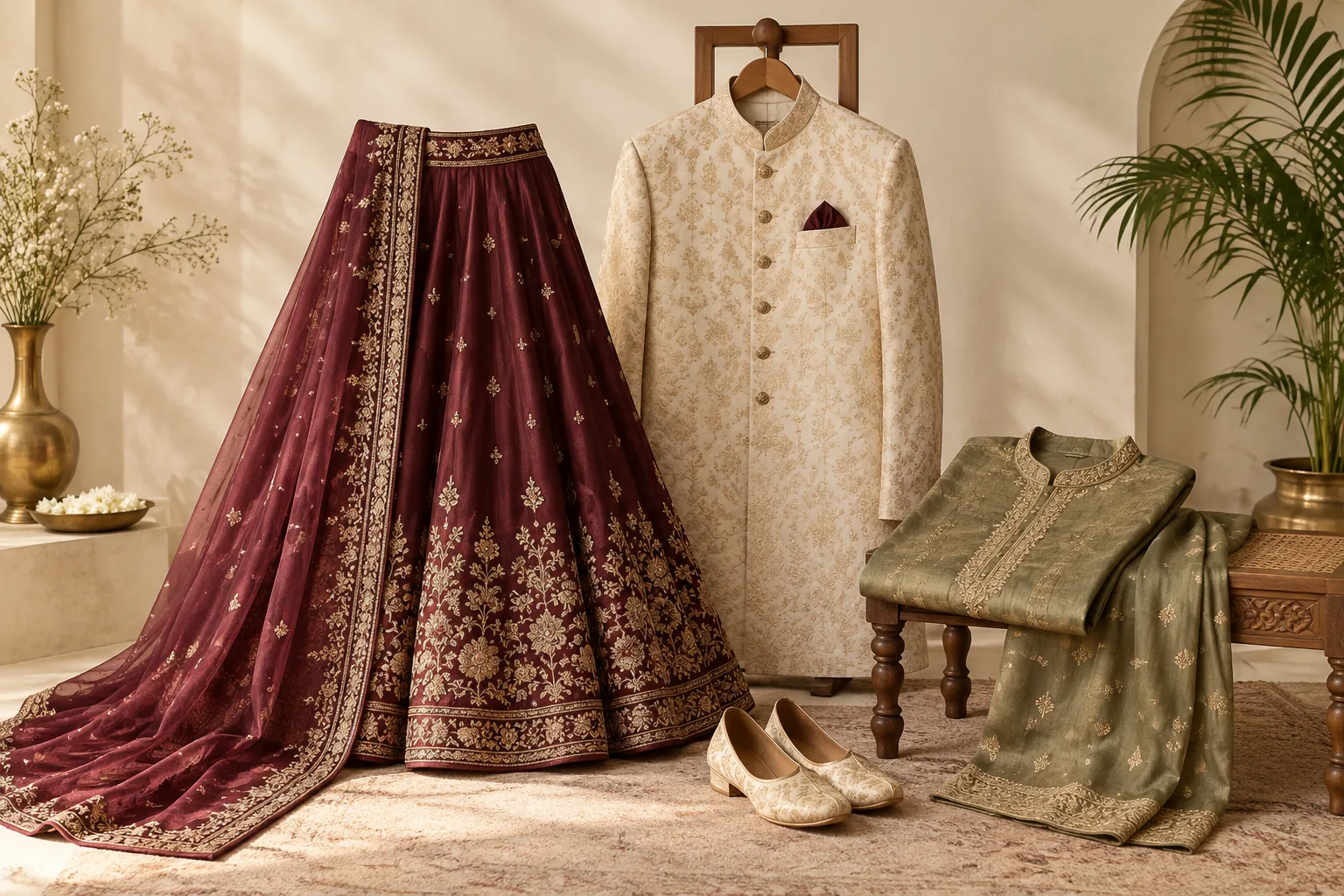
A kurta set comes with a dupatta, a lehenga with a blouse that is cut to the buyer, and a sherwani with a stole and a choice of buttons. A store that lists only one price and one photograph leaves families asking on WhatsApp what is included. Each outfit page has to say what comes in the set, what is stitched to measure and what is sold as shown.
“Size and fit decide the order”
Families who cannot try an outfit worry about the fit, and a returned lehenga is a loss for the shop. The store has to show a size guide that matches how your tailors measure, offer measurements for alteration where you do it, and say clearly which outfits can be changed and which cannot. Without these, buyers order cautiously or not at all.
“The function date is the real deadline”
An order placed for a wedding is worthless if it arrives after the function. The store should ask for the function date at checkout, check it against what your alteration team can finish and your courier can deliver, and warn the buyer when it cannot be met. Selling online without a date field means promising a delivery you have not planned.
“Online stock and the rail do not match”
A single embroidered piece sold in the shop and listed in the store at the same time is sold twice. Ethnic wear is one of a kind or in short runs, so the store needs a clear rule: which pieces are listed online, who updates the stock when a piece sells at the counter, and who tells the buyer when it has gone. A simple count held in the store, checked by the person who closes the counter, is more reliable than a promise to update it later.
What we do
What we deliver for ethnic wear stores.
The work available for this need. We agree the deliverables and responsibilities for your engagement in writing.
Collection structure by garment and occasion
A collection plan with phone-friendly menus, such as lehengas, kurta sets, sherwanis and festival wear, with a second path by occasion. You check that a family can find an outfit without knowing your internal rack names.
Result: A buyer reaches an outfit by garment or by occasion in a few taps.
Outfit page design
A theme set to your brand with space for fabric, what is included in the set, colour as photographed, care instructions and fitting options. You approve the home page and two or three outfit pages before the rest follow that pattern.
Result: Each outfit page answers what comes in the set.
Catalogue upload from your own sheet
Outfits loaded from an approved sheet, with sizes, colour variants and photographs matched to each. Your team checks prices, stock counts and which pieces are one of a kind before the upload is used.
Result: Prices and sizes on the store match your stock sheet.
Size guide and fitting options
A size guide in your tailors' measures and the choice for alteration or stitching to measure where you offer it, with the extra details collected at checkout. Pieces that cannot be altered are marked as such.
Result: A buyer sees which outfits can be altered before ordering.
Function date and delivery rules
A checkout field for the function date, with delivery zones and courier rates set from your own arrangements. Your team decides what is said when the date cannot be met, and the message is written into the store. Where the shop offers a trial at the counter before a large order, the store can offer a store visit as the first choice.
Result: The buyer is told at checkout when a date cannot be met.
Payments, tax invoice and policy pages
Payment methods set up through your gateway, with cash on delivery only where you choose it. Your adviser approves a sample tax invoice, and your refund, alteration and exchange policy pages are drafted from your decisions for approval.
Result: A test order produces a payment status and an invoice your adviser has seen.
How the result is measured
- Orders placed by recorded source, separate from visits and clicks
- Add-to-cart and checkout completion rates
- Paid orders and fulfilled orders, separate from orders merely placed
Recorded as a baseline before work starts, so every later report has an honest comparison.
Who it is for
This is written for these ethnic wear stores.
- Kurta set and salwar suit stores for women
- Lehenga and gown shops for functions
- Sherwani and Indo-western menswear shops
- Family ethnic wear stores selling for all ages
- Festival-led stores for Navratri, Eid and Pongal
- Ethnic wear shops with in-house alteration
- Rental and buy ethnic wear stores
- Group and cousin-set order specialists
Before you decide
Agree the work. Know how to judge it.
Shopify store design and setup for ethnic wear stores: use these checks to prepare, choose the scope, and review what changes.
Bring the right evidence
Choose a product group and follow its journey from the product page to delivery. Review cancelled orders and returns alongside completed purchases, with customer details removed.
Make the scope clear
Agree which catalogue items, payment steps, and sales channels are included. Account for fulfilment costs and returns when deciding what acquisition spend the order can support.
Check the work in use
Test a purchase on mobile, including the address, delivery charge, payment failure, and confirmation. For trade orders, test quotation requests and minimum-order information as well.
Know when to change course
If stock or delivery promises are unreliable, resolve those first. Increasing paid traffic to unavailable products wastes budget and creates avoidable complaints.
These are discussion points, not a fixed package. GullySales confirms the deliverables, responsibilities, fee, and term in writing after reading your brief and speaking with you.
Before we start
What to have ready before the work starts.
The records, access and decisions this work needs from ethnic wear stores. Anything missing is noted in the written scope, with who will supply it.
- A stock sheet with set contents
- Outfit name, what is in the set, fabric, colours, sizes, price and number held. The store's outfit pages are built from this sheet, and when it is missing each page is rebuilt from photographs and guesses, and has to be checked line by line.
- Photographs of each outfit
- Clear images from the front, the back, the embroidery close up and on a person where possible. Families judge fabric and work from the picture, and an outfit with a single dark photograph is the one they message about before buying.
- Your tailor's measuring chart
- The size guide must follow how your own team measures, not a standard chart. If it does not, a family orders a size that does not fit, and the alteration team spends the week before the function repairing the mismatch.
- Your delivery and alteration limits
- Which outfits you can alter, how long your tailors need before a function and where your couriers deliver. We cannot write these into the store from outside, and a store without them promises dates the shop cannot keep. The limits can be rough at first, as the first test orders show which ones were too tight or too loose.
- A person to run orders
- One named person must check payment, confirm the fitting request and arrange dispatch. When orders arrive and nobody owns them, the first family to order a wedding outfit online is the first to complain.
How it works
How the shopify store design and setup work runs
The work itself, in order. How an engagement starts, from your brief to a written scope, is set out on our method page.
- 1
Range and ordering rules
You tell us which outfits would be sold online, which stay in the shop and how the function date and alteration affect an order. If your sales depend on a trial and a conversation at the counter, we say whether an enquiry-led site would suit better. A written outline of this decision is shared with you before any design work starts.
- 2
Catalogue sheet and photographs
Your team supplies a sheet with the outfit, set contents, sizes, colours, prices and one stock count each, plus photographs. We agree the collection structure and build sample pages for sign-off before the whole catalogue follows.
- 3
Accounts and gateway
The store and gateway accounts are opened in your business's name, with login held by you. The gateway provider decides approval and needs your business details, so we ask for them early and agree the cash on delivery rule for high-value outfits.
- 4
Fit, delivery and invoice decisions
We settle with your tailor and your adviser how alteration requests are collected, how the delivery zones and rates are set, and what the invoice must show. Written decisions go into the store settings and the policy pages, which your adviser approves.
- 5
Test orders, including a return
We place test orders for each payment method, a function date that cannot be met, an altered outfit and a refund. Your team reviews the messages the buyer receives and confirms who handles each step when a real order comes in.
- 6
Launch and handover
The approved store opens and your team takes over running it, with training on adding outfits, changing stock, processing alteration orders and refunds. Any support after launch is recorded in writing, and results are read against counts recorded before work started.
Where this fits
Three pieces of sales work, in this order.
This work sits inside sales process design, at stage 1, prospecting and lead generation. The audit comes before it, and sales management keeps it running.
Step 1
Sales audit
Find where deals are being lost and what to fix first.
Start here if you cannot say where orders are lost.
Step 2 · you are here
Sales process design
One written way to sell, from first enquiry to repeat order.
Start here if every salesperson sells differently.
Step 3
Sales management
A target, a review routine and someone who owns the number.
Start here if the team has targets and no routine.
FAQ
Questions owners ask before they call.
Not here? More answers, or ask on WhatsApp.
Should an ethnic wear store sell online at all?
Can the store handle alteration and stitching to measure?
What if a one-off piece sells in the shop?
Can customers pay by cash on delivery?
Will the store produce a tax invoice?
Will orders start as soon as it opens?
How much does it cost?
How long is the contract?
How soon will we see results?
Who will actually do the work?
More for ethnic wear stores
Related work to consider.
Closest to this: search and visibility
Also for ethnic wear stores
Or start from the overview: sales and marketing for ethnic wear stores.
Your next practical step
Tell us what you are trying to grow, and we will read it before we call.
Eight short steps, mostly taps. Skip anything you would rather answer on the call.