Ethnic wear stores · Social media
Show the outfit at the function, then tell the viewer where the shop is.
Social media marketing for an ethnic wear store means using Instagram, Facebook and Pinterest to show outfits the way families look for them, by colour, cut and occasion. GullySales works on what gets posted, how each post points back to the shop and how a message becomes a visit.
Scope, fee, reporting and term are agreed in writing after we have read your brief and spoken to you.
What social media means
Social media is the ongoing posting your business does on platforms such as Instagram, Facebook and LinkedIn to stay visible to customers and prospects between purchases. GullySales plans a posting calendar, writes captions and designs the images so the page looks active and answers what a visitor would ask.
Last updated 14 Nov 2026.
For ethnic wear stores
Where it usually goes wrong, and what we would do.
“Followers like the outfit and cannot find the shop”
A reel of a lehenga collects hearts, yet the caption has no area, no price range and no way to try it on. Viewers admire the garment and go elsewhere to buy something similar.
“A feed built on stock images looks like every other store”
Supplier photographs are the same across dozens of shops. Pictures of your own stock on your own mannequins, in your own light, show that the garment is physically in the shop.
“Wedding families save and share before they visit”
A bride saves a colour and sends it to the family group. Posts that group outfits by occasion, such as mehendi, sangeet and reception, are saved more usefully than a random run of new arrivals.
“Direct messages pile up unanswered over weekends”
Saturdays are the busiest shop days and the slowest for replies. A viewer who messages on Friday evening and hears nothing by Sunday has booked another store.
What we do
What we deliver for ethnic wear stores.
The work available for this need. We agree the deliverables and responsibilities for your engagement in writing.
An occasion-led posting plan
A calendar of posts grouped by function and festival, based on the wedding months and the festivals your store plans for.
Result: The feed is organised by occasion, with the next one already planned.
A caption pattern with the area and price range
A fixed way to end each post with the locality, the price range and how to try the outfit.
Result: Every post tells the viewer where to go next.
Shop-floor photography guide
A short guide on photographing outfits on the shop's own display, with lighting and angle notes for a phone.
Result: Posts show real stock from your own floor.
A message handling routine
Saved replies and a rota for weekend messages, with a note on who answers and what they ask about the function date.
Result: Messages from a weekend get a reply from a named person.
A page-by-page review of posts
A look at which posts brought messages, saves and visits, written for the owner in plain words.
Result: You can see which kinds of post lead to people in the shop.
How the result is measured
- Posts published
- Engagement rate
- Enquiries from social profiles
Recorded as a baseline before work starts, so every later report has an honest comparison.
Posts and pieces to plan
Posts that show an outfit at the function and bring the viewer to the shop.
- Reel of a lehenga being tried on
- A short clip in the shop, with the family's permission, showing the drape and the colour in movement. The caption gives the area and the price range.
- Carousel of colours for a reception
- Photographs of one outfit in several colours that you hold in stock. Say which sizes are on the rack so a viewer knows it is not an advertisement for what you lack.
- Groom's look from sherwani to accessories
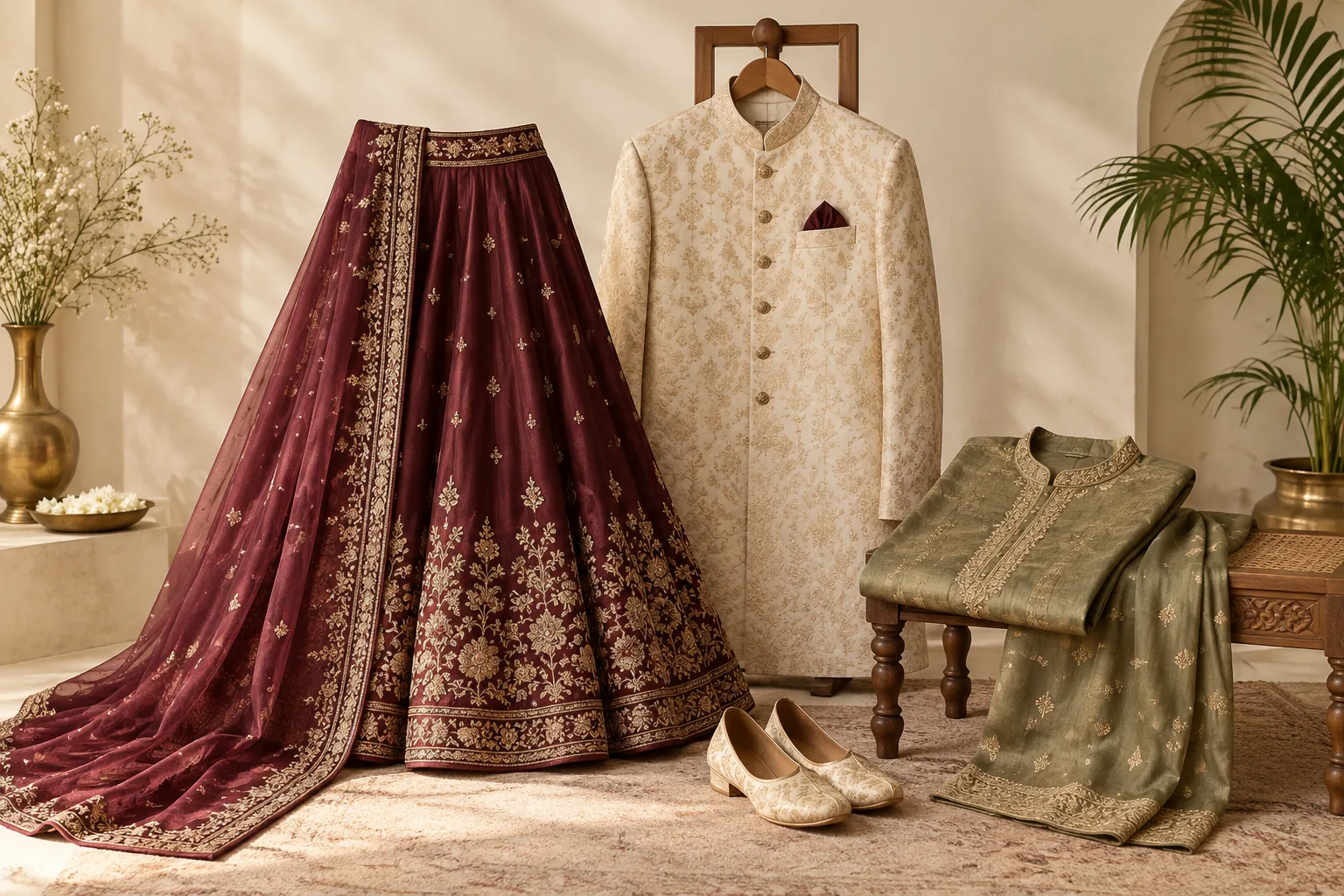
- A set of photographs showing the sherwani, stole, juttis and brooch together, shot in the shop. It shows the groom's side that the shop dresses the whole look.
- Festival family set post
- A photograph of a parent and child outfit sold at the shop, posted before the festival starts and pointing to a chat or a visit.
- Alteration behind the scenes
- A short clip of the tailor at work, with the tailor's agreement. It shows that the shop alters and fits what it sells, which a family worries about.
Who it is for
This is written for these ethnic wear stores.
- Kurta set and salwar suit stores for women
- Lehenga and gown shops for functions
- Sherwani and Indo-western menswear shops
- Family ethnic wear stores selling for all ages
- Festival-led stores for Navratri, Eid and Pongal
- Ethnic wear shops with in-house alteration
- Rental and buy ethnic wear stores
- Group and cousin-set order specialists
Before you decide
When this may not be the right fit.
- Nobody can answer direct messages on a Saturday evening, which is when families write
- You want followers from other cities who cannot travel to try an outfit
Before you decide
Agree the work. Know how to judge it.
Social media marketing for ethnic wear stores: use these checks to prepare, choose the scope, and review what changes.
Bring the right evidence
Review the posts that produced useful conversations, not only the ones with the most views. Gather buyer questions and decide which team member can contribute credible material.
Make the scope clear
Choose the audience and channel before setting a posting volume. Agree who supplies material, approves posts, and handles messages, including complaints or questions the agency cannot answer.
Check the work in use
Follow a post through to the profile, website, and response. A useful report explains the quality of conversations and enquiries, alongside reach and engagement.
Know when to change course
If publishing takes time away from unanswered buyer messages, fix the response routine first. Do not expand to another channel without a clear reason for being there.
These are discussion points, not a fixed package. GullySales confirms the deliverables, responsibilities, fee, and term in writing after reading your brief and speaking with you.
Before we start
What to have ready before the work starts.
The records, access and decisions this work needs from ethnic wear stores. Anything missing is noted in the written scope, with who will supply it.
- Login to each account
- We need access as an editor or the owner's agreement to post from your accounts. Bring the logins or the email each is tied to. If an account was set up by a cousin or a supplier, recover it first, since content published from the wrong account causes confusion. The owner should also say who may approve a post when the owner is away.
- A rack of garments ready to shoot
- The photographs need real outfits, ironed and hung. Set aside the stock for the shoot. If outfits are on hire or on order for customers, they cannot be used, and the plan changes to what remains.
- Staff willing to appear or help
- Posts of staff showing outfits sell better than empty hangers, but each person must agree. Name the staff who will appear, or say none will, and we plan the shoot accordingly.
- A price range you are willing to state
- Families ask for prices in messages. Decide whether to publish a range, and what to say when the question is about a specific piece. Without a decision, captions leave out prices and messages repeat the question.
- A phone for the shop's accounts
- Messages must be answered from a device the shop controls, not a personal phone that leaves with the staff member. Tell us which device is used. If none, the owner's phone is used until another is bought.
How it works
How the social media work runs
The work itself, in order. How an engagement starts, from your brief to a written scope, is set out on our method page.
- 1
Scroll the three feeds like a bride's cousin
We look at your Instagram, Facebook and Pinterest accounts as a family planning a function would, then at two nearby shops. We note which posts show an outfit clearly, which show only a logo, and whether anyone can tell where the shop is. The owner sits through the review and says which posts they are proud of.
- 2
Plan a shoot on the shop floor
We agree with the owner a short list of garments for the next period and plan when to photograph them: in natural light by the window, on hangers, in motion with staff. A guide for staff covers angles and backgrounds. The owner picks the outfits and checks that no customer's order appears in the frame.
- 3
Write captions that carry the area and range
Each caption names the garment, the occasion, the area of town and the price range in words, such as 'within the budget families name for a reception'. The owner decides whether prices appear. Captions end by saying where the shop is and how to book a trial, in the voice of the shop.
- 4
Set the occasion calendar
With the owner we list the weddings and festivals that matter this year and put a post series against each, beginning before the shopping starts. The floor lead says which garments will be in stock. The calendar is approved, and anything the shop cannot supply is removed from it.
- 5
Agree who answers the messages
Messages pile up over weekends. We name who watches Instagram and Facebook messages, who answers sizes and who moves a serious enquiry to the order sheet. The owner approves a few standard replies. A message not answered by the following working day is flagged to the owner.
- 6
Count visits that came from a post
At the counter, staff ask families how they heard of the shop and mark social media where it applies. We compare these with the starting figures and read the messages that became visits. The owner chooses which kind of post to repeat and which to drop, and the floor lead is told so the counter question stays consistent.
Where this fits
Three pieces of sales work, in this order.
This work sits inside sales process design, at stage 0, foundation. The audit comes before it, and sales management keeps it running.
Step 1
Sales audit
Find where deals are being lost and what to fix first.
Start here if you cannot say where orders are lost.
Step 2 · you are here
Sales process design
One written way to sell, from first enquiry to repeat order.
Start here if every salesperson sells differently.
Step 3
Sales management
A target, a review routine and someone who owns the number.
Start here if the team has targets and no routine.
FAQ
Questions owners ask before they call.
Not here? More answers, or ask on WhatsApp.
Which platform matters most for us?
Should we hire an influencer?
Can we post customers wearing our outfits?
A customer posted a photograph in our outfit. May we repost it?
Is it fine to tag a designer whose cloth we use?
Can staff post on their own accounts about the shop?
How much does it cost?
How long is the contract?
How soon will we see results?
Who will actually do the work?
More for ethnic wear stores
Related work to consider.
Closest to this: content and social
Also for ethnic wear stores
Or start from the overview: sales and marketing for ethnic wear stores.
Your next practical step
Tell us what you are trying to grow, and we will read it before we call.
Eight short steps, mostly taps. Skip anything you would rather answer on the call.