Fabric shops and retailers · CRM
Write down who buys which quality, and how long since they last did.
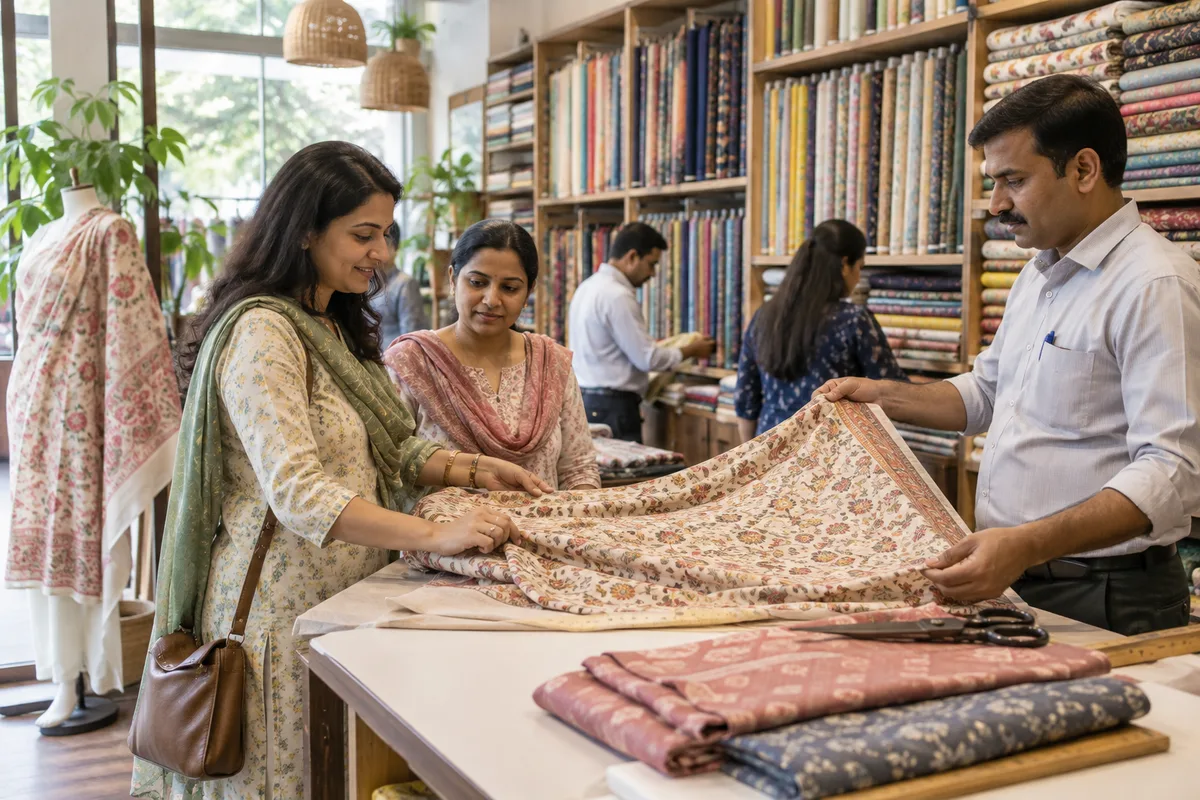
A CRM for a cloth shop is mostly a trade account book with a short record of retail buyers beside it: who they are, which quality and shade they take, when they last bought, what is outstanding and which occasion they buy for. GullySales sets those fields up and gets the counter filling them without slowing a sale.
Scope, fee, reporting and term are agreed in writing after we have read your brief and spoken to you.
What CRM means
A CRM is the record where every enquiry, call and quote is kept against a customer, replacing separate notebooks, spreadsheets and memory. GullySales sets up or cleans an existing CRM and reports from it by enquiry outcome rather than by activity logged.
Also for fabric shops and retailers
- Lead generation for fabric shops and retailers
- Follow-up systems for fabric shops and retailers
- SEO for fabric shops and retailers
- PPC ads for fabric shops and retailers
- Digital marketing for fabric shops and retailers
- Reputation management for fabric shops and retailers
- Local SEO for fabric shops and retailers
- Branding and identity for fabric shops and retailers
Sales and marketing for fabric shops and retailers, the overview.
Last updated 5 Oct 2026.
For fabric shops and retailers
Where it usually goes wrong, and what we would do.
“The field that matters is the shade, not the name”
A boutique taking one georgette in three colours is a different account from one buying lining by the bale. Record the quality and the shade and you can ring the right person the day a lot lands.
“The counter will not type during a rush”
Any record needing five fields at billing time is empty by Diwali. Take the name, the number, what was bought and the occasion, then add the rest when the shop is quiet.
“Credit and enquiry belong in the same place”
Most shops keep udhaar in one book and phone numbers in another. Put them together and you know, before you ring, whether this account is worth showing a new lot to.
What we do
What we deliver for fabric shops and retailers.
Every deliverable, what it covers for you, and the result it is there to produce. Nothing here is an extra.
A trade account book with the fields that decide a call
Every tailor, boutique, curtain stitcher and uniform contractor with the qualities they buy, the usual quantity, the last order date and what is outstanding.
Result: A quiet account is visible without anyone thinking about it.
A retail buyer record short enough to be filled
Name, number, what was bought and the occasion, taken at the bill in under a minute.
Result: The record survives a wedding season.
Enquiries kept apart from sales
What was asked for and never bought, recorded with the shade and the quality, so you can see demand you are not holding.
Result: Buying decisions come from what people asked for.
Occasion tags on the buyer record
Wedding, Onam, school uniform or house furnishing, marked so the right list can be pulled before the season starts.
Result: A message goes only to the people it concerns.
One list instead of three books
The shop's WhatsApp contacts, the counter book and the trade ledger brought together, held by the shop rather than on a staff member's phone.
Result: Somebody leaving does not take the buyers with them.
A read-out the owner will actually look at
Accounts that ordered, accounts that did not, enquiries with no reply, and designs nobody is asking for.
Result: The owner sees the shop without opening three books.
How the result is measured
- Enquiries logged in the CRM
- Data completeness
- Reports generated from CRM data
Recorded as a baseline before work starts, so every later report has an honest comparison.
What to record, and when
What a cloth shop should record about its trade buyers and retail regulars, and whether it needs software yet.
- Quality, shade and lot number
- For a repeat buyer, write the quality name, the shade and the lot or batch number on the bale tag. Dye lots differ, so a tailor reordering for the same set of uniforms must be matched to the right lot.
- Tailor, boutique or reseller
- Mark which buyers resell, such as tailors, boutiques and curtain stitchers. They bring many households, buy by the metre or the roll, and are worth a call when a new range lands.
- Outstanding and credit terms
- Write the credit limit, the agreed days and the last payment date beside the name. Do not rebuild the account book here. The point is that the person taking the call sees the balance before agreeing to another bale.
- Occasion and who it is for
- For a retail buyer, note the occasion: wedding, school uniform, curtains for a new flat, festival blouse pieces. It tells you when to message them next and what to show.
- Enquiries that did not buy
- Keep a separate line for people who asked for a rate or sent a photograph and left without buying, with the quality they wanted. If you did not have it, that is a stock decision.
- Do you need software yet?
- A notebook or a sheet works while one person keeps the book and the same few names recur. Move to a shared list when two counters, a godown or another branch need to see the same trade accounts and outstanding.
Who it is for
This is written for these fabric shops and retailers.
- Retail cloth shops selling suiting and shirting
- Saree and blouse-piece shops
- Dress material and unstitched wear shops
- Curtain, sofa and upholstery fabric houses
- Wholesale cloth merchants supplying tailors and boutiques
- Uniform cloth suppliers for schools, hotels and factories
- Handloom, khadi and silk outlets
- Online fabric sellers cutting to the metre and couriering
- Brand franchise counters for suiting and shirting
Not for
It is not the right fit if.
- The counter will not type during a rush and there is no one to enter the day's bills in the evening, so the record would stay empty.
- Tailor accounts and credit are tracked on paper by the owner who will not share them, so a shared record could not be built.
- The shop sells only to walk-in households who pay at once, and a trade account book would hold little.
How it works
How the CRM work runs
The work itself, in order. How an engagement starts, from your brief to a written scope, is set out on our method page.
- 1
Map the sales process
We sit with the people who sell and write down how a deal moves from enquiry to payment, including where it stalls.
- 2
Agree stages, fields and owners
Each stage gets a name your team already uses and a proof that the deal has left it. We agree which fields are required at which stage, and who may change what.
- 3
Build on a copy
Pipeline, fields and views are built on a trial copy where the CRM offers one, or in a separate pipeline where the plan allows. Live work stays untouched.
- 4
Connect channels, then switch on automations
Channels are connected first. Each automation is then switched on separately, so a misfiring rule is easy to find.
- 5
Test with real deals
The people who will use the CRM run open deals through it. Gaps are fixed before the whole team switches over.
- 6
Switch over and trim
Once real use shows which fields stay empty and which stages nobody uses, those are cut and the handover record is updated.
Where this fits
Three pieces of sales work, in this order.
This work sits inside sales management. A target, a review routine and someone who owns the number.
Step 1
Sales audit
Find where deals are being lost and what to fix first.
Start here if you cannot say where orders are lost.
Step 2
Sales process design
One written way to sell, from first enquiry to repeat order.
Start here if every salesperson sells differently.
Step 3 · you are here
Sales management
A target, a review routine and someone who owns the number.
Start here if the team has targets and no routine.
FAQ
Questions owners ask before they call.
Not here? More answers, or ask on WhatsApp.
Can we run this on a notebook?
Our billing software already stores customers. Is that enough?
How do we record a shade so the reorder matches?
Should outstanding balances live in the CRM or in our billing software?
How much does it cost?
How long is the contract?
How soon will we see results?
Who will actually do the work?
What do you need from us?
What if we are not happy with the work?
More for fabric shops and retailers
Everything else we would do for you.
Closest to this: leads and follow-up
Also for fabric shops and retailers
Or start from the overview: sales and marketing for fabric shops and retailers.
Your next practical step
Tell us what you are trying to grow, and we will read it before we call.
Eight short steps, mostly taps. Skip anything you would rather answer on the call.