How people choose in this industry
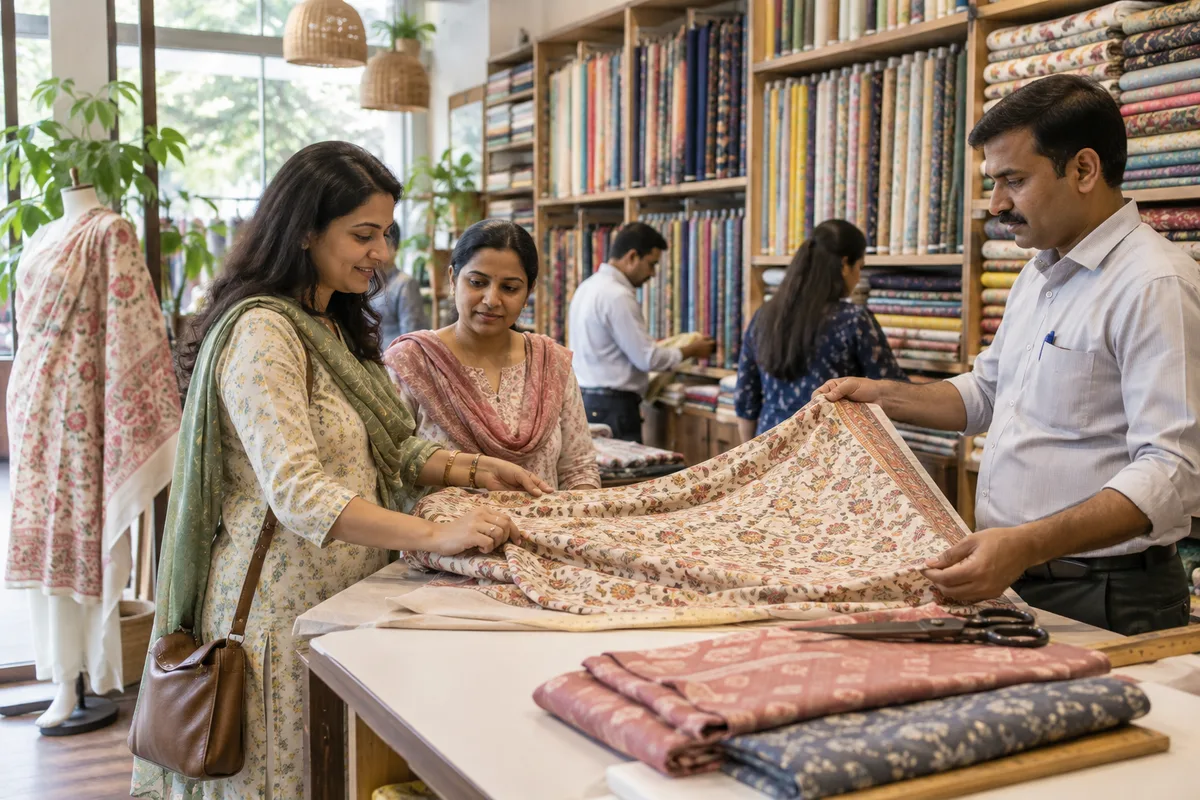
A household buyer starts with whoever is stitching the garment. The tailor names a shop for lining, fall and matching, and that one sentence is worth more than any hoarding. After that it is Maps, a photograph forwarded by a cousin, and a Saturday spent walking one street of cloth shops. Shade decides the sale, and shade cannot be settled on a phone screen.
Tailors, boutiques and curtain stitchers buy on different terms. They want the same lot again in three weeks, and credit until their own customer pays. They also want someone who picks up at eight in the evening, with a bride standing in the studio. Rate matters. Holding the shade matters more, and a trade account that finds a design gone twice does not ask a third time.
Uniform and furnishing orders are settled away from the counter. A school, a hotel or a factory wants a shade card, a sample length and some proof that next year's lot will match this year's. Interior designers lend your sample book to their own client and expect cut lengths delivered to site. The household shopper, meanwhile, checks a rate per metre online before walking in, so the board rate is no longer a secret.
The decision before implementation
Agree the task to demonstrate and who will review the work before choosing the training or content scope.
Existing industry priorities to review
- Suiting and shirting lengths
- Sarees and matching blouse pieces
- Dress materials and unstitched sets
- Curtain, sofa and upholstery fabric
- Uniform cloth for schools and factories
These describe the industry's wider priorities. The written scope identifies which this service will address.