Grocery stores and supermarkets · Customer engagement campaigns
Stay in a family's mind between the ration list and the festival basket.
A customer engagement campaign for a grocery store is planned, consented contact with the families who already shop with you, tied to the rhythm of their buying. GullySales builds the consent record, writes the messages for your approval and lays out a calendar that follows the household and festival year.
Scope, fee, reporting and term are agreed in writing after we have read your brief and spoken to you.
What customer engagement campaigns means
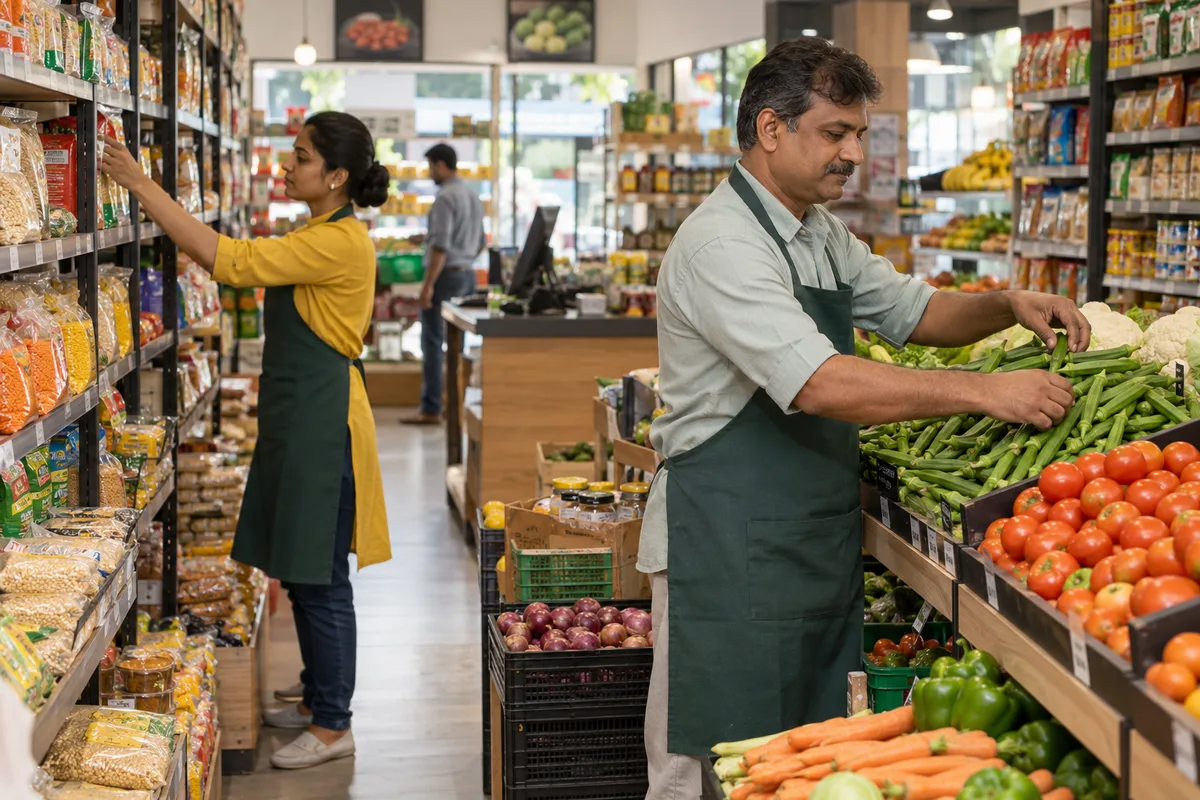
Customer engagement campaigns give existing customers a reason to interact with you between purchases, through useful posts, polls, service reminders, events, anniversaries and group updates, each with consent. GullySales plans the calendar, writes the messages, builds the opt-in record and runs the sends your team approves.
Also for grocery stores and supermarkets
- referral marketing for grocery stores and supermarkets
- SEO for grocery stores and supermarkets
- local SEO for grocery stores and supermarkets
- PPC ads for grocery stores and supermarkets
- reputation management for grocery stores and supermarkets
- content marketing for grocery stores and supermarkets
- social media marketing for grocery stores and supermarkets
- WhatsApp marketing for grocery stores and supermarkets
Sales and marketing for grocery stores and supermarkets, the overview.
Last updated 11 Oct 2026. Rules for this trade differ by state and professional body, and they change. We describe restrictions in general terms, so check the current position with your own council or adviser before you publish anything.
For grocery stores and supermarkets
Where it usually goes wrong, and what we would do.
“The ration list is the one moment you can see coming”
A family that sends a ration list on the first days of the month is predictable. A reminder before that date, with a question about what is finishing, keeps the store in front of a customer who might otherwise open an app out of habit.
“Festival baskets are won before the festival”
Households start planning hampers, sweets and bulk lists well ahead of Diwali, Ugadi, Pongal, Onam or Eid. A store that asks early what the family wants gets the list. A store that waits for a banner gets the walk-in who is already late.
“A broadcast to every number on the bill gets the store reported”
Phone numbers collected at the counter for delivery are not permission for offers. A family that did not agree to hear from the store blocks the number, and the account you use for order confirmations can be restricted with it.
“Apartment groups reward the helpful store, not the loud one”
In a gated community, one resident asks which store delivers to the tower and others answer. A store that takes part with useful information, such as fresh arrivals or a substitution note, is named. A store that only posts offers is muted.
What we do
What we deliver for grocery stores and supermarkets.
The work available for this need. We agree the deliverables and responsibilities for your engagement in writing.
Customer list audit from the billing counter
A review of billing exports and the delivery register for duplicates, missing numbers and last order dates, separating families you can contact from those with no recorded choice.
Result: The owner sees which households are reachable and which have never agreed.
Consent slip and record
A counter slip, a WhatsApp opt-in message and a sheet that notes who agreed, when and to which kind of message. Your own adviser reviews the wording.
Result: Every name on the contact list has a recorded yes beside it.
Household and festival calendar
A written plan placing each message against the ration cycle, the school reopening and the festival calendar, with the offers left for you to decide. Nothing is sent until you approve the entry.
Result: The owner can see every planned message and the date it was approved.
Message templates with a stop instruction
Short texts for WhatsApp, SMS or email: a list reminder, a new-arrival note, a festival hamper question. Each carries a clear way to opt out, and WhatsApp templates follow the platform's current approval rules.
Result: A family can stop the messages at any time, and the stop is recorded.
Reply-handling guide for the counter
One page saying who answers a reply, a complaint about a delivery or a stop request, and how a substitution is confirmed.
Result: No reply sits unread in a phone nobody checks.
Repeat-order log
A simple sheet that links a message sent to the next order from that household, kept by the person at the billing desk.
Result: The owner can compare households that were contacted with those that were not.
How the result is measured
- Customers with recorded consent
- Replies per message type
- Opt-outs and blocks
Recorded as a baseline before work starts, so every later report has an honest comparison.
Who it is for
This is written for these grocery stores and supermarkets.
- Neighbourhood kirana and provision stores
- Supermarkets of one or two floors in a locality
- Small chains of three to ten stores in one city
- Fruits, vegetables and fresh produce stores
- Organic and natural food stores
- Milk booths and bakeries that also carry provisions
- Stores inside gated communities, where the association decides who delivers
- Imported and specialty food stores
Before you decide
Agree the work. Know how to judge it.
Customer engagement campaigns for grocery stores: use these checks to prepare, choose the scope, and review what changes.
Bring the right evidence
Review repeat orders, inactive customers, and reasons for leaving. Separate a normal buying interval from a customer who stopped because of an unresolved problem.
Make the scope clear
Choose the customer group and the reason to contact them. Agree how complaints, renewal decisions, and additional offers are handled, including when a sales message is inappropriate.
Check the work in use
Track the response through to a retained or repeat order, with discounts and service costs visible. Record why the customer returned rather than crediting every repeat purchase to the campaign.
Know when to change course
If customers leave because delivery is unreliable, fix that before offering a loyalty reward. Repeated promotions can hide the cause without improving the experience.
These are discussion points, not a fixed package. GullySales confirms the deliverables, responsibilities, fee, and term in writing after reading your brief and speaking with you.
How it works
How the customer engagement campaigns work runs
The work itself, in order. How an engagement starts, from your brief to a written scope, is set out on our method page.
- 1
List and baseline review
You share the customer export and recent bills. We record the starting position: repeat purchases, reply time and the share of customers with recorded consent.
- 2
Consent clean-up
We separate customers who agreed from those who did not. For the rest, the first message is a plain request for permission, sent by someone they already deal with.
- 3
Calendar and message approval
The engagement calendar and the first templates go to you for sign-off. Your adviser checks consent wording; your platform settings stay under your own login.
- 4
Sends and live replies
Approved messages go out through the agreed channel. Replies reach the named person on your team, and stop requests are applied to the record the same day they arrive.
- 5
Review against the baseline
We compare the record with the starting position, remove touchpoints that drew silence or opt-outs, and agree what runs next. Scope, fee and term are set in writing first.
Where this fits
Three pieces of sales work, in this order.
This work sits inside sales process design, at stage 1, prospecting and lead generation. The audit comes before it, and sales management keeps it running.
Step 1
Sales audit
Find where deals are being lost and what to fix first.
Start here if you cannot say where orders are lost.
Step 2 · you are here
Sales process design
One written way to sell, from first enquiry to repeat order.
Start here if every salesperson sells differently.
Step 3
Sales management
A target, a review routine and someone who owns the number.
Start here if the team has targets and no routine.
FAQ
Questions owners ask before they call.
Not here? More answers, or ask on WhatsApp.
Can I message the numbers I collected for home delivery?
Will this bring families back from the quick-delivery apps?
Who sends the messages from the store's WhatsApp?
How much does it cost?
How long is the contract?
How soon will we see results?
Who will actually do the work?
What do you need from us?
What if we are not happy with the work?
More for grocery stores and supermarkets
Related work to consider.
Closest to this: customers after the sale
Also for grocery stores and supermarkets
Or start from the overview: sales and marketing for grocery stores and supermarkets.
Your next practical step
Tell us what you are trying to grow, and we will read it before we call.
Eight short steps, mostly taps. Skip anything you would rather answer on the call.