Home decor businesses · Case studies and testimonials
Let a customer's finished room convince the next buyer.
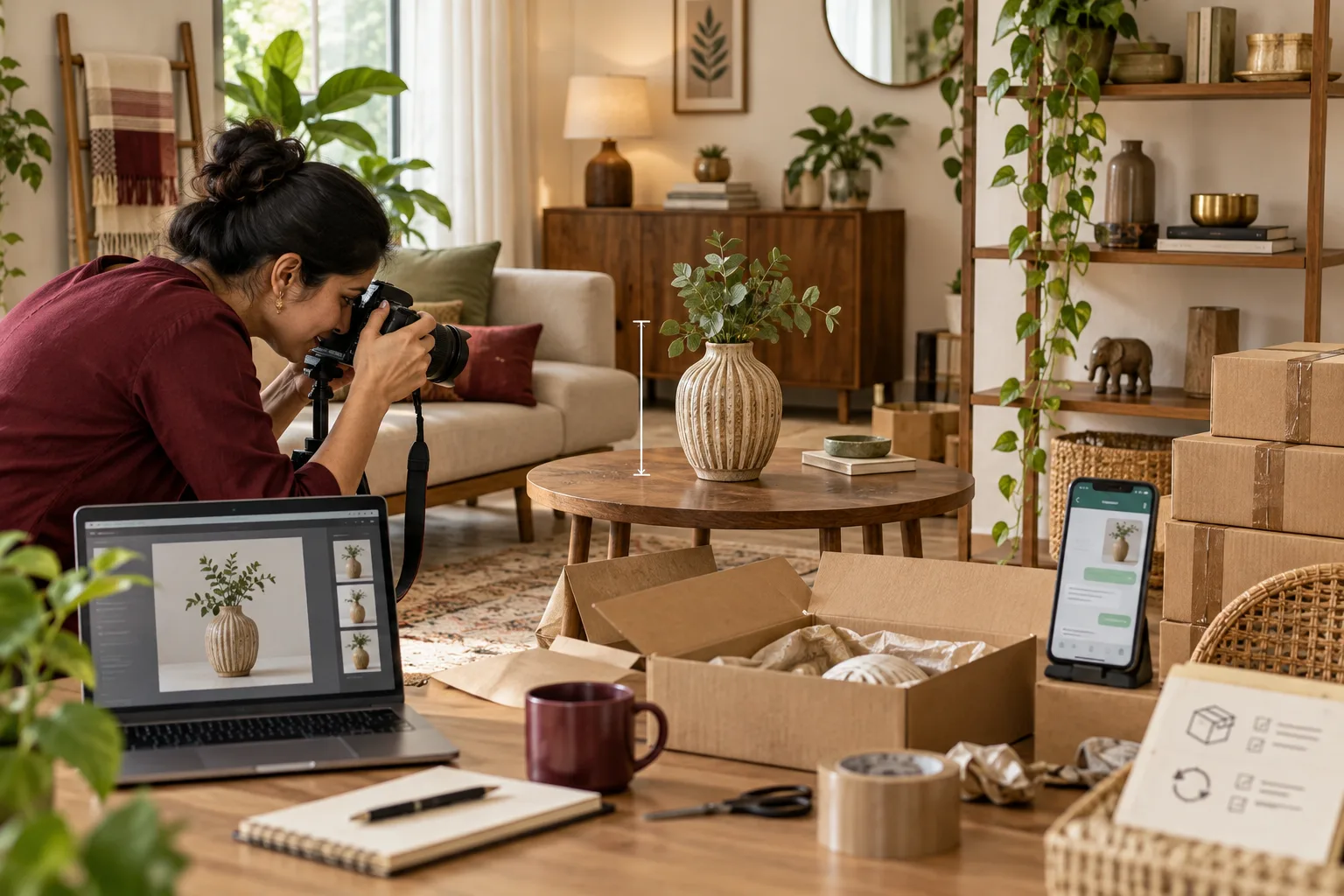
Reviews for a home decor business work best as photographs of the finished room, not star ratings, since buyers want to see how a piece looks at home. GullySales sets up the request timing and the room-style tagging that turns a delivery photo into proof for the next browsing customer.
Scope, fee, reporting and term are agreed in writing after we have read your brief and spoken to you.

What case studies and testimonials means
Case studies and testimonials are written accounts of a real customer's problem and result, used to show a new prospect what working with you actually looks like. GullySales writes these from real engagements and keeps every fact and figure exactly as the customer stated it.
Also for home decor businesses
- Content marketing for home decor businesses
- Influencer marketing for home decor businesses
- Social media marketing for home decor businesses
- Video marketing for home decor businesses
- Digital marketing for home decor businesses
- Email marketing for home decor businesses
- Paid advertising for home decor businesses
- Marketing and sales strategy for home decor businesses
Sales and marketing for home decor businesses, the overview.
Last updated 5 Oct 2026.
For home decor businesses
Where it usually goes wrong, and what we would do.
“Ask for a room photo, not a rating”
A request sent a week after delivery, once the piece is set up, gets a usable photo more often.
“Group testimonials by room style”
A boho living room review sits with other boho pieces, so a browsing customer sees proof for that look.
“Breakage complaints need a visible reply”
A prompt, specific reply about damaged delivery reassures the next fragile-item buyer more than ignoring it.
What we do
What we deliver for home decor businesses.
Every deliverable, what it covers for you, and the result it is there to produce. Nothing here is an extra.
A timed request for a finished-room photo
A message sent a week after delivery, once a piece is likely set up, asking for a photo rather than a star rating.
Result: The business collects proof of how a piece actually looks at home.
Testimonials tagged and grouped by room style
Customer photos and quotes organised by look, such as boho or minimalist, and placed alongside matching product content.
Result: A browsing customer sees proof for the exact style they want.
A written reply protocol for breakage complaints
A calm, specific response prepared for delivery damage complaints, addressing what happened and what was done about it.
Result: A fragile-item buyer sees a problem handled, not ignored.
A mix of resolved and positive reviews shown
A review page showing a mix of glowing feedback and honestly resolved complaints, rather than only five-star entries.
Result: A cautious buyer trusts a page that reads as genuine.
How the result is measured
- Case studies published
- Case studies used in proposals
- Enquiries citing a case study
Recorded as a baseline before work starts, so every later report has an honest comparison.
The room-photo request, step by step
Send the room-photo request in this order and keep the permission on record.
A finished-room photograph is worth more than a rating, but only if the customer sends it and agrees to its use. Use one short WhatsApp message with these parts.
- When to send it
- Send once the courier shows the order delivered and the customer has had time to place the piece. Asking on the day of delivery gets a photo of the box.
- The message itself
- Name the piece, thank the customer by first name and ask for one photo of it in the room. Keep it to a few lines, in the language the customer used with you.
- Photo guidance
- Suggest daylight and a wider shot that shows the corner or wall, with no faces. A customer who knows what a good photo looks like is more likely to send one.
- Permission line
- Ask in the same message whether you may post the photo with their first name, and keep the reply as the record. Never use a photo sent for a complaint.
- Room and style tags
- File each photo by room, such as living room or pooja corner, and by style, such as traditional or minimal. These tags let a browsing customer find a room that looks like theirs.
- If the photo shows damage
- Do not post it. Move the conversation to your breakage reply routine, resolve it first, and ask for a photo again only after the customer is satisfied.
Who it is for
This is written for these home decor businesses.
- Home decor and furnishing boutiques
- Online-only decor and lifestyle stores
- Wall art and photo frame sellers
- Lighting and lamp specialists
- Curtain and soft furnishing stores
- Festive and seasonal decor sellers
- Gifting and home accessory stores
- Home styling and consultation studios
Not for
It is not the right fit if.
- You have not yet delivered an order a customer would photograph, so there is no finished room to ask about
- Breakage complaints sit unanswered, and showing reviews before replying to them would make the problem more visible
How it works
How the case studies and testimonials work runs
The work itself, in order. How an engagement starts, from your brief to a written scope, is set out on our method page.
- 1
Identify the story
We list past engagements, mark which have a clear before and after, and match each to a type of prospect. The customer's willingness to be named is checked early, before any writing.
- 2
Brief the customer
The customer receives the topics, the questions and who will approve the text. Approval is the step that stalls a case study, so we settle who signs off on their side first.
- 3
Interview and research
We interview the customer's decision maker and day-to-day user, then your team. Documents such as the original brief or the project record are used to check what people recall.
- 4
Write and approve
The draft is shared with the customer. Any number or claim they cannot confirm comes out, and the final wording and permission are recorded in writing.
- 5
Publish and use
The case study goes on the website and into the sales kit. Your team is shown which prospect and which objection it answers.
Where this fits
Three pieces of sales work, in this order.
This work sits inside sales process design, at stage 4, presentation and proposal. The audit comes before it, and sales management keeps it running.
Step 1
Sales audit
Find where deals are being lost and what to fix first.
Start here if you cannot say where orders are lost.
Step 2 · you are here
Sales process design
One written way to sell, from first enquiry to repeat order.
Start here if every salesperson sells differently.
Step 3
Sales management
A target, a review routine and someone who owns the number.
Start here if the team has targets and no routine.
FAQ
Questions owners ask before they call.
Not here? More answers, or ask on WhatsApp.
How do we get customers to send photos?
Should we only show five-star reviews?
Can we repost a photo a customer put on their own Instagram?
Can a stylist's photo of our piece count as a testimonial?
How much does it cost?
How long is the contract?
How soon will we see results?
Who will actually do the work?
What do you need from us?
What if we are not happy with the work?
From the blog
Further reading for home decor businesses.
More for home decor businesses
Everything else we would do for you.
Closest to this: content and social
Also for home decor businesses
Or start from the overview: sales and marketing for home decor businesses.
Your next practical step
Tell us what you are trying to grow, and we will read it before we call.
Eight short steps, mostly taps. Skip anything you would rather answer on the call.