Hypermarkets · Digital marketing
Put the budget where a drive-time family looks, and count who arrives.
Digital marketing for a hypermarket is the combined use of search, maps, social media, WhatsApp and paid ads to bring households from the catchment into the store. GullySales works on how the pieces share one calendar and one way of counting.
Scope, fee, reporting and term are agreed in writing after we have read your brief and spoken to you.
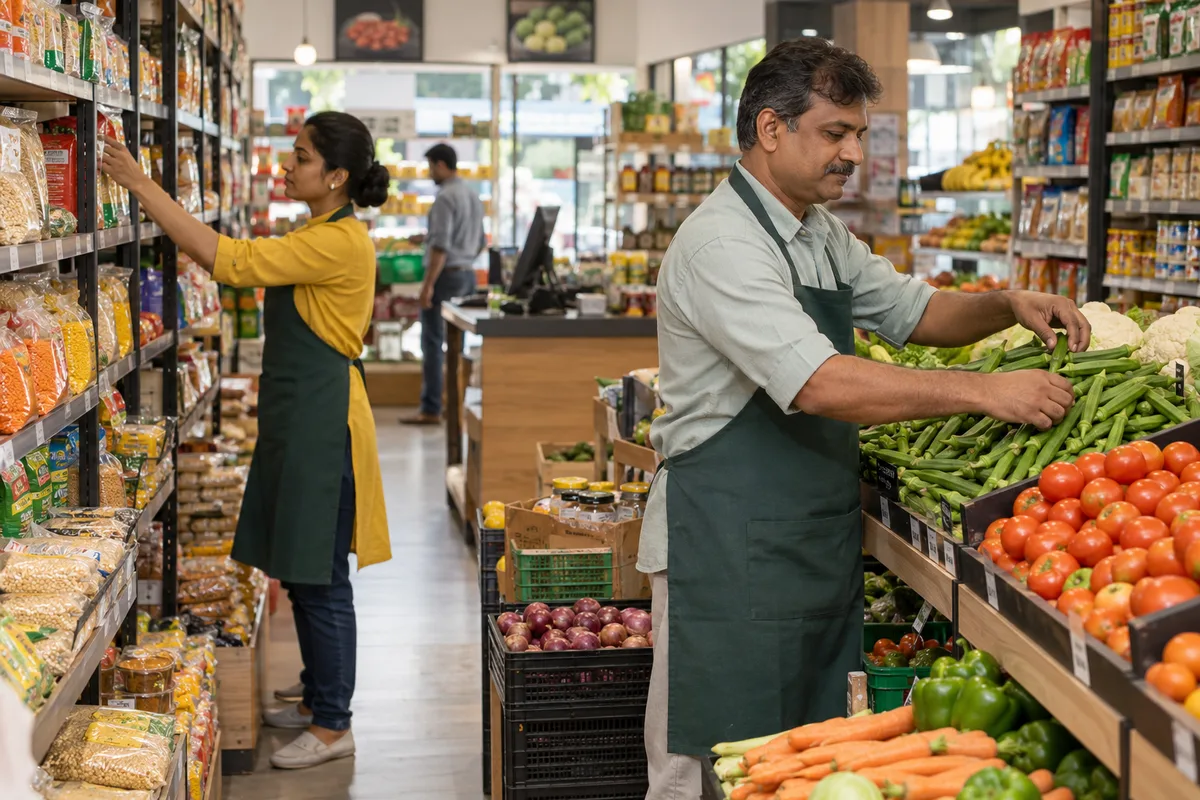
What digital marketing means
Digital marketing is the combined work of search, social media, advertising and website channels running together rather than as separate projects with separate people. GullySales runs these as one connected system so a change in one channel, such as a new offer, is reflected everywhere at once.
Last updated 14 Nov 2026.
For hypermarkets
Where it usually goes wrong, and what we would do.
“Three channels, three people, three different messages”
The agency does Facebook ads, the manager updates Maps and a cashier sends WhatsApp. Three people say three different things about the same sale. The household sees a store that does not agree with itself.
“Reach is wasted outside the drive”
An advert shown to the whole city pays for people who will never drive that far. Setting it to the localities the store serves keeps the budget with the households that can come.
“Paid ads need a place to land”
An advert for a festival sale that leads to the home page fails. It should lead to the sale page or to a WhatsApp chat, so that the click becomes a visit.
“Online orders can hurt the big basket”
A ten-item order delivered by an app costs commission and brings nothing of the large-basket strength. Digital work should sell the trip, not the small order.
What we do
What we deliver for hypermarkets.
The work available for this need. We agree the deliverables and responsibilities for your engagement in writing.
A single digital plan from the sale calendar
One sheet showing for each sale which channel does what, who is responsible and what is counted.
Result: The plan fits on one page and lists every channel.
Paid ads set to catchment localities
Search and social campaigns aimed at the localities in the drive-time map, with different offers for each.
Result: Reports show spend and visits by locality.
Landing pages and chats for each sale
A sale page or a WhatsApp link that each advert leads to, with the offer repeated.
Result: Every advert leads to a page that repeats the offer.
A counting method that ties to billing
Codes, keywords and billing-counter questions agreed in advance, and a sheet that collects the answers.
Result: The sheet shows visits by source.
A review of what to stop
After each sale the plan is read for channels that brought no visits, and money is moved.
Result: The review lists at least one thing stopped.
An online-order test for a small range
A trial of a limited range through an app or the website, judged against margin after commission and delivery.
Result: The trial ends with a figure for margin, not just orders.
How the result is measured
- Enquiries across channels
- Cost per enquiry overall
- Channel mix by contribution
Recorded as a baseline before work starts, so every later report has an honest comparison.
Searches your buyers type
The searches a hypermarket should plan its channels around.
- hypermarket offers this weekend
- A sale page and a paid search limited to the catchment localities, live only while the offer runs.
- festival shopping store near me
- A listing and a festival page, with a post that links to it. The drive time decides the click.
- bulk grocery for catering business
- A bulk buyer page and a short outreach to caterers, which a general ad will not reach.
- home appliances exchange offer
- An appliance page with the exchange terms as the store sets them. Paid spend only for the dates of the scheme.
- online grocery order from hypermarket
- A test page for a small range, only if the store can pick and deliver without hurting the in-store basket.
- furniture and home decor store near me
- A section page with photographs from the floor and the delivery area.
Who it is for
This is written for these hypermarkets.
- Single-site hypermarkets on a highway or ring road
- Hypermarkets inside shopping malls
- Regional chains of hypermarkets across a few cities
- Hypermarkets with an attached electronics and appliances floor
- Hypermarkets with a strong apparel and home section
- Cash-and-carry style large formats that sell to both households and traders
- Hypermarkets in tier-two towns that draw from several villages
- Franchise hypermarkets that follow a national brand's offer calendar
Before you decide
When this may not be the right fit.
- Your billing cannot show whether a visitor came because of an ad, so spend could not be traced to a family in the store.
- Your site cannot hold a sale page or a map link, and ads would send the shopper to a page that does not answer.
- The store has no plan for online orders, and an ad that invites them would create orders the floor cannot pick.
Before you decide
Agree the work. Know how to judge it.
Digital marketing for hypermarkets: use these checks to prepare, choose the scope, and review what changes.
Bring the right evidence
Bring a recent won order and an enquiry that went nowhere. Trace how each buyer found you, what they asked, and who handled the next step. A channel list alone will not explain the difference.
Make the scope clear
Choose one offer and one buyer group first. Agree which part needs attention: being found, getting a useful enquiry, or turning an enquiry into an order. Separate recommendations from the work required to carry them out.
Check the work in use
A useful plan names the first change, its owner, the evidence behind it, and the number that will show whether it worked. Ask what has deliberately been left out and why.
Know when to change course
If your team cannot answer the enquiries it already receives, improve that handover before buying more traffic. If the offer itself is unclear, test it with buyers before adding channels.
These are discussion points, not a fixed package. GullySales confirms the deliverables, responsibilities, fee, and term in writing after reading your brief and speaking with you.
Before we start
What to have ready before the work starts.
The records, access and decisions this work needs from hypermarkets. Anything missing is noted in the written scope, with who will supply it.
- The buying plan for the year
- Give the festival and sale calendar with ranges. We plan against facts. Without it, the plan is general and the messages late. Mark the offers that are still open to change, since those can be shaped to suit a channel while fixed ones cannot.
- Billing addresses or localities
- A list of localities where shoppers live is enough. It sets the catchment. If none exists, we ask cashiers to note the locality for a sample week. If the addresses sit in the loyalty tool, tell us who exports them and whether shoppers agreed to such use.
- Access to every channel
- We need the website, Maps listing, social pages and WhatsApp account. Invitations are better than shared passwords. Without them we can only advise from outside, and each change waits for whoever holds the keys.
- Last year's newspaper and hoarding spend
- Share what the store spent on print and hoardings and what it believed they brought. A rough record will do. Without it, digital cannot be weighed against what it replaces. If the invoices are filed by the accounts team, tell us who to ask.
- A person who collects the figures
- Name who gathers footfall, billing and channel counts after each sale. Without a collector, the review has no numbers to read. The same person should collect the figures after each sale so the counts are comparable from one sale to the next.
How it works
How the digital marketing work runs
The work itself, in order. How an engagement starts, from your brief to a written scope, is set out on our method page.
- 1
Put the sale calendar on one page
We start with a single page that lists every sale, festival and promotion the store will run, with the ranges and the dates. You supply it from the buying plan. All digital work follows this page, so the search, social, WhatsApp and paid messages match. We mark the ranges that carry the best margin or the stock you want to move, so the plan gives them room when two offers compete for the same weekend.
- 2
Draw the catchment from the bills
We take the billing addresses and the localities cashiers know to mark the catchment on a map. You approve it. Paid adverts, listings and locality pages are limited to this area so reach is not wasted on people who will not drive to you.
- 3
Choose the pieces and their order
We decide with you which channels start first: the Maps listing, the website, WhatsApp, then paid posts. Each is tied to a purpose. You approve a plan with only the channels the team can run. We also write down which channel will be switched off first if the team cannot keep up, so the decision is made calmly beforehand.
- 4
Build the landing pages and chats
For each sale, we write a landing page and a chat reply that match the advert wording. You check the offers. A person who clicks an advert should find the same offer and a way to plan the trip. Each landing page names the floor and gate for the offer, and the chat reply gives the same timings, so a family does not meet two different answers.
- 5
Agree how a visit is counted
We set up the counting: codes on offers, source questions at billing and the records from each channel, tied to the billing counts. You decide who collects the figures. Without this, a newspaper insert and a post cannot be compared.
- 6
Review and stop what does not bring visits
After the sale, we read each channel against the counts noted before. You see which brought households and which brought nothing. You choose what to stop, and we test a small online order range only if the store wants it. We read the cost of each channel beside its visits, using the store's own spend records, and you decide where the next sale's budget goes.
Where this fits
Three pieces of sales work, in this order.
This work sits inside sales process design, at stage 0, foundation. The audit comes before it, and sales management keeps it running.
Step 1
Sales audit
Find where deals are being lost and what to fix first.
Start here if you cannot say where orders are lost.
Step 2 · you are here
Sales process design
One written way to sell, from first enquiry to repeat order.
Start here if every salesperson sells differently.
Step 3
Sales management
A target, a review routine and someone who owns the number.
Start here if the team has targets and no routine.
FAQ
Questions owners ask before they call.
Not here? More answers, or ask on WhatsApp.
Should a hypermarket advertise online at all?
Which channel should we start with?
How do we tell digital from the newspaper insert?
Does a hypermarket need an online order service?
Should we stop the newspaper insert?
Is online ordering a good start?
How much does it cost?
How long is the contract?
How soon will we see results?
Who will actually do the work?
More for hypermarkets
Related work to consider.
Closest to this: strategy and research
Also for hypermarkets
Or start from the overview: sales and marketing for hypermarkets.
Your next practical step
Tell us what you are trying to grow, and we will read it before we call.
Eight short steps, mostly taps. Skip anything you would rather answer on the call.