Laptop stores · Buyer persona
Write down the five kinds of person who buy a laptop from you and what each one fears.
A buyer persona for a laptop store is a short written description of one type of buyer, covering their use, their budget, who decides and what worries them. GullySales works with your staff to describe the people who actually buy from you, so each reply, post and offer speaks to one of them.
Scope, fee, reporting and term are agreed in writing after we have read your brief and spoken to you.
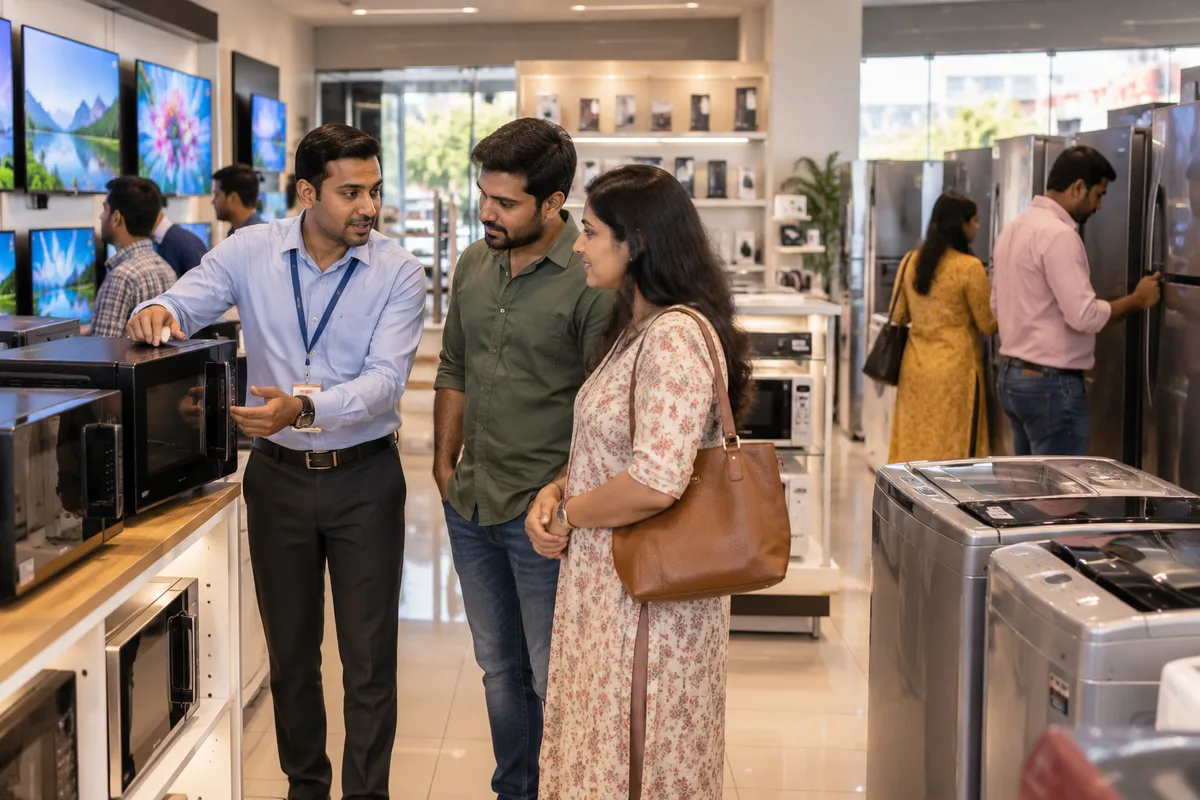
What buyer persona means
A buyer persona is a plain description of the kind of customer who actually buys from you. It includes what they search, what worries them and who else they ask before deciding. GullySales builds this from real enquiries and past sales rather than a generic template, then uses it to write every page and advert.
Last updated 14 Nov 2026.
For laptop stores
Where it usually goes wrong, and what we would do.
“The student and the parent are two buyers in one visit”
The student wants the machine that runs the software and looks good in a hostel. The parent wants a brand that will last and a bill that holds up for the warranty. A reply written for one loses the other.
“The professional buys on time, not on specification”
A consultant or a chartered accountant wants a machine that boots, holds a charge and has someone to ring when it fails. Talking graphics cards to this buyer wastes the visit.
“The gamer arrives already knowing more than the salesperson”
This buyer has watched the reviews and arrives with a short list. What wins is honest talk on cooling, upgrade options and the shop's willingness to demonstrate the machine under load.
“The office buyer is spending somebody else's money”
A manager ordering several machines needs a clear quote, a GST invoice and a promise about support. The person who signs the order may never visit the shop.
What we do
What we deliver for laptop stores.
The work available for this need. We agree the deliverables and responsibilities for your engagement in writing.
Five written buyer profiles
Student with parent, working professional, gamer or creator, small office, and the repeat buyer returning for an upgrade.
Result: Staff can name which profile a walk-in belongs to.
A fears-and-questions list for each profile
The doubts each buyer brings, such as warranty, resale, set-up or compatibility, written in their words.
Result: Replies answer the worry before it is voiced.
Counter prompts by profile
Three opening questions for each type, so staff learn the use and the budget in the first minute.
Result: The conversation starts with the buyer's need, not the stock list.
Message and offer wording by profile
Short sample replies and offers, one for each profile, ready to adapt.
Result: The same laptop is described in language each buyer recognises.
A check against your sales records
The profiles compared with the bills and enquiry notes you already hold, and adjusted to match.
Result: The descriptions rest on your own shop's buyers.
How the result is measured
- Enquiry match to persona
- Conversion rate by persona
- Content aligned to persona
Recorded as a baseline before work starts, so every later report has an honest comparison.
Who is asking
Know what each type of buyer wants to hear before the bill is raised.
- First-year student
- Wants a laptop that lasts the course and carries easily, and wants to know where it goes if the screen breaks.
- Parent paying for the student
- Wants the warranty explained in plain words, the bill kept safe and an honest view on whether the price is fair.
- Salaried professional
- Wants a machine that starts reliably and a clear way to claim the bill, with little interest in specification lists.
- Gamer or creator
- Wants to see the machine run under load and to hear plainly which cooling and screen it has.
- Office owner buying several
- Wants one quote with all machines, the delivery of the lot and one person to call about faults.
- Replacement buyer with an old laptop
- Wants to know what the store does with the old machine and whether data is moved across.
Who it is for
This is written for these laptop stores.
- Multi-brand laptop showrooms in city markets
- Brand-authorised laptop stores and resellers
- Gaming and creator laptop specialists
- Student-focused stores near colleges and coaching hubs
- Business laptop suppliers for small offices and professionals
- Premium laptop counters and Apple-authorised resellers
- Laptop stores with an in-house service desk
- Online-first laptop sellers with a pickup counter
Before you decide
When this may not be the right fit.
- You have no sales record to learn from, and personas written without records would simply restate your assumptions.
- Your counter staff do not agree on what a customer wants, and the first task is to listen to real enquiries.
- You are using personas to set prices, which should follow supplier cost and margin and not buyer type.
Before you decide
Agree the work. Know how to judge it.
Buyer personas for laptop stores: use these checks to prepare, choose the scope, and review what changes.
Bring the right evidence
Write the decision the research must support, such as entering a market or choosing a buyer group. Separate what you know from sales records from what the team currently assumes.
Make the scope clear
Agree which buyers to speak to, which sources to review, and what access you can provide. Include lost enquiries and people who chose another supplier, where they are willing to take part.
Check the work in use
Look for source dates, sample limitations, and evidence that disagrees with the preferred answer. A recommendation should show how it follows from the findings.
Know when to change course
Do not treat a few positive conversations as proof of demand. Test the proposed offer with an actual buying decision before committing to a wider launch.
These are discussion points, not a fixed package. GullySales confirms the deliverables, responsibilities, fee, and term in writing after reading your brief and speaking with you.
Before we start
What to have ready before the work starts.
The records, access and decisions this work needs from laptop stores. Anything missing is noted in the written scope, with who will supply it.
- A season of bills with models and dates
- Invoice copies or the billing software export, showing model, price band and finance. The profiles are built on what buyers did. If bills cannot be shared, a summary by you of the buyer groups becomes the evidence, and the profiles carry a lower confidence.
- Permission from buyers to be called
- A short list of customers who have agreed to a conversation, with a time they prefer. You make the first contact. Without consent we speak only to your staff, and the profiles reflect only what the counter believes.
- Salespeople free for a group conversation
- Two or three staff who face the buyers, sitting with us once for an agreed period of time. Their view is half the evidence. If they cannot be spared, the profiles lean on bills and interviews alone.
- Your view of which buyer you want more of
- Decide whether you want more students, more offices or more premium buyers. This changes which profiles get priority. Without a decision, all five receive the same attention and the messages stay general.
- Past enquiry notes from messages
- Screenshots of the WhatsApp or SMS threads, with the number hidden, that show what buyers asked before purchase. They are the closest record of the buyer's own words. If none exist, the question lists rely on interviews.
How it works
How the buyer persona work runs
The work itself, in order. How an engagement starts, from your brief to a written scope, is set out on our method page.
- 1
Decide which five buyers deserve a profile
We read your bills and enquiry notes with you and sort the last season's buyers by the reason they came. Students, parents, professionals, gamers and small offices are the starting groups. You tell us which group you want more of than any other, and we drop any group too small to shape a message.
- 2
Pull the bills and pick the people to call
We ask for a sample of bills across the groups, with the model, the finance option and the date, and choose a few buyers from each to speak to. You phone or message first to ask permission. We only speak to buyers who agree, we note the models and finance schemes they compared, and we never ask for their income or anything else a buyer would hesitate to say aloud at your counter.
- 3
Talk to buyers and to the counter staff
We ask buyers what they compared, what worried them and what made them buy here. We then ask the salespeople what they hear from each group again and again. The two accounts are set side by side, and we mark where they disagree, because those gaps show what the shop assumes wrongly.
- 4
Write each profile and show it to your team
Each profile records the use, the budget range buyers name, who decides, the fear that nearly stopped the purchase and the question to ask first. We read them aloud to your salespeople and note the ones who say that is exactly this customer, and the ones who say that is nobody. You correct the draft from those reactions.
- 5
Turn the profiles into counter prompts and wording
For each profile we write two or three prompts a salesperson can use, the reply wording for messages, and the offer that suits that buyer. A parent hears about service and finance; a gamer hears about cooling and screen. You choose which wording goes into the follow-up and WhatsApp material.
- 6
Check the profiles against new bills
After the new wording is in use we compare the profiles with bills from the following weeks. Against the buyer mix recorded in the first step, we see whether the groups moved and which message got replies. You decide which profile to rewrite, merge or add.
Where this fits
Three pieces of sales work, in this order.
This work sits inside sales process design, at stage 0, foundation. The audit comes before it, and sales management keeps it running.
Step 1
Sales audit
Find where deals are being lost and what to fix first.
Start here if you cannot say where orders are lost.
Step 2 · you are here
Sales process design
One written way to sell, from first enquiry to repeat order.
Start here if every salesperson sells differently.
Step 3
Sales management
A target, a review routine and someone who owns the number.
Start here if the team has targets and no routine.
FAQ
Questions owners ask before they call.
Not here? More answers, or ask on WhatsApp.
How many personas do we need?
Where does the information come from?
Do we need to ask buyers about their income?
Should the persona note include the buyer's income?
Do we need the buyer's income to build a profile?
Why five profiles and not ten?
How much does it cost?
How long is the contract?
How soon will we see results?
Who will actually do the work?
More for laptop stores
Related work to consider.
Closest to this: strategy and research
Also for laptop stores
Or start from the overview: sales and marketing for laptop stores.
Your next practical step
Tell us what you are trying to grow, and we will read it before we call.
Eight short steps, mostly taps. Skip anything you would rather answer on the call.