Sports equipment shops · Buyer persona
Know who is buying the kit, who is paying and who decides.
A buyer persona for a sports shop describes the people involved in one purchase: the player, the parent who pays and the coach who advises. GullySales works on writing those people down from your own counter records so each message speaks to the right one.
Scope, fee, reporting and term are agreed in writing after we have read your brief and spoken to you.
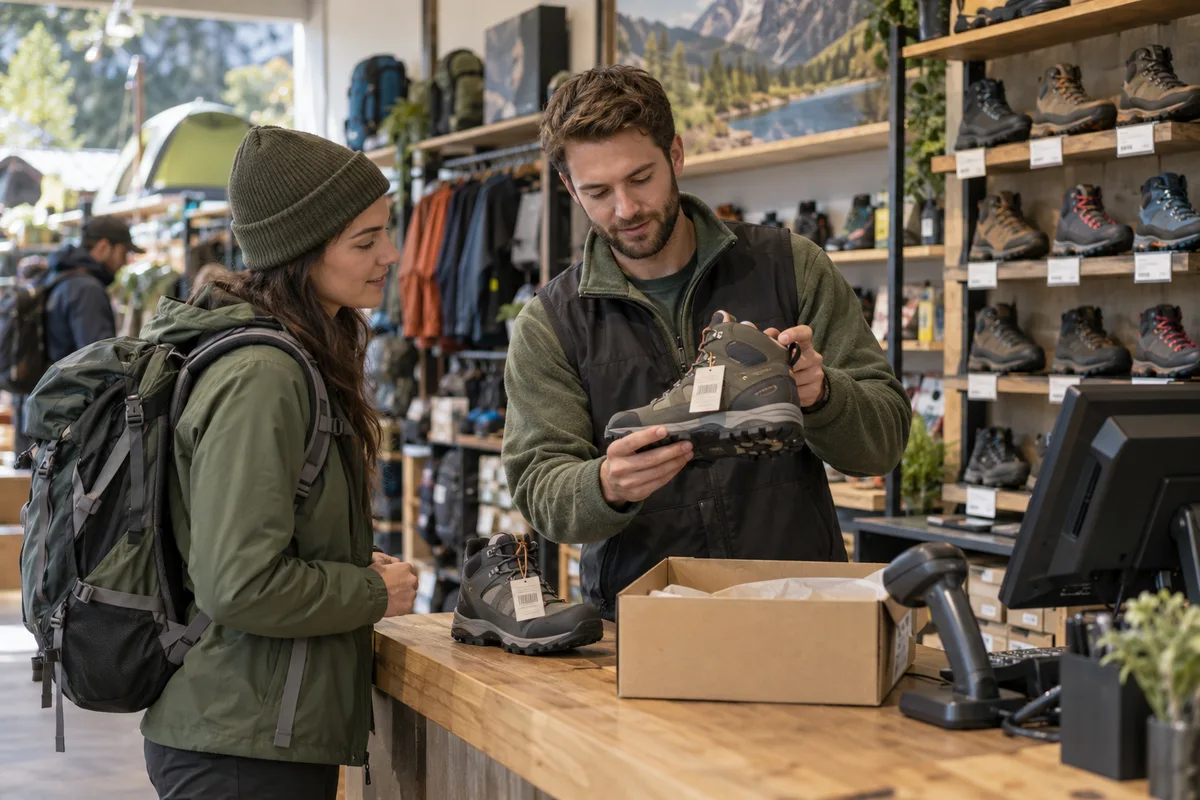
What buyer persona means
A buyer persona is a plain description of the kind of customer who actually buys from you. It includes what they search, what worries them and who else they ask before deciding. GullySales builds this from real enquiries and past sales rather than a generic template, then uses it to write every page and advert.
Also for sports equipment shops
- Digital marketing for sports equipment shops
- Lead generation for sports equipment shops
- SEO for sports equipment shops
- Local SEO for sports equipment shops
- Social media marketing for sports equipment shops
- Content marketing for sports equipment shops
- CRM for sports equipment shops
- Follow-up systems for sports equipment shops
Sales and marketing for sports equipment shops, the overview.
Last updated 14 Nov 2026.
For sports equipment shops
Where it usually goes wrong, and what we would do.
“The player and the payer are not the same person”
A teenager wants a particular brand of boots. The parent holds the budget and asks whether they will last a season. Messages written only for the player ignore the person with the wallet, and the reverse is just as true.
“The coach is a buyer you never see at the counter”
A coach shapes dozens of purchases and may never buy anything themselves. Their concern is that the kit is right for the sport and will turn up on time. Writing a persona for the coach changes what you send them.
“The institutional buyer wants paper”
A school clerk or club secretary compares written quotes and needs a bill. They are not moved by a post. They care about sizes, dates and replacement of wrong sizes. This buyer needs a separate set of messages.
“The home fitness buyer decides slowly”
Someone buying a treadmill or a bench thinks about space, noise, delivery and installation. They visit twice and ask the family. The persona records what they worry about so the demonstration answers it.
What we do
What we deliver for sports equipment shops.
The work available for this need. We agree the deliverables and responsibilities for your engagement in writing.
Persona sheets
One page each for the beginner's parent, the serious player, the coach, the school buyer and the home fitness buyer.
Result: Sheets staff can read and recognise from the counter.
A questions list for each persona
The questions each type of buyer asks, in their own words, taken from your WhatsApp and counter.
Result: Real questions that shape your replies.
A message map
Which message, photo and offer suits each persona, and where it is sent.
Result: A map showing who gets what.
A counter prompt card
A small card for staff with the first two questions to ask each type of buyer.
Result: A card kept near the till.
A review after a season
A short sitting to compare the personas against who actually bought.
Result: Personas corrected against real buyers.
How the result is measured
- Enquiry match to persona
- Conversion rate by persona
- Content aligned to persona
Recorded as a baseline before work starts, so every later report has an honest comparison.
Who is asking
Know the five people who ask a sports shop for kit.
- Parent buying a first bat or racket
- Wants to know the right size for the child's age and whether the cost is justified before a coach is chosen.
- Coach setting a kit list for a batch
- Wants a shop that holds the sizes in stock and will honour the list, so parents are not sent around town.
- School PE teacher raising a purchase
- Wants a written quote that goes into the school's paperwork, with quantities and a clear delivery date.
- Young adult starting a gym at home
- Wants to know what equipment fits a small room and what installation or assembly the shop offers.
- Club captain ordering team jerseys
- Wants to know the printing options, the sizes and when the kit will be ready before the tournament.
Who it is for
This is written for these sports equipment shops.
- Multi-sport retail shops in a town or neighbourhood
- Cricket specialists for bats, pads, balls and kit
- Badminton, tennis and racket sport specialists
- Football, hockey and team sports suppliers
- Fitness and gym equipment sellers for home use
- Skating, swimming and martial arts gear shops
- Sports shoe and sportswear counters
- School and academy sports suppliers with team jersey printing
Before you decide
When this may not be the right fit.
- You do not talk to buyers at the counter, so a persona would be written from guesses and would not help a single reply.
- You are hoping a persona sheet will replace calling the coaches and schools near you, which no sheet can do.
Before you decide
Agree the work. Know how to judge it.
Buyer personas for sports equipment shops: use these checks to prepare, choose the scope, and review what changes.
Bring the right evidence
Write the decision the research must support, such as entering a market or choosing a buyer group. Separate what you know from sales records from what the team currently assumes.
Make the scope clear
Agree which buyers to speak to, which sources to review, and what access you can provide. Include lost enquiries and people who chose another supplier, where they are willing to take part.
Check the work in use
Look for source dates, sample limitations, and evidence that disagrees with the preferred answer. A recommendation should show how it follows from the findings.
Know when to change course
Do not treat a few positive conversations as proof of demand. Test the proposed offer with an actual buying decision before committing to a wider launch.
These are discussion points, not a fixed package. GullySales confirms the deliverables, responsibilities, fee, and term in writing after reading your brief and speaking with you.
Before we start
What to have ready before the work starts.
The records, access and decisions this work needs from sports equipment shops. Anything missing is noted in the written scope, with who will supply it.
- A month of bills and order slips
- Bills show who bought what together and in what pattern, such as shoes with socks or a bat with pads. Copies with names hidden are enough. If they are missing, personas rest on interviews and memory alone, which are less accurate.
- Introductions to buyers and coaches
- We cannot approach your buyers cold. You must ask a few of them for a short chat and introduce us. If no one agrees, we use staff accounts of buyers, and those are secondhand. A short message from you saying who we are is enough for the buyer to agree, and it keeps the conversation friendly.
- A list of the main buying seasons
- Tell us when school terms start, when leagues run and when families buy before tournaments. Personas change with season, so each needs its date. When this is missing, a persona may describe a buyer who only appears twice a year.
- Notes on team and school orders
- The institutional buyer wants quotes, invoices and delivery dates. Pull together a few such orders, including what went wrong. Without them, the school persona stays thin and the plan treats a school like a parent.
- Consent for using buyer information
- Decide what you will let us read and what you will not, and tell any buyer we speak with that their words are used without their name. If consent is unclear, we work only from what you can share openly. Where a parent speaks about a child, we use only what the parent chooses to say and never record the child's name.
How it works
How the buyer persona work runs
The work itself, in order. How an engagement starts, from your brief to a written scope, is set out on our method page.
- 1
Decide whose purchase we are describing
We begin by choosing one purchase to describe, for example a first cricket kit for a child joining an academy, rather than every buyer at once. We name the player, the person who pays and the coach who advises. You tell us which purchase brings the largest trade and the least repeat business. The choice also fixes what we leave out, such as the bulk school order, which gets its own sheet only if you want one.
- 2
Read a month of bills and chats
With your permission we read bills, team orders and WhatsApp chats, and list who asked, who paid and who chose. We remove phone numbers and names in our working notes. You confirm that the bundle represents a normal run of trade, not a festival rush or a one-off clearance.
- 3
Talk to three buyers and a coach
We arrange short conversations with a parent, a player, a school sports teacher and a coach, with you introducing us. We ask what they weighed against each other, what worried them and whom they asked. You choose the people, and you decide what we may record.
- 4
Check what they said against the bills
Interviews and bills do not always agree, since people remember a choice as more careful than it was. We compare what each buyer said with what they actually bought, and mark the gaps. You tell us which differences surprise you and which match the counter. We also mark any buyer whose bills show a pattern the interview never mentioned, such as shoes bought a size up for growth, because that detail belongs on the sheet.
- 5
Write the personas and read them with staff
We write each persona on one page, with their questions, worries and who influences them, and read them aloud with the counter staff. Staff mark what rings false. You approve the final text, since these sheets will guide messages and training.
- 6
Set a season to test the sheets
We agree what to watch across one sporting season: which questions staff hear, which messages get replies and which persona orders more. At the end we compare notes with the counts recorded before, in enquiries and team orders. You decide which persona to serve better next. We also ask the counter staff which questions on the prompt card they actually used, and which they dropped.
Where this fits
Three pieces of sales work, in this order.
This work sits inside sales process design, at stage 0, foundation. The audit comes before it, and sales management keeps it running.
Step 1
Sales audit
Find where deals are being lost and what to fix first.
Start here if you cannot say where orders are lost.
Step 2 · you are here
Sales process design
One written way to sell, from first enquiry to repeat order.
Start here if every salesperson sells differently.
Step 3
Sales management
A target, a review routine and someone who owns the number.
Start here if the team has targets and no routine.
FAQ
Questions owners ask before they call.
Not here? More answers, or ask on WhatsApp.
Do we need research to build personas?
How many personas are enough?
Which persona should a new shop start with?
Should the persona include the child?
Is a persona only an invented customer?
How will staff use the persona sheets?
How much does it cost?
How long is the contract?
How soon will we see results?
Who will actually do the work?
More for sports equipment shops
Related work to consider.
Closest to this: strategy and research
Also for sports equipment shops
Or start from the overview: sales and marketing for sports equipment shops.
Your next practical step
Tell us what you are trying to grow, and we will read it before we call.
Eight short steps, mostly taps. Skip anything you would rather answer on the call.