Sports equipment shops · Digital marketing
Put the right sport in front of the right buyer when the season begins.
Digital marketing for a sports shop is the mix of search, maps, social posts, ads and WhatsApp that brings buyers to the counter. GullySales works on choosing the few channels that suit your sports and your town, and on tying each to a season.
Scope, fee, reporting and term are agreed in writing after we have read your brief and spoken to you.
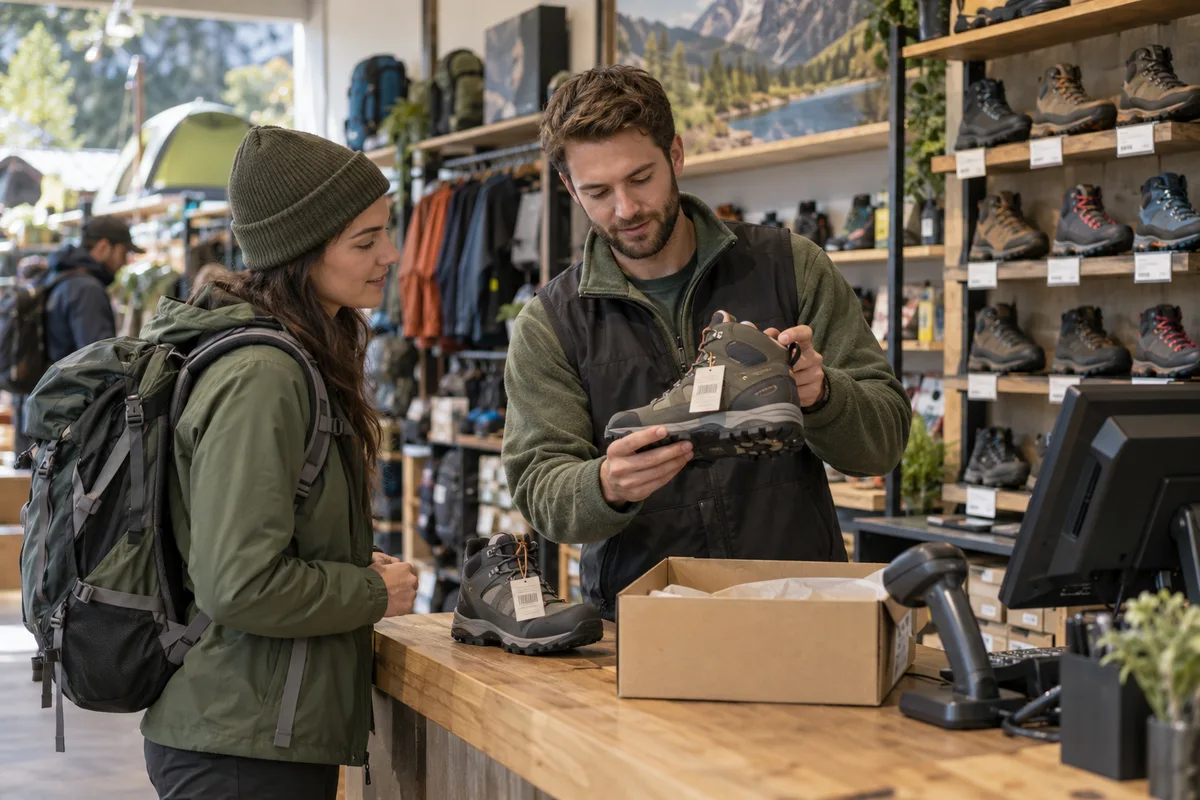
What digital marketing means
Digital marketing is the combined work of search, social media, advertising and website channels running together rather than as separate projects with separate people. GullySales runs these as one connected system so a change in one channel, such as a new offer, is reflected everywhere at once.
Also for sports equipment shops
- Buyer personas for sports equipment shops
- Lead generation for sports equipment shops
- SEO for sports equipment shops
- Local SEO for sports equipment shops
- Social media marketing for sports equipment shops
- Content marketing for sports equipment shops
- CRM for sports equipment shops
- Follow-up systems for sports equipment shops
Sales and marketing for sports equipment shops, the overview.
Last updated 14 Nov 2026.
For sports equipment shops
Where it usually goes wrong, and what we would do.
“Demand follows the sporting calendar”
Cricket gear is wanted when a tournament is on, rackets when badminton leagues begin, shoes when school reopens. A plan that spreads effort evenly misses these peaks. A plan that builds before each one is ready when search rises.
“A channel that cannot be traced is a guess”
If nobody asks where a buyer heard of the shop, a post, a profile and a coach all look the same. A single question at the till gives the first honest picture of what is working.
“A small budget needs one clear job”
Spending a little on every platform leaves each too thin to matter. One ad aimed at a sport and a locality, at the right point in the season, does more than five scattered ones.
“The counter is part of the marketing”
A buyer who is excited by a post and then waits at an empty counter is lost. Staff, stock and hours have to match what the digital side promises. The plan includes the people who answer.
What we do
What we deliver for sports equipment shops.
The work available for this need. We agree the deliverables and responsibilities for your engagement in writing.
A channel plan for your sports and town
Which of search, maps, social, ads and WhatsApp to use, and why, for the sports you stock.
Result: A plan with a reason for each channel.
A season-by-season calendar
What to show and spend on around tournaments, school sports weeks and intakes.
Result: A calendar you can work from.
A source question at the till
A line staff ask every buyer, with a place to record it.
Result: A record of where buyers come from.
Ad setup for local search and social
Campaigns aimed at a sport and an area for the periods that matter.
Result: Ads that carry a single sport message.
A reading of results
A plain report on enquiries, visits and orders against your own baseline.
Result: A report you can read without a guide.
How the result is measured
- Enquiries across channels
- Cost per enquiry overall
- Channel mix by contribution
Recorded as a baseline before work starts, so every later report has an honest comparison.
Searches your buyers type
Match each channel to a search or moment a sports buyer has.
- cricket bat shop near me
- Answered by the Maps profile and a cricket page. The first channel to fix for a walk-in shop.
- school jersey printing
- Answered by a team order page with a quote form. Suits teachers and club captains planning a term ahead.
- badminton racket restringing
- A service page that names the stringing work and the hours the counter takes rackets in. Brings repair customers who then buy.
- best shoes for running track
- A guide page that points to the pairs in stock, with a question prompt to message the shop.
- home gym equipment for small rooms
- A page for dumbbells, benches and mats, with sizes and what the shop can deliver.
Who it is for
This is written for these sports equipment shops.
- Multi-sport retail shops in a town or neighbourhood
- Cricket specialists for bats, pads, balls and kit
- Badminton, tennis and racket sport specialists
- Football, hockey and team sports suppliers
- Fitness and gym equipment sellers for home use
- Skating, swimming and martial arts gear shops
- Sports shoe and sportswear counters
- School and academy sports suppliers with team jersey printing
Before you decide
When this may not be the right fit.
- You cannot say which of your current sales came from which source, so spending more would not show what is working.
- The shop has no stock depth in the sport you want to advertise, and a click would end in no.
Before you decide
Agree the work. Know how to judge it.
Digital marketing for sports equipment shops: use these checks to prepare, choose the scope, and review what changes.
Bring the right evidence
Bring a recent won order and an enquiry that went nowhere. Trace how each buyer found you, what they asked, and who handled the next step. A channel list alone will not explain the difference.
Make the scope clear
Choose one offer and one buyer group first. Agree which part needs attention: being found, getting a useful enquiry, or turning an enquiry into an order. Separate recommendations from the work required to carry them out.
Check the work in use
A useful plan names the first change, its owner, the evidence behind it, and the number that will show whether it worked. Ask what has deliberately been left out and why.
Know when to change course
If your team cannot answer the enquiries it already receives, improve that handover before buying more traffic. If the offer itself is unclear, test it with buyers before adding channels.
These are discussion points, not a fixed package. GullySales confirms the deliverables, responsibilities, fee, and term in writing after reading your brief and speaking with you.
Before we start
What to have ready before the work starts.
The records, access and decisions this work needs from sports equipment shops. Anything missing is noted in the written scope, with who will supply it.
- Sales by month for two years
- The bill totals by month show your seasons better than guesses. A bill book will do. If they are missing, the calendar relies on general sporting dates, which may not match your town. Include a note of the weeks when a school fair or a tournament lifted trade, because those weeks shape the calendar.
- Access to every account you already have
- Give us access to Maps, the website tools, social pages and any ad account. If an account is held by someone else, we start by recovering it. Missing accounts limit what we can measure.
- A budget decision before any ads
- Only you can say what you will spend on ads and for how long you will test them. We advise, but cannot decide. Without a number, we plan the free channels first. If you prefer to start with no budget, we plan the free channels and revisit paid ads after a season.
- A counter question at billing
- Agree to ask every buyer how they found the shop and note the answer. Without that, we cannot tell which channel brought a sale. A tally sheet beside the till with five tick boxes is enough for the question to be answered the same way by every staff member.
- A list of what is in stock now
- Advertising a sport you have run out of wastes spend. Give us a current list of lines and sizes in stock. When missing, campaigns may point at bare shelves.
How it works
How the digital marketing work runs
The work itself, in order. How an engagement starts, from your brief to a written scope, is set out on our method page.
- 1
Chart the sporting year for the shop
We mark when each sport sells: cricket before the school term and the league, badminton when courts open, football before the school cup, fitness gear after the new year. You correct the dates from your own bills. The chart tells us which months deserve effort and which are quiet. We also mark local holidays and school exam periods when families spend less on kit, so a campaign is not planned into a quiet fortnight.
- 2
Find where buyers come from today
We check Maps, search, social, WhatsApp and referrals against what the counter says, and list each source with the best evidence we have. You tell us which source you trust and which you doubt. The gaps are the first thing we try to measure. We also ask a sample of recent buyers how they heard of you, to see whether the counter's answers match.
- 3
Pick the few channels to work
From the chart and the sources, we choose the small number of channels that suit your town and sports, and give each one job, such as Maps for walk-ins or WhatsApp for team quotes. You approve the choice and say what you cannot staff.
- 4
Write the message for each sport
We draft a short message for each sport you push, saying what you stock, who it suits and how to reach the shop, in your own words. You choose the lines you stand behind and cut anything that sounds like a brochure. We add a line on the shop's fitting service where it exists, as that is what sets you apart from a website.
- 5
Set up the ads that need a budget
If you decide to advertise, we create the local search or social ads for the chosen sports, with a budget you set and a clear stop point. You pay the platform directly. We do not run ads for a sport you cannot supply. We check the ad text against what is on the shelf that day and pause anything for a sport that has run out.
- 6
Reconcile sales to each channel
We line up the counter's source answers, Maps figures, messages and quotes against the starting record, sport by sport. You decide which channel to feed in the next season and which to stop.
Where this fits
Three pieces of sales work, in this order.
This work sits inside sales process design, at stage 0, foundation. The audit comes before it, and sales management keeps it running.
Step 1
Sales audit
Find where deals are being lost and what to fix first.
Start here if you cannot say where orders are lost.
Step 2 · you are here
Sales process design
One written way to sell, from first enquiry to repeat order.
Start here if every salesperson sells differently.
Step 3
Sales management
A target, a review routine and someone who owns the number.
Start here if the team has targets and no routine.
FAQ
Questions owners ask before they call.
Not here? More answers, or ask on WhatsApp.
What budget do we need?
Can you promise more footfall?
Which sport should we advertise first?
Do ads work for a shop that sells cheap and expensive kit?
Which channel should a shop with one counter start with?
How do we judge ads against the shop's real sales?
How long is the contract?
How soon will we see results?
Who will actually do the work?
What do you need from us?
More for sports equipment shops
Related work to consider.
Closest to this: strategy and research
Also for sports equipment shops
Or start from the overview: sales and marketing for sports equipment shops.
Your next practical step
Tell us what you are trying to grow, and we will read it before we call.
Eight short steps, mostly taps. Skip anything you would rather answer on the call.