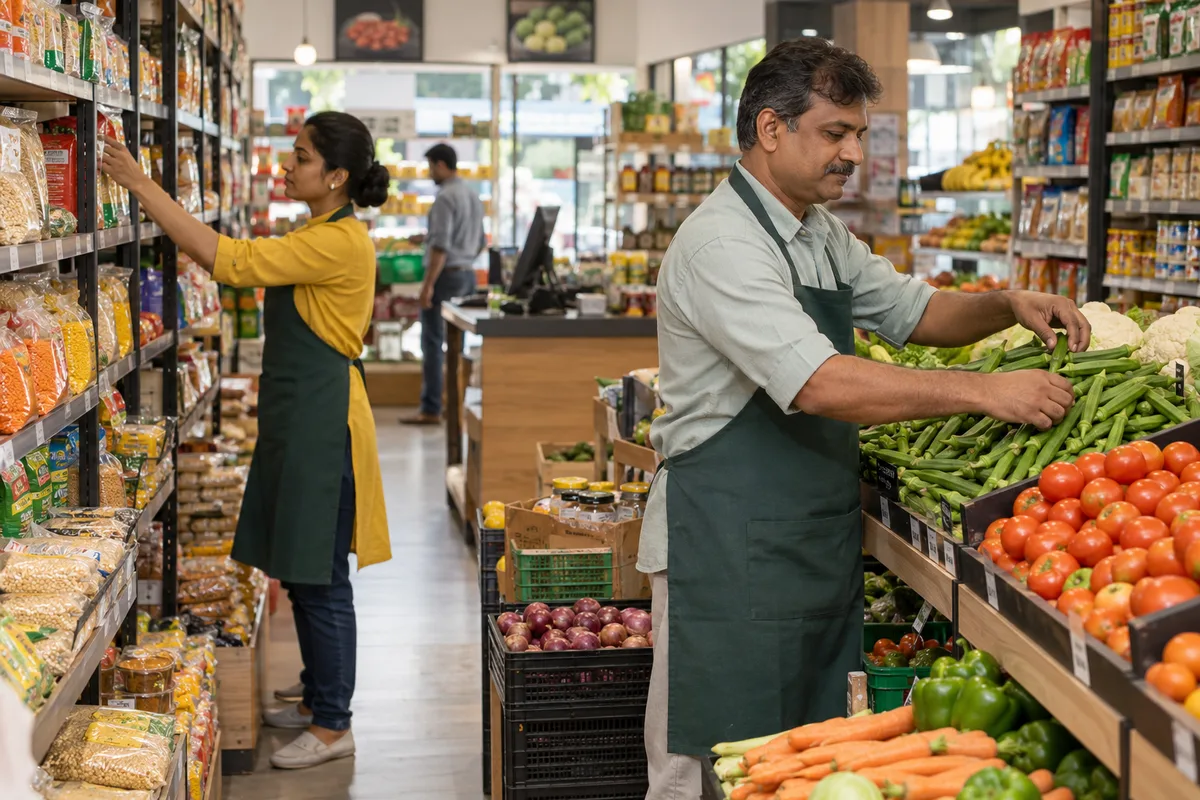
How people choose in this industry
A family picks a supermarket for the weekly or fortnightly shop on four things: whether it is close enough to carry bags home, whether the fresh section is trusted, whether the price on the shelf matches the price at the counter, and whether parking or a quick home delivery is easy. The first few visits settle this. After that the habit holds until something breaks it, such as a stale item bought twice, a long queue or a wrong bill.
New residents decide from Google Maps, the apartment WhatsApp group and what the security guard says. People search supermarket near me, a store name with the word offers, or a delivery slot query, and they compare the photographs, timings and recent reviews on each listing before choosing. A promotion that is not on the phone before the family leaves home has not reached that family.
Suppliers and brands also decide what is on the shelf. A supermarket negotiates margin, schemes and display space with company representatives and distributors, and a representative arrives with the company's numbers. A store that has its own footfall and product-group sales to put beside them negotiates from its own figures.
The decision before implementation
A direct-only business may not need a partner programme. Agree the channel role and conflict boundaries first.
Existing industry priorities to review
- Google Business Profile and local search for the store and each branch
- A customer register built from bills with mobile numbers
- Weekly offers shown on WhatsApp before the family leaves home
- Home delivery for a defined slot and radius
- Own-label staples and fresh counters as reasons to come in
These describe the industry's wider priorities. The written scope identifies which this service will address.