Tile, flooring and bathware dealers · Buyer persona
The person paying for the tiles is rarely the person who picks the dealer.
A buyer persona for a tile, flooring and bathware showroom describes each kind of person who walks in or phones, what they are deciding and who else is deciding with them. GullySales works on writing those personas from your own quotation book and floor staff, so each one gets the right samples, words and follow-up.
Scope, fee, reporting and term are agreed in writing after we have read your brief and spoken to you.
What buyer persona means
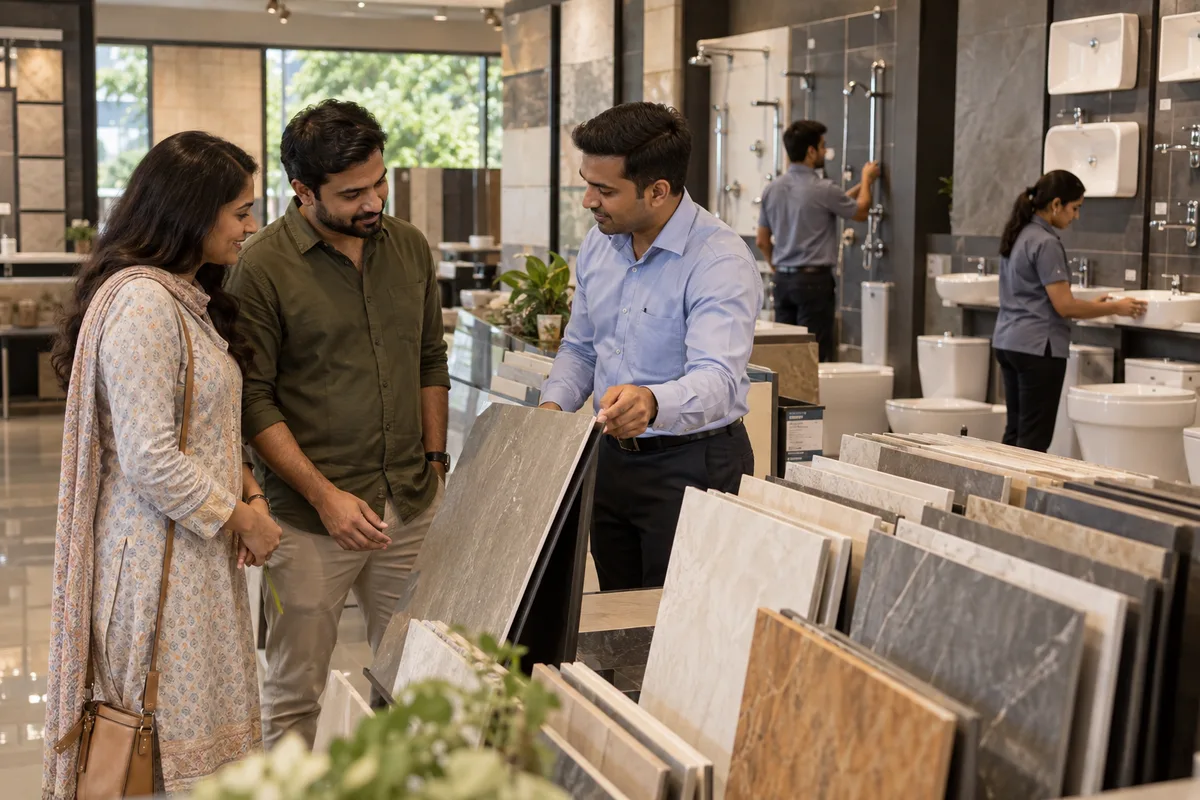
A buyer persona is a plain description of the kind of customer who actually buys from you. It includes what they search, what worries them and who else they ask before deciding. GullySales builds this from real enquiries and past sales rather than a generic template, then uses it to write every page and advert.
Also for tile, flooring and bathware dealers
- Digital marketing for tile, flooring and bathware dealers
- SEO for tile, flooring and bathware dealers
- PPC for tile, flooring and bathware dealers
- Lead generation for tile, flooring and bathware dealers
- Reputation management for tile, flooring and bathware dealers
- Local SEO for tile, flooring and bathware dealers
- Branding for tile, flooring and bathware dealers
- Social media marketing for tile, flooring and bathware dealers
Sales and marketing for tile, flooring and bathware dealers, the overview.
Last updated 5 Oct 2026.
For tile, flooring and bathware dealers
Where it usually goes wrong, and what we would do.
“The homeowner chooses the look, the mason chooses the dealer”
The family falls for a design on the display wall. The mason, who must lay it and who will be blamed for breakage, names the dealer the mason trusts for delivery. A persona that ignores the mason describes half of the purchase.
“The architect and designer want samples, not a sales pitch”
A designer specifying a bathroom needs a sample kit, a trade rate and assurance that the showroom will not approach the client directly. The conversation is about finish, size and availability of a full batch, in that order.
“The builder buys a range, not a room”
A builder fitting out a block of flats looks for one dealer who can hold a fixed range, deliver to each floor as the work proceeds and replace broken boxes. Rate and credit period lead; the showroom's display counts for little.
“The landlord renovating a rental asks one thing: how cheap and how clean”
This buyer wants durable, easy-to-clean flooring and a short job, and will not pay for a premium name. Treating the landlord like a family building a dream home loses the sale on the first quote.
What we do
What we deliver for tile, flooring and bathware dealers.
Every deliverable, what it covers for you, and the result it is there to produce. Nothing here is an extra.
A persona for each buyer who reaches the showroom
One page each for the homeowner, the mason or plumber, the designer, the builder and the landlord, written from real quotations: what they asked, what they chose and who they brought with them.
Result: Floor staff can say which kind of buyer is in front of them.
A map of who decides at each stage
A simple chart showing who picks the look, who picks the dealer, who approves the price and who pays, for a family project and for a builder project.
Result: You know whom to call before the quote goes cold.
Questions that sort the buyer in the first conversation
Three or four plain questions staff ask at the door, such as who will lay the floor and which rooms are being done, written into a one-page guide.
Result: The right sample kit and quotation go to the right buyer.
Messages written per persona
Short WhatsApp and printed notes for each persona, in the words that persona uses for tiles, fittings and delivery.
Result: A designer and a landlord stop receiving the same message.
A review of personas against orders confirmed
A look at which personas actually became orders in your quotation record, and which ones took the most floor time for the least return.
Result: Staff time goes to the buyers who order.
How the result is measured
- Enquiry match to persona
- Conversion rate by persona
- Content aligned to persona
Recorded as a baseline before work starts, so every later report has an honest comparison.
Who is asking
The people who come to a tile and bathware showroom, and what each wants to know before ordering.
- Homeowner building a first house
- Wants to know the quantity for each room, the shade across lots and whether the mason can lay the large format chosen. Is anxious about wasting money.
- Mason who recommends the dealer
- Wants to know that the delivery will come on the day laying starts, that the lots match and that the adhesive and spacers are available.
- Architect or interior designer
- Wants samples, a trade price and the stock position before a client visit. Dislikes being sold to and wants a person who answers a technical question.
- Builder furnishing a flat project
- Wants a range that repeats across units, credit terms and a delivery plan by floor. Buys a range, not a room.
- Landlord renovating a rented flat
- Wants tiles that clean easily and cost little, and asks about slip resistance in the bathroom. Decides once and does not return for years.
Who it is for
This is written for these tile, flooring and bathware dealers.
- Multi-brand tile and sanitaryware showrooms
- Single-brand exclusive tile galleries
- Bathware, CP fittings and bath accessories dealers
- Wooden, laminate and vinyl flooring retailers
- Granite, marble and natural stone dealers
- Tile distributors supplying builders and sub-dealers
- Premium imported tile and bathroom studios
- Flooring retail and installation businesses
Not for
It is not the right fit if.
- You have had no repeat visitors to compare, and a persona would describe the walk-in you remember rather than the buyers who bought.
- The showroom sells only to builders on negotiated terms, and a persona for a family would speak to buyers you do not serve.
How it works
How the buyer persona work runs
The work itself, in order. How an engagement starts, from your brief to a written scope, is set out on our method page.
- 1
Understand the current view
We start with how your team currently describes the customer, since the gap between belief and reality is the finding itself.
- 2
Audit past enquiries and sales
We look at recent enquiries and closed deals to see who actually bought, not who was assumed to buy.
- 3
Interview customers and staff
Structured conversations with recent buyers, held as talk about the last purchase and not a questionnaire. We ask what happened before they called, who else was involved and what they compared. Customers agree before we contact them, and their answers are reported without names.
- 4
Build the personas
Findings are written into short, usable persona documents rather than a long report.
- 5
Apply to your marketing
We show where each persona should change a page, an ad or a script you already have. The sales team reads the drafts and says which ring true. A persona they do not recognise is rewritten.
Where this fits
Three pieces of sales work, in this order.
This work sits inside sales process design, at stage 0, foundation. The audit comes before it, and sales management keeps it running.
Step 1
Sales audit
Find where deals are being lost and what to fix first.
Start here if you cannot say where orders are lost.
Step 2 · you are here
Sales process design
One written way to sell, from first enquiry to repeat order.
Start here if every salesperson sells differently.
Step 3
Sales management
A target, a review routine and someone who owns the number.
Start here if the team has targets and no routine.
FAQ
Questions owners ask before they call.
Not here? More answers, or ask on WhatsApp.
Is a buyer persona only useful for a big showroom?
Do we need to survey customers to build personas?
Should the mason be a persona of their own?
Why does a mason's persona matter if the family pays?
How much does it cost?
How long is the contract?
How soon will we see results?
Who will actually do the work?
What do you need from us?
What if we are not happy with the work?
From the blog
Further reading for tile, flooring and bathware dealers.
 5 min read · 6 Oct 2026Why homeowners pick one quote out of threeInterior, kitchen, window, tile and AC buyers collect three quotes and choose the firm they understood and heard back from. Here is what they compare and where the quote loses.
 7 min read · 21 Sept 2026How to advertise to interior designersA designer does not buy your product. They specify it, and somebody else pays for it. That one fact changes what you advertise, when, and what you are actually asking for.
 8 min read · 21 Sept 2026How to advertise to contractorsA contractor is on site, on a phone, with one hand free. Work out first whether your product is chosen by him or by the person paying him, because that decides everything.
More for tile, flooring and bathware dealers
Everything else we would do for you.
Closest to this: strategy and research
Also for tile, flooring and bathware dealers
Or start from the overview: sales and marketing for tile, flooring and bathware dealers.
Your next practical step
Tell us what you are trying to grow, and we will read it before we call.
Eight short steps, mostly taps. Skip anything you would rather answer on the call.