TV and audio stores · CRM
Keep a record of every visitor so a screen enquiry does not vanish at the door.
A CRM for a TV and audio store is a single place that holds each household's visit, size, budget, shortlist and installation, so any salesperson can pick up the conversation. GullySales works on choosing the fields, setting up the pipeline and training the counter team to use it.
Scope, fee, reporting and term are agreed in writing after we have read your brief and spoken to you.
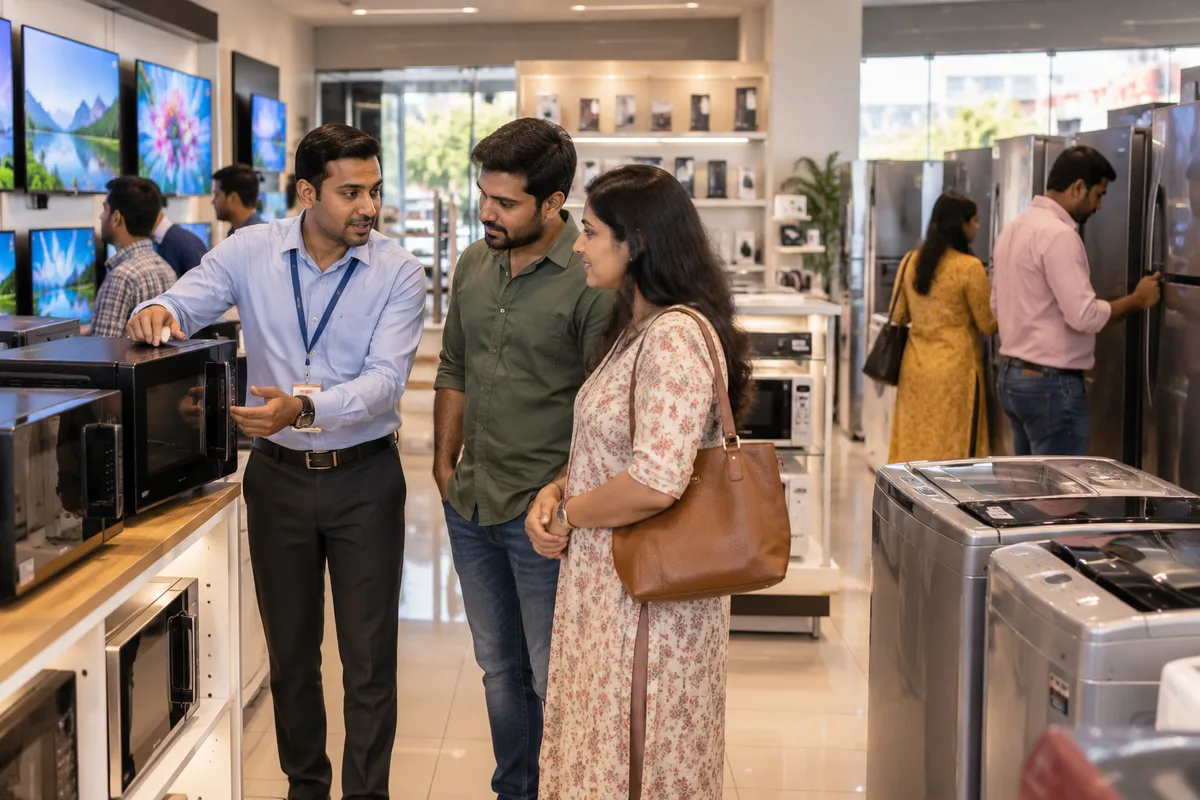
What CRM means
A CRM is the record where every enquiry, call and quote is kept against a customer, replacing separate notebooks, spreadsheets and memory. GullySales sets up or cleans an existing CRM and reports from it by enquiry outcome rather than by activity logged.
Also for TV and audio stores
- Lead generation for TV and audio stores
- Follow-up systems for TV and audio stores
- SEO for TV and audio stores
- Local SEO for TV and audio stores
- Social media marketing for TV and audio stores
- Content marketing for TV and audio stores
- Buyer personas for TV and audio stores
- WhatsApp marketing for TV and audio stores
Sales and marketing for TV and audio stores, the overview.
Last updated 14 Nov 2026.
For TV and audio stores
Where it usually goes wrong, and what we would do.
“Memory lives in one salesperson”
The person who demonstrated the soundbar remembers the household. When that person is away, the visit starts again from nothing, and the buyer feels they are being asked the same questions twice.
“A television sale has stages the register does not show”
Enquiry, demo, shortlist, finance, delivery and installation are separate steps. A billing system only records the end, so lost buyers and delayed installations are invisible.
“Replacement cycles are the long-term value”
A household that bought a set will want a soundbar, a mount or a larger screen later. Without the purchase date and model on file, the store cannot reach them when that need appears.
“Designers and builders need their own record”
Intermediaries who send households should be tracked separately, with the leads they send and the sales that followed, so the relationship is managed on facts.
What we do
What we deliver for TV and audio stores.
The work available for this need. We agree the deliverables and responsibilities for your engagement in writing.
A field list built for this trade
Room size, seating distance, budget, shortlisted models, finance need, exchange set and installation date, kept short enough to fill at the counter.
Result: The record is quick to complete.
A sales pipeline from enquiry to installed
Stages for enquiry, demo booked, visited, quote, bought and installed, with a view of who sits in each.
Result: You can see where households stall.
Tags for source and buyer type
Each record marked with how the household arrived and which persona it matches.
Result: Reports split by source and buyer.
A designer and builder register
Separate records for intermediaries with the households they have introduced.
Result: Referrals are traceable.
Reminders for upgrades and service
Prompts tied to the purchase date, so a future call about a soundbar or a service check is not forgotten.
Result: Past buyers are called with a reason.
Team set-up and rules
Who enters what, when, and how records are corrected, written on one page and shown to the counter team.
Result: Everyone records the same way.
How the result is measured
- Enquiries logged in the CRM
- Data completeness
- Reports generated from CRM data
Recorded as a baseline before work starts, so every later report has an honest comparison.
Fields worth keeping
Record the household, the room and the set shown, so a visit that ends without a sale can be picked up.
- Visitor name and number
- Entered by the salesperson at the demo. It makes the follow-up possible when the household has left.
- Room size and wall or stand
- What the household told the team. It lets the next call suggest a size and not ask again.
- Models shown
- Which sets and soundbars the visitor saw. The salesperson who calls next knows what was compared.
- Reason for not buying
- Price, size, waiting for a festival, or checking online. It tells the owner which of these keeps repeating.
- Installation required
- Whether wall mounting or set-up was asked for. It adds the installer's visit to the order and prevents a complaint later.
Who it is for
This is written for these TV and audio stores.
- Multi-brand television showrooms with a demo room
- Home theatre and hi-fi specialists
- Brand-exclusive television and audio stores
- Soundbar and speaker boutiques
- Stores supplying hotels, guest houses and offices
- Stores supplying interior designers and builders
- Electronics stores with a strong TV and audio floor
- Small-town TV dealers who deliver and install
Before you decide
When this may not be the right fit.
- Your staff already leave the visitor's name off the bill, and a new record would stay empty.
- You sell only through walk-ins and never call anybody back, so a record would have no use.
- You want the record to track stock, but an inventory system already does that and the two would disagree.
Before you decide
Agree the work. Know how to judge it.
CRM for TV and audio stores: use these checks to prepare, choose the scope, and review what changes.
Bring the right evidence
List the records your team uses and show how an enquiry becomes an order today. Bring examples of duplicate entries, missing owners, and reports that require manual correction.
Make the scope clear
Agree the stages, required fields, access roles, and integrations before configuring the system. Separate software subscriptions from setup, data work, and training.
Check the work in use
Ask the people who will use the CRM to complete a real handover and find the next action without help. Check that the management report can be traced back to individual records.
Know when to change course
If the process is unclear, buying a more complex CRM adds more places for confusion. Start with the minimum fields and rules the team can use consistently.
These are discussion points, not a fixed package. GullySales confirms the deliverables, responsibilities, fee, and term in writing after reading your brief and speaking with you.
Before we start
What to have ready before the work starts.
The records, access and decisions this work needs from TV and audio stores. Anything missing is noted in the written scope, with who will supply it.
- Your current register, in whatever form
- A notebook, a spreadsheet or billing software: send what you use now. We need it to see what is already written and what is not. If there is no register at all, we start from a blank design and say that there is no baseline to compare.
- A decision on who owns each enquiry
- Only you can say whether an enquiry belongs to the salesperson who met the household or to the store. This decides who follows up and who is credited. Leaving it open leads to two people calling the same household or nobody calling at all.
- The staff who will fill the records
- The people at the counter must be present for set-up and training. If only the owner attends, the tool is built for the owner, and the floor will not use it. We ask for every salesperson to attend at least once.
- A list of designers and builders and their clients
- A separate register for trade referrals needs names of the designers, builders and their projects as you know them. A notebook is fine. Without it, referrals stay in someone's head and the tool cannot show which introducers bring buyers who complete.
- A rule on what must never be recorded
- State what the staff must not write down: card details, financial worries, family matters. We include the rule on the entry screen. If no rule is stated, staff improvise, and private information ends up in a shared tool that the whole team can read.
How it works
How the CRM work runs
The work itself, in order. How an engagement starts, from your brief to a written scope, is set out on our method page.
- 1
Trace one sale from visit to installation
We pick three recent sales and follow each from the first visit to the installation call, asking who touched it and where the information was written. It may be a notebook, a billing screen or a phone. This shows where memory lives in the store today and what will be lost if one salesperson leaves. You tell us which of the three was typical.
- 2
Decide the stages of a television sale
A sale here moves through stages the register does not show: enquiry, demo booked, demo done, quote given, deposit taken, delivery fixed, installed. We agree the stage names with your manager, using words the staff already use. Fewer stages are better, so we remove any that nobody can tell apart. You approve the list before the tool is touched.
- 3
Choose a tool the counter will actually open
We compare two or three options against what your staff already use, such as a billing package or a shared sheet. The test is simple: can a salesperson fill a record in under the time a customer waits? We recommend one, explain why in plain words and state what it will not do. The choice is yours, not ours.
- 4
Build the fields and the designer register
We set up the fields: size asked, budget band, room, source, buyer type and next step. A second register holds designers and builders, with the clients they have sent. We keep fields few and remove any that staff say they would skip. Notes about private matters, such as health or finances, are kept out of the record.
- 5
Train the team on real records
Training uses the sales we traced in the first step, entered by the staff themselves. We agree the ownership rule: who owns an enquiry, who may change it and who sees the others. Each salesperson enters a few live records with us beside them. Reminders for upgrades and service are switched on only once the entries are being made.
- 6
Read the pipeline against the old register
After the team has used the record through a busy period, we compare it with the baseline from the old register: households recorded, demos done, quotes and sets billed. We show where records stop, which stage loses households and which source brings the buyers that complete. You decide whether the stages stay or change.
Where this fits
Three pieces of sales work, in this order.
This work sits inside sales management. A target, a review routine and someone who owns the number.
Step 1
Sales audit
Find where deals are being lost and what to fix first.
Start here if you cannot say where orders are lost.
Step 2
Sales process design
One written way to sell, from first enquiry to repeat order.
Start here if every salesperson sells differently.
Step 3 · you are here
Sales management
A target, a review routine and someone who owns the number.
Start here if the team has targets and no routine.
FAQ
Questions owners ask before they call.
Not here? More answers, or ask on WhatsApp.
Do we need paid CRM software?
What if staff will not fill it in?
Can a billing system serve as the record?
What should the record never hold?
Can the CRM send installation reminders automatically?
If we move to a different tool, what happens to our customer records?
How much does it cost?
How long is the contract?
How soon will we see results?
Who will actually do the work?
More for TV and audio stores
Related work to consider.
Closest to this: leads and follow-up
Also for TV and audio stores
Or start from the overview: sales and marketing for TV and audio stores.
Your next practical step
Tell us what you are trying to grow, and we will read it before we call.
Eight short steps, mostly taps. Skip anything you would rather answer on the call.