TV and audio stores · Lead generation
Fill the demo room with households who are choosing a screen this season.
Lead generation for a TV and audio store means collecting the names of households who are close to buying a screen or a sound system, not the clicks of people comparing prices on an app. GullySales works on the invitations, the capture points and the record that turn a curious search into a booked demo.
Scope, fee, reporting and term are agreed in writing after we have read your brief and spoken to you.
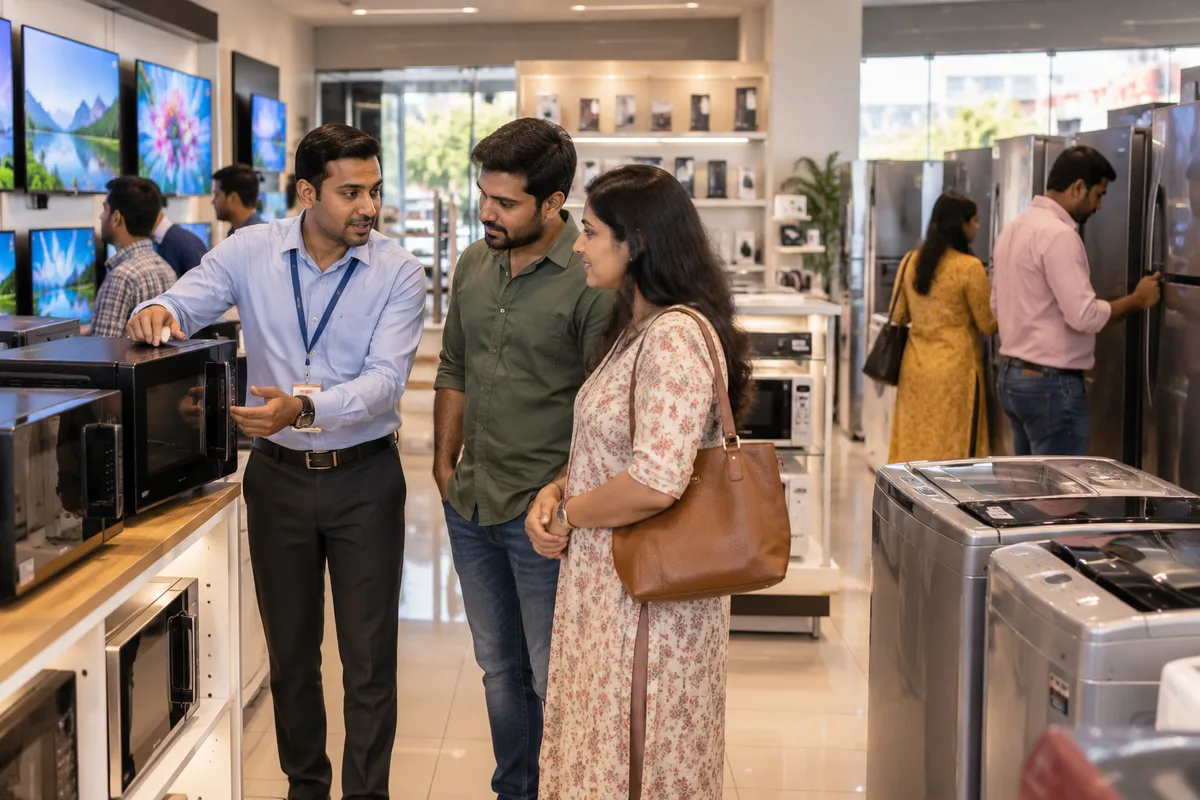
What lead generation means
Lead generation is the combined work of every channel that brings in a new enquiry, whether from search, adverts, referrals or a stall at an exhibition. GullySales runs these channels together and reports the number of enquiries each one produced, not the activity behind it.
Plan the next part of the work
Last updated 21 Nov 2026.
For TV and audio stores
Where it usually goes wrong, and what we would do.
“A lead here is a household with a wall and a date”
The useful enquiry names a room, a seating distance and an occasion such as a cricket series or a housewarming. A bare phone number from a banner has none of that, so the salesperson starts the call blind and the household hangs up.
“Footfall is not a lead until someone writes it down”
Match week fills the floor with people who look, listen and leave. Without a note of size, budget and shortlisted models taken at the counter, the busiest days of the year add nobody to the list you can call.
“Audio buyers and screen buyers arrive by different doors”
The screen buyer searches a size and a brand. The soundbar or hi-fi buyer searches for a demo with their own music. Treating both as one funnel sends the audio enthusiast a television offer and loses the higher-value conversation.
“Builders and designers hand over leads before the client has picked a shop”
An interior designer fitting out a flat names the screen wall months before the household walks in. That introduction is a lead source of its own, and it needs a pack the designer can forward without rewriting.
What we do
What we deliver for TV and audio stores.
The work available for this need. We agree the deliverables and responsibilities for your engagement in writing.
A demo room booking invitation
A WhatsApp and Instagram invitation with a choice of time slots, the screen sizes on show and a line about the sound corner, ending in a one-tap booking.
Result: Every invitation leads to a booking page or chat you can count.
A capture card at the counter
A short form on a tablet or card that records room size, budget, shortlisted models and the reason for buying now, filled while the household is still standing there.
Result: Each visitor leaves a record, bought or not.
Lead sources tagged at the start
Each enquiry is marked with where it came from: search, Instagram, match campaign, designer, walk-in or referral.
Result: You can see which source brought households who bought.
A designer and builder introduction pack
A short document with room-size guides, brands stocked, installation terms and a contact for site measurements.
Result: A designer can forward one file to a client.
Festival and match campaign landing pages
One page per campaign, built around a screen size and a sound setup, with the invitation as the single next step.
Result: Campaign enquiries are separate from everything else.
How the result is measured
- Relevant enquiries by source
- Duplicate and unsuitable enquiries
- Time to the first response
- Accepted enquiries reaching an agreed next step
Recorded as a baseline before work starts, so every later report has an honest comparison.
What to capture or send
Capture the room, the screen size and the occasion, because they decide what the household needs to see.
- Room size and seating distance
- The distance from sofa to wall, which sets the screen size. A buyer who gives this number before visiting arrives ready to compare two sizes.
- Wall or stand
- Whether the set hangs on a wall or stands on a unit. It tells the team if wall-mount fitting belongs in the quote.
- Occasion driving the purchase
- A cricket season, a festival, a new flat or a replacement. It tells the salesperson what to show first.
- Current set and its fault
- The old model and why it is being replaced. A buyer upgrading from an old tube set needs a different conversation from one swapping a recent panel.
- Sound in the plan
- Whether a soundbar or home theatre is wanted too. A set sold alone is a missed quote for the audio floor.
Who it is for
This is written for these TV and audio stores.
- Multi-brand television showrooms with a demo room
- Home theatre and hi-fi specialists
- Brand-exclusive television and audio stores
- Soundbar and speaker boutiques
- Stores supplying hotels, guest houses and offices
- Stores supplying interior designers and builders
- Electronics stores with a strong TV and audio floor
- Small-town TV dealers who deliver and install
Before you decide
When this may not be the right fit.
- Your demo room cannot hold a crowd in match week, and more visitors would wait at a floor with no free salesperson.
- You have no one who calls back visitors who left without buying, so leads would stop at the door like walk-ins do.
- You are hoping to sell on price alone, but the same model is cheaper online, and leads brought by a price would leave for it.
Before you decide
Agree the work. Know how to judge it.
Lead generation for TV and audio stores: use these checks to prepare, choose the scope, and review what changes.
Bring the right evidence
Define the organisations or buyers you can serve and the reasons they would consider a conversation. Bring examples of accepted and rejected prospects so the selection rule is visible.
Make the scope clear
Agree the research sources, contact approach, qualification rules, and handover. Clarify which meetings count as accepted and what happens to replies that are not ready to buy.
Check the work in use
Review why a prospect was selected and what was learned from the response. Count held, relevant conversations separately from contacts found, messages sent, or meetings booked.
Know when to change course
If the same objection appears repeatedly, adjust the offer or buyer group before increasing outreach. Respect a request to stop contact and keep the exclusion in the record.
These are discussion points, not a fixed package. GullySales confirms the deliverables, responsibilities, fee, and term in writing after reading your brief and speaking with you.
Before we start
What to have ready before the work starts.
The records, access and decisions this work needs from TV and audio stores. Anything missing is noted in the written scope, with who will supply it.
- Last season's invoice book and visitor notebook
- These show how past buyers really arrived, which is the only honest starting point for tagging sources. Photographs of the pages are enough if they are readable. If the notebook was never kept, we start tagging from the first day of the work and say plainly that there is no earlier figure to compare.
- The salesperson who closes the largest sets
- The capture card is only as good as the person who writes on it. We need your best closer in the room for an hour to say what they ask first and what they note. If they are not involved, the card turns into a form that nobody fills, and the plan falls back to phone numbers only.
- Past buyers who agreed to be contacted
- The first invitations go to people who have already bought from you and said they were happy to hear from you. A name and number in a register is fine. Without consent on record, we leave this list out and rely on the shop window, the bill and walk-in capture instead.
- Your decision on who may see the demo room
- Only you can decide whether the demo room takes appointments, walk-ins or both, and who is present when a household books. The invitation promises exactly what you decide here. If the choice is left open, the invitation stays generic and bookings arrive with no room to receive them.
How it works
How the lead generation work runs
The work itself, in order. How an engagement starts, from your brief to a written scope, is set out on our method page.
- 1
Read last season's visitor notebook
We begin with whatever the counter already writes down: the visitor notebook, the delivery slips from last match season and the invoice book. We sit with the manager and mark which sales began as a walk-in, a phone call or a designer's referral. You tell us which of those you can actually trace. This gives us the starting figures we compare against at the end.
- 2
Photograph the wall each household describes
Households describe a wall, a distance from the sofa and a budget before they name a model. We listen to a few real counter conversations with your permission, and note the questions that come before a screen size is named. From those we draft the fields on the capture card, so a salesperson writes down the room rather than the brand. You approve the card before it is printed.
- 3
Set up the demo room invitation
The demo room booking invitation is written next, in the voice of your senior salesperson. It names what the household will see and hear, asks for a preferred slot and a phone number, and says nothing about discounts. We fit it to the places you already reach people: the shop window, the bill, the WhatsApp status and your list of past buyers who agreed to hear from you.
- 4
Run a test enquiry through the whole chain
Before anything goes out, we send a test enquiry through every door: the card, the link, a phone call, a designer's message. We watch where each lands, who picks it up and whether the source tag survives. A booking that reaches the demo room with its source still attached is the check that matters. Gaps are fixed with your team before launch, not after.
- 5
Read sources against the notebook baseline
After the first festival or match period, we sit with you and read the tagged enquiries against the figures noted in the first step: bookings made, households who came, quotes given and sets billed. We show which door brought the households that actually bought and which brought only curiosity. You decide which sources to keep, change or drop, and we record the decision.
Where this fits
Three pieces of sales work, in this order.
This work sits inside sales process design, at stage 1, prospecting and lead generation. The audit comes before it, and sales management keeps it running.
Step 1
Sales audit
Find where deals are being lost and what to fix first.
Start here if you cannot say where orders are lost.
Step 2 · you are here
Sales process design
One written way to sell, from first enquiry to repeat order.
Start here if every salesperson sells differently.
Step 3
Sales management
A target, a review routine and someone who owns the number.
Start here if the team has targets and no routine.
FAQ
Questions owners ask before they call.
Not here? More answers, or ask on WhatsApp.
Should we buy leads from a portal?
How do we stop leads from going cold after match week?
Which enquiry details should be asked before the household visits?
Which lead source suits a store with one demo room?
Who answers the booking when a household replies at night?
What do we do with a lead who only wants a price?
How long is the contract?
How soon will we see results?
Who will actually do the work?
What do you need from us?
More for TV and audio stores
Related work to consider.
Closest to this: leads and follow-up
Also for TV and audio stores
Or start from the overview: sales and marketing for TV and audio stores.
Your next practical step
Tell us what you are trying to grow, and we will read it before we call.
Eight short steps, mostly taps. Skip anything you would rather answer on the call.