TV and audio stores · Buyer persona
Know which household walks in before deciding what the salesperson says.
A buyer persona for a TV and audio store is a written portrait of one kind of customer: what they want from the room, who decides and what worries them. GullySales works on drawing these portraits from your own sales records and counter conversations.
Scope, fee, reporting and term are agreed in writing after we have read your brief and spoken to you.
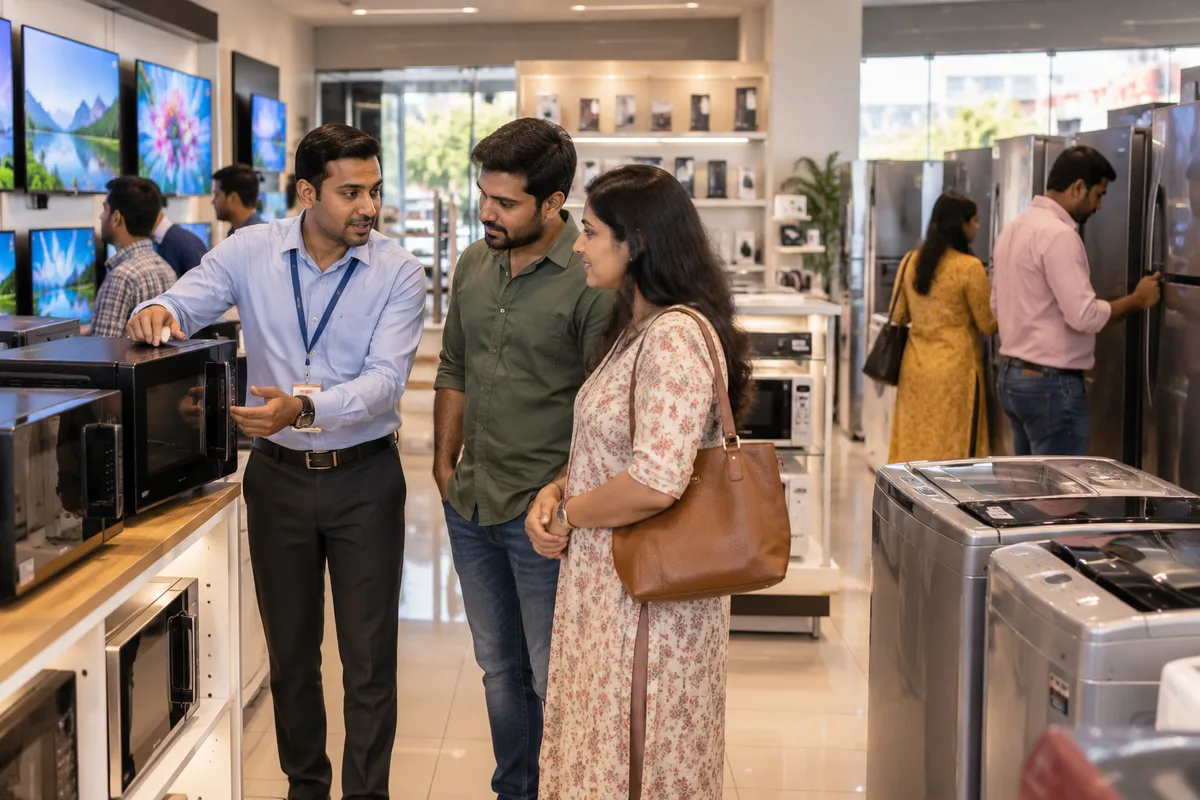
What buyer persona means
A buyer persona is a plain description of the kind of customer who actually buys from you. It includes what they search, what worries them and who else they ask before deciding. GullySales builds this from real enquiries and past sales rather than a generic template, then uses it to write every page and advert.
Last updated 14 Nov 2026.
For TV and audio stores
Where it usually goes wrong, and what we would do.
“The new-flat household buys a whole room”
The couple fitting out a flat want a screen, a wall mount and sound in one decision. They respond to a complete package, a single installation slot and a clear total, and they get irritated by a pile of separate quotes.
“The upgrader knows the old set and wants to see the difference”
Someone replacing an old television compares against what is already on the wall. They want to see the new picture beside a familiar one, and they ask about exchange before anything else.
“The audio enthusiast comes with their own music”
This buyer asks for a listening room, a quiet corner and an honest answer about whether the dearer amplifier is worth it. Pressure ends the conversation; a patient demonstration wins it.
“The one who pays is not always the one who chooses”
A parent may fund the set while a grown child chooses the model. The persona must note who asks, who decides and who pays, because each needs a different sentence.
What we do
What we deliver for TV and audio stores.
The work available for this need. We agree the deliverables and responsibilities for your engagement in writing.
Four to five written personas
One page each for the new-flat household, the upgrader, the audio enthusiast, the match-season buyer and the commercial or designer buyer.
Result: Each persona is something the team can describe aloud.
A questions list per persona
What each buyer asks first, what they fear and what makes them walk away, taken from counter conversations.
Result: The salesperson knows the opening question.
Message and offer matching
Which invitation, guide and offer suits each persona, written as a short table.
Result: Marketing speaks to one buyer at a time.
A counter prompt card
A one-page card for the salesperson with the cues that show which persona has walked in.
Result: The right conversation starts sooner.
A check against sales records
Personas compared with who actually bought, so the portraits are corrected where they are wrong.
Result: Personas reflect real purchases.
How the result is measured
- Enquiry match to persona
- Conversion rate by persona
- Content aligned to persona
Recorded as a baseline before work starts, so every later report has an honest comparison.
Who is asking
Each household walks in with a different question, so write down who is in front of the screen.
- Family replacing the living room set
- Wants the biggest picture the room allows and sound that does not disturb the neighbour, and needs to see both sizes together.
- Newly moved couple
- Is choosing a first set and a soundbar for a flat, and asks about wall mounting and finance before anything else.
- Cricket-season buyer
- Wants a bright, smooth picture and a decision before the match, and needs the demo to show moving play.
- Audio enthusiast
- Is comparing speakers and an amplifier, wants a listening room and will return with a track of their own.
- Interior designer or builder
- Specifies equipment for a client's room and wants dimensions, wall-mount details and a supplier who delivers and installs.
Who it is for
This is written for these TV and audio stores.
- Multi-brand television showrooms with a demo room
- Home theatre and hi-fi specialists
- Brand-exclusive television and audio stores
- Soundbar and speaker boutiques
- Stores supplying hotels, guest houses and offices
- Stores supplying interior designers and builders
- Electronics stores with a strong TV and audio floor
- Small-town TV dealers who deliver and install
Before you decide
When this may not be the right fit.
- You have not noted what buyers asked in the last month, so a persona would repeat the salesperson's impression.
- You sell only to one dealer network, and a household-level persona would describe buyers you never meet.
- You plan to build personas to justify a price, but the real reason for the loss is a cheaper online listing.
Before you decide
Agree the work. Know how to judge it.
Buyer personas for TV and audio stores: use these checks to prepare, choose the scope, and review what changes.
Bring the right evidence
Write the decision the research must support, such as entering a market or choosing a buyer group. Separate what you know from sales records from what the team currently assumes.
Make the scope clear
Agree which buyers to speak to, which sources to review, and what access you can provide. Include lost enquiries and people who chose another supplier, where they are willing to take part.
Check the work in use
Look for source dates, sample limitations, and evidence that disagrees with the preferred answer. A recommendation should show how it follows from the findings.
Know when to change course
Do not treat a few positive conversations as proof of demand. Test the proposed offer with an actual buying decision before committing to a wider launch.
These are discussion points, not a fixed package. GullySales confirms the deliverables, responsibilities, fee, and term in writing after reading your brief and speaking with you.
Before we start
What to have ready before the work starts.
The records, access and decisions this work needs from TV and audio stores. Anything missing is noted in the written scope, with who will supply it.
- A season of invoices and delivery slips
- These show who really bought, what, and how it was delivered. Photographs of the pages, with customer names covered if you prefer, are enough. If the records are thin, we base the groups on the manager's memory and mark the personas as a first draft to be tested.
- Your manager for a recorded conversation
- The manager knows the households that came, the ones that never returned and the ones that sent friends. An hour of talk, which we record with permission, gives the personas their texture. Without that conversation, the portraits stay on the surface.
- A day when we may sit near the counter
- We need permission to listen at the counter during a normal busy period, with the staff aware of why. We never record customers. If a visit is not possible, we work from the staff's own accounts, which show what they hear but not how a buyer first speaks.
- Access to the installation team's notes
- Installers keep job sheets or photographs of walls. A look at those, or a short chat with the installer in charge, shows who was home and what they asked. If there are no notes, we ask for a few examples remembered aloud.
- A list of designers and builders you work with
- Some buyers reach you through an interior designer or builder, and they behave differently from a household. Send names or types, not private details. Without this list, the personas cover only direct households and the trade buyer stays unseen.
How it works
How the buyer persona work runs
The work itself, in order. How an engagement starts, from your brief to a written scope, is set out on our method page.
- 1
Sort last season's invoices by who bought
We take the invoice book and delivery slips from the last busy period and sort them with your manager into rough groups: the new flat that bought a whole room, the household replacing an older set, the audio enthusiast, the designer's client. The sorting is done by hand, from what the manager remembers about each sale. The groups that emerge, not a template, become the starting personas.
- 2
Sit at the counter and listen to openings
We spend time near the counter, with your permission, listening to how different households open a conversation. One starts with the wall, another with the old set, another with a speaker they heard elsewhere. We note the first question and the last doubt. These are written exactly as spoken, without our own gloss, and shown to the staff to confirm.
- 3
Ask the installation team what they saw
The installers see homes that the counter never does: the room, the wall, the sofa distance and who was present. We ask them what each type of household had in common and what went wrong after the sale. Their answers fill the gaps the counter leaves, especially on who really decided and who only paid.
- 4
Write each persona on one page
Each persona is written on one page: what they want from the room, who else decides, what worries them and which of your rooms or services answers it. We use plain wording and no invented ages or incomes. A name for the type, such as the new-flat household, is enough. You read each page and correct any that do not sound like a real buyer.
- 5
Turn the pages into a counter prompt card
A persona is useful only if the salesperson can use it mid-conversation. We make a small card listing, for each type, the first question to ask and the offer to make. We run it past the staff and change any line they say they would never speak aloud. The final card is the version your team agrees to try.
- 6
Check the personas against the next sales
Over the following period we compare the personas with the invoices and the capture cards: which type visited, which bought and which left without booking. Where a persona does not match anyone, we merge or drop it. Where a new type shows up, we add a page. You see what the personas explained, and what they did not.
Where this fits
Three pieces of sales work, in this order.
This work sits inside sales process design, at stage 0, foundation. The audit comes before it, and sales management keeps it running.
Step 1
Sales audit
Find where deals are being lost and what to fix first.
Start here if you cannot say where orders are lost.
Step 2 · you are here
Sales process design
One written way to sell, from first enquiry to repeat order.
Start here if every salesperson sells differently.
Step 3
Sales management
A target, a review routine and someone who owns the number.
Start here if the team has targets and no routine.
FAQ
Questions owners ask before they call.
Not here? More answers, or ask on WhatsApp.
How many personas do we need?
Where does the information come from?
How does an interior designer buyer differ from a household?
Where does persona information come from in a TV store?
Do the personas use real customer names?
What if the staff disagree with a persona?
How much does it cost?
How long is the contract?
How soon will we see results?
Who will actually do the work?
More for TV and audio stores
Related work to consider.
Closest to this: strategy and research
Also for TV and audio stores
Or start from the overview: sales and marketing for TV and audio stores.
Your next practical step
Tell us what you are trying to grow, and we will read it before we call.
Eight short steps, mostly taps. Skip anything you would rather answer on the call.