TV and audio stores · Follow up systems
Call back every household that left without a set, and say something useful.
A follow-up system for a TV and audio store is the routine that decides who contacts a visitor after the demo, with what message and on what trigger. GullySales works on the sequence, the wording and the checks that keep it running on busy days.
Scope, fee, reporting and term are agreed in writing after we have read your brief and spoken to you.
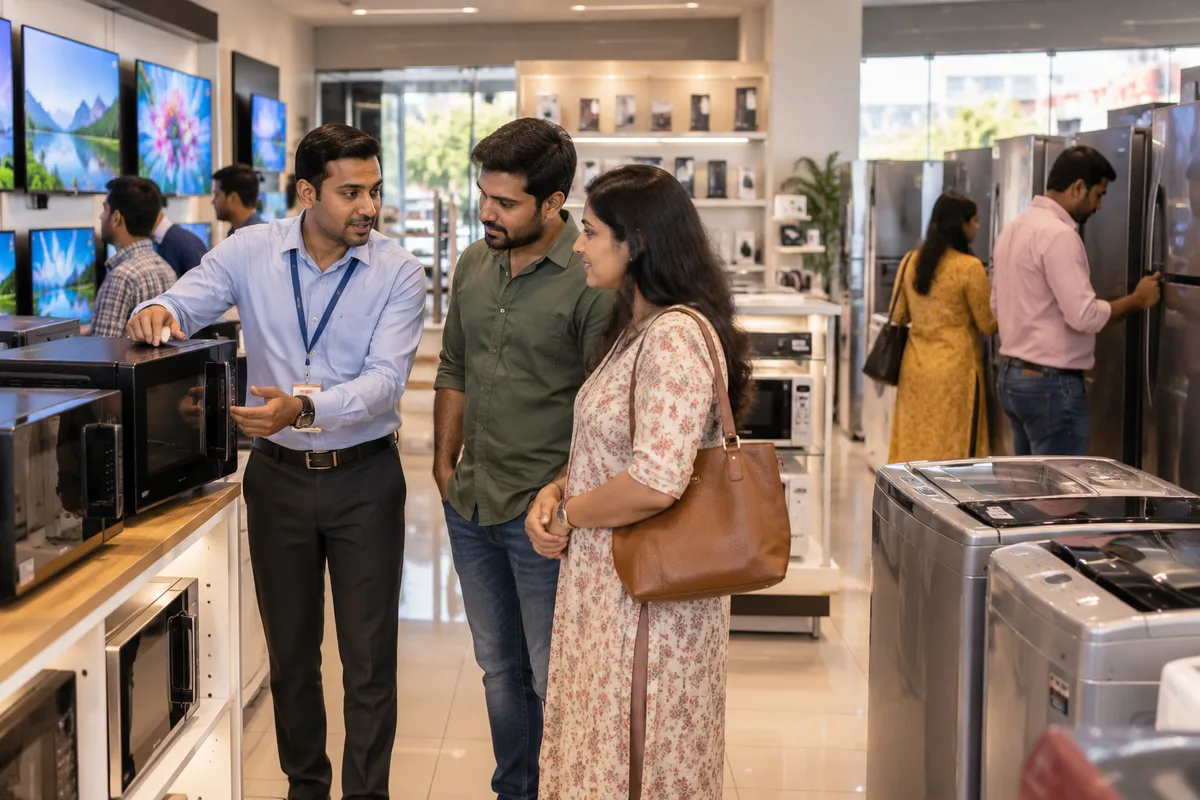
What follow up systems means
A follow-up system is the set routine for calling, messaging or emailing an enquiry more than once, since most buyers do not decide on the first conversation. GullySales sets the number and timing of follow-ups so an undecided buyer keeps hearing from you until they decide either way.
Last updated 14 Nov 2026.
For TV and audio stores
Where it usually goes wrong, and what we would do.
“The household that left is still deciding”
Visitors say they will think about it, and they compare other stores and online prices that same evening. A considerate call with a useful answer arrives while the decision is open.
“A price chase repeats the argument the buyer has already heard”
Ringing only to ask whether they have decided pushes the buyer away. The follow-up should add something: the size they liked in the room, an installation slot or the exchange value of the old set.
“Installation is part of the follow-up”
After a sale, a household waits for a mounting date. A confirmation, a reminder and a check afterwards keep the sale from turning into a complaint or a bad review.
“Match week produces more visitors than the team can call”
Crowds fill the book and the calls slip. Without an agreed order, the warmest records get the same attention as the coldest, and the best buyers cool off.
What we do
What we deliver for TV and audio stores.
The work available for this need. We agree the deliverables and responsibilities for your engagement in writing.
A follow-up sequence per outcome
Different messages for bought, shortlisted, price-hesitant and just-looking visitors, each with a clear next step.
Result: Each visitor gets a message that fits.
A call script with a useful opening
A short opening that refers to the size and room discussed, followed by one question and one offer.
Result: Calls sound like the shop remembers.
A WhatsApp message set
Ready messages with the shortlisted model, a demo slot and an installation option, sent from the store's business number.
Result: Messages are consistent across the team.
An installation confirmation routine
A message the day the set is billed, a reminder before the visit and a check once it is mounted.
Result: No installation depends on memory.
An ownership rule
Each record has a named caller, and unclaimed records are reassigned at a set point in the team meeting.
Result: No visitor is left without an owner.
A review and referral request
A polite ask once the set works, with a link, and a line inviting the household to introduce a friend.
Result: Satisfied households are asked.
How the result is measured
- Follow-up completion rate
- Average number of follow-ups before close
- Enquiries closed after repeat follow-up
Recorded as a baseline before work starts, so every later report has an honest comparison.
What to capture or send
A call after the visit should carry something the household can use, not only a question about the decision.
- Visit-day thank you
- A message the same evening with the models seen and the screen size discussed, so the household has a record to show the family.
- Size-guide reminder
- For a buyer undecided between two sizes, a note with the seating-distance guide and a line inviting a second look.
- Festival or match reminder
- A message to households that visited, naming the offer period only if one exists, with the demo room hours.
- Installation booking
- After purchase, a note confirming wall mounting, the person who will visit and what the household must keep ready.
- Post-installation check
- A call after set-up to confirm picture, sound and remote, since a complaint raised early is easier to settle.
Who it is for
This is written for these TV and audio stores.
- Multi-brand television showrooms with a demo room
- Home theatre and hi-fi specialists
- Brand-exclusive television and audio stores
- Soundbar and speaker boutiques
- Stores supplying hotels, guest houses and offices
- Stores supplying interior designers and builders
- Electronics stores with a strong TV and audio floor
- Small-town TV dealers who deliver and install
Before you decide
When this may not be the right fit.
- You have no list of the households that visited, so nobody can be followed up.
- Your concern is price, and a call will not reduce what a household can find online.
- The sales team is busy with walk-ins all day, and no one has a slot for callbacks.
Before you decide
Agree the work. Know how to judge it.
Follow-up systems for TV and audio stores: use these checks to prepare, choose the scope, and review what changes.
Bring the right evidence
Trace recent enquiries from arrival to the last recorded action. Include a won enquiry, an unsuitable one, and one that went quiet, with personal details removed for the initial discussion.
Make the scope clear
Agree who accepts each enquiry, what makes it qualified, and how ownership changes. Include a rule for missed replies and a clear reason for closing an enquiry.
Check the work in use
Pick an enquiry at random and ask the team to find its owner, latest conversation, and next action. Check that the record agrees with what actually happened.
Know when to change course
If no one has capacity to respond, assign that responsibility before buying more leads. Automation can support the owner, but it cannot replace an unresolved handover.
These are discussion points, not a fixed package. GullySales confirms the deliverables, responsibilities, fee, and term in writing after reading your brief and speaking with you.
Before we start
What to have ready before the work starts.
The records, access and decisions this work needs from TV and audio stores. Anything missing is noted in the written scope, with who will supply it.
- The visit register or notebook for last season
- We need a record of who visited and what happened, even if rough. It lets us see how many were never called. If nothing was written, we begin recording from the first day and use the first period as the baseline.
- Time with the salespeople who make the calls
- The calls will be spoken by your staff, so they must shape the words. An hour with them, trying the lines aloud, is essential. If the plan is written without them, the scripts sit in a drawer.
- A WhatsApp number with a named handler
- Messages need a business number and one person responsible for replies. A personal number should not be used for the store's messages. Without a named handler, replies get lost and the household notices.
- A decision on who may offer a deal
- Follow-up sooner or later reaches the point of a better price. Only you can say who may offer it and how far. If this is unclear, staff either refuse or concede too much, and the household learns to wait for a call.
- Installation dates for open orders
- A household that has paid but not been installed needs a different message from one still deciding. Send the delivery and installation schedule so that nobody receives a sales message while waiting for a fitting.
How it works
How the follow up systems work runs
The work itself, in order. How an engagement starts, from your brief to a written scope, is set out on our method page.
- 1
Hear how the team follows up today
We start by asking each salesperson what they do after a household leaves without buying: who they call, when they decide to stop and what they say. We also look at the phones and the notebook for evidence. The honest picture, not the intended one, is the base. You tell us where you think households slip away.
- 2
Sort visitors by how they left the demo
A household that watched a demo and asked for a quote is different from one that said they would think about it. We agree four or five outcomes with your manager, such as quote given, still comparing and bought elsewhere. Each outcome gets its own follow-up path. The outcomes are named in the staff's own words.
- 3
Write the opening line of each call
The first sentence is the useful part of a call. We write an opening for each outcome that gives the household something new, such as a point about the room, rather than repeating the price. We try the lines aloud with your staff and drop any that feel stiff. The call script stays short and leaves space for the household to speak.
- 4
Draft the WhatsApp message set
Messages are drafted for the same outcomes: a thank-you after the demo with the size discussed, a reminder before a festival, an installation confirmation. Each reads like a person at the counter wrote it. We include a plain stop option. You approve the wording and decide which messages go from the store and which from a named salesperson.
- 5
Name the owner of every open household
A follow-up fails when two people think the other will call. We set the rule: the person who met the household owns the follow-up, and the manager reviews the open list. Match week brings more visitors than the team can call, so we also agree who is called first. The rule is written on a card at the counter.
- 6
Read callbacks against the visit register
Over the next period we compare the follow-ups made with the number of households recorded as visitors, and count how many came back, booked installation or said they bought elsewhere. You see which path brought people back and which did nothing. We change the weak paths and note the reason each lost sale gave.
Where this fits
Three pieces of sales work, in this order.
This work sits inside sales process design, at stage 2, qualification. The audit comes before it, and sales management keeps it running.
Step 1
Sales audit
Find where deals are being lost and what to fix first.
Start here if you cannot say where orders are lost.
Step 2 · you are here
Sales process design
One written way to sell, from first enquiry to repeat order.
Start here if every salesperson sells differently.
Step 3
Sales management
A target, a review routine and someone who owns the number.
Start here if the team has targets and no routine.
FAQ
Questions owners ask before they call.
Not here? More answers, or ask on WhatsApp.
When should we call after a visit?
Should we message or call?
How should we handle a buyer who says they will check online?
What should a call say if the household bought elsewhere?
How many times should we call before we stop?
Can follow-up messages go out in the local language?
How much does it cost?
How long is the contract?
How soon will we see results?
Who will actually do the work?
More for TV and audio stores
Related work to consider.
Closest to this: leads and follow-up
Also for TV and audio stores
Or start from the overview: sales and marketing for TV and audio stores.
Your next practical step
Tell us what you are trying to grow, and we will read it before we call.
Eight short steps, mostly taps. Skip anything you would rather answer on the call.