Video conferencing solution providers · WhatsApp marketing
Use WhatsApp to collect the room details a quote needs.
WhatsApp marketing for a video conferencing provider means using the app buyers and contractors already use to collect room details, send drawings and keep installed clients in touch. GullySales sets up the business profile and message templates that fit how your team works.
Scope, fee, reporting and term are agreed in writing after we have read your brief and spoken to you.
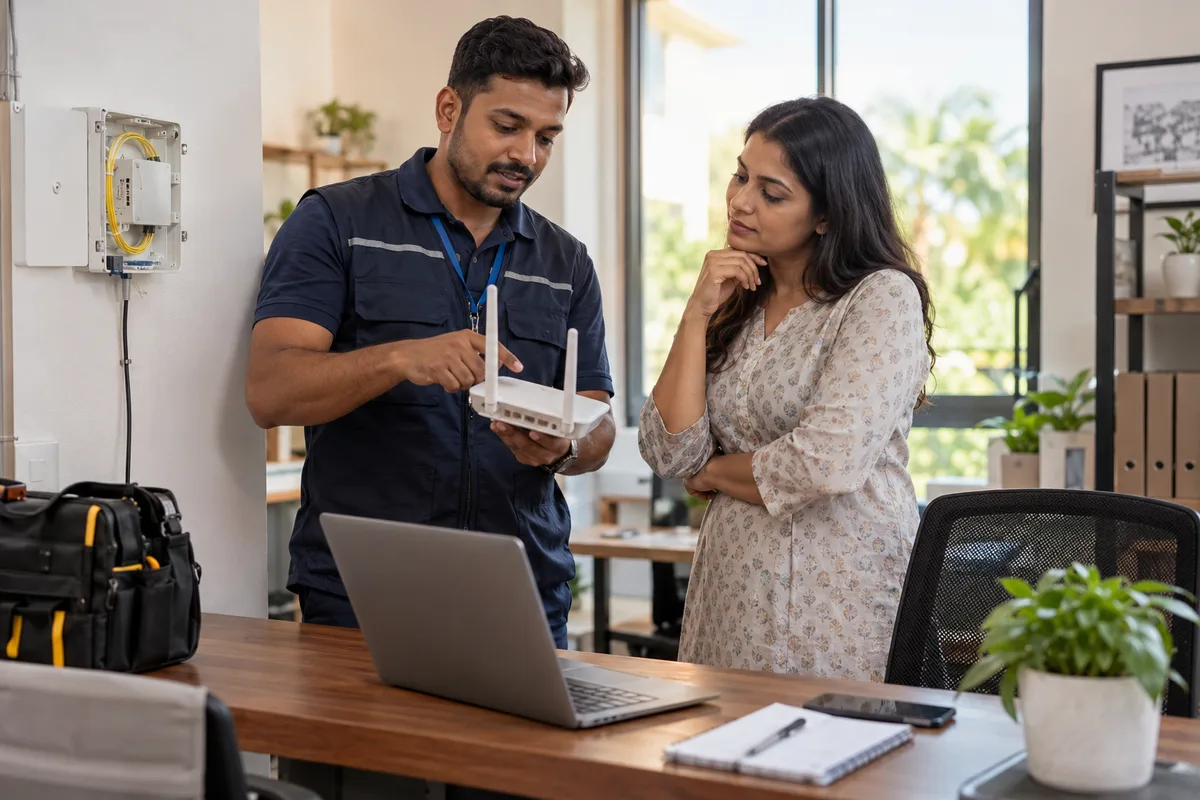
What WhatsApp marketing means
WhatsApp marketing is sending updates, offers and reminders to customers on the app most Indian buyers already check daily. GullySales sets up business WhatsApp, writes the message templates and keeps the list consented and current.
Also for video conferencing solution providers
- Lead generation for video conferencing providers
- SEO for video conferencing providers
- Social media marketing for video conferencing providers
- Content marketing for video conferencing providers
- Buyer persona for video conferencing providers
- CRM for video conferencing providers
- Follow-up systems for video conferencing providers
- Digital marketing for video conferencing providers
Sales and marketing for video conferencing solution providers, the overview.
Last updated 18 Oct 2026.
For video conferencing solution providers
Where it usually goes wrong, and what we would do.
“Buyers send photos of the room before anything else”
A facilities manager will send a photo of the blank wall or the table long before they fill a form. A WhatsApp number that invites room photos and answers with a few plain questions gets the details a quote needs.
“A contractor shares a drawing in a chat”
Interior contractors work in WhatsApp groups. A drawing sheet and a named contact reachable there is more likely to be passed on than a PDF in an email.
“Support requests arrive here too”
A client with a failing call an hour before a board meeting will message the number they have. Without a clear support route, that message sits in a sales chat.
“Broadcasts must have permission”
Sending offers to a list the buyer never joined harms the relationship. Use WhatsApp for people who have asked to hear from you, and check the platform's current rules on business messaging.
What we do
What we deliver for video conferencing solution providers.
Every deliverable, what it covers for you, and the result it is there to produce. Nothing here is an extra.
A WhatsApp Business profile
A business profile with a description, catalogue of room types and clear hours, so the first message is a good one.
Result: Buyers see what you install before they write.
A room-brief message flow
Saved replies that ask for room size, seating, platform and a photo, one question at a time.
Result: Each chat gathers the details needed for a quote.
Drawing and clip templates
Ready messages for sending a drawing, a demo clip or a checklist with a short note.
Result: Your team sends useful material the same way each time.
A separate support route
A clear route for support messages with a named responder, so they are not lost among sales chats.
Result: A failing call reaches the person who can fix it.
Consent and opt-out wording
Simple wording for asking permission to send updates and for stopping them.
Result: Messages go only to people who agreed.
How the result is measured
- Messages delivered
- Reply rate
- Enquiries from WhatsApp
Recorded as a baseline before work starts, so every later report has an honest comparison.
What to capture or send
Collect and send these on WhatsApp for a room quote.
- Photos of the room from two corners
- A request for pictures of the room from the door and from the far wall, with the table in view, before the survey is planned.
- Contractor's drawing
- A saved reply asking the contractor to share the interior drawing or a dimensioned sketch, stored with the client record.
- Short clip of a working room
- A video of a fitted room in use, sent when a buyer asks how the picture and sound look, with the client's permission.
- Support ticket opening message
- A reply to a fault report that records the room, the symptom and the time, then states who will respond and from where.
- Consent and opt-out wording
- A first message that records the contact agreed to receive updates and explains how to stop them, kept with their record.
Who it is for
This is written for these video conferencing solution providers.
- Corporate boardrooms and meeting rooms
- Schools, colleges and coaching institutes with hybrid classrooms
- Hospitals using video for case discussions and training
- Government and public sector conference halls
- Hotels and convention venues
- Law, audit and consulting firms with client calls
- Manufacturing and multi-site companies linking plants
- Auditoriums and training centres
Not for
It is not the right fit if.
- Your support team has no separate route, so fault messages would mix with sales chats and be missed.
- You wish to add every client contact to a broadcast group without asking, which breaks their trust.
How it works
How the whatsapp marketing work runs
The work itself, in order. How an engagement starts, from your brief to a written scope, is set out on our method page.
- 1
Read the chats you already have
We read how customers write to you, which questions repeat and where a chat goes quiet. The repeated questions decide what gets automated first.
- 2
Sort the list and the permission
Contacts who asked to hear from you are separated from numbers that only sit in a phone book. We agree the wording new contacts will see before they say yes.
- 3
Choose the app or the API
One phone and a small team can stay on the ordinary app. Several people on one number, templates or a CRM link need the API through a provider, which is its own piece of setup work.
- 4
Write the replies and the plan
The greeting, away message, saved replies and handover rule are written in your words and approved by you. The message plan and its templates follow.
- 5
Connect the record and test
Each link carries its source line and each chat lands in the CRM. We test on real phones, including a customer who asks for a person.
- 6
Read the unanswered questions
A question the first reply could not answer becomes a new saved reply or a fixed handover. Stop requests are watched too, with the number's quality rating where the API is used, since both show a message plan that has gone too far.
Where this fits
Three pieces of sales work, in this order.
This work sits inside sales process design, at stage 0, foundation. The audit comes before it, and sales management keeps it running.
Step 1
Sales audit
Find where deals are being lost and what to fix first.
Start here if you cannot say where orders are lost.
Step 2 · you are here
Sales process design
One written way to sell, from first enquiry to repeat order.
Start here if every salesperson sells differently.
Step 3
Sales management
A target, a review routine and someone who owns the number.
Start here if the team has targets and no routine.
FAQ
Questions owners ask before they call.
Not here? More answers, or ask on WhatsApp.
Should we use broadcasts?
Can contractors be added to a group?
Can contractors be added to a group for a project?
Is a chat enough to log a support fault?
How much does it cost?
How soon will we see results?
Who will actually do the work?
What do you need from us?
What if we are not happy with the work?
More for video conferencing solution providers
Everything else we would do for you.
Or start from the overview: sales and marketing for video conferencing solution providers.
Your next practical step
Tell us what you are trying to grow, and we will read it before we call.
Eight short steps, mostly taps. Skip anything you would rather answer on the call.