Salons and beauty studios · Buyer persona
Know who is booking before deciding what to post and what to charge.
A buyer persona for a salon is a written picture of the customer who books each service, covering what they search for, what worries them and who else is part of the decision. GullySales works on building those pictures from your own bookings and conversations.
Scope, fee, reporting and term are agreed in writing after we have read your brief and spoken to you.
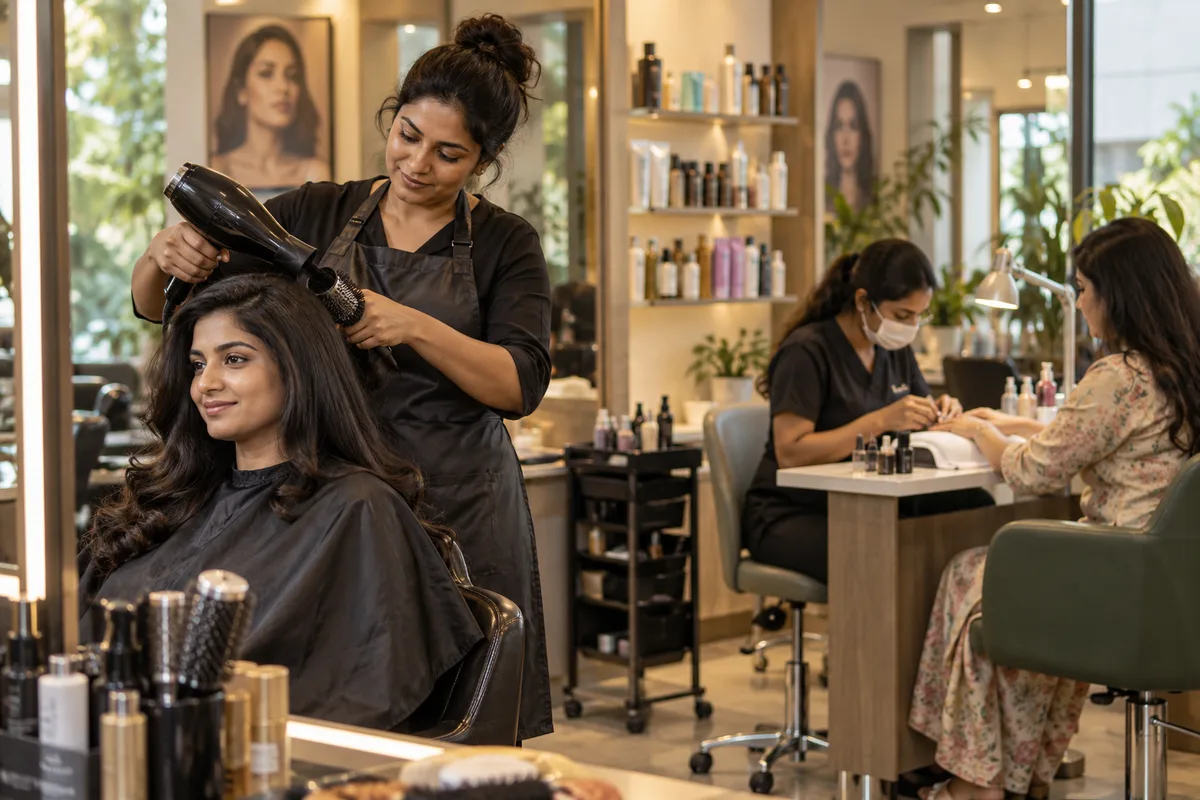
What buyer persona means
A buyer persona is a plain description of the kind of customer who actually buys from you. It includes what they search, what worries them and who else they ask before deciding. GullySales builds this from real enquiries and past sales rather than a generic template, then uses it to write every page and advert.
Also for salons and beauty studios
- Digital marketing for salons and beauty studios
- Apartment advertising for salons and beauty studios
- Email marketing for salons and beauty studios
- Lead generation for salons and beauty studios
- Local SEO for salons and beauty studios
- Outdoor advertising for salons and beauty studios
- PPC ads for salons and beauty studios
- Reputation management for salons and beauty studios
Sales and marketing for salons and beauty studios, the overview.
Last updated 5 Oct 2026.
For salons and beauty studios
Where it usually goes wrong, and what we would do.
“The regular and the bride are different buyers”
The regular books on impulse near home and values a stylist who remembers the last cut. The bride plans for months, compares packages and consults family. Marketing both with one offer and one tone loses the bride's trust and the regular's interest.
“The bride is not the only decision maker”
The bride's mother may pay, a sister may choose the look and a planner may recommend the artist. Each reads different things on your pages. Writing only for the bride leaves the person holding the wallet with no answer to the questions asked.
“The nervous first-timer is afraid of the wrong cut”
Some customers have been disappointed before by a stylist who did not listen. They look for photographs of ordinary hair like theirs, a stylist's name and a clear price. A page of dramatic transformations tells them the studio is for someone else.
“Men's grooming customers book differently”
A man booking a haircut and beard trim wants a time that fits a lunch break, a quick booking route and a stylist who knows the usual. Treating this buyer as a smaller version of the ladies' customer misses how and when the booking is made.
What we do
What we deliver for salons and beauty studios.
Every deliverable, what it covers for you, and the result it is there to produce. Nothing here is an extra.
Two or three personas drawn from real customers
Short profiles built from your booking records and chair conversations, one for each group that pays your bills.
Result: You can name the customers each page is written for.
A decision map for the bridal buyer
Who shortlists, who pays, who approves the look and where each looks, from Instagram to a wedding platform to a friend's word.
Result: You know which person to answer at each stage.
The questions each buyer asks before booking
Cost, hygiene, patch tests, stylist skill, travel and timing, listed per persona in the customer's own words.
Result: The site and replies answer what customers actually ask.
Message and offer matched to each persona
A weekday offer for the regular, a trial for the bride, a first-visit consultation for the nervous customer.
Result: Each group is offered something that suits it.
A source check against bookings
Where each persona found you, taken from your booking source notes, set against the profile written for them.
Result: The profiles are corrected by your own records.
A one-page summary for the front desk
The personas and the right opening question for each, kept at reception.
Result: The person who answers first speaks to the right buyer.
How the result is measured
- Enquiry match to persona
- Conversion rate by persona
- Content aligned to persona
Recorded as a baseline before work starts, so every later report has an honest comparison.
Who is asking
Describe each customer by the service being booked, not by age.
- Regular who wants the usual stylist
- Wants a slot that fits the week and the same person at the chair, without repeating the instructions.
- Bride and the family
- Wants the trial date, a portfolio of similar looks and a clear statement of what the booking covers.
- First-timer afraid of the wrong cut
- Wants to see the stylist's work, know the price and be able to ask a question before sitting down.
- Man booking a haircut and beard
- Wants a short slot that starts on time and a stylist who listens.
- Parent bringing a teenager for a first colour
- Wants to know what is safe, who does it and what the patch test involves.
Who it is for
This is written for these salons and beauty studios.
- Neighbourhood unisex salons
- Ladies beauty parlours and threading studios
- Premium hair studios and colour specialists
- Bridal makeup artists and bridal studios
- Freelance and home-visit makeup artists
- Nail, lash and brow studios
- Men's grooming lounges and barbershops
- Franchise outlets of salon chains
- Skin care and cosmetics brands selling online and through salons
Not for
It is not the right fit if.
- You have not noted what customers actually ask at the desk, so the personas would come from guesses.
- You hope to settle prices from a persona, which is a decision for the owner.
- The salon has a single type of customer and no bridal or grooming work.
How it works
How the buyer persona work runs
The work itself, in order. How an engagement starts, from your brief to a written scope, is set out on our method page.
- 1
Understand the current view
We start with how your team currently describes the customer, since the gap between belief and reality is the finding itself.
- 2
Audit past enquiries and sales
We look at recent enquiries and closed deals to see who actually bought, not who was assumed to buy.
- 3
Interview customers and staff
Structured conversations with recent buyers, held as talk about the last purchase and not a questionnaire. We ask what happened before they called, who else was involved and what they compared. Customers agree before we contact them, and their answers are reported without names.
- 4
Build the personas
Findings are written into short, usable persona documents rather than a long report.
- 5
Apply to your marketing
We show where each persona should change a page, an ad or a script you already have. The sales team reads the drafts and says which ring true. A persona they do not recognise is rewritten.
Where this fits
Three pieces of sales work, in this order.
This work sits inside sales process design, at stage 0, foundation. The audit comes before it, and sales management keeps it running.
Step 1
Sales audit
Find where deals are being lost and what to fix first.
Start here if you cannot say where orders are lost.
Step 2 · you are here
Sales process design
One written way to sell, from first enquiry to repeat order.
Start here if every salesperson sells differently.
Step 3
Sales management
A target, a review routine and someone who owns the number.
Start here if the team has targets and no routine.
FAQ
Questions owners ask before they call.
Not here? More answers, or ask on WhatsApp.
Do we need research or surveys to build these?
How many personas does a salon need?
Should we collect personal details to build these?
Should the persona include the customer's budget?
How long is the contract?
How soon will we see results?
Who will actually do the work?
What do you need from us?
What if we are not happy with the work?
From the blog
Further reading for salons and beauty studios.
 7 min read · 21 Sept 2026How to advertise to women entrepreneursNothing useful here comes from gender. It comes from how these businesses are financed, where they sell from and which hours of the day the founder is actually free.
 6 min read · 6 Oct 2026Why wellness members drop out in the second month, and a register to catch itMembers stop coming weeks before they cancel. A simple attendance register with two trigger rules gives your team a reason to call while the member can still be brought back.
 6 min read · 21 Sept 2026Influencer marketing vs social media advertising: which one should you pay for?An ad is a message you control, shown to people you choose. A creator post is a recommendation you do not control, shown to people who chose the creator.
More for salons and beauty studios
Everything else we would do for you.
Closest to this: strategy and research
Also for salons and beauty studios
Or start from the overview: sales and marketing for salons and beauty studios.
Your next practical step
Tell us what you are trying to grow, and we will read it before we call.
Eight short steps, mostly taps. Skip anything you would rather answer on the call.