Spas · Branding
Be remembered as the spa with the shirodhara room, not just another massage place nearby.
Branding for a spa is what makes a customer ask for your therapist by name and recommend your centre specifically. It is built through a consistent look across your reception, your therapists' uniforms and your Instagram photos of real treatment rooms. GullySales builds this identity around the treatments and hygiene standard you want to be known for.
Scope, fee, reporting and term are agreed in writing after we have read your brief and spoken to you.
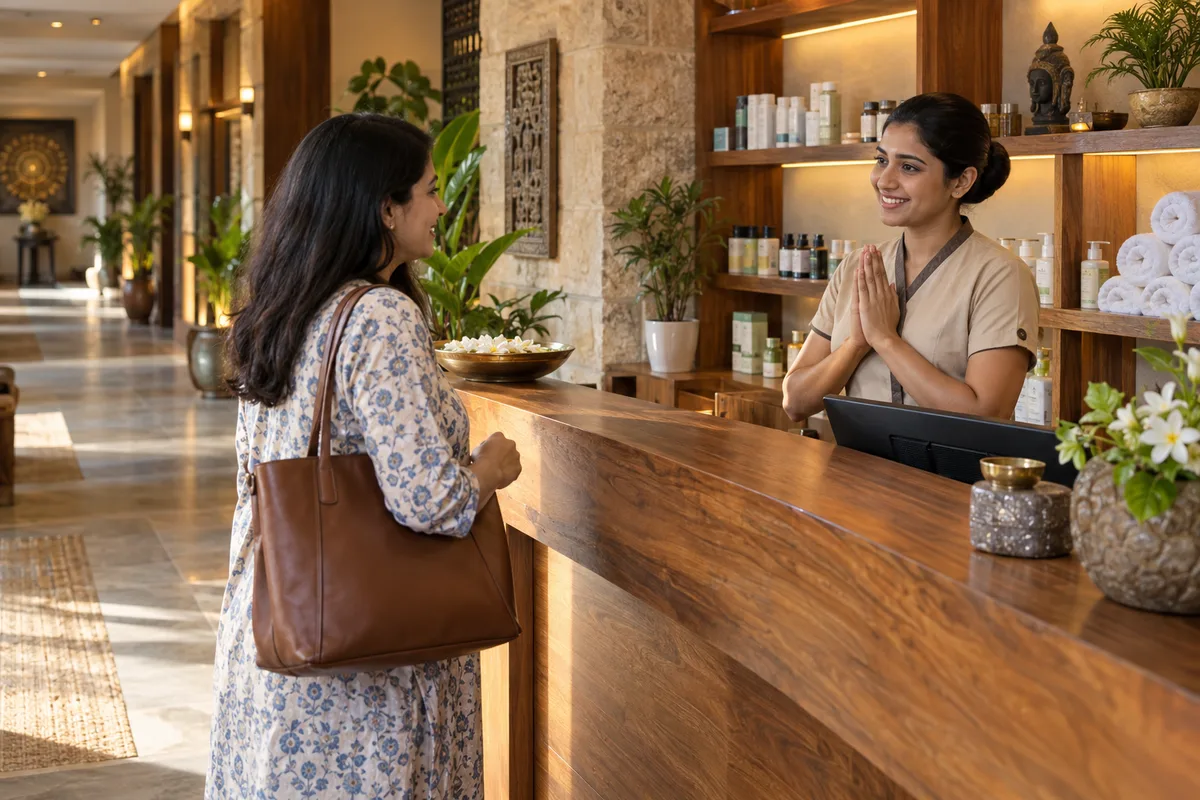
What branding means
Branding is what a customer remembers about your business beyond the product, including your name, colours, tone of voice and what you are known for locally. GullySales sets or corrects this once and applies it consistently across your website, signage and adverts so the business looks like one company everywhere.
Last updated 5 Oct 2026.
For spas
Where it usually goes wrong, and what we would do.
“A signature treatment carries the name”
A spa known specifically for its shirodhara room or its deep-tissue therapists gets referred by that detail, rather than being remembered vaguely as a nice place nearby.
“Hygiene is part of the brand, shown not claimed”
Photos of sealed linen, disposable liners and a clean treatment room reassure a first-time visitor faster than a line of text claiming high hygiene standards.
“One look for the couple package, another for the corporate desk”
A couple spa package can be presented as an indulgent, romantic offer, while a corporate wellness pitch needs a plainer, professional look. A single Instagram feed trying to do both persuades neither.
What we do
What we deliver for spas.
The work available for this need. We agree the deliverables and responsibilities for your engagement in writing.
Signature treatment identified and named consistently
One treatment, such as your shirodhara room or deep-tissue therapists, agreed as the thing your spa is known for and stated the same way everywhere.
Result: A customer describes your spa to a friend by that one detail.
Hygiene photo set for linen, tools and rooms
A shot list of sealed linen, disposable liners and a clean treatment room, used across the Business Profile and Instagram.
Result: A first-time visitor sees cleanliness before they ever ask about it.
Separate look for couple packages and corporate pitches
Two distinct sets of visuals and wording, one romantic for couple packages and one plain and professional for HR contacts.
Result: Each audience sees material built for their own decision.
Identity kit for reception, uniforms and Instagram
Colours, logo files and type rules applied to the reception area, staff uniforms and social posts.
Result: A customer recognises the same spa in every photo and in person.
Therapist name and specialism shown consistently
Each therapist's name and specialism, such as deep-tissue or ayurvedic training, presented the same way on the profile and at reception.
Result: A customer can ask for their preferred therapist by name.
How the result is measured
- Recognition in customer feedback
- Consistency across channels
- Repeat enquiries by name
Recorded as a baseline before work starts, so every later report has an honest comparison.
Positioning in one sentence
We are the spa for this kind of guest and this kind of treatment, and here is what they see before booking.
- Who it is for: the guest you build the day around
- Pick one: office workers after hours, couples marking an occasion, or people who want ayurvedic treatment for aches. A spa that wants everyone ends up discounting for all of them.
- What you do: the treatment you would be known for
- Name your signature treatment in words a guest can say aloud, such as a four-hand abhyanga or a hot stone back massage. A menu of forty items makes a guest ask what you are best at.
- What a guest gets that the next spa does not
- Choose one thing you can do every visit: a therapist who stays with the same guest, a private room, a consultation before the session. Say it in the same words on the booking page, the card and the call.
- The proof you can show
- Photographs of the actual treatment room, linen and oils laid out, therapist names and training, and real Google reviews. Check your state's rules on describing therapies, and do not claim medical results.
- Words every spa menu uses
- 'Rejuvenate', 'escape' and 'indulge' appear in every menu. Replace each with what happens: the length of the session, what the therapist does, what the room feels like, and what to wear.
Who it is for
This is written for these spas.
- Day spas
- Ayurveda and wellness centres
- Salon-spa combo outlets
- Medi-spas and skin clinics with spa services
- Massage-only therapy centres
- Resort and hotel spas
- Corporate and mobile wellness services
Not for
It is not the right fit if.
- You have not decided which treatment you want to be known for, so a name and a look would describe nothing in particular.
- The rooms and linen are not yet ready to photograph, and a brand promising hygiene needs the pictures to match.
- Your lease or location may change, and a new identity printed for one address would need redoing.
Before you decide
Agree the work. Know how to judge it.
Branding for spas: use these checks to prepare, choose the scope, and review what changes.
Bring the right evidence
Collect the sales presentation, website, quotations, and other material buyers actually see. Mark where the description of the business changes or where a claim has no supporting evidence.
Make the scope clear
Agree whether the work concerns the offer, the words, the visual identity, or all of them. List the formats that need updating and who owns the final approval.
Check the work in use
Test the proposed direction on a real sales page or proposal. A buyer should be able to tell who the offer is for, what is different, and what evidence supports it.
Know when to change course
A new identity will not fix an unresolved service problem. Put the delivery issue right before making a stronger public promise about it.
These are discussion points, not a fixed package. GullySales confirms the deliverables, responsibilities, fee, and term in writing after reading your brief and speaking with you.
How it works
How the branding work runs
The work itself, in order. How an engagement starts, from your brief to a written scope, is set out on our method page.
- 1
Scope and decision-maker agreement
You send the requirements brief, then we discuss the business decision behind the work. The written scope identifies the buyer segment and approver, alongside the fee and term.
- 2
Evidence handover
Your team shares relevant enquiries and lost-quote notes, and arranges customer introductions. We agree which competitors matter before reviewing their public material.
- 3
Position choice
We present the findings and a proposed position with its supporting evidence. You decide which buyer needs to prioritise and which claims or customer types to leave out.
- 4
Sales conversation check
Your sales lead tries the draft in real buyer conversations and records objections or confusion. We revise wording that does not hold up when a buyer asks for proof.
- 5
Approval and rollout handover
The authorised decision-maker approves the final strategy. Your sales lead and marketing team receive the same rollout brief, with unresolved proof questions clearly marked.
Where this fits
Three pieces of sales work, in this order.
This work sits inside sales process design, at stage 1, prospecting and lead generation. The audit comes before it, and sales management keeps it running.
Step 1
Sales audit
Find where deals are being lost and what to fix first.
Start here if you cannot say where orders are lost.
Step 2 · you are here
Sales process design
One written way to sell, from first enquiry to repeat order.
Start here if every salesperson sells differently.
Step 3
Sales management
A target, a review routine and someone who owns the number.
Start here if the team has targets and no routine.
FAQ
Questions owners ask before they call.
Not here? More answers, or ask on WhatsApp.
Is branding worth it for a single-branch spa?
Where does branding show up first for a spa?
Should the spa's name include 'ayurveda' or 'wellness'?
Should we promote the therapists by name?
How much does it cost?
How long is the contract?
How soon will we see results?
Who will actually do the work?
What do you need from us?
What if we are not happy with the work?
From the blog
Further reading for spas.
 6 min read · 19 Aug 2026How to sell spa membership packages that customers renewBuild spa membership packages around how often customers already visit, with a saving they can see. Offer them after a session; follow up before renewal.
 7 min read · 3 Jun 2025How to reactivate dormant customersDefine dormant against your own purchase interval, then call your highest-value lapsed customers to ask why they stopped before offering any discount.
Your next practical step
Tell us what you are trying to grow, and we will read it before we call.
Eight short steps, mostly taps. Skip anything you would rather answer on the call.