Spas · Buyer journey
Find the exact point a first massage booking never turns into a monthly package.
Buyer journey mapping for a spa lays out the path from a first search or walk-in to a repeat customer on a membership package. It shows exactly where bookings stall, for example after a good first massage that is never followed up. GullySales maps this journey from your actual booking records and fixes the step where customers are being lost.
Scope, fee, reporting and term are agreed in writing after we have read your brief and spoken to you.
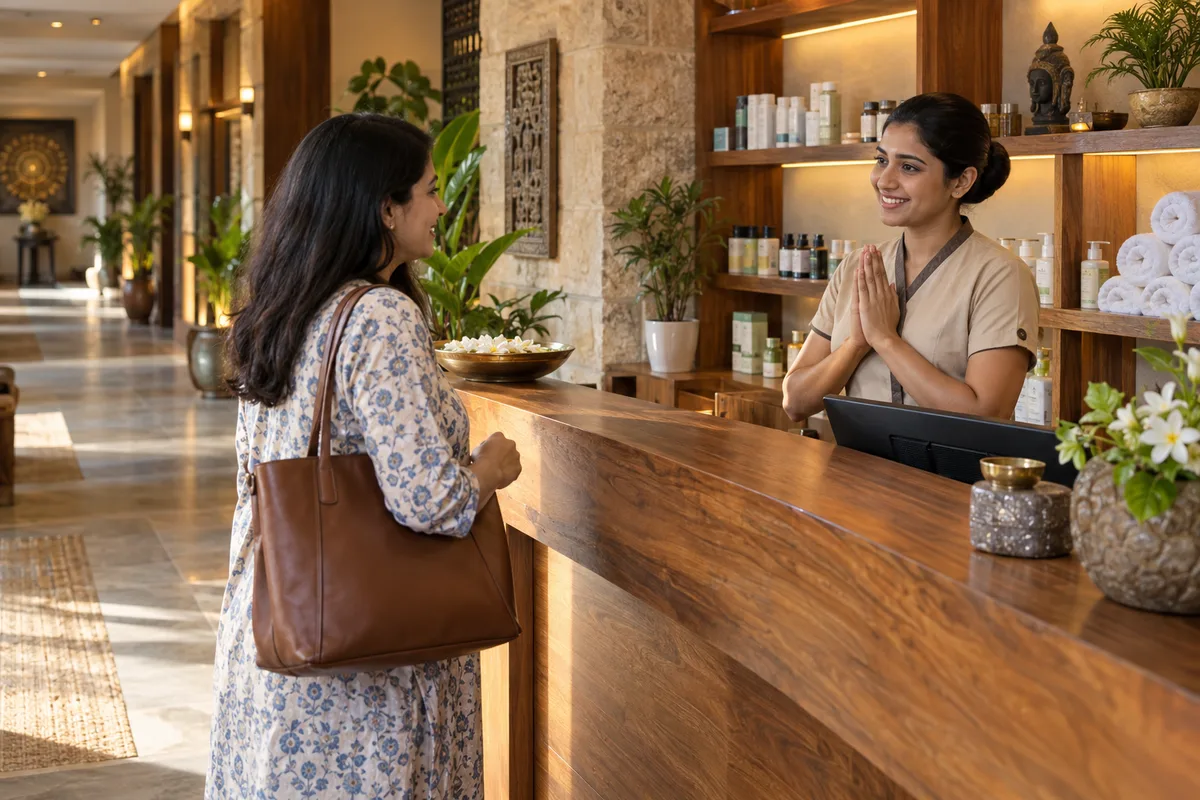
What buyer journey means
For a studio or wellness practice the journey starts with a trigger such as a resolution, a stiff back or a doctor's advice, and runs through a first class or visit to the decision to stay. GullySales draws it from your own booking and attendance records, and checks that someone reaches out at each step where people tend to go quiet.
Last updated 5 Oct 2026.
For spas
Where it usually goes wrong, and what we would do.
“The first visit and the membership decision are separate steps”
A customer who enjoys a single deep-tissue massage does not automatically ask about a monthly package. Someone has to offer it before they leave, or the journey ends at one visit.
“Walk-ins and appointments need different maps”
A walk-in decides in the time it takes to glance at your reception and price list. An appointment booked online has already read your reviews, so treating both journeys the same loses one or the other.
“The gap after a good facial is where referrals are lost”
A satisfied customer is rarely asked to leave a review or bring a friend for a couple package on the way out. The journey stops instead of bringing in the next booking.
What we do
What we deliver for spas.
The work available for this need. We agree the deliverables and responsibilities for your engagement in writing.
Journey map from first search to repeat booking
A map built from your actual booking records tracing a customer from first search or walk-in to a repeat visit or package.
Result: You can see exactly where a customer's path stops.
Separate maps for walk-ins and online bookings
Two distinct journeys documented, since a walk-in decides at reception while an online booker has already read your reviews.
Result: Each kind of customer is handled by the step that actually applies to them.
Drop-off points marked with a fix for each
Every stage where bookings commonly stall, such as after a first massage with no package offer, marked with a specific fix.
Result: A known weak point gets addressed instead of staying a mystery.
Referral and review gap identified after good visits
The point after a satisfied visit where a review or referral ask is currently missing, marked on the journey map.
Result: A happy customer is asked for a review before they walk out.
Review of journey stage numbers
A report against your baseline showing how many customers move from first visit to package or referral.
Result: The owner can see whether fixes to the journey are actually working.
How the result is measured
- Drop-off rate by step
- Time from first contact to sale
- Steps with no content
Recorded as a baseline before work starts, so every later report has an honest comparison.
Stages of the customer's journey
From a tired back or a gift idea to a package, the steps a customer takes at a spa.
- The reason to book
- Tired shoulders, a wedding, a festival or a gift idea prompts the booking. List treatments by purpose on the page, such as back and shoulders or pre-wedding, so the reason matches what the customer types.
- Search and checking hygiene
- The customer looks at nearby spas, photos and reviews, and judges whether the place feels clean and safe. Show the treatment rooms, the linen and the therapists with their training.
- The WhatsApp enquiry
- The customer asks the price, the duration and a slot. Reply with a short menu, a slot on the day requested and a note on what each treatment includes.
- The first visit
- The first massage decides whether the customer returns. Greet them by name, ask about pressure and any health concern, and record their preferences against the booking.
- After the visit
- The customer is relaxed and open to a suggestion. Offer a package or a return slot at reception, with the price written down.
- Repeat or referral
- The customer comes back when reminded or brings a friend. Message them with their therapist's name and an open weekday slot, and note who referred whom.
Who it is for
This is written for these spas.
- Day spas
- Ayurveda and wellness centres
- Salon-spa combo outlets
- Medi-spas and skin clinics with spa services
- Massage-only therapy centres
- Resort and hotel spas
- Corporate and mobile wellness services
Not for
It is not the right fit if.
- Bookings are not yet written down anywhere, so a map would be drawn from memory and not from what guests did.
- You get very few enquiries, and a journey map would invent drop-off points that a handful of calls cannot show.
- You are not able to change the front desk reply or the package offer, so the gaps found would stay open.
Before you decide
Agree the work. Know how to judge it.
Buyer journey mapping for spas: use these checks to prepare, choose the scope, and review what changes.
Bring the right evidence
Write the decision the research must support, such as entering a market or choosing a buyer group. Separate what you know from sales records from what the team currently assumes.
Make the scope clear
Agree which buyers to speak to, which sources to review, and what access you can provide. Include lost enquiries and people who chose another supplier, where they are willing to take part.
Check the work in use
Look for source dates, sample limitations, and evidence that disagrees with the preferred answer. A recommendation should show how it follows from the findings.
Know when to change course
Do not treat a few positive conversations as proof of demand. Test the proposed offer with an actual buying decision before committing to a wider launch.
These are discussion points, not a fixed package. GullySales confirms the deliverables, responsibilities, fee, and term in writing after reading your brief and speaking with you.
How it works
How the buyer journey work runs
The work itself, in order. How an engagement starts, from your brief to a written scope, is set out on our method page.
- 1
Scope and buyer selection
After your requirements brief and a conversation, we agree which offer and buying path to examine. The written scope identifies the records needed and who will approve the map.
- 2
Record access and baseline
Your team shares the agreed records, and we check what can be compared. Before work starts, we record available baseline measures, including enquiries by source, reply time, conversion, and cost per order, and identify missing data.
- 3
Interview findings
Agreed conversations with recent buyers, lost prospects, and staff test the explanations behind the records. We distinguish what someone said from an interpretation that still needs checking.
- 4
Map review and approval
Marketing and sales review the draft together. They confirm stage definitions and handoffs, while disputed explanations remain marked as unresolved rather than becoming accepted facts.
- 5
Action handover and comparison
You approve the priorities and assign responsibility. Where implementation is included in the written scope, changes are measured against the baseline; the reporting frequency and term are agreed in writing before work starts.
Where this fits
Three pieces of sales work, in this order.
This work sits inside sales process design, at stage 1, prospecting and lead generation. The audit comes before it, and sales management keeps it running.
Step 1
Sales audit
Find where deals are being lost and what to fix first.
Start here if you cannot say where orders are lost.
Step 2 · you are here
Sales process design
One written way to sell, from first enquiry to repeat order.
Start here if every salesperson sells differently.
Step 3
Sales management
A target, a review routine and someone who owns the number.
Start here if the team has targets and no routine.
FAQ
Questions owners ask before they call.
Not here? More answers, or ask on WhatsApp.
How do you actually map this for a spa?
What changes once the gaps are known?
Who else influences a spa booking besides the customer?
A customer got the price on WhatsApp and never booked. Should we message again?
How long is the contract?
How soon will we see results?
Who will actually do the work?
What do you need from us?
What if we are not happy with the work?
From the blog
Further reading for spas.
 6 min read · 19 Aug 2026How to sell spa membership packages that customers renewBuild spa membership packages around how often customers already visit, with a saving they can see. Offer them after a session; follow up before renewal.
 7 min read · 3 Jun 2025How to reactivate dormant customersDefine dormant against your own purchase interval, then call your highest-value lapsed customers to ask why they stopped before offering any discount.
More for spas
Related work to consider.
Closest to this: strategy and research
Also for spas
Or start from the overview: sales and marketing for spas.
Your next practical step
Tell us what you are trying to grow, and we will read it before we call.
Eight short steps, mostly taps. Skip anything you would rather answer on the call.