Spas · Public relations
Get written up as the spa to try before the next one opens nearby.
PR services for a spa mean getting featured by local lifestyle publications, wellness bloggers and hotel concierge lists for a distinctive treatment or a milestone opening. This builds credibility a paid advert cannot buy. GullySales pitches your actual treatments and therapists to the outlets your future customers already read.
Scope, fee, reporting and term are agreed in writing after we have read your brief and spoken to you.
What public relations means
Public relations is getting your business covered by journalists, trade publications or local news, which carries more trust than an advert because a third party is saying it. GullySales pitches your story to the right publications and prepares your team for interviews when coverage is offered.
Last updated 5 Oct 2026.
For spas
Where it usually goes wrong, and what we would do.
“A distinctive treatment is the story, not the spa itself”
A rare offering, such as a specific ayurvedic protocol or an unusual couple's suite, gives a local publication a reason to write about you. A generic pitch about relaxation gives them nothing.
“Hotel and concierge relationships bring steady referrals”
A spa recommended on a nearby hotel's concierge list receives a steady trickle of tourist and business-traveller bookings that no single advert could replicate.
“A milestone earns a mention”
A new branch opening, a senior therapist joining from a known institute, or an anniversary gives a local outlet a genuine reason to feature the spa.
What we do
What we deliver for spas.
The work available for this need. We agree the deliverables and responsibilities for your engagement in writing.
Story angle built around one distinctive treatment
A pitch angle, such as a rare ayurvedic protocol or an unusual couple's suite, written for a local publication or blogger.
Result: A publication has a specific reason to write about your spa.
Hotel and concierge outreach list
A list of nearby hotel concierge desks approached for a standing recommendation to their guests.
Result: Tourist and business-traveller bookings arrive through a trusted referral.
Milestone pitch for a new branch or therapist
A written pitch sent to local outlets when a branch opens or a senior therapist joins from a known institute.
Result: A genuine milestone gets a mention instead of going unnoticed.
Wellness blogger outreach list
A list of local wellness bloggers and lifestyle pages relevant to your treatments and location.
Result: Coverage reaches readers who are already interested in a spa visit.
Coverage tracker and reuse plan
A record of every feature earned, with a plan for reusing it on your website and social posts.
Result: Earned coverage keeps working after the article itself is old news.
How the result is measured
- Coverage secured
- Publication reach
- Enquiries after coverage
Recorded as a baseline before work starts, so every later report has an honest comparison.
What is worth telling the press
What a lifestyle writer or hotel concierge can take from a spa.
- One treatment with a real origin
- Pick a single treatment such as a Kerala Abhyanga or a Thai massage by a trained therapist. Name the therapist and where they trained.
- A visit to hotel front desks
- Take the treatment menu and a sample to nearby hotels' front desk and concierge teams. Ask how they list outside spas and what they need from you.
- A writer's complimentary visit
- If you invite a lifestyle writer or blogger, tell them the treatment is complimentary so they can disclose it under the platform's rules. Never script their opinion.
- A seasonal programme
- Pitch a monsoon Ayurveda programme or a pre-wedding ritual before the season starts. Describe the treatment, not health outcomes.
- Therapist credentials on file
- Keep each therapist's training certificates in a folder and show them if a writer asks. For Ayurvedic treatments, check local licensing rules on how you describe them.
- Photographs with no clients
- Photograph the treatment room and products with no clients visible. A client's face cannot be printed without consent.
Who it is for
This is written for these spas.
- Day spas
- Ayurveda and wellness centres
- Salon-spa combo outlets
- Medi-spas and skin clinics with spa services
- Massage-only therapy centres
- Resort and hotel spas
- Corporate and mobile wellness services
Not for
It is not the right fit if.
- You have no treatment, therapist or story that differs from the spa down the road, so a pitch would give a writer nothing new.
- The rooms are not ready for a visitor, and a feature that brings guests to an unfinished spa would hurt.
- You cannot host a writer without taking a chair from a paying guest.
Before you decide
Agree the work. Know how to judge it.
PR services for spas: use these checks to prepare, choose the scope, and review what changes.
Bring the right evidence
Start with a fact a journalist or industry audience could independently check. Gather supporting documents and decide who is authorised to speak for the business.
Make the scope clear
Separate editorial outreach from paid placements and production. Agree the subject, target publications, spokesperson access, and how an inaccurate statement would be corrected.
Check the work in use
Judge the relevance and accuracy of coverage, including where it sends readers. Keep a record of published links and the enquiries that can be traced to them.
Know when to change course
If the story is only an unsupported claim of being the best, develop evidence first. An outreach list does not guarantee editorial coverage.
These are discussion points, not a fixed package. GullySales confirms the deliverables, responsibilities, fee, and term in writing after reading your brief and speaking with you.
How it works
How the public relations work runs
The work itself, in order. How an engagement starts, from your brief to a written scope, is set out on our method page.
- 1
Scope agreement
You send the requirements brief, then we discuss the announcement or communication problem. The written scope sets the work, fee, and term before research or drafting begins.
- 2
Story selection
We interview the people closest to the facts and review supporting records. You approve the story to pursue, the intended publications, and information that must remain private.
- 3
Material approval
The release and supporting materials go to your named approver. Claims needing legal or compliance review stay with your advisers until cleared.
- 4
Journalist approach
Approved pitches go to relevant journalists. Replies and requests enter the log, with follow-up handled within the agreed scope rather than repeated indiscriminate emailing.
- 5
Interview handoff
Your spokesperson receives the briefing and the journalist's questions where available. Requests for additional facts return to the person authorised to confirm them.
- 6
Coverage review
We record published pieces and identify factual errors to raise with the publication. Relevant coverage goes to your sales lead, while public-response drafts are reviewed against any changed facts.
Where this fits
Three pieces of sales work, in this order.
This work sits inside sales process design, at stage 1, prospecting and lead generation. The audit comes before it, and sales management keeps it running.
Step 1
Sales audit
Find where deals are being lost and what to fix first.
Start here if you cannot say where orders are lost.
Step 2 · you are here
Sales process design
One written way to sell, from first enquiry to repeat order.
Start here if every salesperson sells differently.
Step 3
Sales management
A target, a review routine and someone who owns the number.
Start here if the team has targets and no routine.
FAQ
Questions owners ask before they call.
Not here? More answers, or ask on WhatsApp.
Is PR realistic for an independent spa?
How is this different from paid advertising?
A lifestyle website offers a feature for a fee. How can we tell it is paid?
Who should talk to a journalist, the owner or the head therapist?
How long is the contract?
How soon will we see results?
Who will actually do the work?
What do you need from us?
What if we are not happy with the work?
From the blog
Further reading for spas.
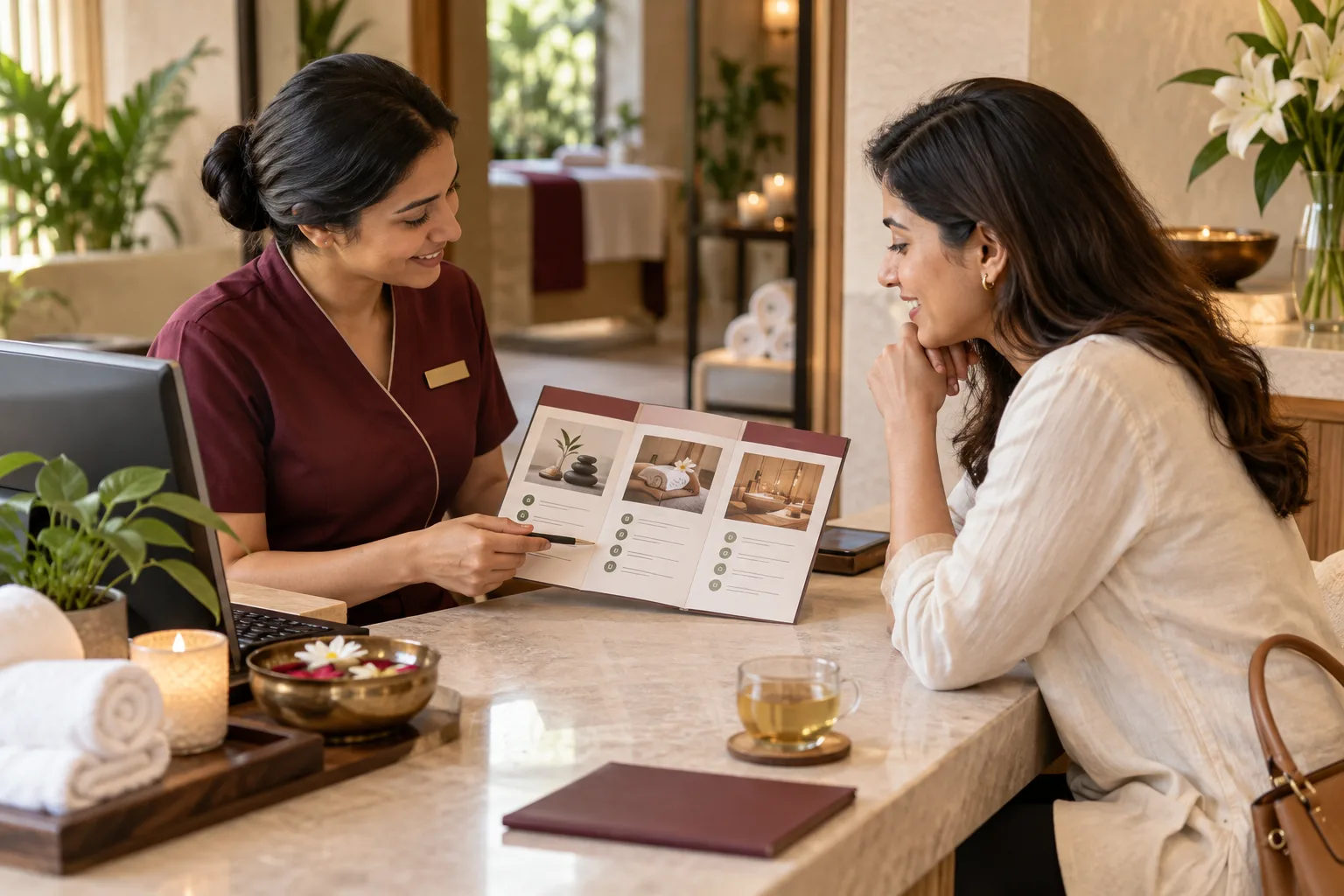 6 min read · 19 Aug 2026How to sell spa membership packages that customers renewBuild spa membership packages around how often customers already visit, with a saving they can see. Offer them after a session; follow up before renewal.
 7 min read · 3 Jun 2025How to reactivate dormant customersDefine dormant against your own purchase interval, then call your highest-value lapsed customers to ask why they stopped before offering any discount.
More for spas
Related work to consider.
Closest to this: reputation
Also for spas
Or start from the overview: sales and marketing for spas.
Your next practical step
Tell us what you are trying to grow, and we will read it before we call.
Eight short steps, mostly taps. Skip anything you would rather answer on the call.