Tattoo studios · Search engine optimisation
Be the page that appears when someone searches for a style, not only a studio name.
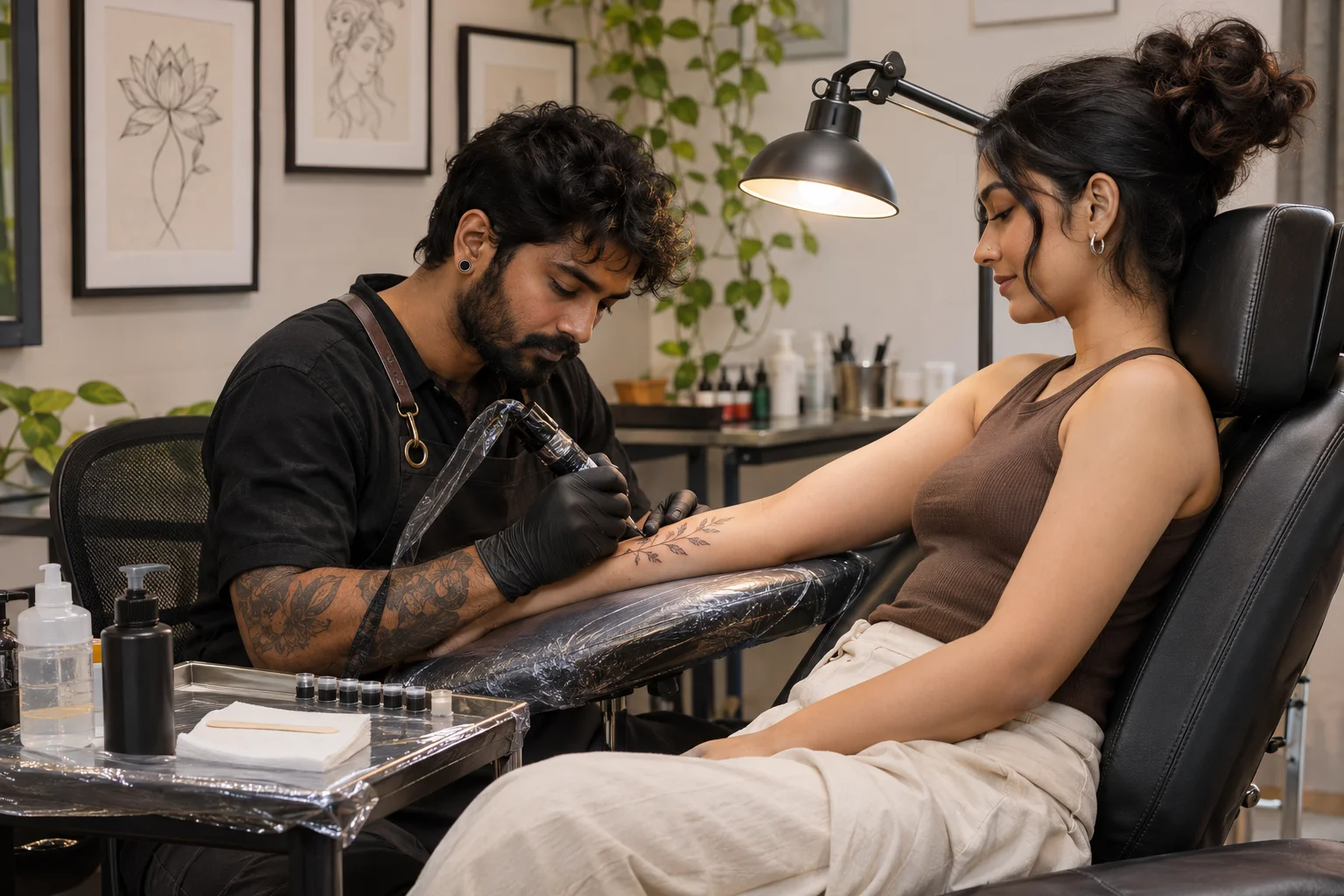
SEO for a tattoo studio is the work of making your pages match the searches people type about styles, placements, cover-ups and aftercare. GullySales works on the pages, the wording and the structure that let a search engine read your studio as a specialist.
Scope, fee, reporting and term are agreed in writing after we have read your brief and spoken to you.
What search engine optimisation means
Search engine optimisation (SEO) is the work of getting your website to appear when a buyer searches Google for what you sell. GullySales builds pages around real search terms, fixes technical issues that block ranking, and tracks which searches actually bring enquiries.
Last updated 14 Nov 2026.
For tattoo studios
Where it usually goes wrong, and what we would do.
“People search the style, not the studio”
A buyer types "fine line tattoo" or "cover-up tattoo" with a city, long before any studio name. If the site has one page called Gallery, nothing matches those words. A page for each style you do well gives a search engine something to show.
“Image galleries say nothing to a search engine”
A grid of photographs with no text, no style name and no placement is invisible as words. Each piece needs a caption, the style, the area of the body and a plain note on the session, so the page reads as well as it looks.
“Aftercare questions bring the nervous first-timer”
Searches such as how to look after a new tattoo or what peeling means arrive from people who already have work and from those about to book. A clear aftercare page earns trust and brings in visitors who then see your portfolio.
“Artist pages split your strength”
If every artist has a handle but no page on the site, their style never builds search presence. A page per artist, linked to the studio, collects the style words and the booking route in one place that belongs to you.
What we do
What we deliver for tattoo studios.
The work available for this need. We agree the deliverables and responsibilities for your engagement in writing.
A page for each style you practise
Fine line, blackwork, realism, traditional, Japanese or lettering, each with its own wording, examples and booking link.
Result: A style search can land on a page written for it.
Captions and alt text for the portfolio
Every piece described with style, placement and session note, written for a visitor first and a search engine second.
Result: Your gallery can be read, not only looked at.
An aftercare and first-timer guide
A plain page on preparing, what the chair is like, aftercare and what to do if something looks wrong, with a note to see a doctor for health concerns.
Result: First-timers reach you through a question they already had.
One page per artist
A profile with the artist's style, examples and the studio's shared booking link, carrying the studio name.
Result: Search results for an artist's style show the studio.
Titles and headings checked page by page
Page titles and headings rewritten to name the style, the trade and the city once, in ordinary words.
Result: Each page says in a line what it is about.
How the result is measured
- Ranking positions
- Organic traffic
- Enquiries from organic search
Recorded as a baseline before work starts, so every later report has an honest comparison.
Searches your buyers type
The searches a tattoo buyer runs before choosing a studio.
- fine line tattoo artist near me
- A style page for fine line work with your best healed examples, the artist who does it and the minimum size you accept. Link the booking form from the page.
- tattoo cover up ideas for old tattoo
- An honest cover-up page. Say what a cover-up can and cannot hide, show before and after pairs, and explain that the consult decides the design.
- how to prepare for first tattoo
- A first-timer guide covering food, clothing and what to bring. It reaches the nervous buyer early and shows the studio as a calm place to start.
- tattoo aftercare dos and don'ts
- An aftercare page written by the artist in plain words. It earns visits from people who already have a tattoo and may want the next one.
- realistic portrait tattoo artist
- A page for portrait work with the artist named, the reference photo rules and the number of sittings the studio expects for a large piece.
- tattoo studio hygiene single use needles
- A hygiene page with photos of the station, sterile packaging and the licence the studio holds. It answers the fear that stops a first booking.
Who it is for
This is written for these tattoo studios.
- Custom tattoo studios with several resident artists
- Single-artist private studios
- Fine line and minimal tattoo specialists
- Realism and portrait artists
- Cover-up and scar-camouflage specialists
- Traditional, tribal and Japanese style studios
- Studios that also offer piercing
- Tattoo removal and fading clinics
- Convention and guest-artist organisers
Before you decide
When this may not be the right fit.
- Your website cannot be edited, so style pages and guides would have nowhere to go.
- All your bookings come from one artist's following and the studio has no wish to be found by strangers.
- You have no healed photographs yet, and style pages built on fresh work alone would promise more than the studio can show.
Before you decide
Agree the work. Know how to judge it.
SEO for tattoo studios: use these checks to prepare, choose the scope, and review what changes.
Bring the right evidence
Bring the pages for the products or services you want to sell, the search queries available in your reports, and examples of enquiries from search. Separate branded searches from buyers discovering you for the first time.
Make the scope clear
Agree which pages and technical fixes come first, who can publish changes, and who supplies subject knowledge. Link search work to a relevant enquiry route on each priority page.
Check the work in use
Follow the trail from a relevant query to its landing page and then to an enquiry. Review whether those enquiries fit your offer, alongside indexing and search visibility.
Know when to change course
A ranking movement alone is not a buying signal. If traffic grows but relevant enquiries do not, revisit page intent and the offer before producing more pages.
These are discussion points, not a fixed package. GullySales confirms the deliverables, responsibilities, fee, and term in writing after reading your brief and speaking with you.
Before we start
What to have ready before the work starts.
The records, access and decisions this work needs from tattoo studios. Anything missing is noted in the written scope, with who will supply it.
- Owner access to Search Console
- Search Console shows the exact searches that reach the site, and no tool of ours can replace it. Owner or full-user access is acceptable, and a fresh property is fine if the site has never been added. Without it, we plan from the portfolio alone and the plan is a weaker one.
- The list of styles and artists
- Each artist should write down their styles and the ones they would turn away. A rough note on a phone will do. If this list is missing, we cannot decide which page belongs to which artist, and the site risks showing two artist pages that compete for the same search.
- Healed photographs with client consent
- Style pages and the aftercare guide are more convincing with healed pictures. We need photographs where the person agreed to publication, kept somewhere we can open. Pictures without consent are not used, and a page may launch with fewer images until the studio collects more.
- Your current aftercare instructions
- The aftercare guide should say what your artists already tell clients, in the same order. A printed sheet or a saved message is a good source. If artists give different advice, the studio has to settle on one version first, since a public page cannot carry contradictions.
How it works
How the search engine optimisation work runs
The work itself, in order. How an engagement starts, from your brief to a written scope, is set out on our method page.
- 1
List the styles each artist really practises
We begin by asking each artist to name the styles they would take on tomorrow, in their own words, and the ones they are only learning. That list, not a keyword tool, decides which pages we plan. You settle disputes between artists here, for instance when two people both claim blackwork, because each style page needs one clear home in the site.
- 2
Check your Search Console and profile access
We ask for read access to Google Search Console, the Google Business Profile and the website's editor, and we look at the queries that already bring people in. Searches for a studio's name, a style and a city show how people describe what they want. We write down what the site currently ranks for, as a plain record to compare against.
- 3
Agree who writes and who approves
Each style page and the aftercare guide needs an artist to confirm the facts: how the line is made, what healing looks like, what the studio will not do. We agree who in the studio reads each draft and what they can change. Pages that skip an artist's approval misdescribe the work, so the approver's name goes on our plan.
- 4
Photograph and caption the portfolio together
With an artist we go through the portfolio and write a caption and alt text for each image that names the style, the placement and whether it is fresh or healed. Pieces that the artist is proud of are chosen first. Images the client has not consented to publish are left out, and you confirm that list before anything goes online.
- 5
Publish page by page and recheck headings
We publish the style pages, the artist pages and the aftercare guide in an order you approve, and after each one we recheck the title, heading and internal links against the plan. If a page splits strength with another, we merge or redirect it. When the pages are live, we read which enquiries came from search and which style they asked about.
Where this fits
Three pieces of sales work, in this order.
This work sits inside sales process design, at stage 1, prospecting and lead generation. The audit comes before it, and sales management keeps it running.
Step 1
Sales audit
Find where deals are being lost and what to fix first.
Start here if you cannot say where orders are lost.
Step 2 · you are here
Sales process design
One written way to sell, from first enquiry to repeat order.
Start here if every salesperson sells differently.
Step 3
Sales management
A target, a review routine and someone who owns the number.
Start here if the team has targets and no routine.
FAQ
Questions owners ask before they call.
Not here? More answers, or ask on WhatsApp.
How does SEO differ from our Instagram?
Is an Instagram page enough without our own website?
Can you promise a first-page ranking?
Should every artist have a separate page for search?
Should every artist get their own page?
Can the portfolio images carry the ranking by themselves?
How much does it cost?
How long is the contract?
How soon will we see results?
Who will actually do the work?
More for tattoo studios
Related work to consider.
Closest to this: search and visibility
Also for tattoo studios
Or start from the overview: sales and marketing for tattoo studios.
Your next practical step
Tell us what you are trying to grow, and we will read it before we call.
Eight short steps, mostly taps. Skip anything you would rather answer on the call.