Tattoo studios · Buyer persona
Know who is walking in, what they fear and what makes them choose your artist.
A buyer persona for a tattoo studio is a plain description of the type of client who books: what they want, what they worry about and what they check first. GullySales works from your own past enquiries to write the few personas your studio actually serves.
Scope, fee, reporting and term are agreed in writing after we have read your brief and spoken to you.
What buyer persona means
A buyer persona is a plain description of the kind of customer who actually buys from you. It includes what they search, what worries them and who else they ask before deciding. GullySales builds this from real enquiries and past sales rather than a generic template, then uses it to write every page and advert.
Last updated 14 Nov 2026.
For tattoo studios
Where it usually goes wrong, and what we would do.
“The first-timer with a small design”
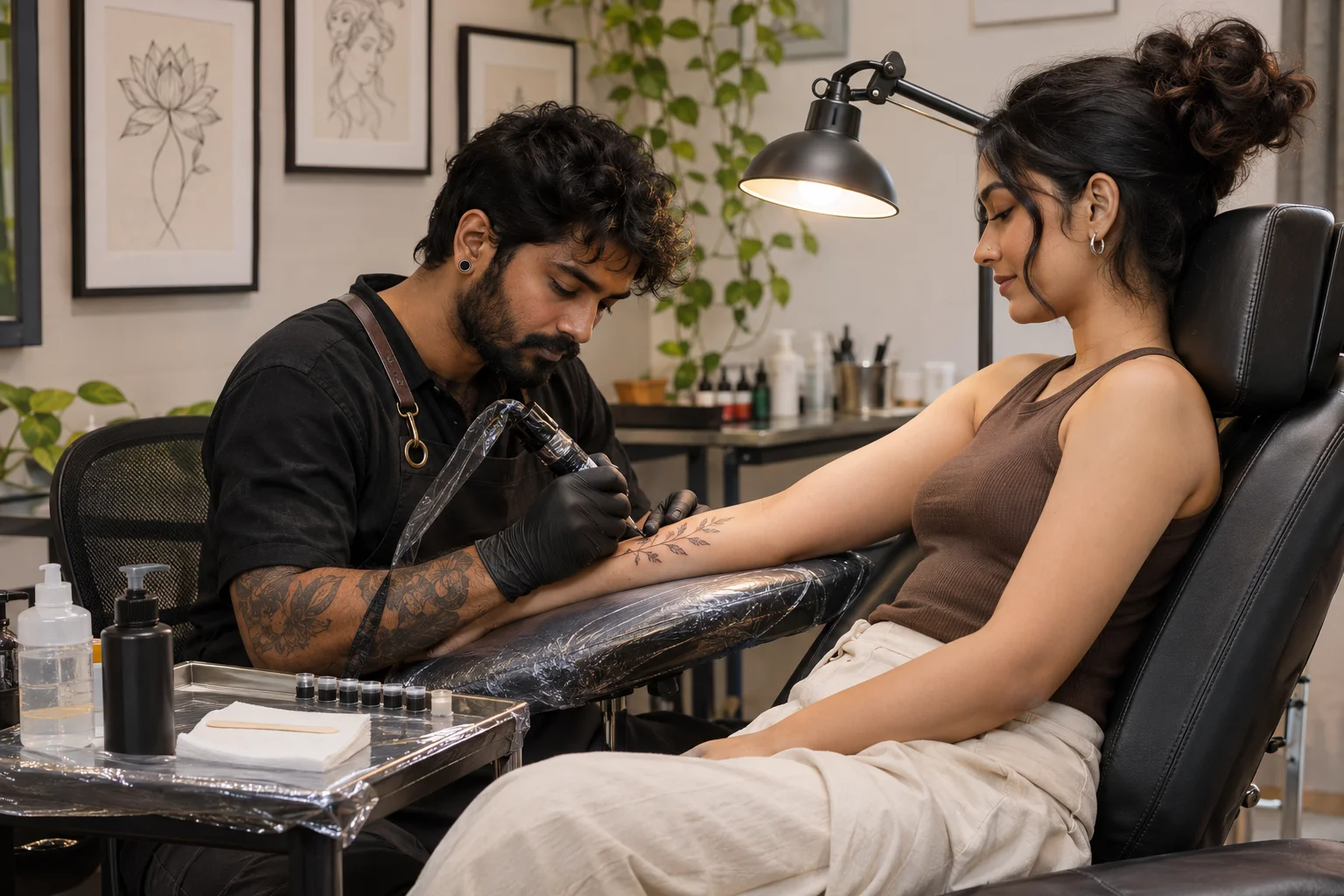
This buyer wants a minimal piece, has saved a reference and worries about pain and infection. They look for a calm reply and a clean studio. The studio that explains the process kindly wins before the price comes up.
“The collector adding to existing work”
A client with work already knows tattooing and judges by line quality, healed results and the artist's name. They book a specific artist and wait for the slot. Generic offers do not move them; a clear portfolio does.
“The cover-up client”
This buyer has older work they dislike and some embarrassment about it. They need honesty about what is possible and no judgement. A studio that handles the first message with respect gets the consult.
“The traveller or convention visitor”
Someone from another city plans around a guest artist or a visit. They read communication closely, need dates and a deposit route, and judge the studio on how clearly it answers from a distance.
What we do
What we deliver for tattoo studios.
The work available for this need. We agree the deliverables and responsibilities for your engagement in writing.
Three or four written personas
Each persona described by what they want, what they fear and what they look at first, drawn from your own enquiries.
Result: The team shares a picture of who books.
A message for each persona
A first reply and a booking page line written for each type of client, in the studio's voice.
Result: Replies fit the person asking.
An enquiry log read for patterns
Past messages sorted by style, placement and outcome, to see which persona books and which drifts away.
Result: You see where each type stops.
A style-to-artist map
A simple table showing which artist suits which persona and which style.
Result: The desk sends each enquiry to the right artist.
A list of questions for the consult
The few questions the artist asks to confirm which persona is in front of them.
Result: The consult starts from understanding, not guesswork.
How the result is measured
- Enquiry match to persona
- Conversion rate by persona
- Content aligned to persona
Recorded as a baseline before work starts, so every later report has an honest comparison.
Who is asking
The people who message a tattoo studio and what each needs to read.
- First-timer with a small design
- Wants to know about pain, hygiene and whether the artist will judge a simple idea. Answer with a short first-visit guide and a named artist.
- Collector adding to a sleeve
- Wants to see that the artist can match existing work and plan the next sitting. Share past sleeve progress and ask for photos of what they already have.
- Cover-up client with an old piece
- Wants honesty about what can be hidden. Send the cover-up page and a clear line that the consult decides the design before anyone books.
- Partner or friend booking a matching piece
- Wants to book two people at once and agree on one design. Offer a joint consult slot and say whether each person pays a separate deposit.
- Traveller or convention visitor
- Wants a date, a clear price band and a deposit route before arriving. Give the guest-artist window and the studio's travel-friendly booking steps.
- Parent asking about a minor
- Wants to know the studio's age rule. State the policy plainly and check local law, because rules differ by place and the studio carries the risk.
Who it is for
This is written for these tattoo studios.
- Custom tattoo studios with several resident artists
- Single-artist private studios
- Fine line and minimal tattoo specialists
- Realism and portrait artists
- Cover-up and scar-camouflage specialists
- Traditional, tribal and Japanese style studios
- Studios that also offer piercing
- Tattoo removal and fading clinics
- Convention and guest-artist organisers
Before you decide
When this may not be the right fit.
- You have no record of who has enquired, so a persona would be a guess with no enquiries to check it against.
- The studio takes one kind of client only, and separate personas would add messages nobody needs.
- No one will use the personas in replies or on the pages, and the document would stay in a folder.
Before you decide
Agree the work. Know how to judge it.
Buyer personas for tattoo studios: use these checks to prepare, choose the scope, and review what changes.
Bring the right evidence
Write the decision the research must support, such as entering a market or choosing a buyer group. Separate what you know from sales records from what the team currently assumes.
Make the scope clear
Agree which buyers to speak to, which sources to review, and what access you can provide. Include lost enquiries and people who chose another supplier, where they are willing to take part.
Check the work in use
Look for source dates, sample limitations, and evidence that disagrees with the preferred answer. A recommendation should show how it follows from the findings.
Know when to change course
Do not treat a few positive conversations as proof of demand. Test the proposed offer with an actual buying decision before committing to a wider launch.
These are discussion points, not a fixed package. GullySales confirms the deliverables, responsibilities, fee, and term in writing after reading your brief and speaking with you.
Before we start
What to have ready before the work starts.
The records, access and decisions this work needs from tattoo studios. Anything missing is noted in the written scope, with who will supply it.
- The booking sheet for the past year
- Personas drawn from memory flatter the clients you liked. The booking sheet or diary shows who actually came, what they booked and whether they returned. A spreadsheet or even photographed pages will do. If records are thin, we plan more time on interviews and flag that the personas rest on opinion.
- Threads of enquiries that did not book
- People who did not come tell us as much as those who did. Bring a sample of messages that went quiet, with names removed. If the studio deletes old chats, tell us, and we plan the personas from bookings and interviews alone.
- Introductions to a few past clients
- A call with a handful of past clients adds what the records cannot show. You make the introduction, because they know you, and each person may refuse. Without any interviews the personas stay as a studio's view, which we label so that nobody mistakes them for the clients' own words.
- Each artist's time for a short talk
- Each artist knows who they enjoy tattooing and who leaves unhappy. We need a short conversation with each, at the studio, between sittings. If an artist cannot, their style is described by the lead artist, and we mark that persona as second-hand.
- A view on which clients you want more of
- Personas are of no use unless you say whom the studio prefers to serve. A candid note from the owner is enough, for instance preferring custom pieces to walk-in flash. If that decision is open, we describe all types equally and ask you to rank them after reading.
How it works
How the buyer persona work runs
The work itself, in order. How an engagement starts, from your brief to a written scope, is set out on our method page.
- 1
Choose which clients to describe first
You and the lead artist decide which kinds of client are worth a persona, starting with the first-timer, the collector, the cover-up client and the traveller. Studios with a piercing room or removal service may add one more. We write the choice down, because every later step, from interviews to messages, follows from who is on the list.
- 2
Pull the last year's bookings and messages
We ask for the booking sheet, the deposit log and a sample of enquiry threads, then sort them by the kind of client. The sort shows what each type asked, how long they hesitated and what they booked. You tell us which clients were a good fit, and that judgement shapes how we describe each persona.
- 3
Interview artists and a few past clients
We talk to each artist about who sits in their chair, and with your permission call a few past clients about what they checked before booking. We ask what nearly stopped them and who they consulted. Clients can decline, and nobody is quoted by name. The notes, not our guesses, become the content of each persona.
- 4
Test each persona against real threads
We read each draft persona next to actual enquiries and check that it fits real people. A cover-up client who asks about price first, or a traveller who asks about aftercare back home, would show a gap. The artists mark what is wrong, and we rewrite until each persona reads as someone they would recognise.
- 5
Rank the personas by fit with your diary
With the lead artist and you, we rank the personas by how well they suit the studio's diary, not by volume alone. A collector who returns for a second sleeve may matter more than a stream of small first pieces. We write the ranking down with the reason beside it, and you change it if the studio is moving toward a different kind of work.
- 6
Hand over the messages and consult questions
We turn the personas into a first reply for each, a list of consult questions, and a note on which artist suits which client. Then we go through them with the desk, who put them to use. A few weeks of real enquiries later, we read which persona each new enquiry matched and whether the replies helped.
Where this fits
Three pieces of sales work, in this order.
This work sits inside sales process design, at stage 0, foundation. The audit comes before it, and sales management keeps it running.
Step 1
Sales audit
Find where deals are being lost and what to fix first.
Start here if you cannot say where orders are lost.
Step 2 · you are here
Sales process design
One written way to sell, from first enquiry to repeat order.
Start here if every salesperson sells differently.
Step 3
Sales management
A target, a review routine and someone who owns the number.
Start here if the team has targets and no routine.
FAQ
Questions owners ask before they call.
Not here? More answers, or ask on WhatsApp.
Do we need all of these personas?
How do you find out who our buyers are?
What if clients are mostly young?
Do we write a persona for each artist's audience?
Does a persona mean we turn down everyone else?
How many personas should a studio have?
How much does it cost?
How long is the contract?
How soon will we see results?
Who will actually do the work?
More for tattoo studios
Related work to consider.
Closest to this: strategy and research
Also for tattoo studios
Or start from the overview: sales and marketing for tattoo studios.
Your next practical step
Tell us what you are trying to grow, and we will read it before we call.
Eight short steps, mostly taps. Skip anything you would rather answer on the call.