Tattoo studios · Follow up systems
Reply to every idea, remind every client and check on every healed piece.
A follow-up system for a tattoo studio is the set of set messages and reminders that carry a client from first enquiry through consult, deposit, session and healing. GullySales works on the wording, the order and who sends each message.
Scope, fee, reporting and term are agreed in writing after we have read your brief and spoken to you.
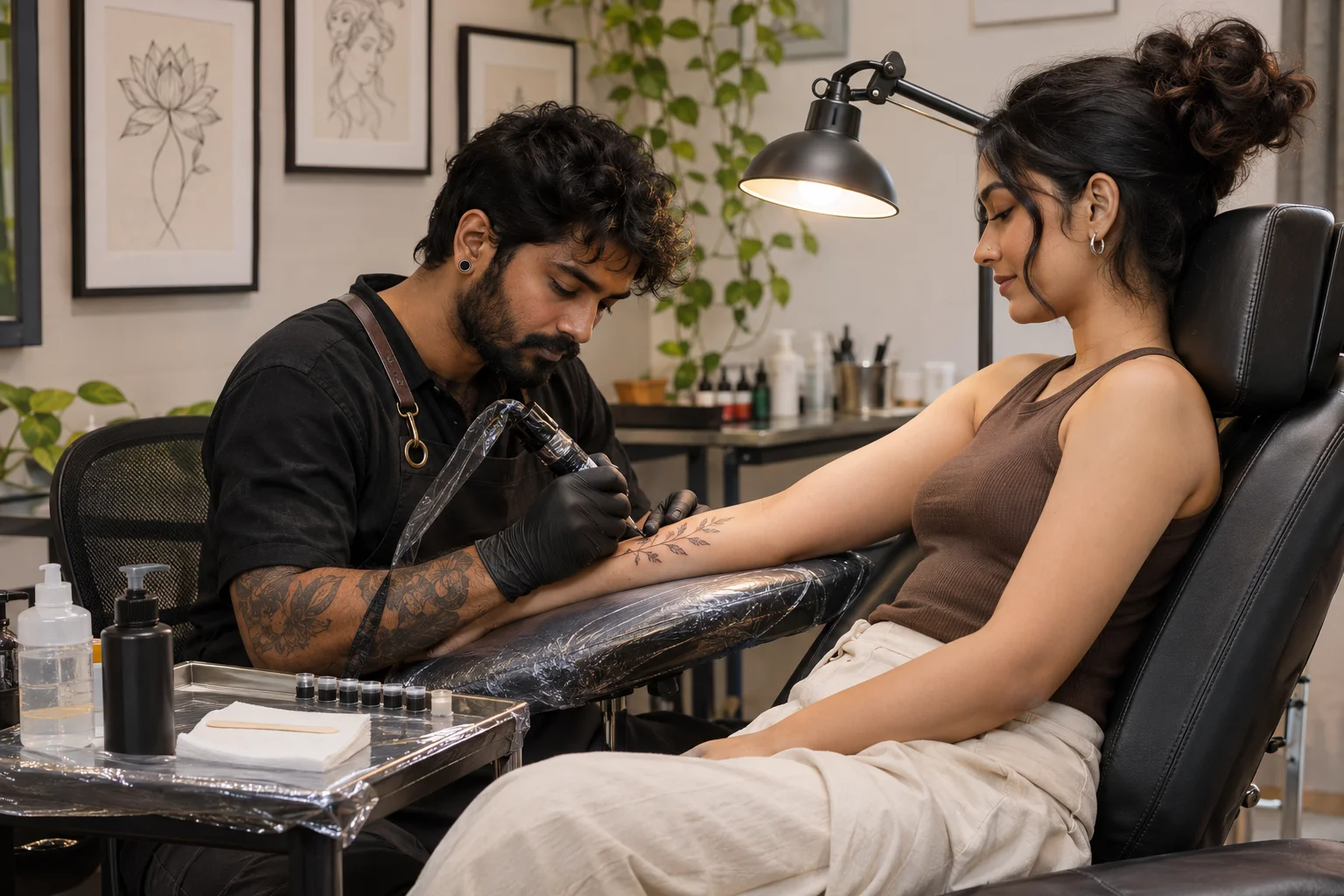
What follow up systems means
A follow-up system is the set routine for calling, messaging or emailing an enquiry more than once, since most buyers do not decide on the first conversation. GullySales sets the number and timing of follow-ups so an undecided buyer keeps hearing from you until they decide either way.
Last updated 14 Nov 2026.
For tattoo studios
Where it usually goes wrong, and what we would do.
“The silent gap after the first reply”
A client sends an idea, gets a price and goes quiet. The reason may be a worry that was not asked: pain, placement, cost. One follow-up that asks what is holding them back reopens the conversation without pressure.
“A deposit is paid and then forgotten”
Between deposit and session there can be a long wait for a large piece. Without a reminder the client drifts, or arrives unprepared. A short message with preparation steps keeps the date firm and the client ready.
“Late cancellations come from silence”
A client who has heard nothing for a long stretch may cancel on the day. A confirmation message ahead of the session, with the cancellation terms restated plainly, makes the date real and lets the studio rebook an empty chair.
“Aftercare is where the next booking starts”
A client checked on after the session feels looked after. A message asking how healing is going, and about sharing a healed photograph with consent, brings back the proof for the portfolio and the memory of a good studio.
What we do
What we deliver for tattoo studios.
The work available for this need. We agree the deliverables and responsibilities for your engagement in writing.
A reply for every stage
Written messages for first enquiry, consult confirmation, deposit receipt, session reminder, aftercare and healed check.
Result: Nobody is left without an answer.
A no-answer nudge
One kind follow-up for a client who went quiet after a quote, asking what would help.
Result: Silent enquiries get one fair second chance.
A session reminder with preparation
A message before the session covering what to wear, eat and bring, and the cancellation terms.
Result: Clients arrive ready and dates hold.
An aftercare check
A message after the session asking how healing is going, with an invitation to share a healed photograph if the client agrees.
Result: Clients feel cared for and you gather consented portfolio work.
An owner for every message
A simple list stating who sends each message, so the desk and artists do not double up or skip.
Result: Each message has a name next to it.
How the result is measured
- Follow-up completion rate
- Average number of follow-ups before close
- Enquiries closed after repeat follow-up
Recorded as a baseline before work starts, so every later report has an honest comparison.
What to capture or send
The messages a tattoo studio sends between the first idea and the healed piece.
- First reply to the idea
- Three questions about placement, size and references, plus the consult link. Send it from the desk so the artist stays free to draw.
- Nudge after no answer
- A single, polite reminder with the artist's current availability. Do not chase beyond it; a client who stays silent has moved on.
- Deposit confirmation
- Send the amount, the session date and the rule for rescheduling in one message. The client can scroll back to it when the date nears.
- Preparation note before the session
- Food, clothing, skin care and what to bring, sent the day before. It cuts late cancellations and rescheduled sessions.
- Aftercare instruction after the session
- Written by the artist and sent once the session ends. The client has the steps in a chat, not just in memory of a conversation in the chair.
- Healed check message
- Ask how the piece looks and request a photo if the client is willing. It begins the touch-up or next-piece conversation with a person who already trusts the studio.
Who it is for
This is written for these tattoo studios.
- Custom tattoo studios with several resident artists
- Single-artist private studios
- Fine line and minimal tattoo specialists
- Realism and portrait artists
- Cover-up and scar-camouflage specialists
- Traditional, tribal and Japanese style studios
- Studios that also offer piercing
- Tattoo removal and fading clinics
- Convention and guest-artist organisers
Before you decide
When this may not be the right fit.
- The studio has no one assigned to send and watch messages, and a set of templates would sit unused.
- You treat every enquiry as a walk-in and never take a deposit, so the deposit steps would describe a process you do not run.
- The artists feel any reminder is pushy and will not allow messages to clients, so the system would be switched off at once.
Before you decide
Agree the work. Know how to judge it.
Follow-up systems for tattoo studios: use these checks to prepare, choose the scope, and review what changes.
Bring the right evidence
Trace recent enquiries from arrival to the last recorded action. Include a won enquiry, an unsuitable one, and one that went quiet, with personal details removed for the initial discussion.
Make the scope clear
Agree who accepts each enquiry, what makes it qualified, and how ownership changes. Include a rule for missed replies and a clear reason for closing an enquiry.
Check the work in use
Pick an enquiry at random and ask the team to find its owner, latest conversation, and next action. Check that the record agrees with what actually happened.
Know when to change course
If no one has capacity to respond, assign that responsibility before buying more leads. Automation can support the owner, but it cannot replace an unresolved handover.
These are discussion points, not a fixed package. GullySales confirms the deliverables, responsibilities, fee, and term in writing after reading your brief and speaking with you.
Before we start
What to have ready before the work starts.
The records, access and decisions this work needs from tattoo studios. Anything missing is noted in the written scope, with who will supply it.
- Access to the shared inbox and artist threads
- The count of quiet threads needs a look at the actual conversations. A screen-share with the desk is acceptable, and names can be hidden. If an artist keeps their threads private, the baseline covers the shared inbox only, which understates the problem.
- The studio's rule for deposits and reschedules
- Reminders must say what happens to a deposit if the client misses a sitting. Bring the rule in whatever form it exists. If artists apply it differently, the studio has to choose one version before a message can state it.
- Preparation advice for the sitting day
- The session reminder carries what the client should do beforehand: eating, clothing, what to avoid. Bring the advice your artists give now. Where advice touches health, we keep your words and add a line asking the client to speak to their doctor if unsure.
- A name against every message
- Each message needs a person who sends it and a person who covers when they are away. List the desk staff and artists with their duties. Without names, reminders get sent late or twice, and the system becomes another thing everyone assumes someone else is doing.
- Healed-photo and consent wording
- The aftercare check can ask clients for a healed photograph. Bring any consent text you already use, or decide to start one. Without a clear request and consent line, we leave the photograph request out and limit the message to asking how the healing is going.
How it works
How the follow up systems work runs
The work itself, in order. How an engagement starts, from your brief to a written scope, is set out on our method page.
- 1
Count the threads that went quiet
We open the shared inbox and the artists' phones with you and count how many enquiries stopped after the first reply, how many consults ended without a deposit, and how many deposits were never followed by a booked sitting. Nothing fancy: a tally on paper is enough. That count is the baseline every later reading is compared with.
- 2
Decide when a quiet client is closed
You and the lead artist decide how long silence is allowed before the studio stops chasing, and what one final message says. We write that decision down as a plain rule for each stage. Without it the desk either nags people or lets threads rot, and the same client gets different treatment from different artists.
- 3
Draft the messages in the artists' voices
We write a reply for each stage: after the first enquiry, after the consult, once the deposit is paid, ahead of the sitting with preparation notes, and after healing. Each artist edits the wording to sound like them. Anything about skin or health is phrased as the studio's usual advice, never as a promise about a person.
- 4
Read the drafts aloud with the desk
The desk and each artist read the drafts aloud and mark anything that sounds unlike the studio, any claim about skin or healing, and any message that would reach a client at the wrong moment, such as a nudge after a deposit was already paid. We rewrite until the people who send the messages are comfortable saying them in their own name.
- 5
Test the tasks on live enquiries
We set the reminders in whichever tool the desk uses and run them on a handful of live enquiries. The desk tells us when a reminder arrives at the wrong moment, such as a nudge to someone who already booked. We fix the triggers and check that every message has a named person who sends it.
- 6
Read stalled threads against the opening count
After the routine has run for some time, we count the quiet threads again and read them against the opening tally: replies received, consults booked, deposits turned into sittings, aftercare answers. You see which stage still loses people and which message gets answered. We change one message at a time, so you know what made the difference.
Where this fits
Three pieces of sales work, in this order.
This work sits inside sales process design, at stage 2, qualification. The audit comes before it, and sales management keeps it running.
Step 1
Sales audit
Find where deals are being lost and what to fix first.
Start here if you cannot say where orders are lost.
Step 2 · you are here
Sales process design
One written way to sell, from first enquiry to repeat order.
Start here if every salesperson sells differently.
Step 3
Sales management
A target, a review routine and someone who owns the number.
Start here if the team has targets and no routine.
FAQ
Questions owners ask before they call.
Not here? More answers, or ask on WhatsApp.
Will follow-ups feel pushy?
Should follow-ups go on WhatsApp?
Who should send them, the artist or the desk?
How many reminders before we stop contacting a client?
Will automated reminders feel cold to a tattoo client?
What happens when a client replies to a reminder?
How long is the contract?
How soon will we see results?
Who will actually do the work?
What do you need from us?
More for tattoo studios
Related work to consider.
Closest to this: leads and follow-up
Also for tattoo studios
Or start from the overview: sales and marketing for tattoo studios.
Your next practical step
Tell us what you are trying to grow, and we will read it before we call.
Eight short steps, mostly taps. Skip anything you would rather answer on the call.