Tattoo studios · WhatsApp marketing
Turn a reference image sent on WhatsApp into a consult booked and a deposit paid.
WhatsApp marketing for a tattoo studio is the use of a business number to receive ideas, answer questions and confirm sessions with clients who chose to message you. GullySales works on the profile, the quick replies and the booking flow inside the app.
Scope, fee, reporting and term are agreed in writing after we have read your brief and spoken to you.
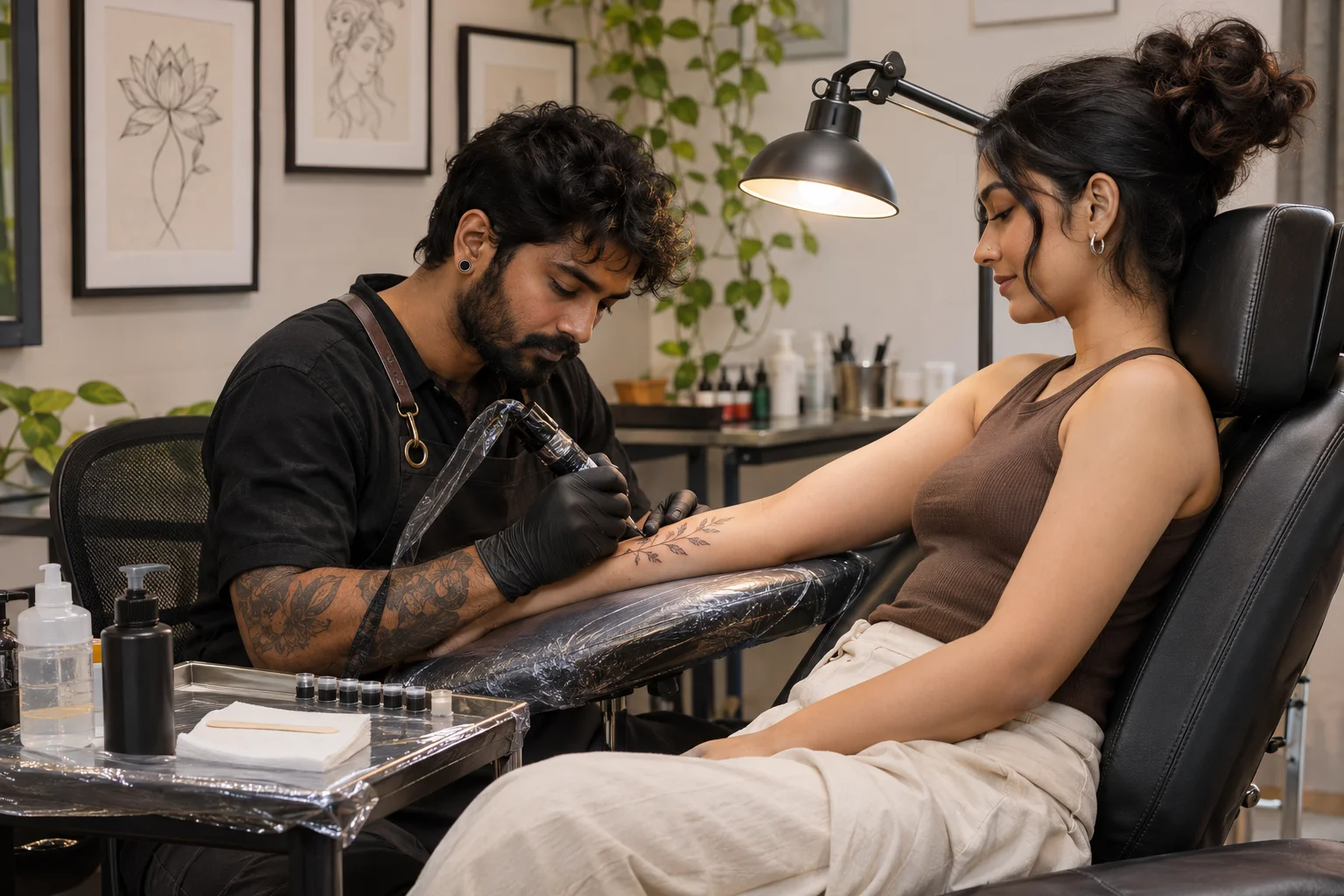
What WhatsApp marketing means
WhatsApp marketing is sending updates, offers and reminders to customers on the app most Indian buyers already check daily. GullySales sets up business WhatsApp, writes the message templates and keeps the list consented and current.
Last updated 14 Nov 2026.
For tattoo studios
Where it usually goes wrong, and what we would do.
“Clients send the idea as a picture”
A reference image arrives with a one-line question. The reply that wins is one that looks at the picture, asks about placement and size, and offers a consult. A reply that only quotes a price misses the point of the message.
“One personal number does not scale”
When enquiries reach an artist's own phone, they are answered between sessions or not at all. A shared business number with quick replies lets the desk answer in the studio's voice while artists draw.
“Broadcasting to everyone annoys the wrong people”
A flash day message sent to every contact reaches people who only wanted one answer. A list built from clients who agreed to hear about flash days and guest artists keeps the studio welcome in the inbox.
“Deposits get lost in chat history”
A deposit request buried in a long thread is easy to miss, and so is its confirmation. A clear message stating the amount, what it holds, how to pay and the cancellation terms keeps the record where both sides can find it.
What we do
What we deliver for tattoo studios.
The work available for this need. We agree the deliverables and responsibilities for your engagement in writing.
A business profile that explains the studio
Studio name, styles, address, appointment rules and age policy set up on a business number.
Result: A new contact sees what the studio is and does.
Quick replies for common questions
Saved answers for price, placement, pain, aftercare and the age policy, in the studio's voice.
Result: The desk replies in one consistent voice.
A consult booking message
A short message with a booking link and the few questions the artist needs answered first.
Result: Each consult starts with a clear brief.
A deposit message
A plain message stating what the deposit holds, how to pay and the cancellation terms.
Result: Clients know the terms before they pay.
A consent-based list
A list of clients who agreed to hear about flash days and guest artists, with a simple way to leave it.
Result: Broadcasts go only to people who asked.
How the result is measured
- Messages delivered
- Reply rate
- Enquiries from WhatsApp
Recorded as a baseline before work starts, so every later report has an honest comparison.
What to capture or send
Messages a tattoo studio sends on WhatsApp and the moment for each.
- Reply to a reference image
- A reply that thanks the sender, names the artist who suits the style and asks for placement and size. It turns a loose picture into a brief.
- Consult booking link
- Sent once the brief is clear. It carries the consult time options and what to bring, so the client books without a long thread.
- Deposit request
- The amount, the reason for it and the rescheduling rule, in one message. Use the studio's payment link, and never ask for card details in chat.
- Session reminder
- Sent the day before, with the address, the artist's name and a line on preparation. It is the message that most reduces no-shows.
- Aftercare note
- The artist's instructions as a short message with a saved reference for the client. Ask them to message the studio if something looks wrong.
- Touch-up or next-piece invitation
- Sent only to clients who agreed to messages. Name the artist's next open window and link the booking form.
Who it is for
This is written for these tattoo studios.
- Custom tattoo studios with several resident artists
- Single-artist private studios
- Fine line and minimal tattoo specialists
- Realism and portrait artists
- Cover-up and scar-camouflage specialists
- Traditional, tribal and Japanese style studios
- Studios that also offer piercing
- Tattoo removal and fading clinics
- Convention and guest-artist organisers
Before you decide
When this may not be the right fit.
- Your clients have not agreed to receive messages, and a list built from old chats would break their trust.
- One personal number serves the whole studio and its owner is not willing to open a business account.
- You have no one to answer replies on the same day, so the channel would invite messages that wait unread.
Before you decide
Agree the work. Know how to judge it.
WhatsApp marketing for tattoo studios: use these checks to prepare, choose the scope, and review what changes.
Bring the right evidence
Describe how the contact list was collected, what people asked to receive, and which messages are currently sent. Include opt-outs and replies when reviewing campaign performance.
Make the scope clear
Agree the audience, message purpose, sending system, and response owner. Separate promotional communication from order or service updates, and check current platform requirements before launch.
Check the work in use
Test the message with a small appropriate audience before wider use. Check links, reply handling, opt-outs, and whether the response leads to a relevant conversation or order.
Know when to change course
Do not use an unexplained contact list as a shortcut to demand. If recipients do not expect the message, resolve the permission and relevance questions before sending.
These are discussion points, not a fixed package. GullySales confirms the deliverables, responsibilities, fee, and term in writing after reading your brief and speaking with you.
Before we start
What to have ready before the work starts.
The records, access and decisions this work needs from tattoo studios. Anything missing is noted in the written scope, with who will supply it.
- A business number that is not an artist's own
- A shared number lets the studio keep the history if an artist leaves. Bring a SIM that the studio owns, or decide to buy one. If the only number is an artist's personal line, we advise moving gradually and keeping that artist as the contact for existing clients.
- Chat exports from recent enquiries
- We read real conversations to write replies that sound right. A few exported chats, with names hidden, will do. If the desk cannot export, a screen-share is acceptable. Without examples, the quick replies are generic and the artists end up rewriting them.
- The list of clients who agreed to messages
- Only people who agreed to hear from the studio can go on a list. Bring whatever record exists: a form, a message thread, a note in the diary. Contacts without a record are used only for messages about their own booking.
- Your deposit instructions, in words
- The deposit message needs the studio's actual way of taking payment and its rule on refunds. Bring the text you send today. We do not move money for you, and if the process is vague, you settle it before a message states it.
- The name and logo for the business profile
- The business profile shows who you are, what you do and when the desk replies. Bring the studio's logo, address and a plain description. If the licence or registration can be shown, tell us, and if not, the profile simply leaves it out.
How it works
How the whatsapp marketing work runs
The work itself, in order. How an engagement starts, from your brief to a written scope, is set out on our method page.
- 1
Read the chats where ideas arrive as pictures
We sit with the person who handles WhatsApp and read a set of recent chats where a client sent a reference image. We note what they asked, what the studio replied and where the conversation stalled. You pick the chats that went well, and these set the tone for the saved replies we write.
- 2
Choose the business app or the API
For a studio with a few artists and one desk, the free business app is enough, and we explain what it lacks. A larger studio may need the API and a provider, which we only suggest when it is justified. You decide, since the choice changes who can answer, which numbers are used and what the provider charges.
- 3
Agree who may be messaged and about what
We write down which contacts agreed to hear from the studio, for which purpose, and how they can stop. Booking, deposit and sitting messages go to people with a live booking. Offers go only to those who opted in. You confirm this list before any template is submitted for approval.
- 4
Route each chat to a named person
We agree who picks up a new idea, who handles a deposit, and who answers an aftercare question, and we set labels and a hand-over note for each. Chats between an artist and a long-standing client may stay personal. The shared number holds studio business only, so no one has to scroll for a deposit.
- 5
Write the greeting and the away message
We write the greeting a new contact sees, the away message for sitting hours and closed days, and the line that asks them to send the idea, the placement and the size. You and the desk read these on a phone beside a real chat. The wording says what the number is for and what it is not, so a client with a medical worry is pointed to a doctor.
- 6
Release the replies and read the chats
We load the quick replies, the consult message and the deposit message, then test them with the desk on a few real enquiries before the number is given out more widely. Later we read the chats against the first set: ideas received, consults booked, deposits confirmed. You decide which replies to rewrite and which routes to keep.
Where this fits
Three pieces of sales work, in this order.
This work sits inside sales process design, at stage 0, foundation. The audit comes before it, and sales management keeps it running.
Step 1
Sales audit
Find where deals are being lost and what to fix first.
Start here if you cannot say where orders are lost.
Step 2 · you are here
Sales process design
One written way to sell, from first enquiry to repeat order.
Start here if every salesperson sells differently.
Step 3
Sales management
A target, a review routine and someone who owns the number.
Start here if the team has targets and no routine.
FAQ
Questions owners ask before they call.
Not here? More answers, or ask on WhatsApp.
Is it fine to broadcast a promotion to every number on the phone?
Should the artist or the desk answer?
Is it right to take payment details on chat?
Can we use WhatsApp broadcast for a guest artist visit?
Can we send offers to everyone on the studio's phone?
Should clients be able to book a sitting entirely inside WhatsApp?
How much does it cost?
How long is the contract?
How soon will we see results?
Who will actually do the work?
More for tattoo studios
Related work to consider.
Or start from the overview: sales and marketing for tattoo studios.
Your next practical step
Tell us what you are trying to grow, and we will read it before we call.
Eight short steps, mostly taps. Skip anything you would rather answer on the call.