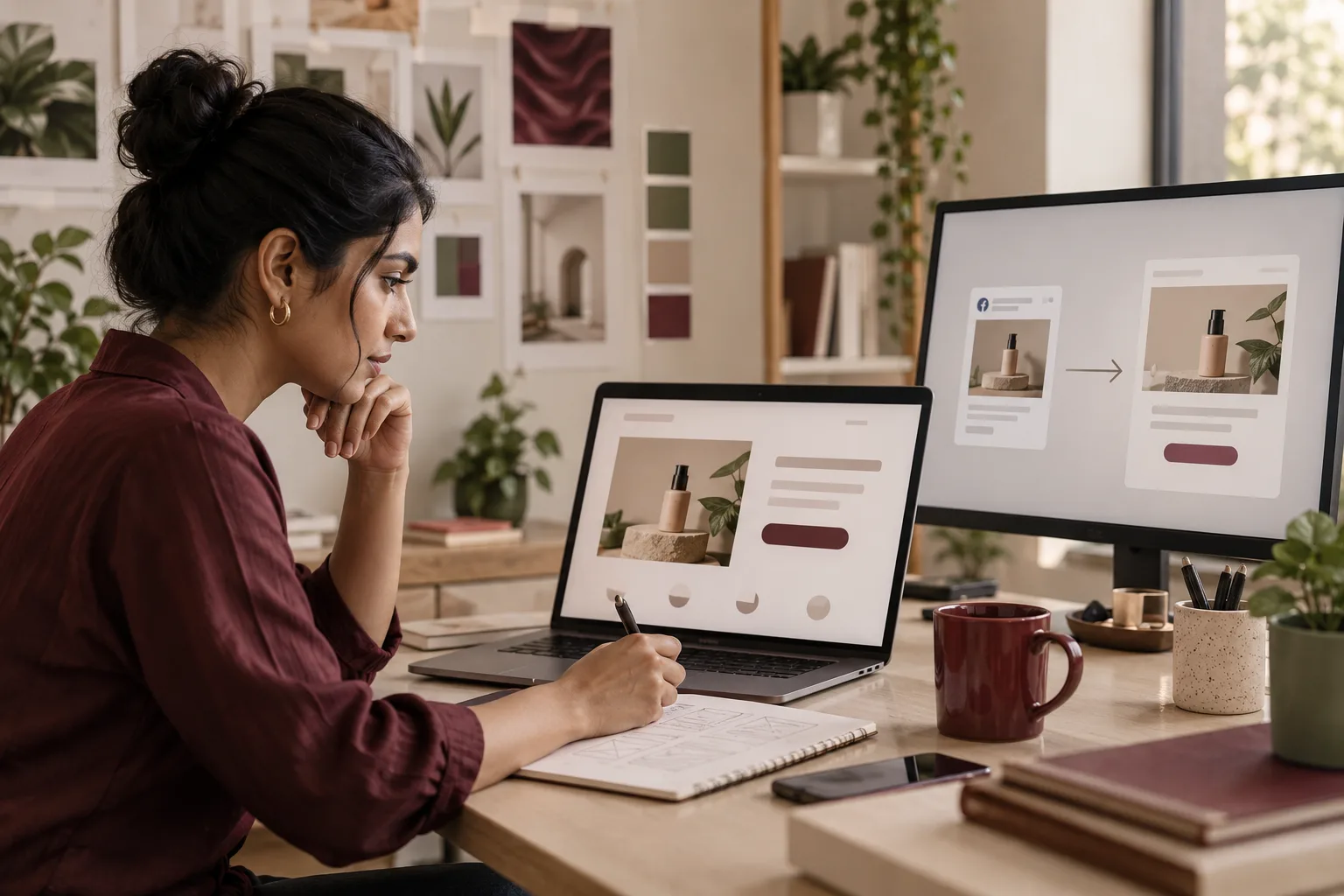
The page your ads send people to finally matches what the ad promised.
Gully Sales plans, writes, builds and tests single-purpose landing pages for Indian SMBs, each tied to one campaign, one audience and one action, so paid clicks, email visitors and outreach replies turn into enquiries and orders.
- One page, one offer, one action, built for the traffic source that feeds it.
- Headline, proof, offer and form written to continue the ad or email that brought them.
- Tracking wired in from launch, so you know the cost of every enquiry the page produces.
Gully Sales Private Limited serves businesses across India, with campaign, copy, design, development and tracking handled by one team.
In one paragraph
What is Landing Page Development for Ad Campaigns?
Landing page development is the design and build of a single-purpose web page that receives visitors from one campaign and asks them to take one action. Gully Sales writes the promise, matches it to the ad or email, adds proof and an offer, builds the form, checks it on mobile and wires in tracking, so an Indian SMB's paid and outbound traffic lands on a page made to convert it.
The problem
Your campaigns send people to a page that was never built for them.
Most SMB campaigns end on the homepage or a general service page. The ad promised a specific thing to a specific person; the page that opens talks about the whole company, offers six menus and a generic contact form. The visitor came with one question and the page does not answer it. Nobody is at fault here. The website was built to describe the business, not to close one offer, and the agency running the ads was only asked to bring clicks.
You will recognise it as
- Your ads, emails or WhatsApp broadcasts all link to the homepage or a service page with no offer on it.
- Clicks are coming in and the spend is real, but enquiries from the campaign are few or poorly matched.
- The page opens slowly on a phone, and the form sits far below the point where most visitors stop scrolling.
- The headline on the page says something different from the ad or email that brought the visitor.
- You cannot tell which campaign produced which enquiry, so every campaign looks equally weak.
- Every new campaign needs the developer to clone a page, and it goes live late or not at all.
What it costs the business
- Paid clicks are spent on visitors who leave within seconds because the page did not continue the conversation the ad started.
- Sales follows up on enquiries the page never qualified, so calling time goes to people who wanted something else.
- Campaign budgets get cut because results look poor, when the page, not the channel, was the weak point.
- Offers that would work stay untested, because launching a page for each one is too slow and too costly.
Why it persists. It persists because a page per offer reads as extra cost stacked on media that is already spent, while pointing the ad at an existing page appears to cost nothing. The waste is real but never invoiced: it surfaces as a higher cost per enquiry, which is then blamed on the channel, the season or the audience. So the next campaign points at whatever page exists, and the same money is lost again a little more expensively.
If it stays unresolved. Every rupee of campaign spend keeps leaking at the same point. As channel costs rise, the same budget buys fewer clicks and the same page converts the same small share of them, so the cost of each enquiry climbs until the campaign is switched off and the channel is written off as one that does not work for your business.
What changes
What changes when each campaign has a page built for it.
In the first weeks
- A live page for your campaign with one clear offer, matching copy, proof, a working form and tracking.
- A mobile-checked page that loads quickly on the phones and networks your visitors actually use.
- A tracking setup that records every form submit, call tap and WhatsApp tap by campaign and source.
In how the work runs
- New offers go live as pages without waiting on the main website or its developer.
- Enquiries arrive with the campaign and offer attached, so sales knows what the person responded to.
- A page template your team can reuse for the next campaign with copy and offer changes only.
In sales and marketing
- A larger share of the clicks you already pay for become enquiries or orders, which lowers cost per enquiry.
- Better-qualified enquiries, because the page states who the offer is for and what happens next.
In what management can see
- Cost per conversion, form completion and lead quality reported per campaign, not blended across the whole site.
- Clear evidence of which offers, audiences and channels deserve more budget.
Over the longer term
- A library of tested pages and offers that makes each new campaign faster and cheaper to launch.
- Learnings about headlines, proof and offers that feed back into the main website and sales conversations.
Gully Sales controls the page: its message, structure, form, speed and tracking. Conversion rate, lead quality and cost per enquiry also depend on the offer itself, the audience the campaign targets and how quickly enquiries are followed up, so we report them but do not promise them.
Who it is for
This is for businesses paying for clicks that land on the wrong page.
The businesses it suits
- Businesses running Google, Meta or LinkedIn ads that currently land on the homepage or a general page.
- Companies sending email, SMS or WhatsApp campaigns with an offer that deserves its own page.
- Sales teams doing outbound outreach who need a page to send a prospect to after the first reply.
- Businesses launching a new product, service, batch, event or seasonal offer with a fixed window.
- Clinics, institutes, real estate and service firms whose enquiry depends on one clear next step.
- Manufacturers and distributors promoting one product line or dealer programme to a specific segment.
What usually prompts the call
- A campaign is about to launch and there is no page that matches its promise.
- Ads are running, clicks are coming in and the cost per enquiry is too high to continue.
- A new offer, location, course or product needs to be tested before it earns a place on the main site.
- An exhibition, webinar or launch has a date and the main website cannot be changed in time.
- The sales team keeps sending prospects a PDF because there is nowhere online to point them.
What Gully Sales does
The work, component by component.
Campaign promise
We define the one thing the page promises: who it is for, what they get and what to do next. Everything else on the page exists to support that single promise, and anything that does not is left out.
- Why it matters:
- A page that tries to say everything converts nobody. One promise gives the visitor a reason to stay.
- You receive:
- A one-page brief stating audience, promise, action and the objections the page must answer.
- Business value:
- The page and the campaign feeding it pull in one direction.
Message match
The headline, opening paragraph and visuals are written to continue the ad, email or message that brought the visitor, using the same words, the same offer and the same audience.
- Why it matters:
- A visitor who sees a different promise from the one they clicked assumes they are in the wrong place and leaves.
- You receive:
- Headline and opening copy variants mapped to each ad group, email or outreach message.
- Business value:
- Fewer visitors bounce in the first seconds, so more of them reach the offer.
Proof section
We select and present the evidence that makes the promise believable: client names you can show, results you can verify, certifications, photos of real work, or process detail if nothing else exists yet.
- Why it matters:
- Indian buyers check whether a business is real and established before they share a phone number.
- You receive:
- A proof block built from verified items only, plus a list of proof worth collecting next.
- Business value:
- The visitor's doubt is answered on the page instead of on a sales call.
Offer and call to action
We shape what the visitor gets for acting now: an audit, a sample, a site visit, a demo, a quote or a purchase, and write the call to action so the next step is obvious and low-risk.
- Why it matters:
- 'Contact us' asks the visitor to do the work. A specific offer tells them what they will receive.
- You receive:
- Offer definition, call-to-action copy and a placement plan for the page.
- Business value:
- The visitor knows what happens after the click, so more are willing to act.
Form and enquiry path
We build the form, WhatsApp path or checkout with only the fields the next step needs, with validation, a confirmation page and routing to your inbox, sheet or CRM so nothing waits unseen.
- Why it matters:
- Every extra field costs completions, and every unrouted enquiry costs a follow-up that never happens.
- You receive:
- Working form with routing, confirmation page and logged test submissions.
- Business value:
- Enquiries arrive complete, on time and where your team will actually see them.
Tracking setup
We install analytics and conversion tracking so every submit, call tap and WhatsApp tap is recorded with its campaign and source, and sent back to the ad platform where the platform allows it.
- Why it matters:
- Without this you cannot know the cost of an enquiry, and the ad platform cannot optimise towards enquiries.
- You receive:
- Tracking plan, tags installed and conversion events verified end to end.
- Business value:
- Every campaign is judged on enquiries, not on clicks.
Mobile experience
The page is designed for the phone first: short blocks, large tap targets, a form that works with the on-screen keyboard, and load time checked on a mid-range Android phone on mobile data.
- Why it matters:
- Most campaign traffic in India arrives on a phone, often on a slow or unstable connection.
- You receive:
- Mobile layout, speed report and device checks completed before launch.
- Business value:
- The visitors you pay the most for get the version of the page that works.
Testing and iteration
After launch we review the numbers, then change one thing at a time: headline, offer, proof order, form length. Each change is measured against the version before it, and the winner stays.
- Why it matters:
- The first version is an informed guess. The numbers show what to keep and what to drop.
- You receive:
- Test log with hypotheses, results and the version currently live.
- Business value:
- The page improves while the campaign runs, not after the budget is spent.
What you will have at the end.
- Landing page brief: audience, promise, offer, action and objections, agreed with you before design starts.
- Message-match map linking each ad group, email or outreach message to its headline and opening copy.
- Full page copy: headline, sub-headline, benefits, proof, offer, short FAQ and call to action.
- Page design for mobile and desktop in your brand, with a sample screen shared for approval before build.
- Built page on your domain or a sub-domain, on your CMS, a page builder or standalone code as agreed.
- Working form or WhatsApp path with validation, confirmation page and routing to inbox, sheet or CRM.
- Analytics and conversion tracking installed and verified, with events sent to ad platforms where possible.
- Speed and mobile check report, with the fixes applied before launch.
- Reusable page template your team can duplicate for the next campaign.
- Launch checklist, a post-launch review and a first set of test recommendations.
How it runs
The engagement, step by step.
- 1
Campaign and offer brief
We sit with you and whoever runs the campaign to fix the audience, the traffic source, the offer and the single action the page will ask for. We also list the objections a visitor will have.
- You provide:
- Campaign plan or ad copy, the offer, who it is for, and access to anyone who talks to these customers.
- We produce:
- A one-page landing page brief for sign-off.
- Done when:
- You agree the promise, the action and the audience in writing.
- 2
Message and structure
We map each ad, email or message to the headline it should land on, then decide the order of sections: promise, proof, offer, objections, form. Nothing goes on the page that does not serve the action.
- You provide:
- Final ad or email variants, and any brand rules the page must follow.
- We produce:
- Message-match map and an annotated page outline.
- Done when:
- The outline is approved and every ad variant has a matching headline.
- 3
Copy and proof
We write the full page in plain business English, then assemble the proof: client names, results, photos, certifications. Where proof is missing we say so and suggest what to collect.
- You provide:
- Verified client names, results, photos, certificates and permission to use them.
- We produce:
- Complete page copy and a proof block, with gaps marked.
- Done when:
- Copy is approved and every proof item is one you can stand behind.
- 4
Design and build
We design the page for the phone first, share a sample for approval, then build it on your CMS, a page builder or as standalone code, in your brand and on your domain.
- You provide:
- Logo, brand assets, domain or hosting access, and a decision on the platform.
- We produce:
- Approved design and a built, private preview of the page.
- Done when:
- The page matches the approved design on the devices your visitors use.
- 5
Form, tracking and QA
We connect the form or WhatsApp path to your inbox, sheet or CRM, install analytics and conversion events, then test every path end to end on real phones and check load speed on mobile data.
- You provide:
- Access to analytics, ad accounts and the CRM or inbox that should receive enquiries.
- We produce:
- Tracking plan, verified events, test submissions and a speed report.
- Done when:
- A test enquiry reaches the right person and appears in analytics with its source.
- 6
Launch and review
The page goes live with the campaign. In the early period we watch the numbers daily for anything broken, then hold a review of conversion rate, form completion, lead quality and cost per enquiry.
- You provide:
- Feedback from sales on the quality of the enquiries received.
- We produce:
- Launch confirmation and a first performance review.
- Done when:
- You know how the page is converting and what the first test should be.
- 7
Test and iterate
We change one element at a time, headline, offer, proof order or form length, measure it against the previous version and keep the version that performs. The log stays with you.
- You provide:
- Agreement on which tests to run and the traffic to run them on.
- We produce:
- Test log, updated page versions and a reusable template.
- Done when:
- Each test has a recorded result and the winning version is live.
Ways to work with us
Build one page, or the page system every campaign you run will need.
Single campaign page
One landing page for one campaign, from brief through launch, with a post-launch review. Suited to a launch, an event or a first paid campaign.
Campaign page set
A family of pages for one campaign across several audiences, ad groups, courses or locations, sharing one template and one tracking setup.
Ongoing page programme
A monthly arrangement in which we build, test and improve pages as your campaigns change, working alongside your ads or sales team.
Page within a campaign engagement
Landing page development combined with our demand generation or outsourced sales work, so the page, the traffic and the follow-up are managed together.
Why Gully Sales
What you are actually choosing when you choose us.
We start from the campaign, not from the page.
We read the ads, emails or outreach first and build the page to continue them. A page designed in isolation looks fine and converts poorly; a page designed from the campaign does its job.
Copy, design, build and tracking are one team.
You do not brief a copywriter, then a designer, then a developer, then an analytics person. The same team owns the promise through to the conversion event, so nothing is lost between hand-offs.
We know what Indian buyers check before they enquire.
Real photos, a phone number that is answered, a WhatsApp option, GST and registration details, and named clients matter more here than stock imagery. We build the page for how buyers here decide.
Enquiries are routed to sales, not just collected.
Gully Sales works across sales and marketing, so the page is built to hand the enquiry to whoever follows up, with the campaign and offer attached, rather than to fill a spreadsheet nobody opens.
We report the cost of an enquiry, not the count of clicks.
Every page ships with conversion tracking verified end to end, and our reviews talk about form completion, lead quality and cost per enquiry, which are the numbers that decide whether the campaign continues.
Where it applies
The same service, in different businesses.
Healthcare clinics
- The situation:
- A clinic runs Google and Meta ads for one treatment, but the ads land on the hospital homepage and callers ask which doctor, which branch and what it costs.
- How it applies:
- A treatment-specific page with the doctor, the procedure explained, patient proof, a consultation offer and a call or WhatsApp button placed for a phone screen.
- Likely benefit:
- Callers arrive already knowing the treatment and the next step, so the front desk books rather than explains.
Education and training institutes
- The situation:
- Admissions season brings a burst of paid and referral traffic for one course, and the enquiry form on the main site asks for fifteen fields.
- How it applies:
- A course page with batch details, eligibility, outcomes, alumni proof and a short enquiry form that routes to the admissions counsellor with the course attached.
- Likely benefit:
- Fewer abandoned forms and counsellors who know which course the enquiry is about before they call.
Real estate developers
- The situation:
- A project launch has a limited window and the corporate website cannot be updated in time for the ad campaign.
- How it applies:
- A project page with location, configurations, pricing-on-request, site-visit booking and tracking that reports which ad set produced each visit request.
- Likely benefit:
- Site-visit requests are captured from day one and the sales team can see which audience is worth more budget.
Manufacturers and industrial suppliers
- The situation:
- A dealer or distributor recruitment drive is being pushed through LinkedIn and email, and prospects are being sent a PDF brochure.
- How it applies:
- A dealer programme page with margins explained in principle, support offered, existing dealer proof and an application form that qualifies by region and capacity.
- Likely benefit:
- Applications arrive pre-qualified, and the business development team stops chasing PDF downloads.
B2B services and software
- The situation:
- An outbound email sequence is getting replies, but the only place to send an interested prospect is a homepage that speaks to everyone.
- How it applies:
- A segment-specific page that mirrors the email's promise, shows relevant client proof and offers a demo or audit booking with a calendar step.
- Likely benefit:
- Prospects who reply can be sent to a page that closes the loop the email opened, and bookings come with context.
D2C and e-commerce brands
- The situation:
- A festive or seasonal offer is being promoted on Instagram, and clicks land on a category page where the offer is not visible.
- How it applies:
- An offer page with the bundle, the discount conditions, reviews, delivery details and a checkout path that keeps the offer applied.
- Likely benefit:
- The offer the customer clicked for is the offer they see, and checkout completion can be measured for the campaign alone.
Questions buyers ask
Before you enquire, the answers you will want.
What traffic source and conversion action will the page support?
Any source with a clear promise behind it: Google Search, Meta or LinkedIn ads, email or WhatsApp broadcasts, outbound sales outreach, QR codes on print, or an exhibition follow-up. We build one page per promise, not per source, so the same page can serve an ad and an email if they make the same offer. The action is agreed in the brief: a form, a WhatsApp conversation, a call, a booking or a purchase.
How long does the engagement take?
It depends on how much already exists. A page where the offer, copy and proof are ready moves faster than one where we must define the offer and collect proof first. Platform access, brand assets and approval speed on your side also matter. We give you a schedule with the quote and hold to it once your inputs are in, but we do not promise a fixed number of days before we have seen what is in place.
What inputs are required from us?
The campaign plan or the ads themselves, a clear offer, and someone who can describe the customer and their objections. Then verified proof: client names, results, photos and certificates you have permission to use. Finally access: your domain or hosting, analytics and ad accounts, and the inbox, sheet or CRM that should receive enquiries. We tell you exactly what is needed at the start so nothing waits on a missing login.
How is success measured?
Against the baseline we record before launch: click-to-enquiry rate, form completion, lead quality as rated by your sales team, cost per enquiry and mobile page speed. We report per campaign, not blended across your whole site, so you can see what this page did with this traffic. Where there was no earlier page, an agreed initial period becomes the baseline that later tests are compared with.
What is excluded from scope?
Running the ads, unless you engage our demand generation team alongside. Redesigning your main website, building a multi-page campaign site, or optimising pages you already have; those are separate services and we will point you to the right one. Hosting fees, ad spend, paid page-builder licences and stock imagery are paid by you. Ongoing testing after the first review is part of the programme option, not the single-page option.
Can you build it on our existing website or CMS?
Usually, yes. We build on WordPress and other common CMS platforms, on page builders your team already uses, or as standalone code on a sub-domain when the main site is slow or hard to change. We recommend the option that lets the page load fast, keeps your tracking clean and lets your team duplicate it for the next campaign. If your current platform cannot do that, we say so before starting.
What if we have no client testimonials or results to show yet?
You still have proof; it is just not in the form of a testimonial. Photos of real work, your team, your premises, certifications, registrations, years in business, named clients with permission, a clear process and a real phone number all build confidence. We use only what you can stand behind, mark what is missing and give you a short list of proof to collect so the next version of the page is stronger.
Will you run the ads or the email campaign as well?
Landing page development on its own covers the page, the form and the tracking. If you want the traffic managed too, our demand generation and marketing campaigns team can run the ads or emails alongside, and our outsourced sales team can handle follow-up. Many clients start with the page because their existing agency is fine at buying traffic and the page was the missing piece.
2 more questions
What happens after launch? Do you keep improving the page?
Every engagement includes a post-launch review with a first set of test recommendations. In the ongoing programme option we run those tests, changing one element at a time and keeping what performs, and report the results each month. In the single-page option we hand over the page, the template and the test log so your team or your agency can continue, and you can return to us for a test cycle when you need one.
How is a landing page different from a website page or a microsite?
A website page belongs to the site's navigation and serves anyone who arrives. A landing page has one audience, one promise and one action, usually no menu, and lives for the campaign it was built for. A campaign microsite is a small multi-page site for a larger launch or event. If your campaign needs more than one page to do its job, we recommend the microsite service rather than stretching a landing page.
Talk to us
Book a free audit before your next campaign spends its first rupee.
The review is free. We look at where your campaigns currently land, what happens after the click and where enquiries are being lost, and tell you plainly whether a landing page will help.
- No obligation and no sales script
- A reply from someone who does the work
- Your details are never sold or shared