Notes for owners · Sales management
A front-desk script for the call a clinic misses
Missed clinic calls often ring while the doctor is mid-consultation. A call-back routine, a missed-call log and word-for-word scripts so no caller is left waiting.
The GullySales team · Updated 17 Oct 2026 · 6 min read
Rules for this trade differ by state and professional body, and they change. Check the current position with your own council or adviser before you act on anything here.

On this page
- Why the missed call is lost faster than it looks
- Step one: write down every missed call
- Step two: send the first message at once
- Step three: the call-back script
- Step four: the voicemail line and the greeting
- A children's clinic in Bhopal with one receptionist
- When this does not fit
- Putting the log on the desk
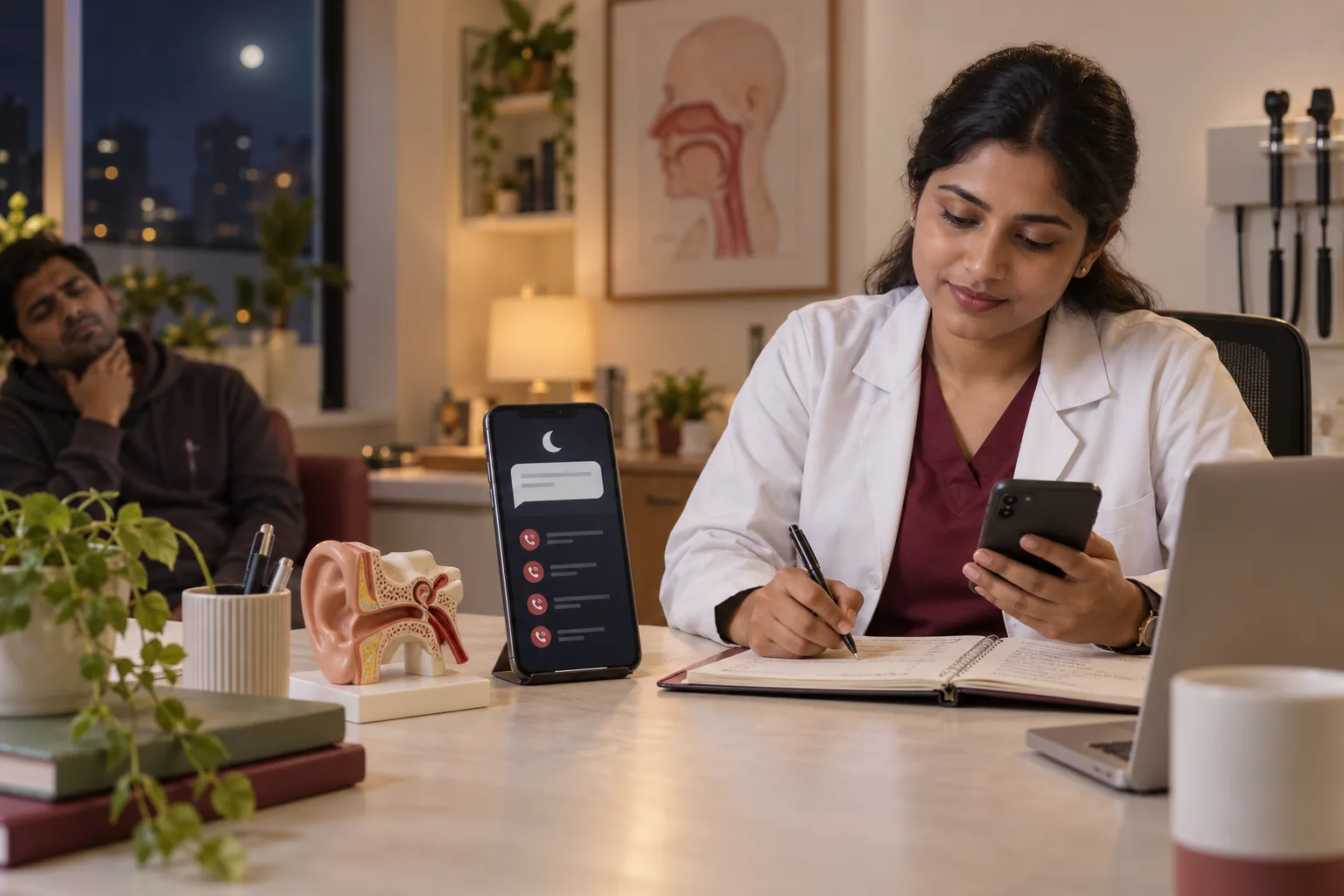
A clinic often misses calls because the phone rings while the one person who answers is with a patient or the doctor. A routine helps before more staff does: every missed call is noted, the caller gets a message straight away, and someone rings back at a time that was named. Below is the log, the two messages and the call-back script, ready to use.
Why the missed call is lost faster than it looks
A person who rings a clinic may be in some discomfort or have a booking to make today. Some will not leave a voicemail. They may ring the next clinic on the search page, and whoever answers first can get the appointment while the first clinic never learns the call existed.
At an invented dental clinic in Belagavi, the receptionist also greets patients, fills forms and collects fees. The phone rings during a scaling session, and a patient at the counter needs a receipt. One person cannot be in three places. That is a design problem, not a fault.
Step one: write down every missed call
Keep a sheet, or a page in a notebook, at the desk. Each time the phone shows a missed call, someone adds a line.
| Time | Number | Name if known | What they wanted | Messaged? | Called back? | Outcome |
|---|---|---|---|---|---|---|
| 11:20 | 98xxx | unknown | not known | yes | 12:40 | Booked Thursday 5 pm |
| 11:45 | 99xxx | Mrs Rao | cancel | yes | 12:45 | Moved to Saturday |
The log does two jobs. It makes the call-back someone's task, and it shows at the end of the week how many calls were missed and how many became bookings. That number tells you whether a second phone line or extra hours are worth the trouble. Do not guess it.
Name one person who clears the log. If the job belongs to "whoever is free", it belongs to nobody.
Step two: send the first message at once
When a call is missed, send a short message from the clinic's WhatsApp number, by hand if you use the Business app:
Hello, this is [clinic name]. Sorry we missed your call, we were with a patient. We will ring you back by [time]. If you would like to type your question here instead, we will reply to that too.
Name a real time. "Shortly" means nothing to a person in pain. Choose a time you can keep, such as the end of the current consultation, and set a reminder on the desk phone.
If the clinic's number is a landline that cannot send messages, use a mobile number kept for this purpose and say so in the message.
Step three: the call-back script
When you ring, say who you are before anything else.
"Good morning, this is [name] from [clinic]. You rang us a little while ago and we missed it. How can I help?"
Then listen. People often want something small: a timing, a fee for a consultation, a route. Answer it. If it leads to a booking, take it on this call.
For a booking, ask in this order: what is it for, which day suits you, is this the right number to remind you on. Repeat the day and time back. Then say what to bring.
If there is no answer, do not ring five times. Ring once, send the message again, and note it in the log. A second attempt later the same day is fine. After that, stop.
Step four: the voicemail line and the greeting
If the phone has a voicemail or greeting, make it say what to do: "You have reached [clinic]. We may be with a patient. Please send your name and question on WhatsApp to this number and we will call you back." This gives the caller something to do other than hang up. Keep it under fifteen seconds.
Avoid a greeting that lists clinic hours and then goes silent, since nobody listens to the end.
A children's clinic in Bhopal with one receptionist
Take an invented paediatric clinic in Bhopal. The receptionist keeps missed calls in mind and returns them "when things calm down", usually after lunch. A parent who rang at eleven about a child's fever may have booked elsewhere by one. The call-back is treated as a favour that waits for a quiet moment.
Three changes follow. The log goes on the desk. The first message goes out at once. And the call-back time is fixed to the gap between the last morning patient and lunch, with the owner's assistant covering on days that gap never comes. After two weeks the owner counts the log lines and sees that most missed calls fall between eleven and one, when the doctor is busiest. Lunch for the receptionist moves later and the call-backs move into that hour, which the receptionist dislikes. Some days the gap still never comes, and those calls wait.
When this does not fit
If your clinic gets very few calls, a log is more ceremony than you need. A note in the phone is enough. If calls are heavy and continuous, a log will not keep up, and you should talk to someone about call handling; telecalling is the nearest service.
Calls from existing patients about cancelling or a report go in the log too, marked as such, so that the booking count is not flattered. Never use the script to push. A caller who says "I was just checking" is allowed to say it. The aim is to answer, not to book at all costs. Message only the number that called, and only about that call.
Putting the log on the desk
Print the log table, stick it at the desk and choose the person who owns it. Write the two messages into the phone's saved replies. Keep it for a fortnight, then count the calls missed and the bookings that followed. The healthcare hub covers how patients find and choose clinics, and lead response and follow-up is the nearest service. If you would like help setting it up, tell us what you need.