Notes for owners · SEO, content and AI search
AI call summaries for sales teams: setting it up fairly
How to set up AI call summaries so the team trusts them: the notice to give callers, a summary format that fits a CRM, and what the summaries may and may not be used for.
The GullySales team · Updated 17 Oct 2026 · 5 min read
On this page
After every call your telecallers spend minutes typing notes, and many of the notes are thin. A tool that listens and writes the summary would give those minutes back. It would also make your team wonder who is listening to them. Fairness decides whether it works. Three people need to be told something before the first recording: the caller on the phone, the salesperson who made the call, and the manager who will read the summary. Tell each of them the right thing, and the tool saves time. Skip one, and it becomes a suspicion machine the team works around.
What do I tell the caller?
A short notice at the start of every call, in the language of the call. Try this: "This call may be recorded and summarised so that we get your requirements right." Say it every time, including to repeat customers, and print the same sentence on your enquiry form and in your first WhatsApp reply.
What else you must do depends on what you record, where it is stored and who can listen. Rules differ and change. Ask your legal adviser to read your sentence and your retention practice once. Do not copy wording from another firm's site.
If a caller objects, switch recording off for that call and write the requirements by hand. Make this a normal move. Tell the team it is allowed, or the notice is a formality.
What do I tell the salesperson?
Put the purpose in writing before the first recording, and show what the summaries are not for. A version a small team can sign:
Summaries are for your own follow-up and for coaching conversations. The manager reads a summary only for calls you chose, calls picked at random, or a customer complaint. A summary alone will not be used in an appraisal, pay or warning decision.
The last sentence is the one the team looks for. Without it, people perform for the recorder or avoid the phone.
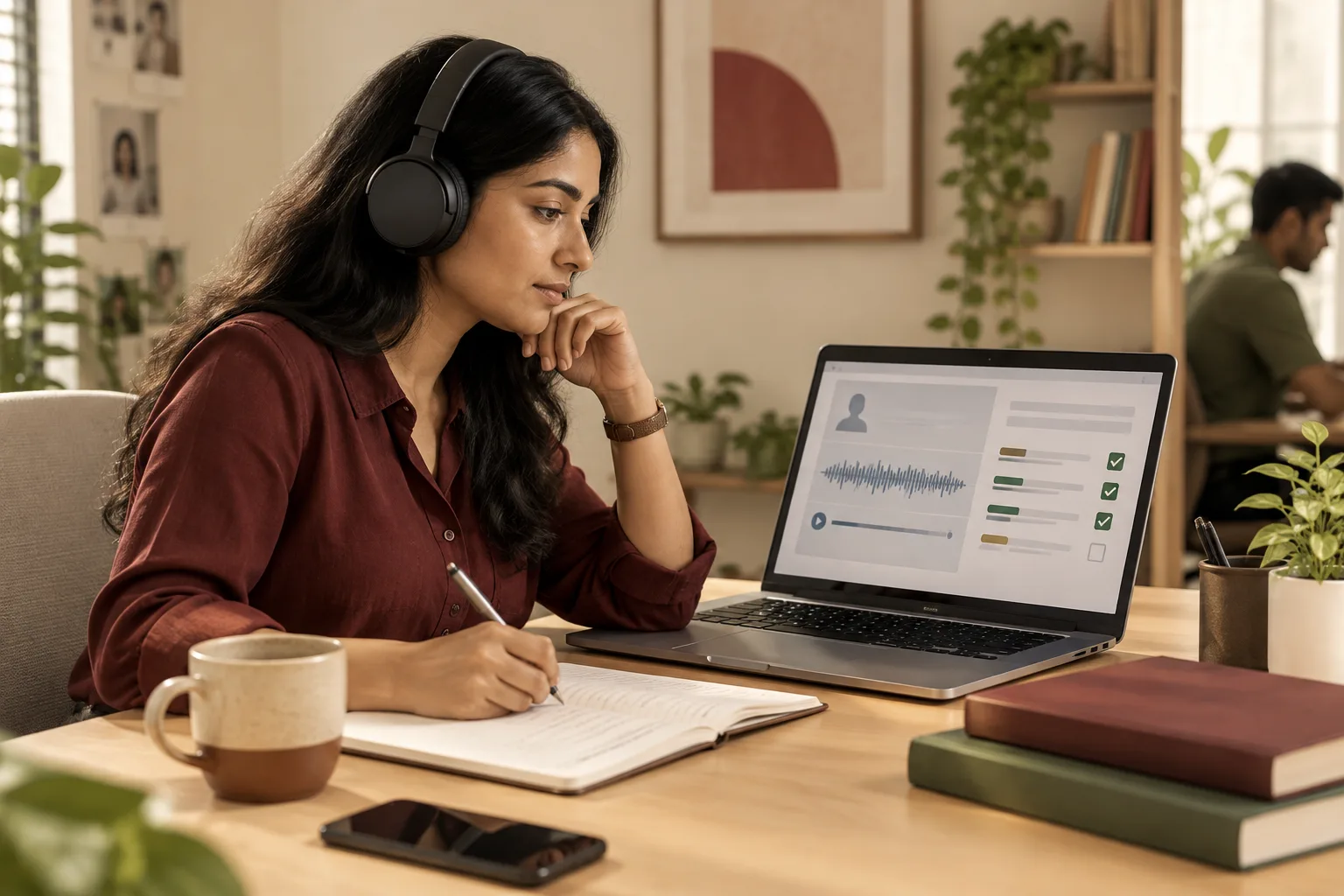
Add a confirm step. The salesperson reads the summary, corrects it and ticks it before it joins the record. A tool's errors then belong to the tool, and nobody is blamed for a mistake they did not make.
What do I tell the manager?
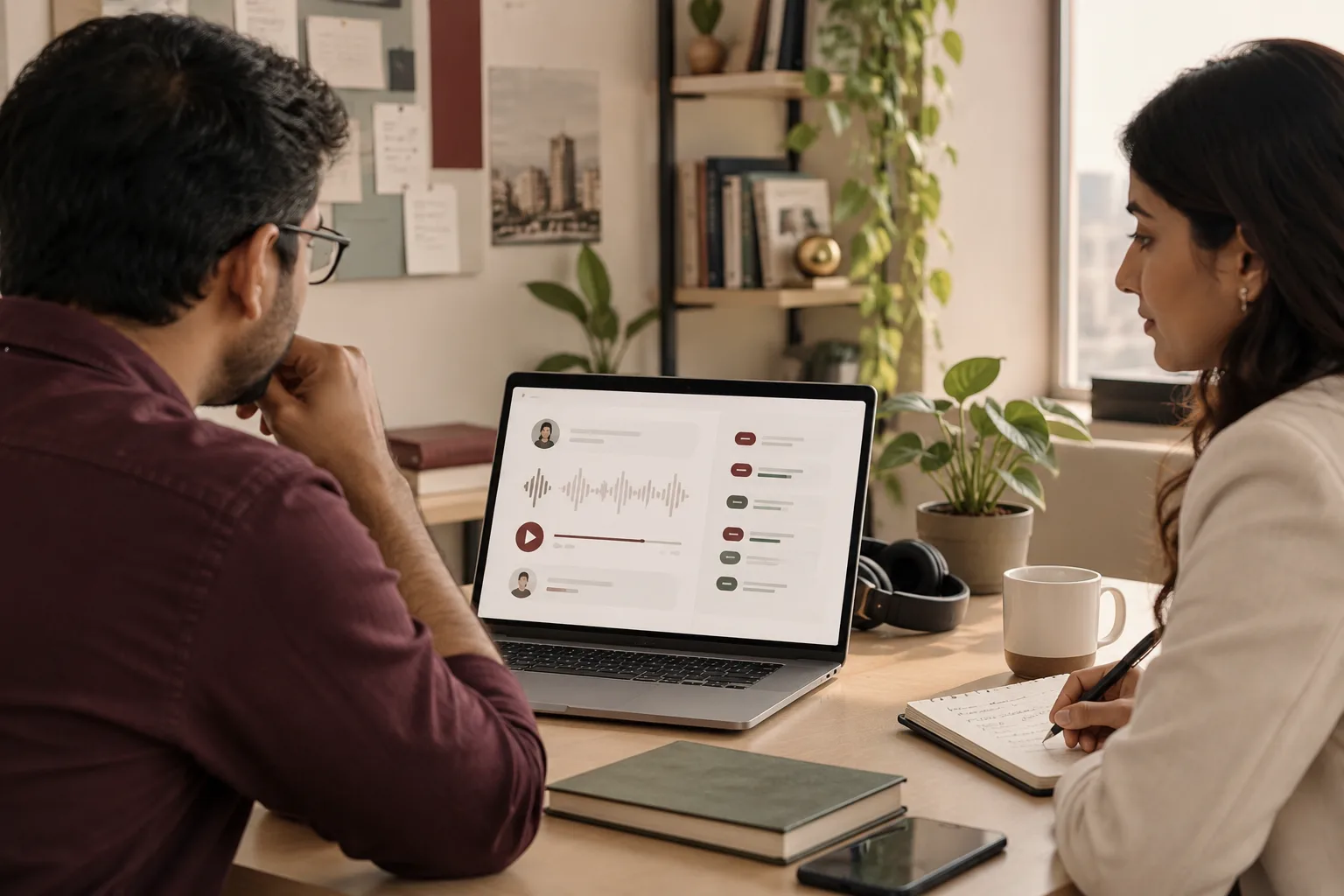
Pick calls; do not mine them. Ask each salesperson to choose one call to talk through, add one at random and one that closed. Read the summary, play the thirty seconds that matter, and ask what they would change. Use the same form every time. Our call review form is one you can copy, and the wider practice is in conversation intelligence for small teams.
Count good calls as often as bad ones. A tool makes lost deals easy to find, and a team that hears only about lost deals stops sharing.
What goes in a summary?
Fix the format, or each summary will drift. Six lines fit in a CRM notes field:
- Who and role: name, company, what they decide.
- Need, in their words: one or two phrases the buyer used.
- Constraint: budget, date, who else must agree.
- Objection: what worried them.
- Next step: an action, an owner and a date.
- Confirmed by: the salesperson's tick.
Keep it short. A summary longer than the notes it replaces will not be read.
What went wrong in Siliguri?
Imagine, as an invented example, a tea trader in Siliguri with three telecallers who sell to small tea shops and hotel kitchens in Bengali, Nepali and Hindi, often mixing them in one call. The owner tried a tool that wrote summaries automatically.
The first week's summaries read well, and several were wrong. A shopkeeper who said an order might come "after the puja" was recorded as promising payment after the puja. A quantity of two hundred packets became twelve hundred. Languages changing mid-sentence were the weakest point.
The owner did not switch it off. The trial stayed on one desk with a confirm tick, and twenty summaries were compared with the audio. Wrong quantities were the commonest error. So the owner made quantity a typed field that the caller fills in during the call, and let the summary carry only the narrative. The owner also told the callers that if the tool got a sentence wrong, the correction was part of the job and nobody's record.
Callers began to use the summaries for their own follow-up once they stopped fearing being quoted on the tool's mistakes, though one caller still switched it off on difficult calls, and the owner decided to leave that choice with the caller.
What can still go wrong?
Summaries can be wrong, so a person checks them. Names and numbers are the weakest points.
They can leak. Recordings and summaries hold customer details, so decide who has access and keep them inside one tool, not forwarded on WhatsApp.
They can feel like surveillance. The written purpose and the confirm step lower that, and so does inviting the team to criticise the summaries.
They can touch sensitive subjects. If callers discuss health, money or children's details, ask your adviser what you may record and keep.
When should you skip it?
If your team makes a handful of calls a day and the owner sits next to them, a notebook and a good habit beat a tool. If most selling happens on WhatsApp and in shops, spend the effort on message records.
Summaries earn their place when calls are many, spread over several people, and out of earshot. Even then, begin with one desk for a short trial. Compare its summaries with the audio, count the errors by kind, and only then decide whether a second desk should follow.
Start with one desk
Before the trial, write the notice and the purpose statement above and read them out to the callers, who may spot a problem you cannot. Conversation intelligence is the service for this work, calls are one part of the selling covered under sales, and to plan a one-desk trial, tell us what you need.
Related services