Notes for owners · Industry playbooks
How to sell board games and puzzles online when nobody can try them first
A board game sells online when the listing tells the buyer how many can play, how long a game takes, from what age, and what one turn looks like, so they can picture the evening.
The GullySales team · Updated 17 Oct 2026 · 6 min read
On this page
Say a family of five buys your two-player strategy game for the Diwali holidays, plays it once, and leaves one star and the word "boring". Nothing is wrong with the game. A shop would have opened the box and dealt a hand; your page could not. Online, it has to answer the buyer's first questions: how many can play, how long a game takes, the youngest age that can follow it, and what one turn looks like. Put those answers and a short how-to-play video above the description, and the box becomes a plan for an evening.
Why a good game gets a bad review
Read the one-star reviews on the games you stock and look at what they actually complain about. A party game bought for a couple. A thousand-piece puzzle given to a seven-year-old who wanted to finish it before dinner. "Too complicated" and "kids lost interest" are the words, and each one describes a buyer who could not tell from the page what they were getting.
The box does not help. The player count printed on it is the range the publisher allows, so "2 to 6 players" can mean "good with four, dull with two". The age is the youngest the maker will sign off on, which says nothing about whether a ten-year-old will enjoy it. A buyer reading box art and "fun for the whole family" is guessing. When the guess goes wrong, you get the return or the review.
The five lines that go above the price
Write these for every game you sell, in this order, and put them where the buyer sees them before scrolling. Here is the block for a made-up family card game:
Players:   2 to 5 (best with 3 or 4)
One game:  about 25 minutes; the first takes longer while you learn
Age:       10 and up on the box; a 7-year-old can play on a parent's team
Language:  cards carry short English text, so some reading is needed
Best for:  family after dinner, or two couples; not a party of ten
"Best with" matters most, and it is the line a marketplace reseller cannot write, because it only comes from playing the game. If nobody on your team has played a title, find someone who has before you fill it in.
Language matters in India, and listings seldom say it. A game with a lot of English text on its cards leaves out a grandparent who reads Tamil or Hindi but not English. A family buying for a three-generation evening needs to know that before ordering.
Puzzles need their own five lines: the piece count, the finished size in centimetres, and the size of each piece. Then what makes the image hard (a sky, a sea, a field of one colour), and what you do if a piece goes missing. Finished size is the one buyers forget. They remember it when the puzzle is half done on the table they need for dinner.
What the how-to-play video shows
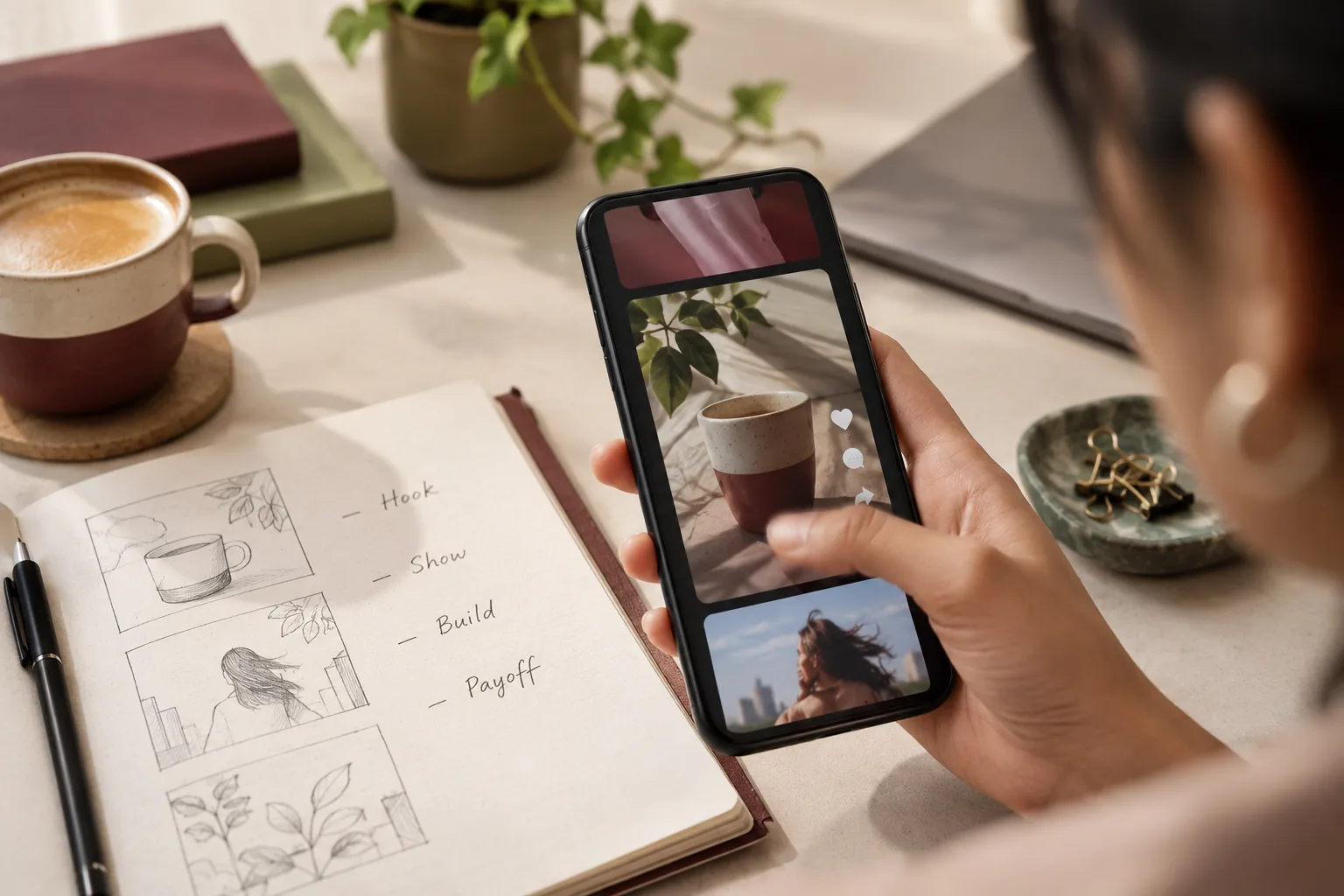
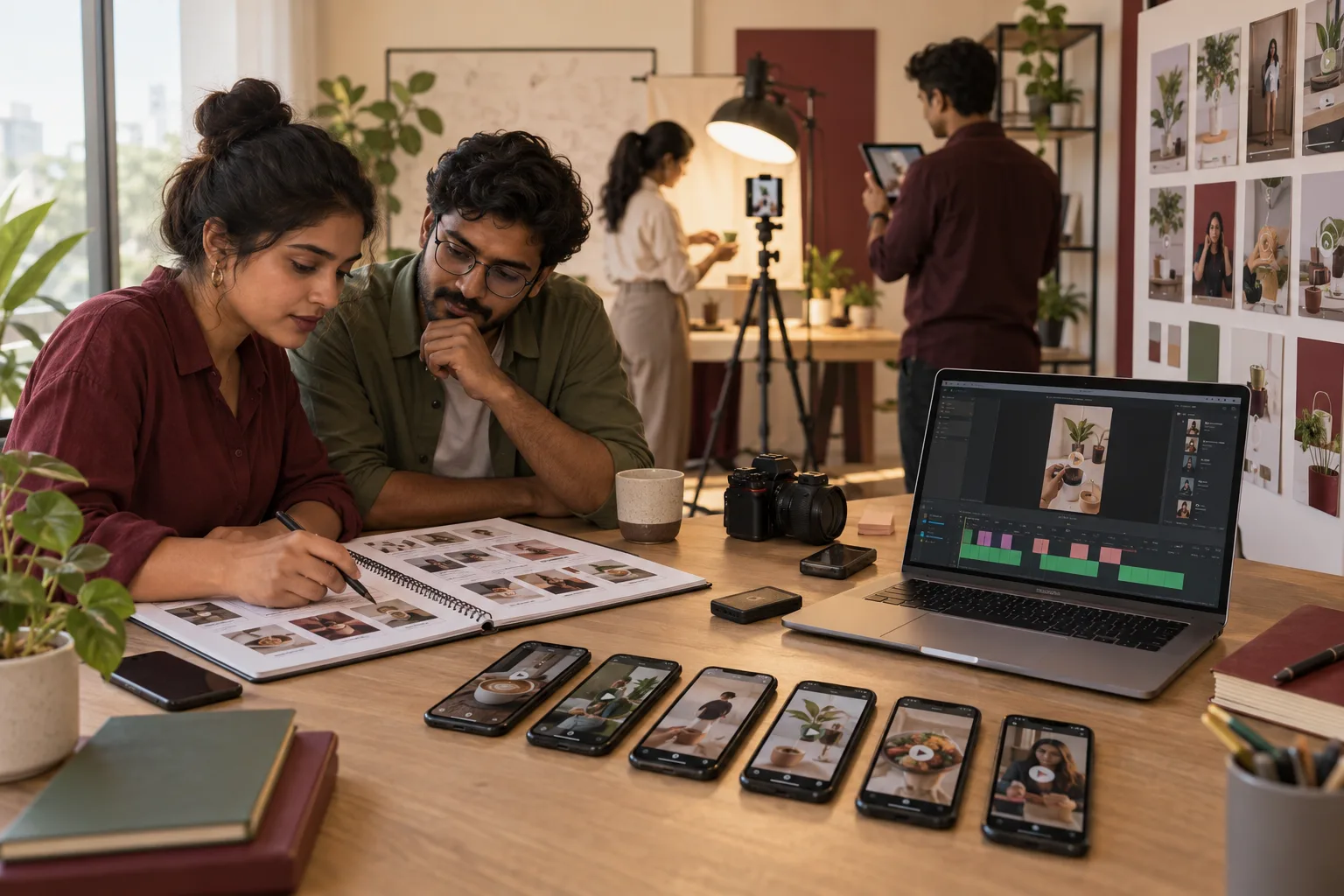
The video is there to help someone decide, not to teach the rules. Keep it between 45 and 90 seconds and shoot it at home on a real table, with real hands, in ordinary light.
- Every component spread out on the table, so the buyer sees what they are paying for.
- The goal, said in one sentence.
- One full turn, played at normal speed.
- Whatever makes the table react: the steal, the reveal, the tower that falls.
- How a game ends and who wins.
- A last frame with the player count, the time and the age written on screen.
Leave out everything else. A twelve-minute rules video tells a browsing parent that the game is hard work, which may not be true at all.
Skip the how-to-play video for games everyone already knows. Nobody needs Ludo, carrom or chess explained. For those, film what a buyer worries about instead: the thickness of the board, the weight of the coins, the lid shutting properly, the pieces next to a hand for scale.
For example: a Panaji studio and its train game
Imagine a small game studio in Panaji that has made a card game about a long train journey across India, selling through its own website and Instagram. The listing showed the box art, "fun for the whole family" and "ages 6+", which the founders had copied from their printer's template.
Reviews came back mixed. Several said the children got bored, and two buyers asked to return it. The founders watched their nephews play and saw the problem at once. The game needs reading and a little adding up, and it is at its best with three or four people aged ten or older.
They changed the age line to "10 and up, younger children can play on a parent's team" and added "best with 3 or 4". They shot a one-minute video of a round at a dining table, with the family laughing at a card that sends everyone back a station.
The messages did not stop. They changed. Instead of "is it fun?", buyers asked "is there a Hindi edition?" and "does it work for six?", which are questions from people close to buying.
Sell the occasion, not the mechanics
Owners who play games love to describe mechanics: deck-building, worker placement, tile-laying. Buyers seldom search that way. They want a return gift for a birthday party, or a game for a couple. They want grandparents and grandchildren at one table, or something for the monsoon when the children cannot go out.
How to arrange the menu by age and player count is covered in structuring a toy catalogue by age. The description is a separate job. Start it from the evening. Name a game the family already owns: "If your family plays Uno every weekend, start with this one." A buyer who recognises their own evening has half decided.
Where this falls short
None of it saves a game that is not fun, or one priced well above a famous title with no reason given. And if you stock a few hundred imported titles, you cannot film them all. So don't. Film the steady sellers and the ones that draw the most questions. For the rest, write the five lines from the publisher's information and fill in "best with" only where someone has played it.
On marketplaces, space for text and video is limited and the rules on what you may show change, so check the platform's current rules. Put the five lines into the second product image as text, where they cannot be cut.
What to do next
Go through this season's buyer questions, from Instagram, WhatsApp and marketplace Q&A, and mark which of the five lines would have answered each. The game with the most marks goes first. Write its block, then film its clip. Games sit with toys and puzzles in the kids' part of the online sale, which is laid out under e-commerce sales and marketing. If you would rather hand over the clip, short-form video and reels production is the service, and tell us what you need is the first step.