Notes for owners · Digital marketing
Craft kits and sewing supplies: selling the hobby with tutorials, not discounts
Hobby buyers order the next kit once they have finished the first, so a short tutorial at the step where people get stuck, and a group where buyers show their work, beat a discount code.
The GullySales team · Updated 17 Oct 2026 · 5 min read
On this page
Ask a craft seller why buyers do not order a second kit and the answer is price. Ask the buyers and you may hear something else: the first kit is still in a drawer, half done, stuck at the stitch they could not get right. A discount does not fix that. A short video of that exact step does, and so does a place where buyers show what they finished. Sell the hobby, which means the kit, the tutorial that gets someone through it, and the people who will see the result.
Where hobby buyers get stuck
Every craft has a step that stops beginners. In embroidery it is the French knot. In crochet it is the magic ring that starts an amigurumi toy, and counting stitches in the round. Home sewers stall at setting in a sleeve or reading the markings on a paper pattern; with blouse stitching, the darts. Lippan art kits stop at the clay mix, when the mirrors will not stay put.
The buyer reaches that step, tries twice and puts the kit away. Many do not complain or return it. They simply never buy another.
So find your step before you make anything. Ask a handful of recent buyers on WhatsApp how far they got. Their answers name your first tutorial.
One tutorial per sticking point, not a full course
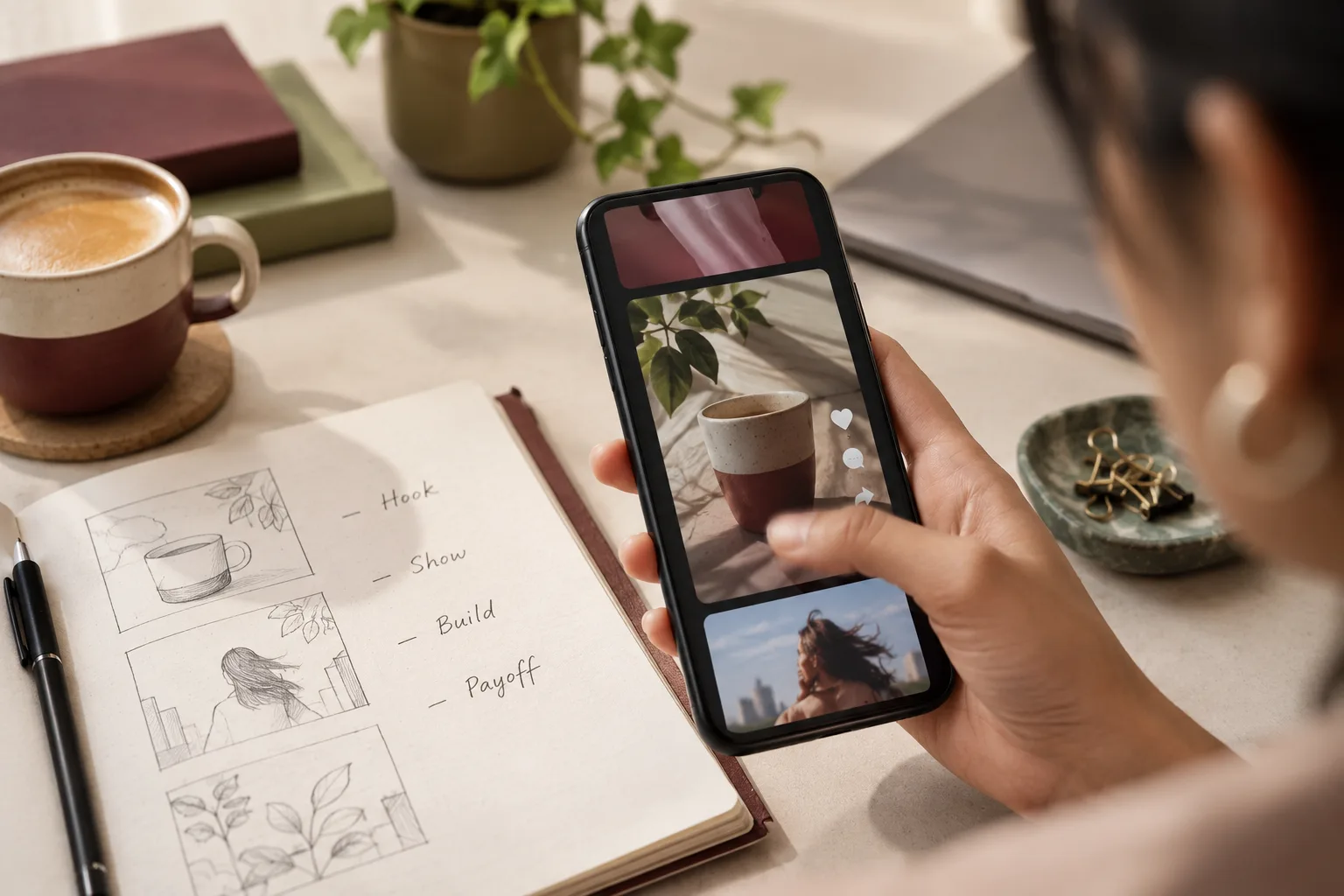
A long "complete beginner's course" gets started and abandoned like the kit. What gets watched is short and specific: one stitch, filmed from the stitcher's side, slowed down at the moment that goes wrong. Here is a four-step script for a stitch video of sixty to ninety seconds.
- Opening seconds. The finished stitch, close up. One line: "This is the French knot, and here is the part everyone gets wrong."
- Up to about thirty seconds. The stitch made once at normal speed, hands only, from the stitcher's angle.
- To the one-minute mark. The same stitch again, slowed at the wrap and the pull. One caption: "Keep the thread taut as you go back down."
- Last fifteen seconds. The usual mistake made on purpose, a loose loop, how to undo it, and where this stitch appears in the kit's pattern.
Put a QR code on a card inside the kit, printed beside that step in the instructions, which opens the video. The buyer needs help while holding the hoop. They will not go hunting through your Instagram page for it.
Cut tighter, the same footage becomes a reel for people who have not bought yet. A finished hoop turned over to show a neat back makes a good one. The tips in our note on making short-form video ads apply to it.
Give finished work somewhere to go
People finish crafts so they can show them. If the only audience is the family WhatsApp group, you never see the result. Give your kit buyers a place of their own, such as a WhatsApp community or a closed Instagram group. There they post the finished piece, and ask for help when stuck.
A pinned message sets the tone. Something like this:
Welcome. This group is for people making things from our kits. Post your finished pieces, and the half-finished ones too. Stuck? Ask. Someone from our team answers, and other members chip in. No selling here, by us or anyone else, apart from a short note when a new pattern is out.
The group's questions name your next tutorial. Finished pieces, shared with permission, are better product photographs than any you will shoot. And when a new pattern is ready, the group is where the people who finished the last one are waiting. Our note on encouraging repeat purchases covers what else brings an online buyer back.
Running the group is real work. Somebody has to answer the stuck buyer while they are still holding the hoop, and clear out spam. If nobody can, do not start: a group full of unanswered questions does more harm than having none.
For example: crochet toy kits from Shillong
Take an invented seller in Shillong making crochet kits for small stuffed toys: yarn, a hook, stuffing, safety eyes and a pattern sheet. First orders were steady. Second orders were rare, so the seller sent past buyers a discount code. Almost nobody used it.
Then the seller rang a dozen buyers. Most had not finished. Some never got past the magic ring. The rest lost count in round three, where the increases start. The sheet said "6 sc in magic ring, inc in each st", which is clear to anyone who already crochets and means nothing to a beginner. The discount had been offering them a second kit before they could finish the first.
So the seller filmed the magic ring, seventy seconds from the crocheter's side, and put a QR card beside that step. A second video slowed down the increase rounds. Every kit now carries a stitch marker, and the pattern is written out in words beside the shorthand. Buyers post their finished toys in a WhatsApp community, and the next pattern is shown there first. In this illustration, the second orders that followed came mostly from buyers who had posted a finished toy, though a few still stalled at the safety eyes, which the seller had not filmed.
When tutorials and groups are not worth it
Some buyers already know the craft. Tailors buy thread by the cone; experienced knitters buy yarn in bulk. They want stock, shade cards and a price, and a tutorial will not change their order. And a group needs a person behind it. A seller working alone with a full order book should start with the QR videos and leave the group until someone has time to run it.
What to do next
Read your own instruction sheet and find the step it covers in the fewest words. That is the likeliest place your buyers stop. Film that single step before your next batch of kits ships, and put the QR card inside. Making these videos is short-form video and reels production work, running the group is customer community management, and craft sellers sit in our e-commerce sales and marketing section. If the videos or the group need a hand, tell us what you need.