Notes for owners · SEO, content and AI search
Marketing a homestay or café in the French Quarter: photographs, a plain address and a recent review
Tourists choose a French Quarter homestay or café on their phones, from photographs, an address they can follow and a recent review. Fix those three before writing any long copy.
The GullySales team · Updated 17 Oct 2026 · 5 min read

On this page
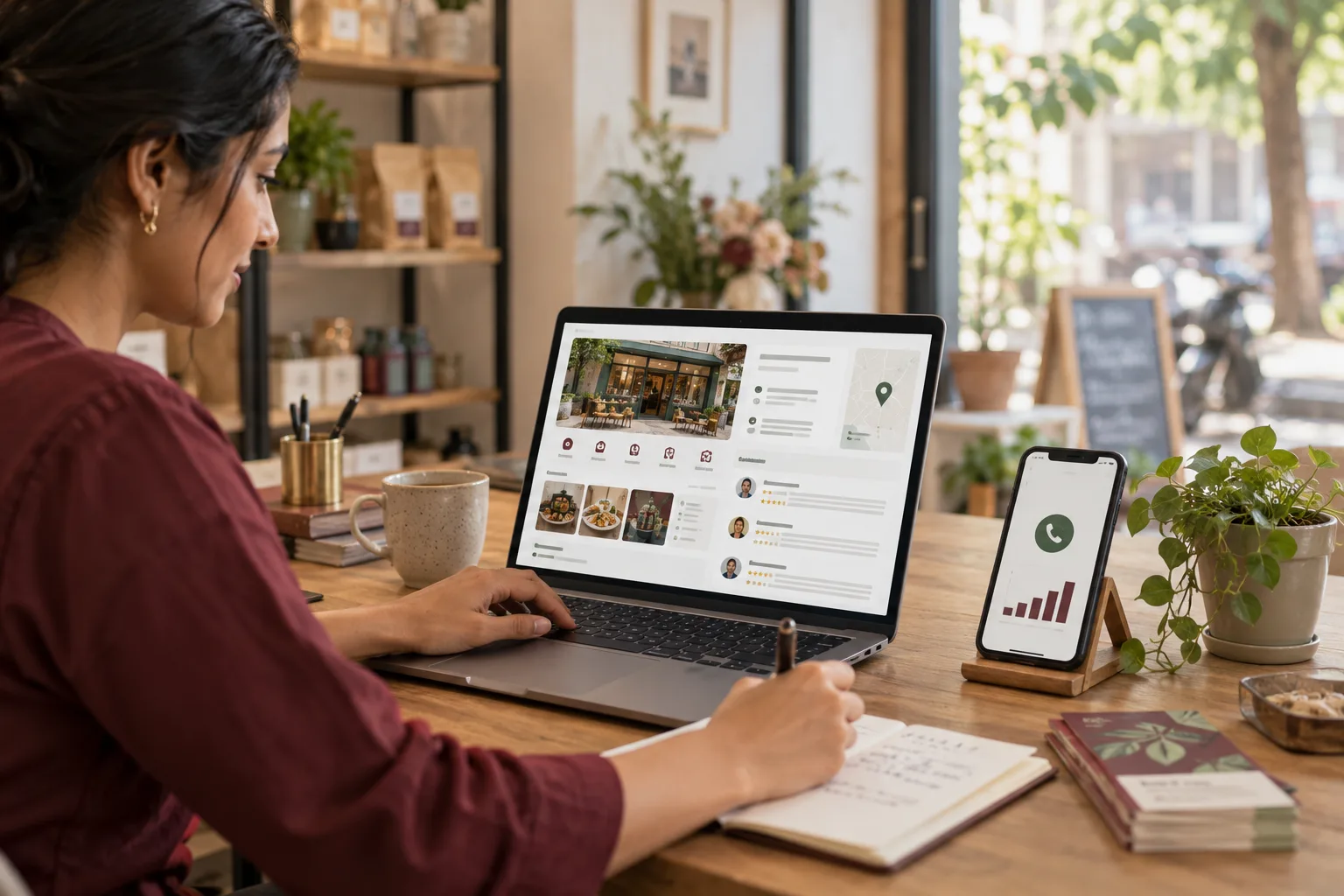
Tourists walk past your door looking at their phones, then go into the café two houses down. In the French Quarter, visitors decide on their phones, standing on the Promenade or lying in a hotel room. What they check is short: photographs of the actual place, an address they can follow on foot or hand to a driver, and a review from the last few weeks. A long story about the house's history comes after those. Get those three right on your Google listing and your Instagram before you write another paragraph.
What a tourist checks before crossing the road
Imagine one couple from Bengaluru on a Saturday afternoon. They search "café near me" on the beach road and open three of the pins. For each, they look at the first photograph, the distance, whether it is open now and the most recent review. Then they pick one.
A homestay is chosen more slowly, usually the evening before, but on the same four things. The guest also opens Instagram to see if the rooms look like the listing.
Visitors to the heritage belt are a mix of weekend crowds from Chennai and Bengaluru and travellers from abroad (see our Puducherry page). Both read photographs before words. French and English speakers also read reviews in their own language, which matters later.
The photographs: a shot list for one morning
Take these in daylight, on one morning, with a phone held level. No filters that turn a yellow wall orange.
- Your front door from across the street, wide enough to show the wall colour, the shutters and the name board, so a stranger recognises it on foot.
- The corner where your lane meets a street people know.
- Each room exactly as a guest gets it: bed, window, bathroom.
- The courtyard or verandah at the hour guests actually use it.
- For a café, the counter with the menu board readable, and each page of the menu.
- One table by the window with a real plate on it, not a styled flat-lay.
- Where a scooter or car goes.
- You or your staff at work.
Put the front door first. The first image is what a guest sees in the search results, and a picture of the door doubles as directions. Replace any photograph more than a season old, especially after you repaint.
An address a stranger can follow
French Quarter addresses trip people up. Street signs are in French and Tamil, some guests search "White Town" and others "French Quarter", and a cab driver may know a landmark better than a street name.
Write the address so it works for all of them:
- Door number and street name, spelled as on the sign.
- A landmark a driver knows, such as a church, a school or a well-known hotel, and how far you are from it on foot.
- Which side of the canal you are on.
- Both names for the area: French Quarter (White Town).
Then check the pin. Drag it onto your door, not the middle of the street or the end of the lane. Use the same address text, word for word, on Google Maps, Instagram and every booking listing. A pin on the next lane, or an address spelled differently on Instagram and Maps, sends a cab driver to the wrong door. It also makes it harder for Google to be sure it is one business. That is basic local SEO.
A recent review, and your reply under it
A tourist reads the top two or three reviews and their dates. If the newest is from last year, the place looks closed or forgotten. If it is a complaint with no reply, it looks like nobody cares.
So the aim is a steady trickle of new reviews, not a pile of old ones. Ask every guest at checkout and every table at the bill. Use the same words each time: "If you liked it, a Google review helps the next traveller find us." A small card with a QR code that opens your review page saves them searching. Never offer anything in return.
Reply to every review, good and bad. Use the language it was written in, so the next French reader sees that someone answers. Keep it short. Name the dish or the room they mentioned. Online review generation and management sets up the asking and keeps the replies going when the season is busy.
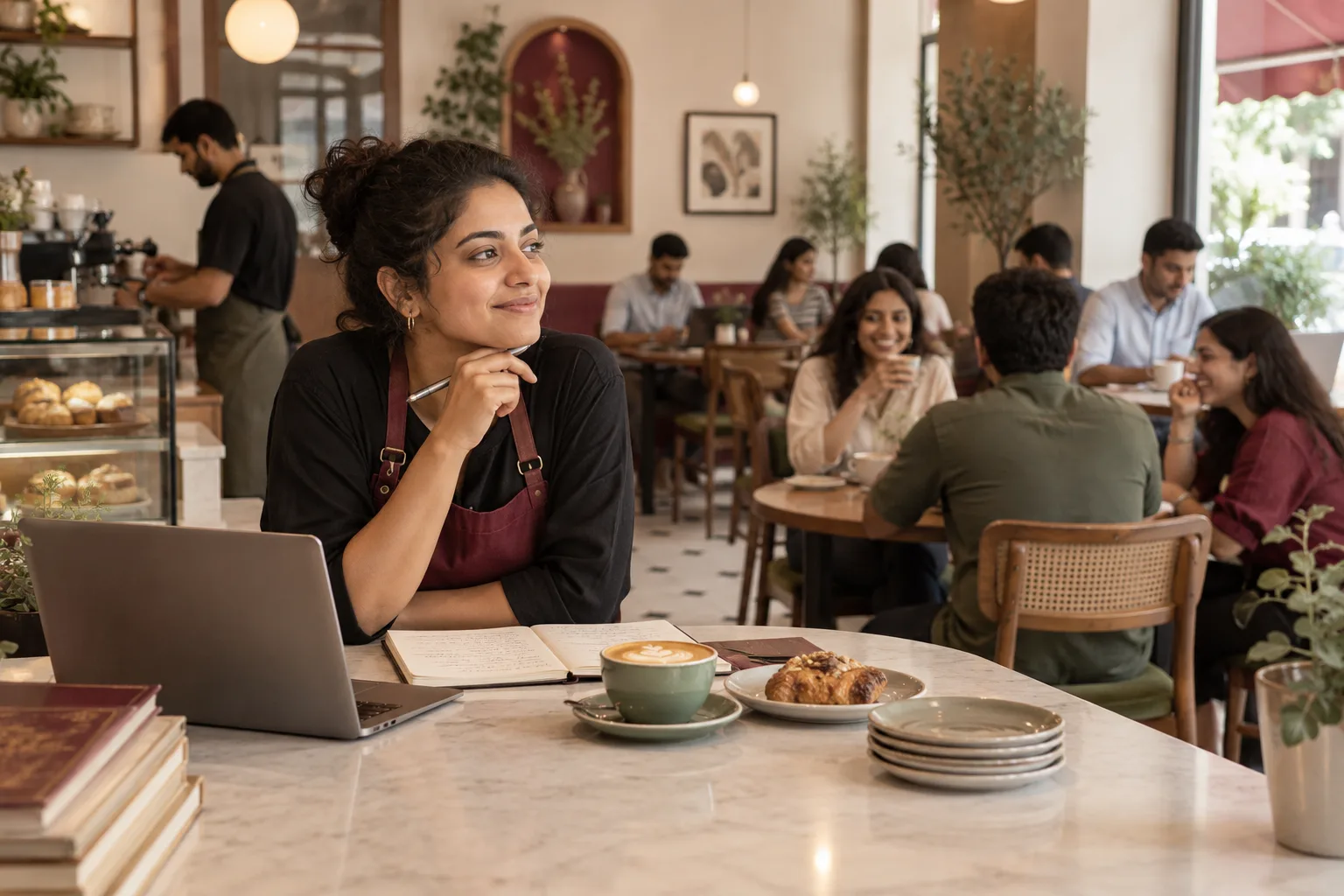
For example: a café in a heritage house
Imagine a café on the ground floor of a two-storey heritage house, on a lane a few minutes from the Promenade. The details are illustrative.
Its listing had nine photographs, all close-ups of coffee and cake. The address read "Near Beach, White Town". The pin sat at the far end of the lane, so walkers reached the wrong yellow house and gave up. The newest review was over a year old and complained about slow service, with no reply.
Every one of those faults was on the listing, not in the café. Over one week the owner worked down them in order, repainting nothing and paying for nothing but a printed card. A photograph of the front door, taken from across the lane, went first. The address got a door number, the nearby church as a landmark and "French Quarter (White Town)". The pin moved to the door. The owner replied to the old review, saying what had changed in the kitchen. A card at each bill asked for reviews, and the newest one soon carried a recent date. To see whether it worked, the owner asked new faces at the till how they had found the café, and kept a tally for a fortnight.
Where long copy still earns its place
Long copy is not useless here. It is aimed at a different guest.
Guests booking a week or more read every line. So do retreat organisers and families planning a wedding. A page with the rooms, the house rules and the neighbourhood answers them before they ask. How that page is built for long stays is in our note on retreats and long stays near Auroville. A café does not need it.
Keep the house's history for the website and one Instagram highlight. On the listing, it only pushes the door photograph down.
Walk to your own door using only the listing
Stand a street away with your phone and try to reach your door using nothing but what the listing shows. Wherever you hesitate, a tourist turned back. The photographs, the address and the pin are the first fixes; Google Business Profile management keeps them current after that. If you want this done with you, tell us what you need.