Notes for owners · Industry playbooks
Patients from Bangladesh and the northeast who go quiet after one call
Why families from Bangladesh and the northeast go quiet after calling a Kolkata hospital, and how to answer visit, stay and cost questions early, in their language, then follow up at each step of the trip.
The GullySales team · Updated 17 Oct 2026 · 6 min read

On this page
A caller in Khulna rings the international desk about a parent's heart, sends the reports on WhatsApp, and then goes quiet. The desk marks the enquiry "not interested". The family is still interested. They are waiting on a passport, a visa, money from a relative abroad and leave from work, and nobody sent the written answers those steps need. Answer the visit, stay and cost questions early, in writing and in the family's own language. Then follow up by message at each step of the trip, until they arrive or say no.
A note before any advice: how a hospital may describe treatment, quote prices, take payment from patients abroad or deal with referrers is regulated, and the rules change. Treat what follows as a way of organising your desk, and have your own legal or healthcare adviser read each template before it goes out.
What the silence actually means
A family in Kolkata, or anywhere in West Bengal, picks a hospital in a day. A family in Jessore or Imphal is deciding something else. Can the journey happen at all? Between the first call and the first OPD visit sit passports, visas and foreign exchange, then a border crossing or a flight, a place to stay, and an attendant who can get leave.
Each of those needs something from you: a written opinion, an estimate, a letter, a date. If the hospital waits for the family, and the family waits for the hospital, both go quiet, and a hospital elsewhere that sent papers first may get the patient.
Quiet does not mean no. It means stuck, so your follow-up should help with the step they are stuck on.
The first reply, answered before they ask
Send this in writing soon after the reports arrive, as one message plus a PDF. Use the family's language and add English, since the visa officer and relatives abroad will read it as well.
Which doctor, and how long in Kolkata? The consultant's name, the OPD days, and how many days a first visit needs for tests and a decision. If the department has looked at the reports, say what the doctor wants to see in person.
Where will we stay, and what will it cost? Guest houses near the hospital with a price range, and the neighbourhoods other families already use. Say how many attendants may stay with the patient and where they can eat.
What will treatment cost? A written range for the likely procedure, what it includes and what could push it up. Then the ways a foreign patient can pay at your counter, as your accounts team confirms them.
What papers do we need? Passport and reports, to begin with. If your hospital issues a letter that families attach to a medical visa application, say how to ask for it. For the visa itself, point families to the official sources and do not explain it yourself.
None of this should promise an outcome.
Speak their Bengali, or their language
A family from Bangladesh speaks Bengali, though not always as Kolkata does, and some speak Sylheti at home. Put someone comfortable with the differences on the desk, and allow voice notes.
The northeast is many languages, not one. Some families will be at home in Bengali, others in English, Hindi or Assamese. On the first call, ask which suits them, write it in the register and pass the enquiry to a colleague who speaks it.
Ask whether the family prefers WhatsApp, IMO or something else, and follow up there. A message costs them less than an international call, and can be forwarded to a relative abroad who is paying.
Follow the trip, one step at a time
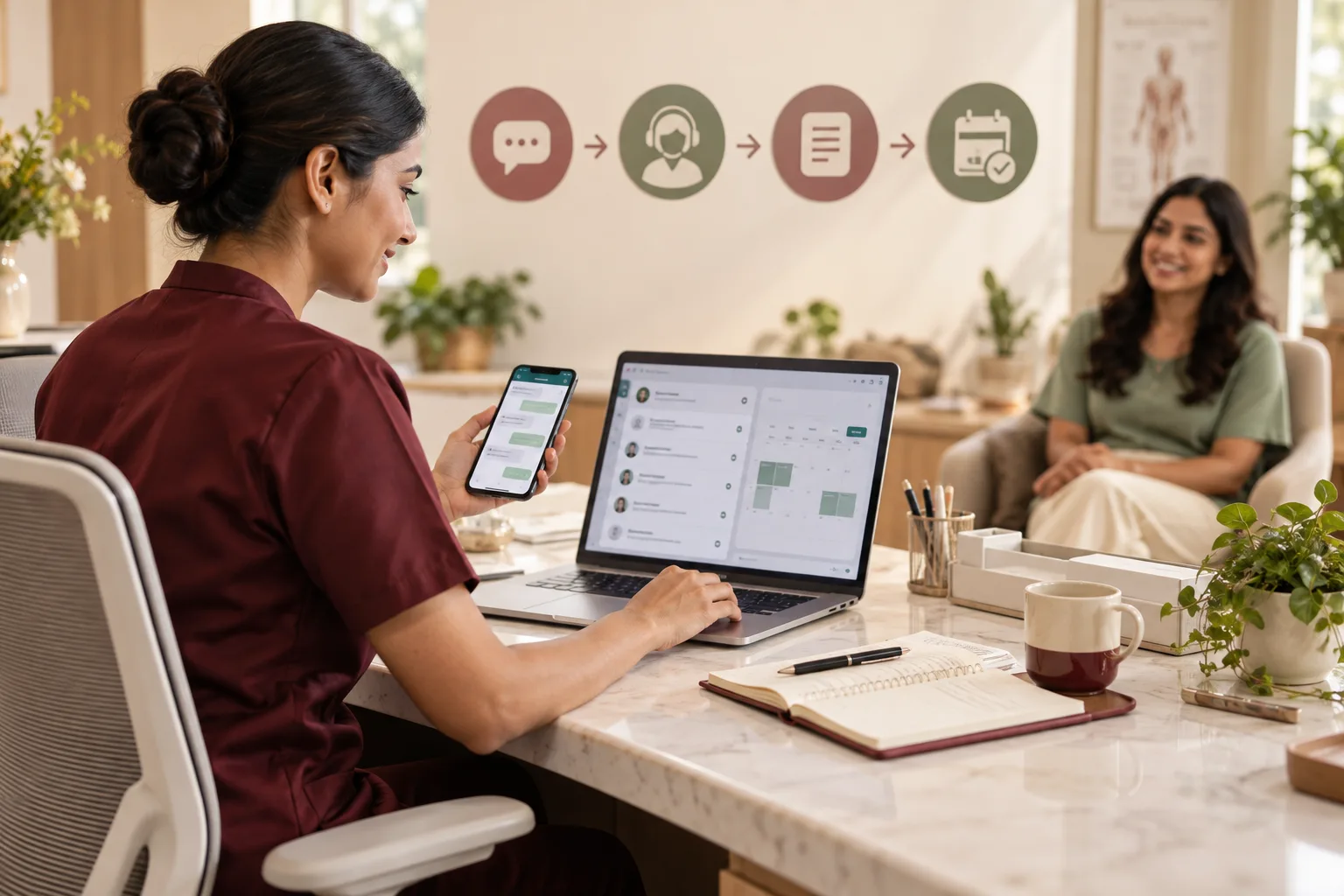
Keep one coordinator per family, with a name the family learns. Keep a register of where each family stands, using the steps below.
- Reports received. Acknowledge them at once and tell the family when to expect the doctor's opinion.
- Opinion and estimate sent. A little later, ask whether the papers are enough for the visa application, and offer the letter if your hospital issues one.
- Visa applied for. Ask them to message you when it arrives, and share the list of reports and medicines to bring.
- Visa received. Fix the OPD date with the consultant's office. Offer help with a guest house.
- Travel booked. Send directions from the border or airport, with a reminder before the first appointment.
If two messages at one step get no reply, make one call, then send a last message saying the door stays open and stop. Repeated calls to a worried family can feel like pressure, so one clear last message is kinder.
The family from Jessore
Imagine a hospital on the EM Bypass whose cardiology department gets enquiries from across the border (an illustrative case). A caller in Jessore sends a parent's angiography report. The desk replies in Kolkata Bengali that the doctor will advise when they come, and quotes a package figure over the phone. Nothing is written down.
The family needs a written opinion and estimate to apply for the visa and to ask a sibling in Dubai for money. They wait, ask once more, and get the same answer. Three weeks later the family goes to a hospital in Chennai that sent a written estimate and messaged at every step.
Run the same enquiry through the first reply and the ladder. Soon after the report arrives, the department sends a short written opinion with a cost range, in Bengali and English. A coordinator at ease with the family's Bengali takes over and messages on IMO at each step. The family has a paper for the visa officer and a figure for the sibling in Dubai, though the cost may still turn out higher than the range once the doctor sees the patient. The desk spends more time on each case, which is the cost of doing it properly.
When to send them elsewhere
If your hospital does not do the procedure the reports point to, say so in the first reply and name the kind of centre that does. If the family cannot afford the trip and treatment, say what it will cost rather than let them discover it on arrival.
Reopen the files marked "not interested"
Ask the international desk for every enquiry from Bangladesh and the northeast marked "not interested" or left without a status. Beside each, note which of the four written answers the family ever received: doctor and days, stay, cost range, papers. If it is none, the family did not say no, because the hospital never gave them the means to say yes. Start with the oldest file and send those four answers. For help with the first-reply template and the follow-up register, see lead response and follow-up or tell us what you need.