Battery dealers · Content marketing
Explain batteries so plainly that the reader rings you to fit one.
Content marketing for a battery dealer is writing and filming the answers that vehicle owners, garages and households look for before they buy. GullySales works on choosing the questions, producing the guides and linking each to a way to ask the shop.
Scope, fee, reporting and term are agreed in writing after we have read your brief and spoken to you.
What content marketing means
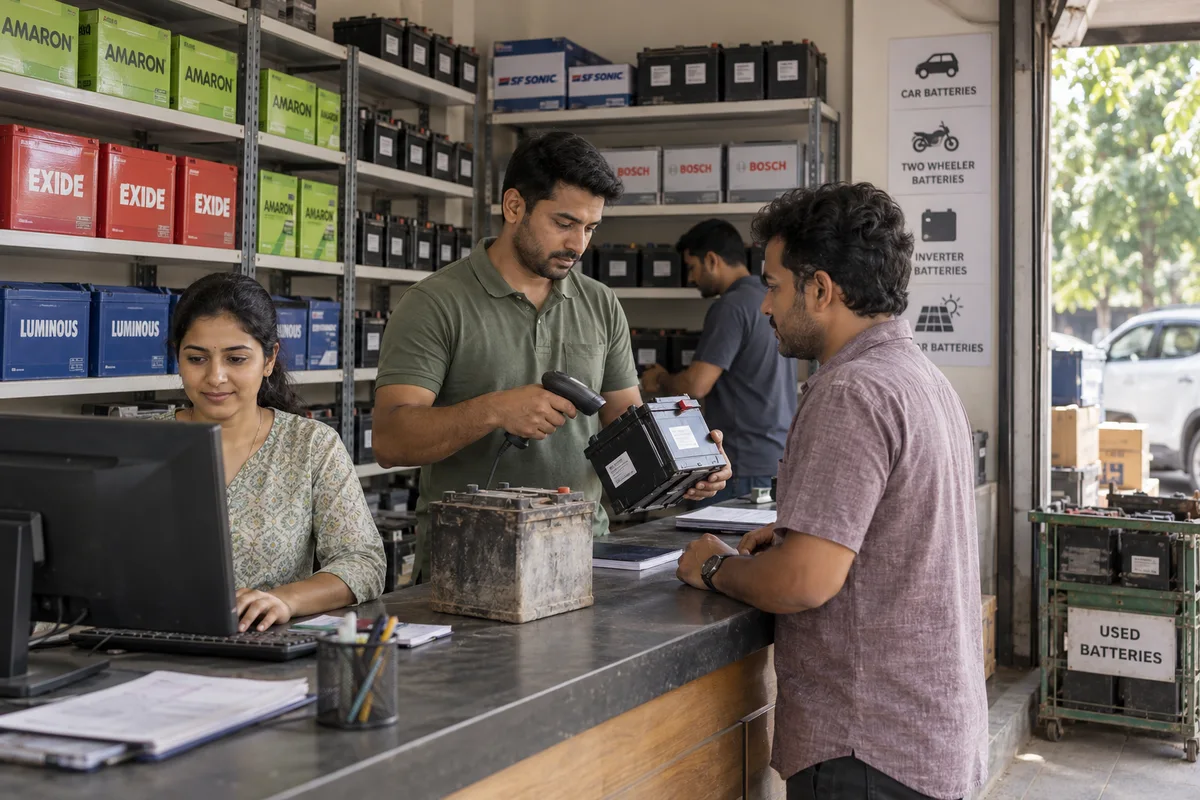
Content marketing is writing articles, guides and pages that answer the questions buyers search before they are ready to enquire. This makes your business visible and trusted before the first call. GullySales plans this content from the first conversation onward, choosing topics that match real search demand rather than guesses.
Last updated 18 Oct 2026.
For battery dealers
Where it usually goes wrong, and what we would do.
“Buyers do not know what to ask”
An owner knows the car will not start, not whether the battery or the alternator is at fault. A guide that explains the signs earns trust before any price is quoted.
“Exchange and warranty terms need explaining”
Buyers compare a figure after exchange with a figure without it and think one shop dearer. A page that sets out how exchange and the warranty card work removes the confusion.
“Inverter buyers need arithmetic in plain words”
A household wants to know how many hours of backup its fans and lights get. A worked example in appliances, not technical units, is the content that brings the enquiry.
“Content written once serves for years”
A guide on how long a battery lasts or how to read a warranty card stays useful. A shop that writes ten such pages has a standing source of enquiries.
What we do
What we deliver for battery dealers.
Every deliverable, what it covers for you, and the result it is there to produce. Nothing here is an extra.
Question list from the counter
Questions callers and garages ask, collected from the call log and the counter, sorted by vehicle type and urgency.
Result: Each guide starts from a question people actually ask.
Starter guides for owners
Pages on signs of a failing battery, how exchange works and what a warranty card covers, written in plain words.
Result: An owner can read the answer before calling.
Inverter and backup guide
A worked example from appliances to battery capacity, with a form to send in the load.
Result: The shop receives the load, not a bare price query.
Short videos and carousels
The same guides cut into short videos and picture posts for social pages and WhatsApp status.
Result: One guide appears in several places.
Garage handout
A one-page sheet for mechanics with fitting notes, models stocked and how to reach the shop.
Result: A mechanic has something to hand to a customer.
Content index and refresh note
A list of every guide, its purpose and the date it was last checked, with updates when models or terms change.
Result: Out-of-date guides are flagged rather than left to mislead.
How the result is measured
- Pages published
- Organic traffic
- Enquiries from content pages
Recorded as a baseline before work starts, so every later report has an honest comparison.
Who it is for
This is written for these battery dealers.
- Car and two-wheeler battery dealers
- Truck and bus battery dealers
- Inverter and home UPS battery dealers
- Authorised brand battery outlets
- Battery shops offering doorstep fitting
- Solar battery and storage dealers
- Electric vehicle battery service points
- Wholesale battery suppliers who sell to garages
How it works
How the content marketing work runs
The work itself, in order. How an engagement starts, from your brief to a written scope, is set out on our method page.
- 1
Confirm the plan
Topics and formats for the coming month are confirmed against the content strategy.
- 2
Produce and review
Content is written or filmed, then reviewed by someone who knows your trade before it goes out.
- 3
Publish and distribute
Finished content is published to the site and pushed through the channels your buyers actually use.
- 4
Track enquiries
Enquiries are traced back to content where a direct line exists, and reported honestly where it does not.
- 5
Report and adjust
We report results and adjust the next topics based on what actually worked.
Where this fits
Three pieces of sales work, in this order.
This work sits inside sales process design, at stage 0, foundation. The audit comes before it, and sales management keeps it running.
Step 1
Sales audit
Find where deals are being lost and what to fix first.
Start here if you cannot say where orders are lost.
Step 2 · you are here
Sales process design
One written way to sell, from first enquiry to repeat order.
Start here if every salesperson sells differently.
Step 3
Sales management
A target, a review routine and someone who owns the number.
Start here if the team has targets and no routine.
FAQ
Questions owners ask before they call.
Not here? More answers, or ask on WhatsApp.
How much should a battery shop write?
Can we use the manufacturer's material?
How do we tell if a guide is working?
How long is the contract?
How soon will we see results?
Who will actually do the work?
What do you need from us?
What if we are not happy with the work?
More for battery dealers
Everything else we would do for you.
Closest to this: content and social
Also for battery dealers
Or start from the overview: sales and marketing for battery dealers.
Your next practical step
Tell us what you are trying to grow, and we will read it before we call.
Eight short steps, mostly taps. Skip anything you would rather answer on the call.