Battery dealers · WhatsApp marketing
Answer a battery price on WhatsApp with the model, the exchange value and the arrival.
WhatsApp marketing for a battery dealer means using the app your buyers already message to quote prices, confirm fitting and remind owners of warranty dates. GullySales works on the catalogue, saved replies and consent records behind it.
Scope, fee, reporting and term are agreed in writing after we have read your brief and spoken to you.
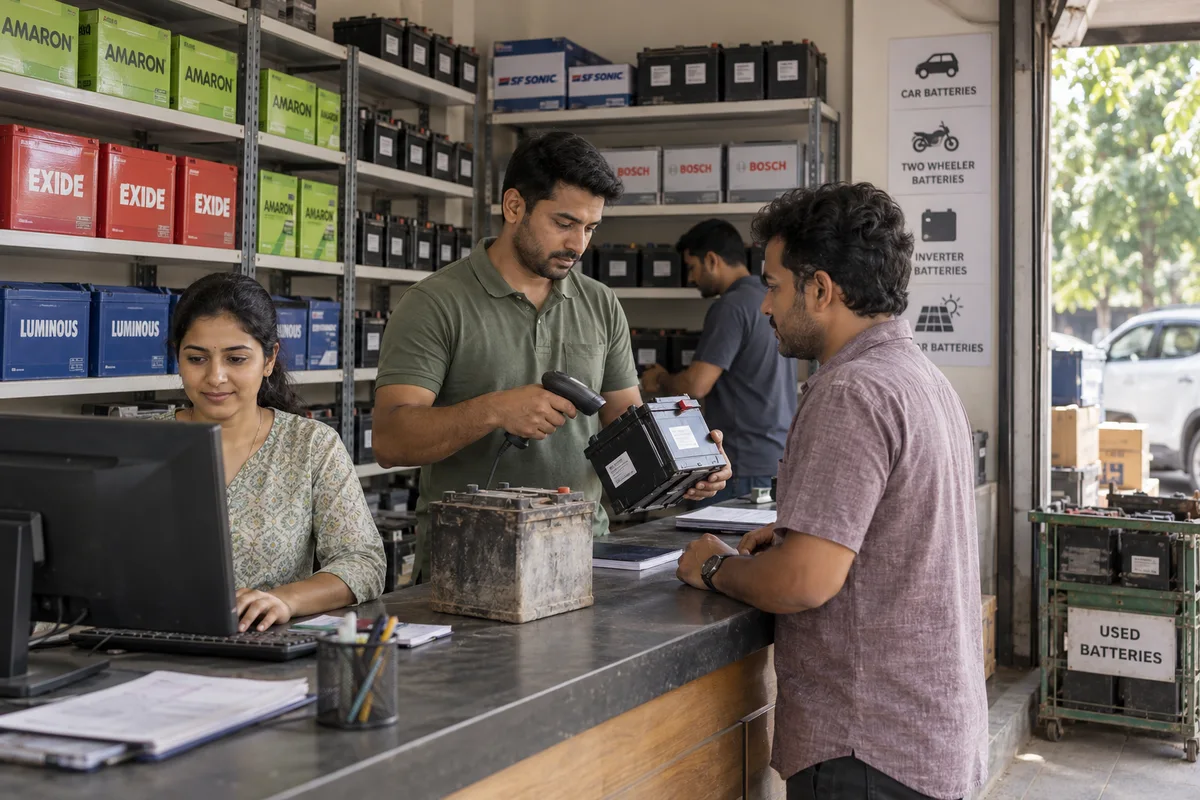
What WhatsApp marketing means
WhatsApp marketing is sending updates, offers and reminders to customers on the app most Indian buyers already check daily. GullySales sets up business WhatsApp, writes the message templates and keeps the list consented and current.
Last updated 18 Oct 2026.
For battery dealers
Where it usually goes wrong, and what we would do.
“Buyers send the car model and wait”
A stranded driver messages a model and expects a figure. A shop that answers with a price, the exchange terms and an arrival time is chosen before a rival finishes typing.
“A catalogue beats a long conversation”
Listing batteries by model, brand, price and exchange value inside the business app lets the buyer see the options and choose, without the counter typing the same message again.
“Garages live on WhatsApp”
Mechanics send a photograph of a battery label and want the price and the delivery time. A saved reply and a stock list in the workshop group makes the shop the easy supplier.
“Consent and restraint decide whether it works”
Owners accept a reminder about their own battery and resent promotions. Messages sent without consent, or too many of them, get blocked and damage the number.
What we do
What we deliver for battery dealers.
Every deliverable, what it covers for you, and the result it is there to produce. Nothing here is an extra.
Business account set-up
Profile, hours, address, catalogue and greeting message set up on the WhatsApp Business app or the API, depending on volume.
Result: A buyer opening the chat sees the shop, the hours and the catalogue.
Saved replies for the counter
Price, exchange, warranty, arrival and payment answers saved so each person replies the same way.
Result: Common questions are answered in one tap.
Catalogue by vehicle and capacity
Batteries listed with brand, capacity, price and exchange value, arranged by vehicle type and inverter use.
Result: A buyer can find a battery without asking.
Garage broadcast list
A list of workshops that agreed to receive stock and price notes, with a record of consent.
Result: Mechanics hear from you only when they chose to.
Reminder messages from the register
Warranty-end messages for consenting owners, naming the battery and offering a check.
Result: Owners due a replacement get a clear message.
Message log and handover rules
A shared log of chats, who answered, and when a chat moves to a phone call or a site visit.
Result: No chat is left unanswered without a note.
How the result is measured
- Messages delivered
- Reply rate
- Enquiries from WhatsApp
Recorded as a baseline before work starts, so every later report has an honest comparison.
Who it is for
This is written for these battery dealers.
- Car and two-wheeler battery dealers
- Truck and bus battery dealers
- Inverter and home UPS battery dealers
- Authorised brand battery outlets
- Battery shops offering doorstep fitting
- Solar battery and storage dealers
- Electric vehicle battery service points
- Wholesale battery suppliers who sell to garages
How it works
How the whatsapp marketing work runs
The work itself, in order. How an engagement starts, from your brief to a written scope, is set out on our method page.
- 1
Understand current WhatsApp use
We review how customers currently message you and how consistently, if at all, it is answered.
- 2
Audit common questions
We identify the questions that come up repeatedly, which decide what should be automated first.
- 3
Set up automation and templates
An automated first response and quick reply templates are built for the most common needs.
- 4
Connect to the CRM
Conversations are linked to customer records so context carries over between team members.
- 5
Measure and optimise
We track response time and conversion, refining automated responses based on what customers actually ask.
Where this fits
Three pieces of sales work, in this order.
This work sits inside sales process design, at stage 0, foundation. The audit comes before it, and sales management keeps it running.
Step 1
Sales audit
Find where deals are being lost and what to fix first.
Start here if you cannot say where orders are lost.
Step 2 · you are here
Sales process design
One written way to sell, from first enquiry to repeat order.
Start here if every salesperson sells differently.
Step 3
Sales management
A target, a review routine and someone who owns the number.
Start here if the team has targets and no routine.
FAQ
Questions owners ask before they call.
Not here? More answers, or ask on WhatsApp.
Can we send offers to everyone who messaged us?
Should we use the free app or the API?
What should the first reply to a driver say?
How much does it cost?
How long is the contract?
How soon will we see results?
Who will actually do the work?
What do you need from us?
What if we are not happy with the work?
More for battery dealers
Everything else we would do for you.
Or start from the overview: sales and marketing for battery dealers.
Your next practical step
Tell us what you are trying to grow, and we will read it before we call.
Eight short steps, mostly taps. Skip anything you would rather answer on the call.