E-commerce · Crafts & Sewing
A kit is bought as a gift or a rainy afternoon, and judged on whether it gets finished.
A kit is the one craft product where the buyer often is not the maker. A parent buys it for a child, an office buys forty for a team day, a friend buys it as a birthday present. They want to know it works, that nothing is missing, and that the person using it will manage.
Scope, fee, reporting and term are agreed in writing after we have read your brief and spoken to you.
In one paragraph
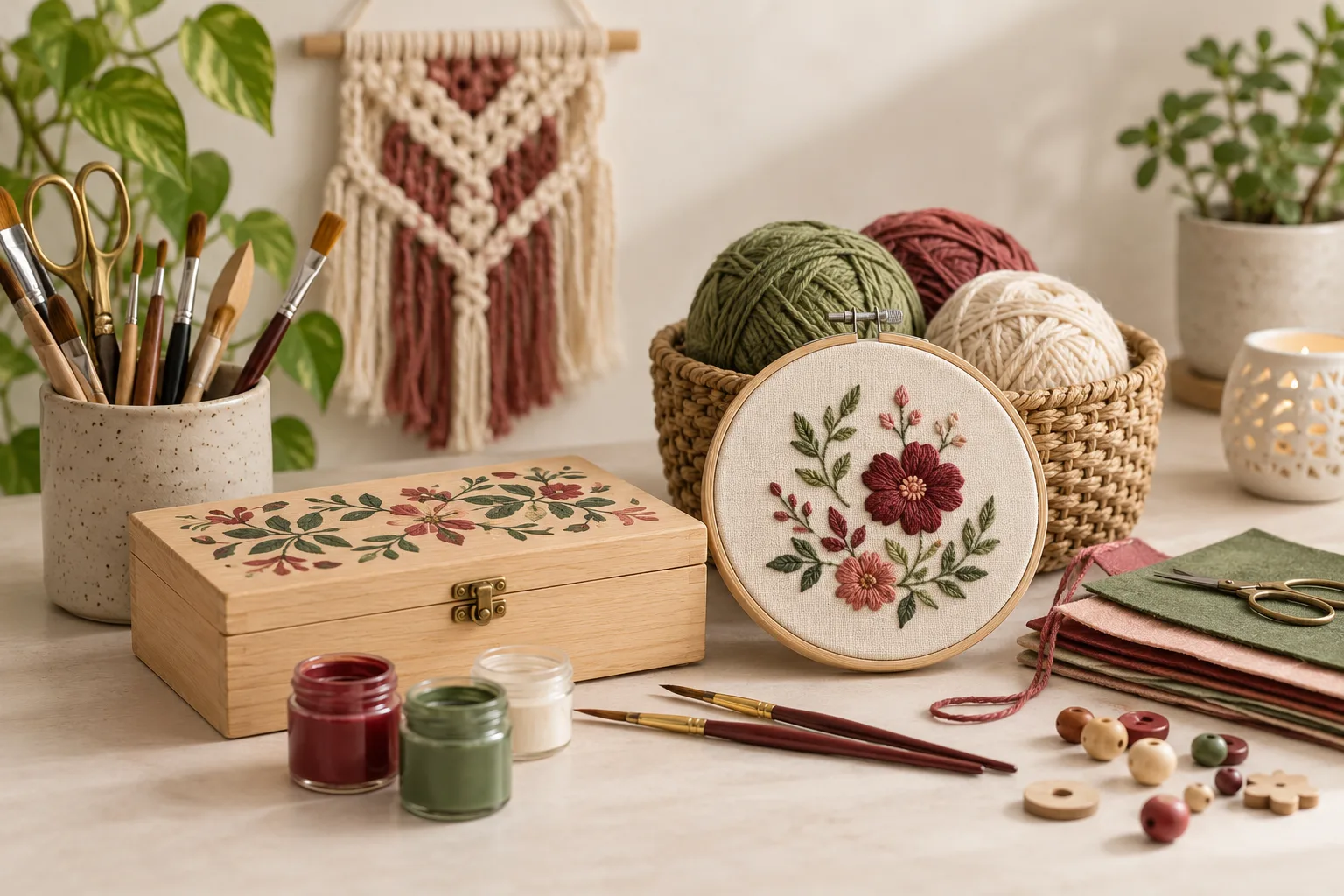
Craft kits online are boxed sets with everything needed for one project, such as a candle, a macrame hanging, a terrarium or a clay pot set, bought for children, beginners and as gifts. GullySales works on how your kit pages show contents, time and skill level, how a kit is sold as a gift on a date, and how a buyer who finished one is offered the next.
The measure that matters is a finished project. A kit that sits half done in a cupboard earns a bad review and no reorder.
Last updated 7 Oct 2026.
Who it is for
This is written for you if you sell craft kits online.
- Brands selling DIY kits for children, such as clay, painting and science-and-craft sets
- Makers of adult hobby kits like macrame, candle, resin and crochet sets
- Sellers of themed kits for festivals, birthdays and gifts
- Companies who supply kits for workshops, schools and team events
Not for
It is not the right fit if.
- A seller of kits whose contents change from batch to batch without the page being updated
- A brand whose kit has no instructions, since the kit is bought for guidance as much as for materials
How buyers choose
What decides the sale of craft kits.
Everything included, and what is not
Whether glue, scissors or a cutter are in the box. Buyers read for the phrase you will also need, and assume the worst if there is none.
Age, skill and time
A kit for a ten-year-old or an adult beginner, finished in an hour or over a weekend. The age and the time are two of the first questions a parent asks.
Safety and materials
Small parts, non-toxic dyes, heat or sharp tools. Parents of young children read this closely, and the kit's maker is the one to confirm what applies.
The finished piece
A photograph of the result and a short clip of the steps. A gift buyer wants to know what the recipient will have at the end.
Where sales are lost
What usually goes wrong when you sell craft kits online.
In the words sellers use on the first call.
“Reviews say it was harder than we showed”
The photograph is the finished piece by an expert. The buyer's piece looks different, and the review says the kit is misleading.
“Gift orders arrive late or without a message”
A kit ordered for a birthday must reach the child by the day. A gift buyer wants a card and a delivery date, and gets neither.
“Workshop and corporate orders go elsewhere”
An HR team wants thirty kits for a team day by a date. Our website offers one and a cart.
The scope
The work we would propose for craft kits.
Measured on purchases, conversion rate, cost to win a customer, average order value and repeat purchases. Anything here that needs a platform or tool we have not used with you is confirmed with you before it goes in the scope.
- Contents, time and level on the pageA fixed panel on each kit: what is in the box, what is not, the age, the time it takes and the skill needed, with a real beginner's result next to the expert's.
- Gifting flowA gift note, a last order date for each occasion and a delivery promise on the page. What your platform allows for gift notes and date limits is checked in the first conversation before we promise it.
- Video stepsA short clip of each stage, filmed by someone who has not made it before, so the buyer sees the real effort.
- Workshop and bulk ordersA page for team days, school workshops and return gifts, taking quantity and date and answering with a quote.
- The next kitA message after delivery with the next project at the same level, or the refill pack for the one they finished.
What we do
What you get for craft kits.
Each deliverable and what it is there to change.
A kit page standard
One layout for contents, age, time and skill used on every kit, with the missing items named.
A real-result photograph set
A first-attempt result next to the polished one, so the buyer expects the right thing.
A gift occasion plan
Cut-off dates, a gift note field and a delivery promise for each festival and birthday season.
A workshop order page
Quantities, customisation and delivery date for teams, schools and parties.
How the result is measured
- Purchases
- Conversion rate
- Average order value
- Repeat purchase rate
- Return rate
- Corporate and workshop quotation requests
Recorded as a baseline before work starts, so every later report has an honest comparison.
How it works
From your first message to the first piece of work.
No open-ended retainer. Every step gives you something in writing.
First
Your brief
You tell us what you need in a few short steps: your business, what you want, where enquiries come from and how they are handled.
After the brief
A conversation and a written scope
We read it, then talk with whoever handles your enquiries. If you want our help, the scope, the fee and the reporting come in writing, and nothing starts before you have read them.
Before work starts
Baseline recorded
The numbers this work is meant to move, such as enquiries, quotations, orders, visits or renewals, written down so every later report has an honest comparison.
After the baseline
The first fix goes live
The fix we agreed to start with is put in place and measured against the baseline, whether that is a reply, a follow-up, a page, a listing or the handover between marketing and sales.
As agreed
Report against the baseline
What moved, what did not, and what changes next, in plain words. How often you get it is set in writing before work starts.
At renewal
Renew on the numbers
The term ends and you decide whether to continue from the results. The length is agreed in writing before anything starts.
What we need from you
What to have ready before we talk.
None of it has to be tidy. We read what you have.
- Your kits with exact contents and what is not included
- Reviews and returns that mention difficulty or missing items
- Gift and workshop orders you have taken
- Sales by occasion
- Your product videos and photographs
Selling in India and abroad
Selling craft kits beyond your own market.
Where you sell decides sizes, units, seasons and returns. We work from Bengaluru and have no overseas office, so for a new country we start from your own sales and the platforms you already use.
Child safety and toy rules
Kits for children can fall under toy and product safety rules, which differ by country and change. Your adviser confirms what applies before you export.
Gift kits for the diaspora
A relative abroad sends a kit to a child in India, or an Indian-themed kit abroad. Delivery date and customs are the questions, and the first step is the orders you already ship.
FAQ
Questions about selling craft kits online.
Not here? More answers, or ask on WhatsApp.
What should a craft kit page say first?
How do I stop reviews saying the kit was too hard?
Can I sell kits to companies for team days?
How much does it cost?
How long is the contract?
How soon will we see results?
Who will actually do the work?
What do you need from us?
More in Crafts & Sewing
Sellers of craft kits also need
Also selling from a shop, a workshop or a warehouse? See the page for fabric shops and retailers.
This page is part of the e-commerce section. The D2C brands page covers the arithmetic of acquisition cost and the second order for any brand.
Why us
Why owners pick GullySales over an agency.
Marketing and sales, as one job
Most agencies stop at the enquiry. We also fix what happens after it: the reply, the follow-up, the quote and the CRM.
The person on the first call does the work
No account managers in between. You are never handed to someone you have not met.
A baseline before anything starts
Your numbers are written down on day one, so every later report compares against something honest.
The fee in writing, split three ways
Our time, your media spend and production on separate lines. You always see what goes to us.
No guarantees we cannot keep
The term is agreed in writing and never a default twelve months. We never promise a ranking or a lead count, because nobody controls those.
One office, and we say so
Nagarbhavi, Bengaluru. We work across India by call and WhatsApp and travel when a session needs to be in person.
#257, 3rd floor, Sri Nanjundeshwara Complex, Nagarbhavi 8th Block, Outer Ring Road. How we work.
Engagement options
Ways to work with us.
Pick the size of commitment that fits. Every option starts with your brief and a conversation.
Option 1
The conversation on its own
A call after you send your brief. It says honestly whether you need outside help, and many fixes are ones your own team can make.
Option 2
One fix, scoped
Start with the fix that matters most, such as reply time or follow-up. The fee is in writing before anything starts.
Option 3
An ongoing programme
We run the work, report against the baseline, and you renew on the numbers. The term and the reporting are agreed in writing first.
Option 4
Guidance for your own team or agency
We plan, brief and check the work of your in-house team or current agency, instead of replacing them.
Your brief
Tell us what you need, and we will read it before we call.
Eight short steps about your business, what you want and who decides. Most questions are a tap, and you can skip any you would rather answer on the call.
Your next practical step
Tell us what you are trying to grow, and we will read it before we call.
Eight short steps, mostly taps. Skip anything you would rather answer on the call.