Coaching centres and tutors · Outdoor advertising
The board outside the school gate is read by the same parent every afternoon.
Outdoor advertising for a coaching centre is the board, kiosk or auto panel on the route between the schools your students come from and your classroom. GullySales builds the site list from your own admission register, times the display cycle to the admission window, and gives each panel one batch.
Scope, fee, reporting and term are agreed in writing after we have read your brief and spoken to you.

What outdoor advertising means
Outdoor advertising is the hoarding, billboard, bus shelter or digital screen on a road your buyers already use. GullySales picks the sites from where your customers actually come from, coordinates the booking with the media owner, and gives the campaign a traceable route so it is not judged on guesswork.
Also for coaching centres and tutors
- Apartment advertising for coaching centres and tutors
- Newspaper advertising for coaching centres and tutors
- PPC advertising for coaching centres and tutors
- SEO for coaching centres and tutors
- Lead generation for coaching centres and tutors
- Digital marketing for coaching centres and tutors
- Reputation management for coaching centres and tutors
- Local SEO for coaching centres and tutors
Sales and marketing for coaching centres and tutors, the overview.
Last updated 5 Oct 2026. Rules for this trade differ by state and professional body, and they change. We describe restrictions in general terms, so check the current position with your own council or adviser before you publish anything.
For coaching centres and tutors
Where it usually goes wrong, and what we would do.
“Pick-up time is what you are buying”
A mother waiting outside the school gate at three o'clock reads the same board four afternoons a week for a month. A site on the ring road is passed once at speed by people whose children study somewhere else.
“This is a season, not a year”
Admissions bunch into the weeks around the Class 10 and Class 12 results. A twelve-month site sits ignored through the term and costs what three months bought around that window would.
“A rank list at a hundred metres is a grey rectangle”
Twenty photographs and a table of marks cannot be read from a moving auto. One batch, the start date and a number somebody can save is what survives the distance.
“Autos run the route your students take”
Back panels on the autos working between the school and your lane are cheap, and they move through the exact pocket your admission register already points at.
What we do
What we deliver for coaching centres and tutors.
Every deliverable, what it covers for you, and the result it is there to produce. Nothing here is an extra.
Site list taken from the feeder schools in your register
The schools your current students actually come from, the roads between those gates and your classroom, and the junctions parents wait at, used to draw the shortlist.
Result: Boards go up where your kind of family already stands.
Display cycle timed to the admission window
The mounting date and the cycle set so the panels are up while parents are asking around, with printing and permission worked backwards from that morning.
Result: You pay for the weeks families are deciding.
One batch to a panel, with its start date
The board batch, the repeater batch or the crash course on its own site with the date it begins, instead of the institute's full course list crammed into one frame.
Result: A parent sees the batch their child needs and a deadline to act on.
Consent and claim wording settled before printing
Written permission from the student and the parent for any photograph or name, and claims kept to what you can evidence, checked by your own adviser before the flex is made.
Result: Nothing goes up that a family or a regulator can pull you up on.
A counselling line used on the boards alone
One number printed on outdoor and nowhere else, answered while the counselling desk is staffed, with every call logged against the site it came from.
Result: The school-gate board can be told apart from the main road one.
Enquiries traced back to the school
Which school each enquiring child attends, recorded at the desk and read against the baseline taken before the boards went up.
Result: Next season's sites are chosen from what filled the batch.
How the result is measured
- Sites booked
- Proof of display received
- Enquiries quoting the campaign route
Recorded as a baseline before work starts, so every later report has an honest comparison.
How it is bought, and approved
A coaching centre buys boards near schools, and the owner of the site and the civic body clear them first.
- Who owns the wall or pole
- Land near a school gate may belong to the school, a trust or the municipality. Find the owner first and get consent in writing before you pay a media seller.
- Rules near educational institutions
- Some cities restrict commercial boards close to schools and colleges. Rules differ by city and change, so ask the civic body before you book a site beside a gate.
- Kiosk per face, auto per vehicle
- Pole kiosks are sold per face and auto panels per vehicle. Ask for the route and the hours the autos run, since school pick-up decides who sees the panel.
- Cycle dates against the admission window
- Start the display when brochures and demo classes start, not when the printer is ready. Put start and end dates on the order.
- Claims on the board
- Rank, selection and result claims are advertising claims. Print only what your own records show, and check the current rules for education advertising with the relevant authority.
- A batch, a line and a question
- Give each panel a batch name and a counsellor line or QR to that batch's page. At the demo, ask which school gate the parent passes.
Who it is for
This is written for these coaching centres and tutors.
- School tuition centres for CBSE, ICSE and state boards
- Home tutors and individual subject teachers
- JEE and NEET entrance coaching institutes
- State entrance coaching for KCET, MHT CET and similar exams
- Government exam coaching for UPSC, state PSC, bank and SSC exams
- Commerce coaching for CA, CS and CMA foundation levels
- Language, spoken English and IELTS or PTE coaching centres
- Study abroad and overseas education consultants
- College admission and career counselling advisers
- Online and hybrid tutoring businesses
How it works
From your first message to the first report.
No open-ended retainer. Every step gives you something in writing.
First
Your brief
You tell us what you need in a few short steps: your business, what you want, where enquiries come from and how they are handled.
After the brief
A conversation and a written scope
We read it, then talk with whoever handles your enquiries. If you want our help, the scope, the fee and the reporting come in writing, and nothing starts before you have read them.
Before work starts
Baseline recorded
The numbers this work is meant to move, such as enquiries, quotations, orders, visits or renewals, written down so every later report has an honest comparison.
After the baseline
The first fix goes live
The fix we agreed to start with is put in place and measured against the baseline, whether that is a reply, a follow-up, a page, a listing or the handover between marketing and sales.
As agreed
Report against the baseline
What moved, what did not, and what changes next, in plain words. How often you get it is set in writing before work starts.
At renewal
Renew on the numbers
The term ends and you decide whether to continue from the results. The length is agreed in writing before anything starts.
How the outdoor advertising work runs
- 1
Draw the catchment
We agree the roads, junctions and neighbourhoods your buyer moves through. It is almost always a smaller area than an owner first says, and a clinic in Nagarbhavi does not need the whole of west Bengaluru.
- 2
Survey what is available
We work through the sites on offer inside that catchment and go and stand in front of the ones worth looking at.
- 3
Compare and book
Sites are compared on facing, visibility, illumination and cycle length, then booked through the media owner or their agency at a negotiated rate.
- 4
Print to specification
Artwork is made to the exact panel size and delivered ahead of mounting day, with a proof you approve before printing.
- 5
Monitor the cycle
We collect mounting and mid-cycle photographs, and take up anything late, torn or unlit with the media owner while the cycle is still running.
Why us
Why owners pick GullySales over an agency.
Marketing and sales, as one job
Most agencies stop at the enquiry. We also fix what happens after it: the reply, the follow-up, the quote and the CRM.
The person on the first call does the work
No account managers in between. You are never handed to someone you have not met.
A baseline before anything starts
Your numbers are written down on day one, so every later report compares against something honest.
The fee in writing, split three ways
Our time, your media spend and production on separate lines. You always see what goes to us.
No guarantees we cannot keep
The term is agreed in writing and never a default twelve months. We never promise a ranking or a lead count, because nobody controls those.
One office, and we say so
Nagarbhavi, Bengaluru. We work across India by call and WhatsApp and travel when a session needs to be in person.
#257, 3rd floor, Sri Nanjundeshwara Complex, Nagarbhavi 8th Block, Outer Ring Road. How we work.
Your brief
Tell us what you need, and we will read it before we call.
Eight short steps about your business, what you want and who decides. Most questions are a tap, and you can skip any you would rather answer on the call.
FAQ
Questions owners ask before they call.
Not here? More answers, or ask on WhatsApp.
Is a school-gate site worth its premium over a main road board?
When should the boards go up?
Can we paint our name on a compound wall near the school?
Is a bus shelter panel better than a hoarding for a tuition centre?
How much does it cost?
How long is the contract?
How soon will we see results?
Who will actually do the work?
What do you need from us?
What if we are not happy with the work?
From the blog
Further reading for coaching centres and tutors.
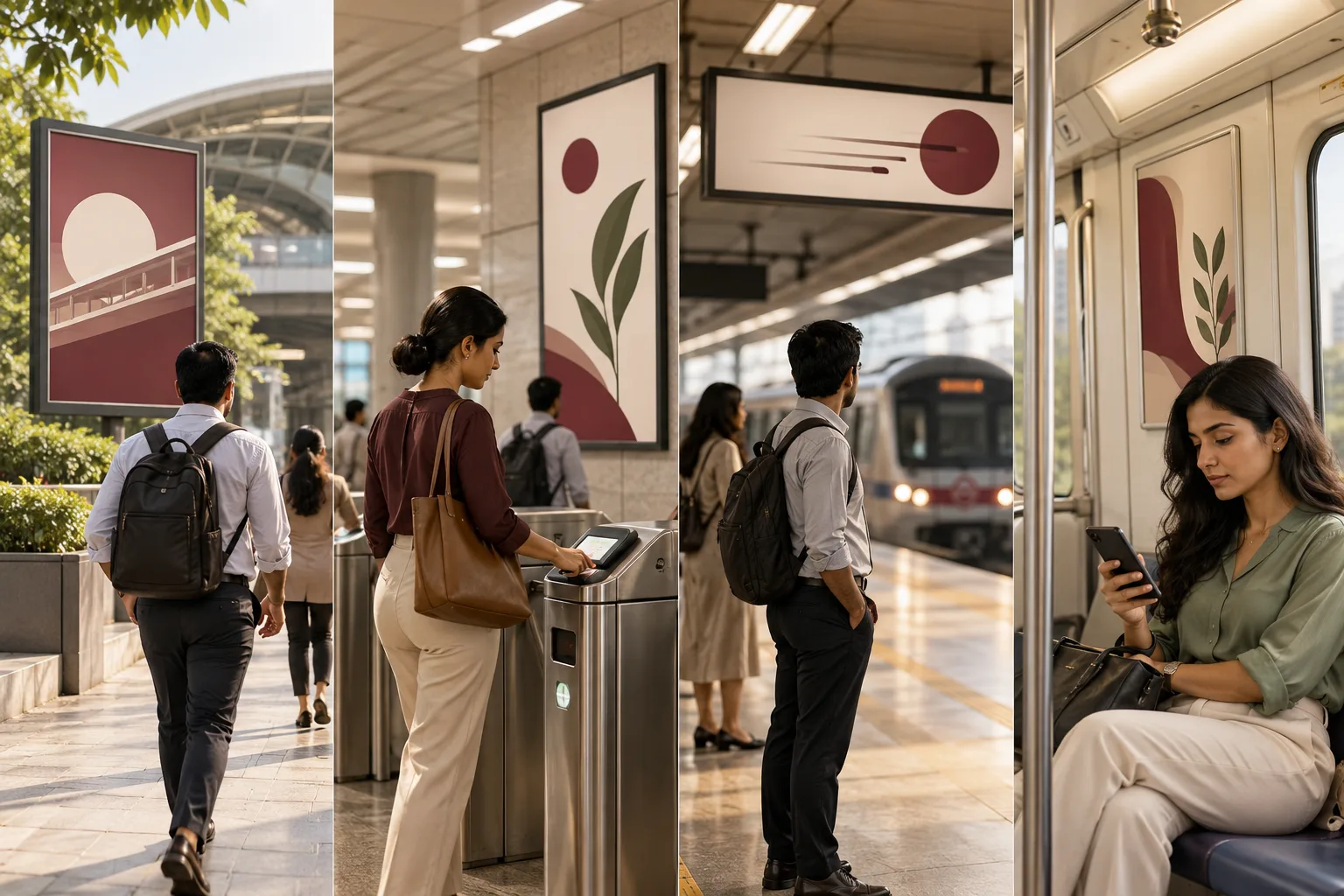 7 min read · 21 Sept 2026How to advertise to metro commutersA commuter is a mode, not a person. The journey has four still moments and each one takes different creative, which is why one design across a station never performs.
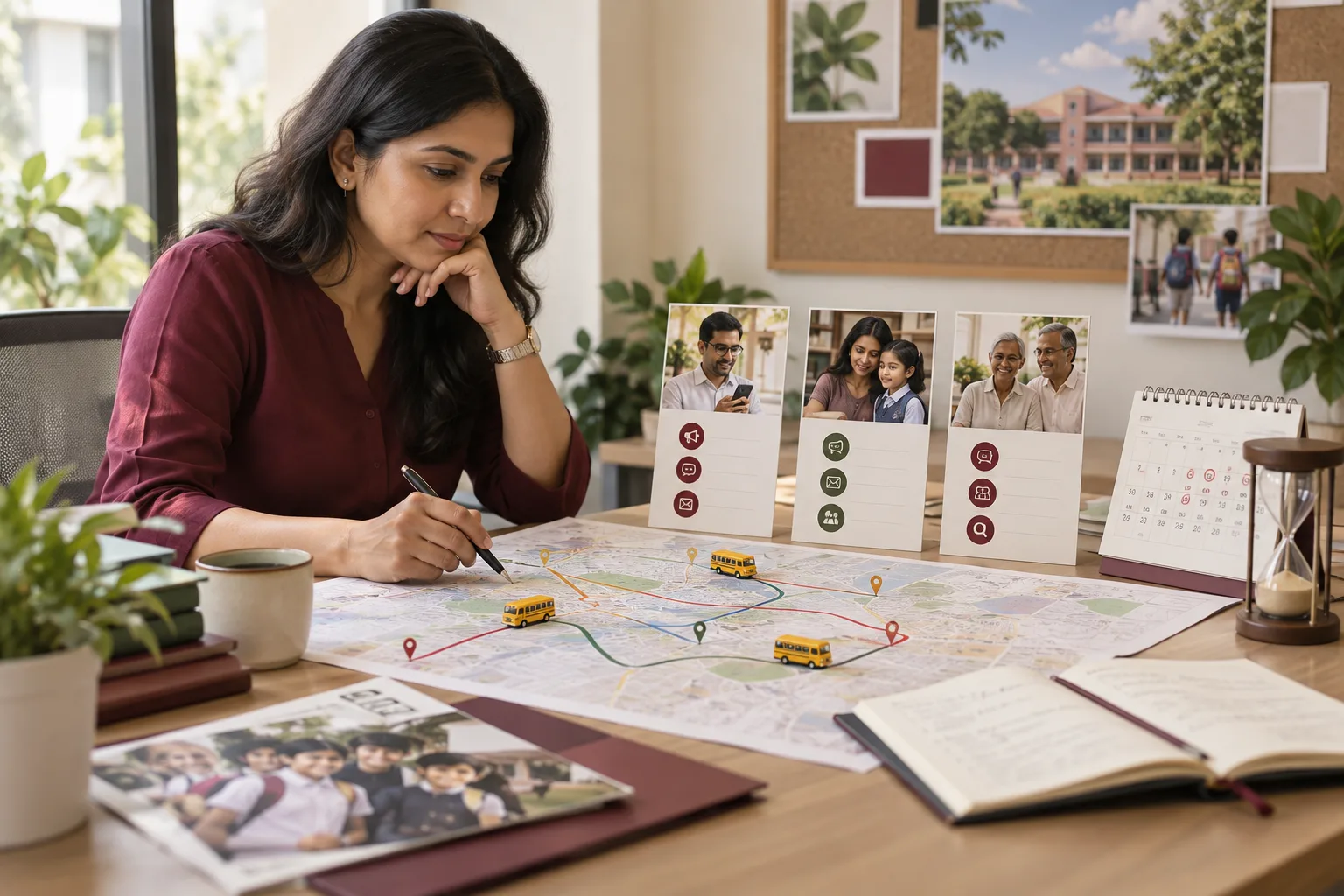 6 min read · 12 Nov 2024The best advertising channels for schoolsA school's mix is decided by the bus route, the parent you are selling to and how many weeks are left in the admission window. Then the channel list writes itself.
 5 min read · 6 Oct 2026How families and companies choose between institutesA parent, a student, a certification candidate and an HR head each pick an institute differently. This post sets out who decides, what each one checks and what your admissions desk should have ready.
More for coaching centres and tutors
Everything else we would do for you.
Closest to this: paid and media
Also for coaching centres and tutors
Or start from the overview: sales and marketing for coaching centres and tutors.
Your next practical step
Tell us what you are trying to grow, and we will read it before we call.
Eight short steps, mostly taps. Skip anything you would rather answer on the call.