Banks · Airport advertising
Reach the traveller who already needs an overseas account, not every passer-by.
Airport advertising for banks means buying a position inside a terminal, or on an approach, to put a specific banking product in front of travellers at the moment they are thinking about money abroad. GullySales works on the brief, the site shortlist, the booking particulars, the approved artwork and the route by which a traveller's interest reaches your team.
Scope, fee, reporting and term are agreed in writing after we have read your brief and spoken to you.
What airport advertising means
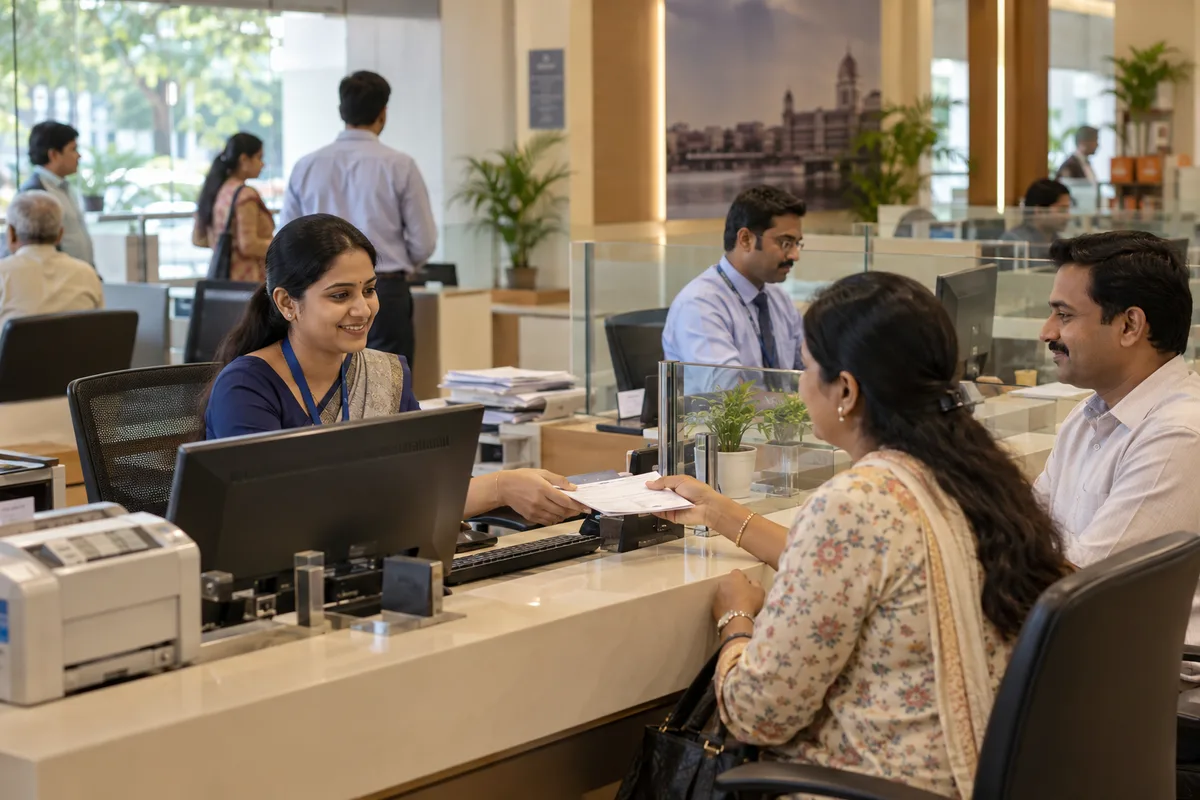
Airport advertising buys space inside a terminal for an agreed display period, from backlit panels to slots on digital screens or security trays. GullySales matches available sites to your buyers’ travel routes and waiting areas, compares formats, coordinates booking and artwork approval, and checks delivery against the booking rather than treating passenger numbers as sales leads.
Last updated 14 Nov 2026. Rules for this trade differ by state and professional body, and they change. We describe restrictions in general terms, so check the current position with your own council or adviser before you publish anything.
For banks
Where it usually goes wrong, and what we would do.
“The audience is mixed and only a slice is yours”
A terminal carries holidaymakers, workers going abroad, returning residents, business travellers and people seeing relatives off. A bank selling an overseas remittance account, a travel card or a premium relationship wants only some of them. A position in the arrivals hall speaks to someone landing with money to move; a departure gate speaks to someone leaving. The brief starts from which traveller you want.
“Product claims need approval before the poster does”
A bank's advertisement is not just a design. Rate statements, fee statements, eligibility and the wording around a product are checked by the bank's own compliance function, and the airport operator has its own display rules on top. Artwork that is approved internally can still be refused by the operator, so both approvals are sought before production, not after.
“A traveller cannot act on the spot”
A person in a queue with a bag will not fill in a form, and a long scheme name is forgotten before the gate. The message has to be one thing a traveller can remember or capture in a glance, and the response route has to work at the traveller's pace, including from another country and outside branch hours.
“A booking is a position, not a result”
What a seller offers is a place, a format and a set of dates. It does not include a count of enquiries or accounts opened. A bank that treats a booking as a lead source is disappointed. A bank that records the position, the dates and every response against it can judge later whether the spend belonged in the plan.
What we do
What we deliver for banks.
The work available for this need. We agree the deliverables and responsibilities for your engagement in writing.
Traveller and terminal brief
A brief that names the traveller the bank wants, such as people sending money home, students going abroad or business owners who trade overseas, and says where in the airport they stand, wait or walk. The brief is the test against which every position offered is judged.
Result: Every position on the shortlist can be traced to a traveller named in the brief.
Site shortlist with photographs
A shortlist of positions across the terminal, each with a photograph taken from a traveller's eye line, the format offered, what stands beside it and what blocks the view. Photographs come from the media owner or from a site visit agreed with you, and the source of each is noted.
Result: For each position, a photograph and a note of what is in view are on file before any booking.
Comparable format options
Like-for-like notes on static panels, digital screens, banners and any branded fixtures the seller offers for your chosen areas. Where a seller will not give comparable particulars, that is recorded rather than filled with assumptions, so you decide knowing what is missing.
Result: Formats are compared on one sheet using the same headings for every option.
Written booking particulars
A single document listing the exact position, format, dates, who supplies the production, the proof the seller will provide and the conditions for changes or cancellation. You sign it, not GullySales, and the seller's current terms apply.
Result: The booking can be read in one place and matches what the seller confirmed in writing.
Artwork files and approval record
Artwork prepared to the size and technical rules the seller gives, with a record of which wording your compliance people approved and which the operator cleared. Product claims, fees and rates are kept to what the bank has approved for public use.
Result: Each line of wording on the artwork has a recorded approver.
Response route and delivery proof pack
A route by which a traveller's interest reaches your team, such as a dedicated page or messaging line staffed for overseas time zones, plus a pack of the seller's proof that the artwork ran as booked. The pack and the response log are kept together.
Result: Responses can be matched to the position and dates in the proof pack.
How the result is measured
- Installed sites and display dates against the booking
- Digital plays against the booked slot and loop terms
- Branded searches against the pre-campaign baseline, without assuming causation
Recorded as a baseline before work starts, so every later report has an honest comparison.
Who it is for
This is written for these banks.
- Private sector bank branches
- Public sector bank branches
- Regional rural banks
- Cooperative banks
- Small finance banks
- Business correspondent networks
- NRI-focused branches
- MSME-focused branches
Before you decide
Agree the work. Know how to judge it.
Airport advertising for banks: use these checks to prepare, choose the scope, and review what changes.
Bring the right evidence
State the buyer group, catchment, and dates that matter to the offer. Ask for the proposed inventory and available evidence about its audience, with the source and date shown.
Make the scope clear
Agree the exact placements, formats, booking period, and proof of delivery. Separate media charges from design, production, permissions, and installation where these apply.
Check the work in use
Compare delivery evidence with the agreed booking and record enquiries through a distinct response route where practical. Treat audience estimates separately from measured responses.
Know when to change course
Do not buy a placement only because it is discounted. If the location or audience does not fit the buyer, revisit the plan before committing production costs.
These are discussion points, not a fixed package. GullySales confirms the deliverables, responsibilities, fee, and term in writing after reading your brief and speaking with you.
Before we start
What to have ready before the work starts.
The records, access and decisions this work needs from banks. Anything missing is noted in the written scope, with who will supply it.
- A single product with approved wording
- Choose the one product the position will promote and have your compliance people approve what can be said in public. Without approved wording the artwork stalls at the operator, and a position already booked runs empty or with a message you did not intend.
- Someone who answers overseas enquiries
- Name the person or team that will reply to a traveller's message, and the hours they are reachable. A traveller in another time zone who gets no reply goes to another bank. If nobody can answer outside branch hours, the response route needs to say when a reply will come.
- Your brand files and logo permissions
- Provide the logo, colours and any existing campaign artwork, and say where the brand has usage rules that the airport must follow. Without them the artwork is rebuilt from a screenshot, and a position can be installed with a logo the bank would have refused.
- A clear view of your overseas customers
- Bring what you know about customers who send money, hold foreign accounts or travel for business, including where they come from and where they fly to. This gives the brief its edge. Without it the airport audience is guessed, and a good position is wasted on a traveller who has no use for the product.
- A decision on what the spend is for
- Decide whether the aim is to be seen, to collect enquiries or to support a branch near the airport. These need different positions and different response routes. If the spend must produce a steady flow of enquiries, airport space may not be the right place, and we say so early.
How it works
How the airport advertising work runs
The work itself, in order. How an engagement starts, from your brief to a written scope, is set out on our method page.
- 1
Agreeing the product and the traveller
We start with one product and one traveller, and ask what the spend is meant to do for the bank. A product that a branch can serve well suits this better than a general brand message. We also ask what a visit to the airport branch or overseas desk would actually offer, if one exists, and whether it is open when travellers pass.
- 2
Choosing terminal areas to approach
We list the areas where your traveller waits, such as arrival halls, baggage reclaim, departure queues or approach roads, and approach sellers for those areas only. Positions on a road to the airport are a separate outdoor purchase and are not treated as terminal inventory. You approve the shortlist before any seller is asked to hold a position.
- 3
Authorising the booking
You read the particulars, check the seller's right to offer the position and decide whether to proceed. We do not sign for the bank or make payment. Where the seller's terms are unclear on changes, removal or substitution of a position, we raise the question in writing and keep the answer with the booking.
- 4
Clearing the message and the display
Your compliance people approve the product wording; the operator then reviews the artwork for placement. The two reviews are separate and each may ask for changes. We hold the versions, record who approved which, and do not send artwork for production until both approvals are on file.
- 5
Installing and opening the response route
The seller installs the artwork and sends proof. We check the proof against the booking and test the response route from outside the bank's network, including at an hour when the branch would be shut. If the route is not staffed when travellers are likely to use it, we say so before the first response arrives.
- 6
Reading the campaign against the record
Before the work began we recorded how overseas product enquiries reached the bank and from where. We read the responses logged against the position and dates, add what your branch staff heard, and report what the evidence shows. The decision to renew, move or drop the position is yours.
Where this fits
Three pieces of sales work, in this order.
This work sits inside sales process design, at stage 1, prospecting and lead generation. The audit comes before it, and sales management keeps it running.
Step 1
Sales audit
Find where deals are being lost and what to fix first.
Start here if you cannot say where orders are lost.
Step 2 · you are here
Sales process design
One written way to sell, from first enquiry to repeat order.
Start here if every salesperson sells differently.
Step 3
Sales management
A target, a review routine and someone who owns the number.
Start here if the team has targets and no routine.
FAQ
Questions owners ask before they call.
Not here? More answers, or ask on WhatsApp.
Is airport advertising right for a bank?
Who approves the wording on an airport advertisement?
How do we know the advertisement actually ran?
Can you promise how many enquiries we will get?
Does this include hoardings on the road to the airport?
What if the artwork needs changes after approval?
How much does it cost?
How long is the contract?
How soon will we see results?
Who will actually do the work?
From the blog
Further reading for banks.
 7 min read · 21 Sept 2026How to advertise to airport travellersA terminal is a small number of regular flyers counted many times, and the crowd changes completely between the six o'clock bank and the summer holidays.
 6 min read · 6 Oct 2026How buyers decide which lender or adviser to trustPeople choosing a bank, lender, adviser or insurer start with a name someone gave them, then check you before calling. See what they look for.
 6 min read · 29 Jan 2026Local search for a financial services office: profile, reviews and what you can sayHow a financial services office can set up its Google Business Profile, ask for reviews and reply to them without breaking client confidentiality.
More for banks
Related work to consider.
Closest to this: paid and media
Also for banks
Or start from the overview: sales and marketing for banks.
Your next practical step
Tell us what you are trying to grow, and we will read it before we call.
Eight short steps, mostly taps. Skip anything you would rather answer on the call.