FMCG and beverage brands · Outdoor advertising
Paint the shop boards and walls on routes where your stock is already sold.
Outdoor advertising for an FMCG or beverage brand is shop boards, wall paintings, bus shelters, hoardings and van wraps placed on the beats where your distributors have stock. GullySales picks the sites against the outlet list, checks permissions and artwork, and ties each site to sales in the outlets around it.
A 90-minute audit call and a written, scored report. Turnaround, reporting and term are agreed in writing after the audit.
What outdoor advertising means
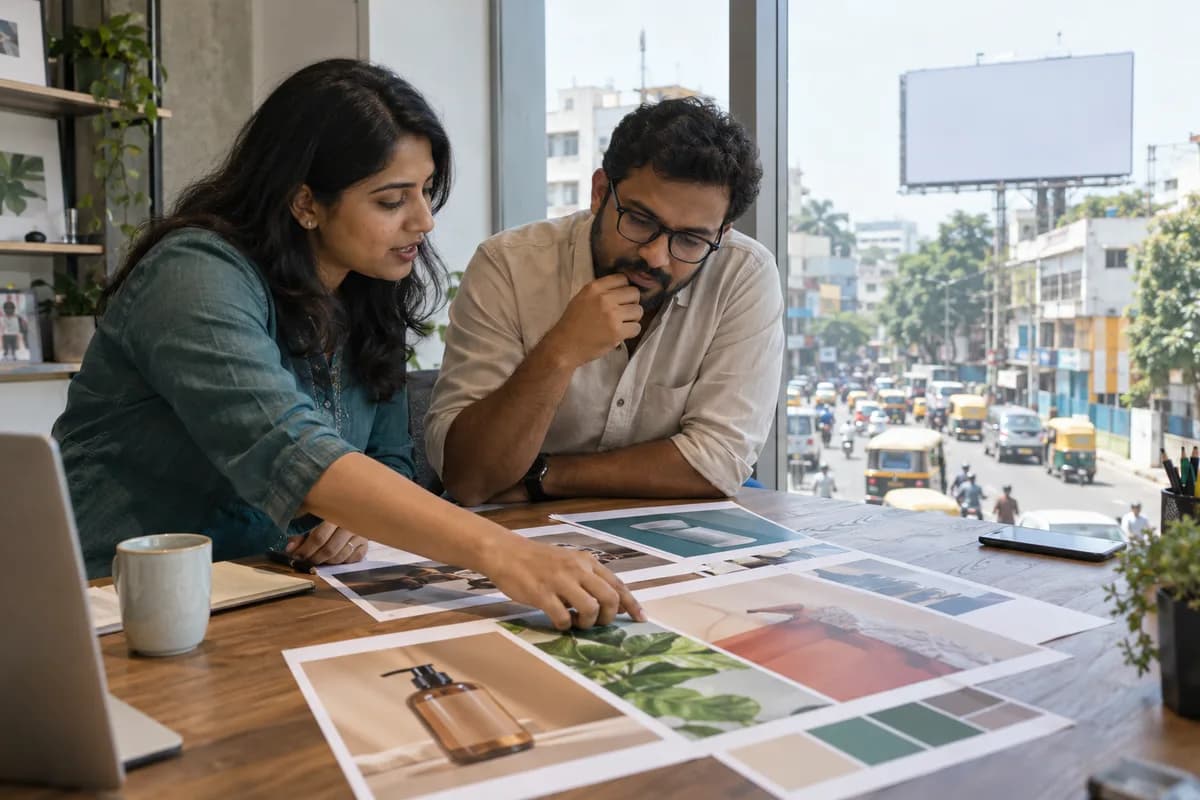
Outdoor advertising is the hoarding, billboard, bus shelter or digital screen on a road your buyers already use. GullySales picks the sites from where your customers actually come from, coordinates the booking with the media owner, and gives the campaign a traceable route so it is not judged on guesswork.
Also for FMCG and beverage brands
- SEO for FMCG and beverage brands
- Social media marketing for FMCG and beverage brands
- Influencer marketing for FMCG and beverage brands
- Digital marketing for FMCG and beverage brands
- Branding for FMCG and beverage brands
- Content marketing for FMCG and beverage brands
- Lead generation for FMCG and beverage brands
- Sales management for FMCG and beverage brands
Sales and marketing for FMCG and beverage brands, the overview.
Last updated 6 Oct 2026. Rules for this trade differ by state and professional body, and they change. We describe restrictions in general terms, so check the current position with your own council or adviser before you publish anything.
For FMCG and beverage brands
Where it usually goes wrong, and what we would do.
“Hoardings go up where the brand is not sold”
A highway hoarding seen by every passing truck sells nothing if the dhabas on that highway do not stock the bottle.
“Shop boards are the cheapest shelf space”
A sponsored name board for a kirana carries your brand above the counter for years, and the retailer sees it as a favour from you.
“A village wall outlasts the campaign”
A painting on the main road into a village stays readable through several seasons, and it works only if the shop below it sells the pack.
What we do
What we deliver for FMCG and beverage brands.
Every deliverable, what it covers for you, and the result it is there to produce. Nothing here is an extra.
Sites chosen from the outlet list
Hoardings, bus shelters and walls picked near clusters of outlets that stock your brand, with each site matched to its nearest shops.
Result: Each site points to a shop that can sell.
A shop board and cooler wrap programme
Which retailers qualify for a sponsored name board or cooler wrap, the note on what they will stock, and an approved printer for each region.
Result: The brand sits above the counter in outlets that sell it.
Permissions and consent on file
Owner consent for walls and shop boards and the local body licence for hoardings, collected before mounting and kept with the site record.
Result: No board comes down halfway through the season.
Artwork built for distance
The pack, the brand and one price point, large enough to read from a moving bus, in the language of the area.
Result: A passer-by knows what to ask for.
Mounting proof and site checks
Dated photographs when each site goes up and again during the display period, with torn or unlit sites taken up with the vendor.
Result: You get the display days you paid for.
Sales read around each site
Outlet billing near each site compared with similar outlets far from any site, before and after mounting.
Result: You learn which sites deserve a renewal.
How the result is measured
- Sites booked
- Proof of display received
- Enquiries quoting the campaign route
Recorded as a baseline before work starts, so every later report has an honest comparison.
How it is bought, and approved
How a drinks or home care brand buys outdoor, from shop boards to highway hoardings, and who has to agree first.
- Shop boards and cooler wraps
- Bought per outlet through a local printer. The retailer's consent and a written note on what he will stock are the starting point. Some towns levy a fee on signboards, so check locally.
- Village and town wall paintings
- Bought per wall from painting contractors who tour the district. Get the owner's written consent, photograph the wall before and after, and agree how long the painting stays.
- Hoardings and bus shelters
- Bought by site and display period from a media owner. Ask to see the local body licence and the landowner's consent, and visit at dusk to check the lighting and which way it faces.
- Van wraps and auto backs
- Bought per vehicle for a period. Wrap the distributor's own delivery vans first, since they stop at every outlet on the beat, and check local transport rules on vehicle advertising.
- Size and lighting limits
- Rules on size, lighting and position differ by city and change. Ask the media owner what the site is licensed for, and never add lights or extend a board without permission.
- How to tell it worked
- Choose sites near outlets you already bill, then compare their billing with similar outlets far from any site over the same weeks. Ask retailers whether shoppers mention the board.
Who it is for
This is written for these FMCG and beverage brands.
- Packaged drinking water and 20-litre can brands
- Regional soft drink, soda and goli soda bottlers
- Juice, fruit drink and nectar brands
- Energy, sports and electrolyte drink brands
- Packaged tea and coffee powder brands
- Flavoured milk, buttermilk and lassi brands
- Home care brands: detergent, dishwash, floor cleaner and phenyl
- Personal care and pooja brands: soap, hair oil and agarbatti
Not for
It is not the right fit if.
- You want a guaranteed Google ranking or a guaranteed number of leads. Nobody honest can promise either.
- You need enquiries by next week and have nobody to answer them.
- You want posts and reach reported, not enquiries and orders.
How it works
From your first message to the first report.
No open-ended retainer. Every step gives you something in writing.
First
Free audit call
90 minutes with whoever handles your enquiries: how they arrive, how fast they are answered, where they are lost.
After the call
Written, scored report
Six areas scored, fixes ranked by return and cost. If you want our help, the scope, the fee and the reporting come with it, in writing.
Before work starts
Baseline recorded
Enquiries by source, reply time, conversion and cost per order, written down so every later report has an honest comparison.
After the baseline
The first fix goes live
Usually the cheapest one on the report: reply time, a follow-up sequence or the marketing-to-sales handover.
As agreed
Report against the baseline
What moved, what did not, and what changes next, in plain words. How often you get it is set in writing before work starts.
At renewal
Renew on the numbers
The term ends and you decide whether to continue from the results. The length is agreed in writing before anything starts.
How the work runs for FMCG and beverage brands
- 1
Read the records
In the free audit we go through primary and secondary sales by distributor, active outlets, pending claims and sales by season, so the first decision rests on records and not on how the summer felt.
- 2
Fix the offer
Distributor margin, schemes, claim rules and retailer display terms written down, each checked against what the brand can still afford in the monsoon.
- 3
Tighten the beat
Beat plans, outlet lists, a selling kit for the salesman and a sales app or sheet he will actually fill in.
- 4
Add channels one at a time
A new district, modern trade, quick commerce, canteens or events, each opened when the plant, the cash and the distributors can carry it.
- 5
Run the season
Summer loading tied to sell-through, schemes judged on outlets reached, and the slow months used to widen coverage.
Proof
What happened when owners fixed this.
Real clients, the work we did, and the result as it was recorded. Where no number was recorded, none is claimed.
SB Engineering
- Situation
- Buyers searching for laser cutting and sheet metal work in Bengaluru were finding other suppliers first, because the company did not rank for the terms its own customers type.
- What we did
- The site redesigned for mobile
- Search work on the buyer's terms
- Content that shows the work
- Social channels managed
- Result
- Website traffic rose 60% within six months, against a target of 50%.
- High-quality leads rose 45%, with a rise in conversion rates alongside them.
- Fifteen target keywords moved up the rankings, five of them into the top three positions.
Burhani Hydroline
- Situation
- The website was dated. Menus were hard to follow, pages were slow, and it did not work properly on a phone, which is where a buyer looks first.
- What we did
- Research before design
- Wireframes and prototypes
- The full product catalogue
- An online checkout
- Result
- No numbers were recorded for this engagement. The work is described in full in the case study.
Also worked with
Chord Road Hospital · Curtain Label · Difesa Security Services · Felicity Inn · Hands On CSR · Implevista · Kambar Group · Kalessi · Kerur Pain Clinic · LL Trust · Lucky Deals · Natural Gases · NavaShakthi Souhardha · NewCom Logistics · Proton Technical Services · Shakthi Foundation · Shakthi Group · Urbanest · Insyde Studio · Venkateshwara Laser Tech · Vivara Studios
Why us
Why owners pick GullySales over an agency.
Marketing and sales, as one job
Most agencies stop at the enquiry. We also fix what happens after it: the reply, the follow-up, the quote and the CRM.
The person on the first call does the work
No account managers in between. You are never handed to someone you have not met.
A baseline before anything starts
Your numbers are written down on day one, so every later report compares against something honest.
The fee in writing, split three ways
Our time, your media spend and production on separate lines. You always see what goes to us.
No guarantees we cannot keep
The term is agreed in writing and never a default twelve months. We never promise a ranking or a lead count, because nobody controls those.
One office, and we say so
Nagarbhavi, Bengaluru. We work across India by call and WhatsApp and travel when a session needs to be in person.
#257, 3rd floor, Sri Nanjundeshwara Complex, Nagarbhavi 8th Block, Outer Ring Road. How we work.
The offer
Start with a free audit of how you sell.
It is useful on its own, whether or not you hire us.
What you receive
- A 90-minute call with the person who will do the work
- A written, scored report on the six places orders leak
- Every fix ranked by what it returns and what it costs
- The one thing to do first, and why
- An honest line on whether you need outside help at all
- If you do, the scope and the fee in writing
No invoice. No obligation. No sales script.
FAQ
Questions owners ask before they call.
Not here? More answers, or ask on WhatsApp.
Hoardings, wall paintings or shop boards: which should come first?
When should outdoor go up for a summer drink?
Should we renew a hoarding for another display period?
How far does a hoarding pull buyers for a cold drink?
Should we give coolers to retailers?
How do we stop distributors loading up in March and returning stock later?
How much does it cost?
How long is the contract?
How soon will we see results?
Who will actually do the work?
From the blog
Further reading for FMCG and beverage brands.
- 6 min read · 21 Sept 2026Outdoor advertising vs digital advertising: which should you buy?Outdoor buys a place for a month and cannot be switched off. Digital buys one person at a time and can be stopped by lunchtime. Different money, different job.
- 9 min read · 21 Sept 2026Outdoor advertising in Bengaluru: what is actually out thereRoadside hoardings are the smallest part of this city's outdoor now. Metro pillars, barricades, mall facades, IT park foyers and apartment gates are separate media with separate owners, and each reaches a different Bengaluru.
- 7 min read · 21 Sept 2026How to track a hoarding campaignOne code or number per site turns a campaign you cannot judge into eleven sites you can rank. The useful question is which panel worked, not whether outdoor works.
More for FMCG and beverage brands
Everything else we would do for you.
- SEO for FMCG and beverage brands
- Social media marketing for FMCG and beverage brands
- Influencer marketing for FMCG and beverage brands
- Digital marketing for FMCG and beverage brands
- Branding for FMCG and beverage brands
- Content marketing for FMCG and beverage brands
- Lead generation for FMCG and beverage brands
- Sales management for FMCG and beverage brands
- Sales strategy for FMCG and beverage brands
Or start from the overview: sales and marketing for FMCG and beverage brands.
Your next practical step
Get a free audit of how you sell, and a scored report of where the work is.
90 minutes. A written, scored report. No invoice and no obligation.