Dermatology clinics · Email marketing
Remind a patient about their next chemical peel sitting before they forget and drift away.
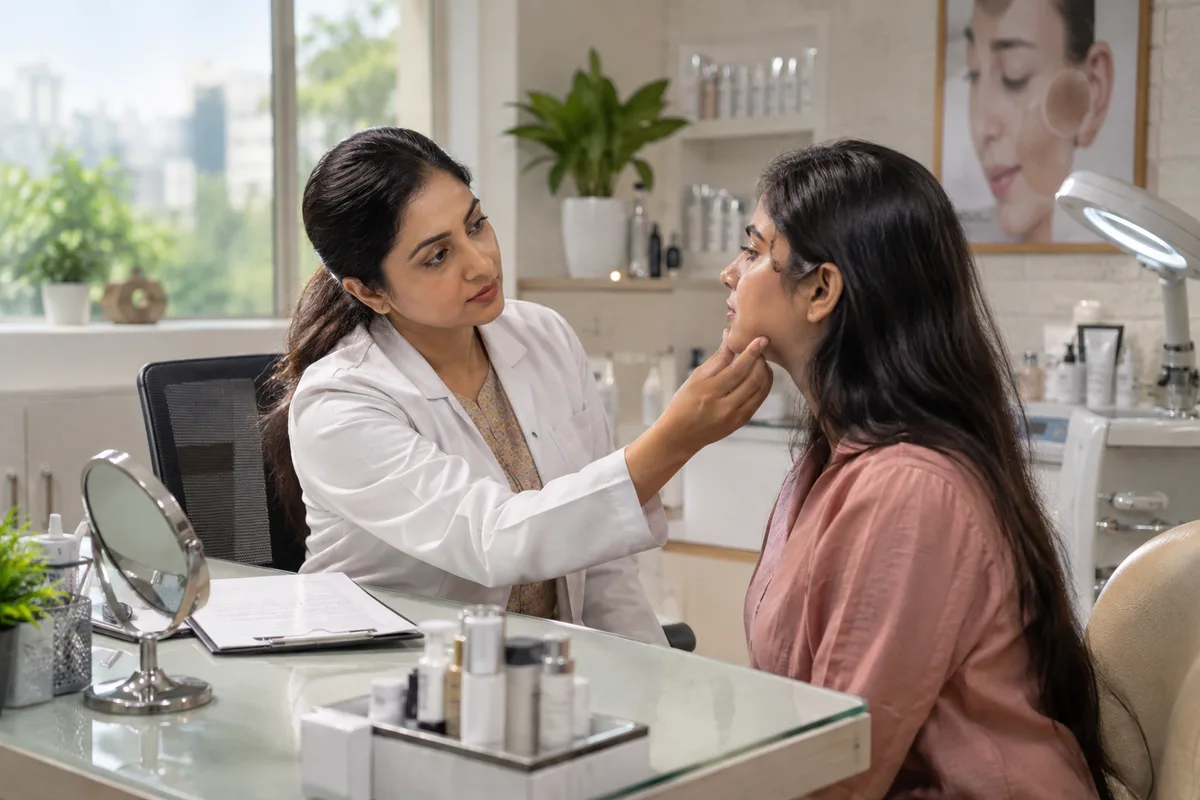
Email campaigns for a dermatology clinic work best for patients already in a treatment plan. They remind a patient of the next session in a course such as chemical peels, better suited to ongoing care than first-time acquisition. GullySales sets these up alongside WhatsApp, since not every patient reads email as closely as their phone messages.
Scope, fee, reporting and term are agreed in writing after we have read your brief and spoken to you.
What email marketing means
Email marketing is sending planned messages to a list of past and prospective customers who have agreed to hear from you. It suits offers, updates and staying in touch with someone who is not ready to buy yet. GullySales writes and schedules these emails and tracks who opens, clicks and enquires.
Also for dermatology clinics
- WhatsApp marketing for dermatology clinics
- AEO for dermatology clinics
- Branding for dermatology clinics
- Content marketing for dermatology clinics
- Digital marketing for dermatology clinics
- Google Business Profile for dermatology clinics
- Influencer marketing for dermatology clinics
- Lead generation for dermatology clinics
Sales and marketing for dermatology clinics, the overview.
Last updated 8 Nov 2026. Rules for this trade differ by state and professional body, and they change. We describe restrictions in general terms, so check the current position with your own council or adviser before you publish anything.
For dermatology clinics
Where it usually goes wrong, and what we would do.
“Session reminders for multi-sitting treatments”
A patient midway through a course of laser hair removal or chemical peels, who is not reminded of the next session, often lets the gap stretch. The treatment then stalls and the results suffer.
“Post-procedure care instructions”
Aftercare guidance sent by email following a procedure such as a peel or a mole removal reduces confused follow-up calls and reassures a patient who is watching their skin heal.
“Seasonal prompts tied to skin conditions”
A reminder about sun protection ahead of summer, or about dryness and eczema flare-ups in winter, brings existing patients back at exactly the point their concern usually returns.
What we do
What we deliver for dermatology clinics.
Every deliverable, what it covers for you, and the result it is there to produce. Nothing here is an extra.
Session reminder emails for multi-sitting treatments
A reminder sent ahead of the next sitting in a course such as laser hair removal or chemical peels, timed from the last visit.
Result: A patient midway through a course does not let the gap stretch.
Aftercare email for each procedure type
Written aftercare guidance sent following a peel, mole removal or other procedure, matched to that specific treatment.
Result: A healing patient has clear guidance instead of calling with the same question.
Seasonal skin-concern prompt emails
An email timed to sun protection ahead of summer, or dryness and eczema flare-ups in winter, sent to existing patients.
Result: Patients hear from the clinic exactly when their concern usually returns.
WhatsApp and email reminders coordinated together
Reminders coordinated across WhatsApp and email so a patient is not messaged twice on the same reminder, or missed on both.
Result: Every patient gets one clear reminder on the channel they actually read.
Report on reminders sent against sessions kept
A report tying reminder emails to whether the next sitting was actually booked, against the baseline agreed before work started.
Result: The clinic sees whether reminders are keeping patients in their treatment course.
How the result is measured
- Open rate
- Click rate
- Enquiries from email
Recorded as a baseline before work starts, so every later report has an honest comparison.
What must be in place first
What a skin clinic needs in place before it sends a treatment-course email.
- Consent written into the case sheet
- A patient in a peel or laser course agrees at the first visit to receive session reminders by email. Note it on the case sheet next to the course plan, so you can show it later.
- A neutral subject line
- Write 'Your next appointment' and keep the condition, the procedure and the product out of the subject and the preview. Skin concerns are private, and the mail may be read on a shared screen.
- Course reminders apart from promotions
- The reminder for session three of a course is part of the patient's care. A new laser package is promotion. Keep two lists so someone who opts out of offers still receives the reminders.
- No claims of results
- Medical advertising rules for dermatologists differ by state and body and change over time, so check with your own council. Keep result claims, patient photographs and cure language out of every mail.
- Sender and reply handled by the front desk
- Use the clinic's own domain, and route replies to the coordinator who moves slots. Patients write back to ask for a different day, and the doctor should not be the one reading them.
Who it is for
This is written for these dermatology clinics.
- Solo dermatologist clinics
- Multi-doctor dermatology and cosmetology centres
- Dermatology hospitals with in-patient procedures
- Cosmetic and aesthetic dermatology clinics
- Hair transplant and trichology centres
- Skin and laser clinics inside malls or commercial complexes
- Paediatric and family dermatology practices
- Multi-branch dermatology chains
Not for
It is not the right fit if.
- You do not hold the patient's written agreement to receive email, so a course reminder would reach people who never agreed
- Your records do not show which sitting each patient has reached, so a reminder might name the wrong treatment
- You want to send before-and-after pictures to a list, which carries privacy and advertising risks for a skin clinic
How it works
How the email marketing work runs
The work itself, in order. How an engagement starts, from your brief to a written scope, is set out on our method page.
- 1
Understand your list
We review who is on the list, how they got there, what they agreed to, and how long since they last heard from you.
- 2
Audit past sends
We read past campaign reports, your sending domain settings and any spam complaints to see what has and has not worked.
- 3
Segment and plan
The list is split into groups and a sending calendar is agreed, with a rule for unsubscribes and quiet addresses.
- 4
Write and set up
Emails are written, checked and scheduled in your email tool. Welcome and nurture emails are set to send on a trigger where that fits.
- 5
Measure and adjust
We read clicks, replies, enquiries and complaints by segment, and change subject lines, timing and content to match.
Where this fits
Three pieces of sales work, in this order.
This work sits inside sales process design, at stage 1, prospecting and lead generation. The audit comes before it, and sales management keeps it running.
Step 1
Sales audit
Find where deals are being lost and what to fix first.
Start here if you cannot say where orders are lost.
Step 2 · you are here
Sales process design
One written way to sell, from first enquiry to repeat order.
Start here if every salesperson sells differently.
Step 3
Sales management
A target, a review routine and someone who owns the number.
Start here if the team has targets and no routine.
FAQ
Questions owners ask before they call.
Not here? More answers, or ask on WhatsApp.
Is email or WhatsApp better for a dermatology clinic?
How often should we email patients?
Can a patient's photographs go into an email to other patients?
What should the last mail in a treatment course say?
How much does it cost?
How long is the contract?
How soon will we see results?
Who will actually do the work?
What do you need from us?
What if we are not happy with the work?
From the blog
Further reading for dermatology clinics.
 8 min read · 21 Sept 2026How to advertise to hospital administratorsThe administrator scopes the purchase, the head of department asks for it and the trust signs it. Three quotations are compulsory, so your job is to be one of the three and to write the specification.
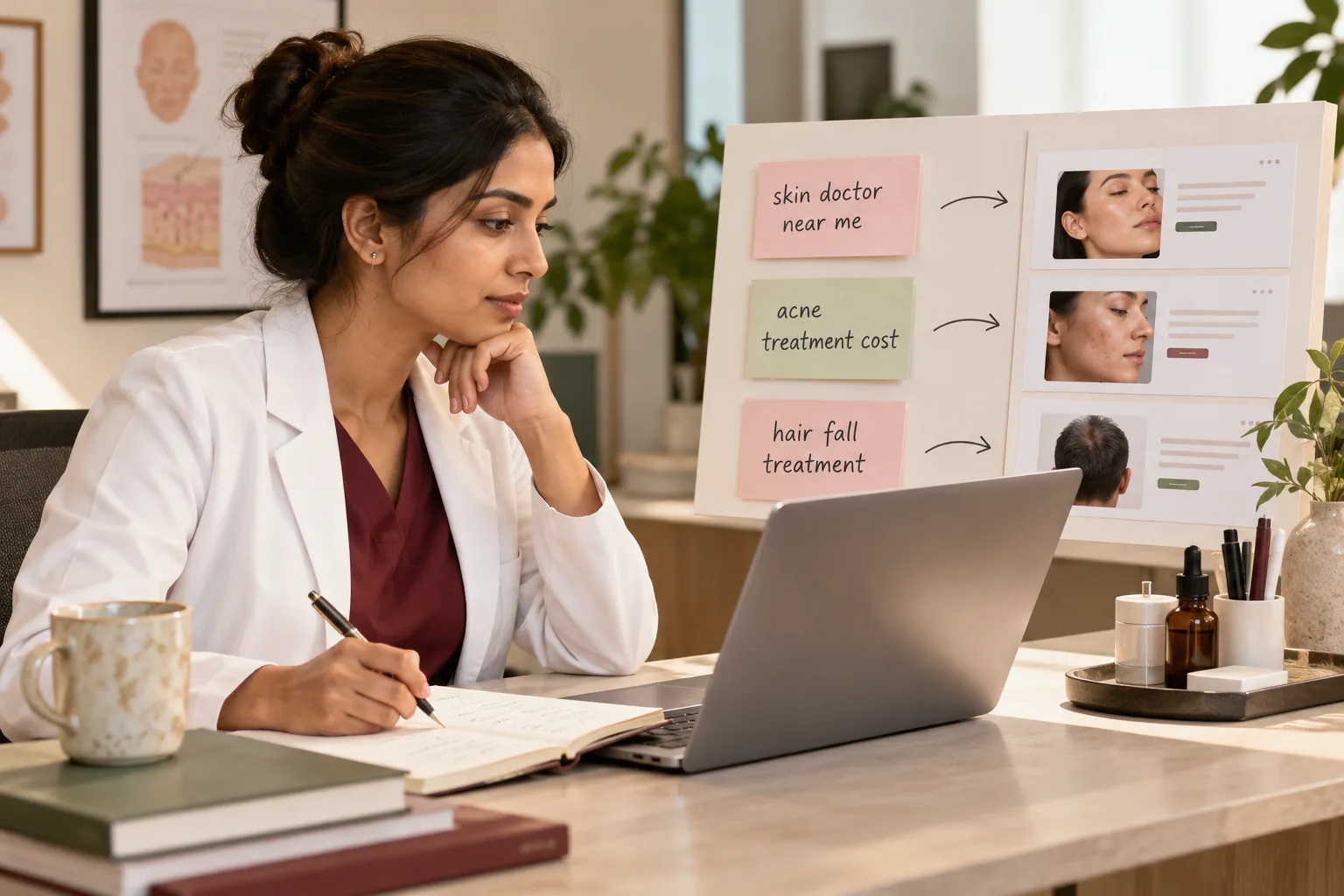 7 min read · 21 Jan 2026Keyword research for dermatology clinics: the words patients typeThe keywords for dermatologists that bring appointments are the ones patients type: skin doctor near me, acne treatment cost, hair fall treatment. How to group them, and which page each belongs on.
 8 min read · 12 Aug 2025Local SEO checklist for clinicsA five-part checklist for clinics: a complete Google Business Profile, consistent details, treatment pages, a review routine and enquiry tracking.
More for dermatology clinics
Everything else we would do for you.
Closest to this: messaging and automation
Also for dermatology clinics
Or start from the overview: sales and marketing for dermatology clinics.
Your next practical step
Tell us what you are trying to grow, and we will read it before we call.
Eight short steps, mostly taps. Skip anything you would rather answer on the call.