Doctors and general clinics · Follow up systems
Make sure the patient who was due back is the one the front desk calls.
A follow-up system for a clinic is the set of reminders and callbacks that brings a patient back for the visit the doctor advised, and answers an enquiry that went unanswered. GullySales writes the routine, the wording and the due-date list, and the front desk runs them.
Scope, fee, reporting and term are agreed in writing after we have read your brief and spoken to you.

What follow up systems means
A follow-up system is the set routine for calling, messaging or emailing an enquiry more than once, since most buyers do not decide on the first conversation. GullySales sets the number and timing of follow-ups so an undecided buyer keeps hearing from you until they decide either way.
Also for doctors and general clinics
- Lead generation for doctors and general clinics
- CRM for general clinics
- SEO for doctors and general clinics
- PPC ads for doctors and general clinics
- Digital marketing for doctors and general clinics
- Reputation management for doctors and general clinics
- Local SEO for doctors and general clinics
- Branding and identity for doctors and general clinics
Sales and marketing for doctors and general clinics, the overview.
Last updated 17 Oct 2026. Rules for this trade differ by state and professional body, and they change. We describe restrictions in general terms, so check the current position with your own council or adviser before you publish anything.
For doctors and general clinics
Where it usually goes wrong, and what we would do.
“A missed call at six in the evening is a lost patient”
The OPD is full, the phone rings out and the caller tries the next clinic. A callback rule, with a named person and a note of who called, turns a missed call into a conversation.
“The patient who feels better stops following up”
Fever settles, the sugar reading improves and the second visit never happens. A reminder worded around the check the doctor advised, not a sales message, gives the patient a reason to return.
“Vaccination schedules are follow-up with a fixed date”
A parent trusts the clinic to remember the next dose. When the due date lives in a notebook, it is missed. A schedule recorded at each visit and a reminder sent before the date keeps the family on track.
“Follow-up must respect the patient's wishes”
A patient who has not agreed to messages, or who has asked to stop, gets none. A follow-up system without a consent check becomes a nuisance, and a nuisance sends patients to another doctor.
What we do
What we deliver for doctors and general clinics.
Every deliverable, what it covers for you, and the result it is there to produce. Nothing here is an extra.
Missed-call callback rule
A written rule for who returns calls missed during OPD hours, how soon they are logged and what is said, with a note kept against the number.
Result: Each missed call has an owner and a recorded outcome.
Follow-up list by visit type
A weekly list built from the register: chronic care checks due, vaccinations due, annual checks and post-visit reviews the doctor requested.
Result: The front desk knows whom to contact without searching.
Reminder wording the clinic approves
Short messages for appointments, vaccinations and chronic care checks, in plain language, with no cure claims and no named medicines.
Result: The receptionist sends consistent, factual messages.
An unanswered enquiry sweep
A daily look at WhatsApp, Maps messages and call logs for questions that never received a reply.
Result: No enquiry sits unread overnight.
Opt-out handling
A clear way to record a patient who asks to stop messages, and a rule that they are removed from every list.
Result: A patient's request is honoured at once, across the clinic.
How the result is measured
- Follow-up completion rate
- Average number of follow-ups before close
- Enquiries closed after repeat follow-up
Recorded as a baseline before work starts, so every later report has an honest comparison.
What to capture or send
The moments a clinic should ring or message a family, and what to say.
- A call missed during the OPD
- A note of the number and the time, and a callback from a named person once the room is free, so the caller is not left to try again.
- A chronic patient due for review
- A message or call that names the doctor and offers the next sitting, sent only to patients who agreed to be contacted.
- A child due for a vaccination
- A reminder with the date from the schedule and the clinic's sitting hours, sent to the parent who booked.
- A patient who missed a visit
- A courteous call that asks whether they wish to rebook, with no reproach and no discussion of the illness over the phone.
- A family after a home visit
- A call from the clinic to ask whether the patient needs another visit, with the doctor's agreement on what may be said.
Who it is for
This is written for these doctors and general clinics.
- Single-doctor family and general practice clinics
- Polyclinics with visiting consultants
- Physicians and internal medicine consultants in private practice
- Paediatric and child health clinics
- Diabetes and lifestyle disease clinics
- Home visit doctors and home nursing services
- Home sample collection and diagnostic partner centres
- Medical equipment rental and home care providers
- Corporate and occupational health service providers
Not for
It is not the right fit if.
- No one is named to make the calls, and a due list without an owner is never worked through.
- You plan to message patients about test results or medicines, which the doctor must explain in person.
- The clinic has not yet recorded who agreed to be contacted, so any reminder would go to people who did not ask.
How it works
How the follow up systems work runs
The work itself, in order. How an engagement starts, from your brief to a written scope, is set out on our method page.
- 1
Measure today's reply time
From your recent enquiries, we set the time each arrived against its first reply, using the call log, chats, form entries and portal panel. We also count the follow-ups each one got.
- 2
Agree targets and the sequence
We set reply targets and the follow-up sequence with your team, based on its real hours and workload.
- 3
Write the templates and first-call questions
The first reply, the quote follow-up and the last attempt are written in your voice and loaded as quick replies. The first-call questions are agreed with your best salesperson.
- 4
Set ownership, tasks and alerts
Named owners, cover for leave and CRM or sheet tasks go live. App alerts, such as IndiaMART's, are switched on for the right phones.
- 5
Track and adjust
Reply time and follow-up completion are reported against the baseline, and the routine is changed where it is not kept. How often you are reported to is agreed in writing.
Where this fits
Three pieces of sales work, in this order.
This work sits inside sales process design, at stage 2, qualification. The audit comes before it, and sales management keeps it running.
Step 1
Sales audit
Find where deals are being lost and what to fix first.
Start here if you cannot say where orders are lost.
Step 2 · you are here
Sales process design
One written way to sell, from first enquiry to repeat order.
Start here if every salesperson sells differently.
Step 3
Sales management
A target, a review routine and someone who owns the number.
Start here if the team has targets and no routine.
FAQ
Questions owners ask before they call.
Not here? More answers, or ask on WhatsApp.
What should a reminder say?
Who at the clinic should run follow-up?
Can we follow up a patient who never came back?
How do we follow up a patient without seeming to chase them?
How much does it cost?
How long is the contract?
How soon will we see results?
Who will actually do the work?
What do you need from us?
What if we are not happy with the work?
From the blog
Further reading for doctors and general clinics.
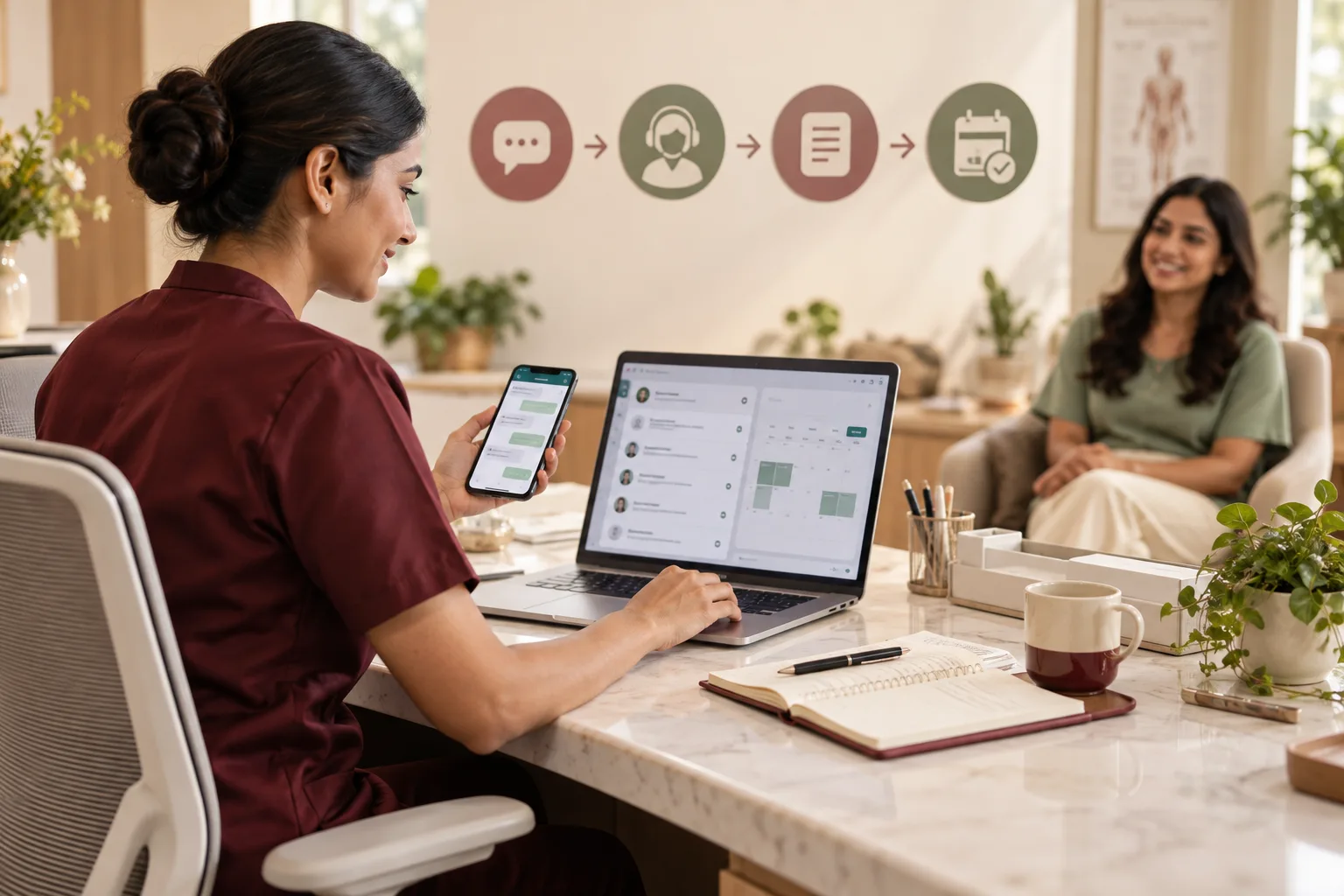 6 min read · 10 Oct 2026How clinics can improve the journey from online enquiry to appointmentMost patients who message a clinic never book. Walk the path from first message to booked slot, and fix who answers, how fast, what is asked and what happens next.
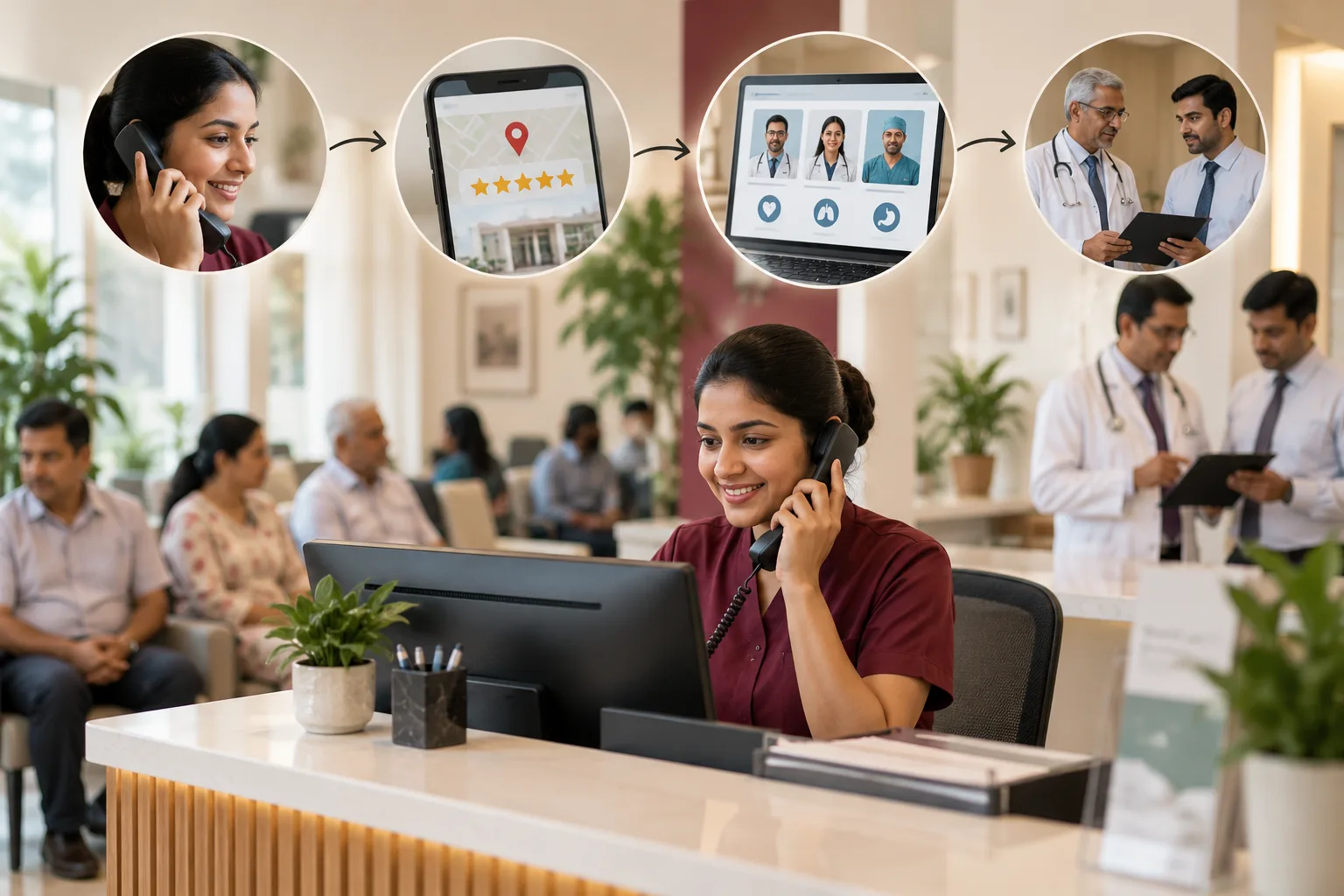 7 min read · 7 Jul 2026How to increase OPD patients: a practical plan for hospitals and clinicsMore OPD patients come from answering every call, a Maps profile with fresh reviews, a page per speciality and doctors who refer to you. The order of work that fills the outpatient desk.
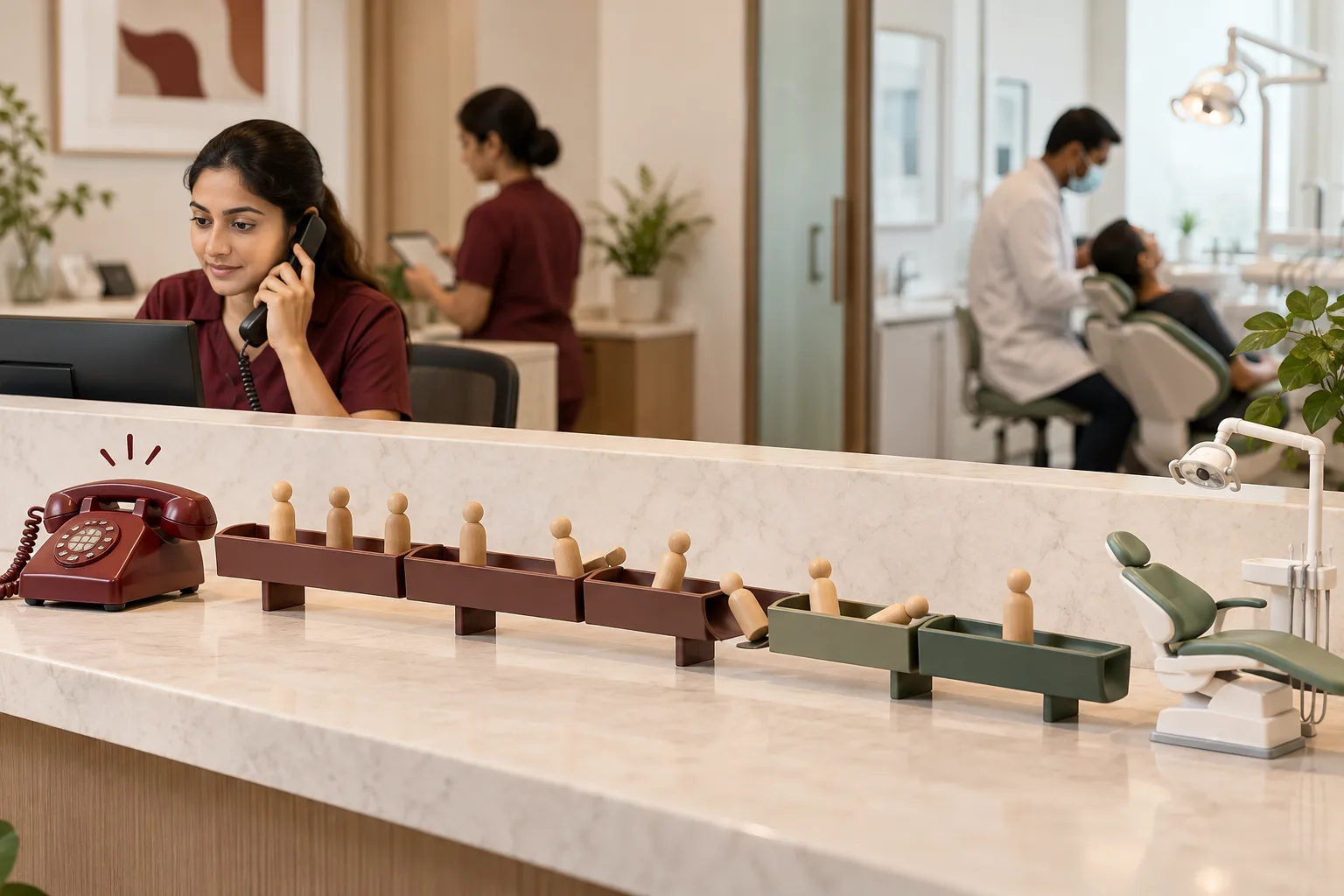 7 min read · 5 Nov 2024How to get more dental appointmentsMost practices do not need more enquiries. They lose people between the phone ringing and somebody sitting in the chair. Here is the funnel and where it leaks.
More for doctors and general clinics
Everything else we would do for you.
Closest to this: leads and follow-up
Also for doctors and general clinics
Or start from the overview: sales and marketing for doctors and general clinics.
Your next practical step
Tell us what you are trying to grow, and we will read it before we call.
Eight short steps, mostly taps. Skip anything you would rather answer on the call.