Home cleaning companies · CRM
Record the flat, the gate pass and the cleaner the family asked for again.
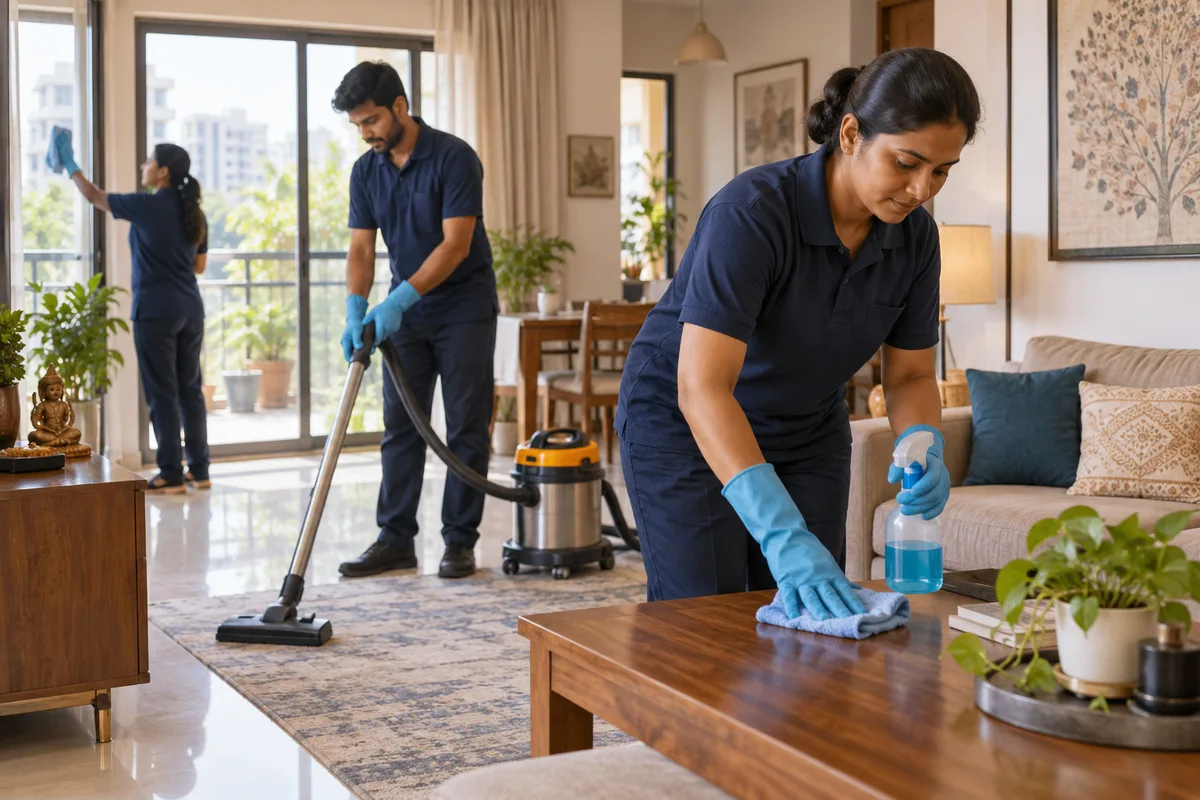
A cleaning company's CRM is a household file rather than a sales pipeline. It holds the flat number, how the crew gets past security, the dog, the granite the customer does not want bleach on, who went last time and when the next visit is due. GullySales sets that record up and keeps it short enough that a supervisor fills it in.
Scope, fee, reporting and term are agreed in writing after we have read your brief and spoken to you.
What CRM means
A CRM is the record where every enquiry, call and quote is kept against a customer, replacing separate notebooks, spreadsheets and memory. GullySales sets up or cleans an existing CRM and reports from it by enquiry outcome rather than by activity logged.
Also for home cleaning companies
- Lead generation for home cleaning companies
- Follow-up systems for home cleaning companies
- Apartment advertising for home cleaning companies
- Branding for home cleaning companies
- Buyer journey mapping for home cleaning companies
- Buyer personas for home cleaning companies
- Content marketing for home cleaning companies
- Digital marketing for home cleaning companies
Sales and marketing for home cleaning companies, the overview.
Last updated 5 Oct 2026.
For home cleaning companies
Where it usually goes wrong, and what we would do.
“The record is the home, not the enquiry”
Which tower, which floor, the lift the crew is allowed to use, whether the guard needs a list of names the day before, and where the water point is. Half of a bad first visit is logistics nobody wrote down.
“Which cleaner went last time is the field customers ask about”
A family who liked a particular girl will ask for her by name, and being unable to answer that question is how a recurring customer starts looking around. Store the name against the household and the request becomes easy to honour.
“A recurring contract needs the schedule to live in the record”
Weekly and fortnightly jobs are lost to a visit that quietly did not happen while everyone assumed somebody else had gone. The schedule and the visit log belong in the same place, so a skipped date shows up before the cancellation does.
What we do
What we deliver for home cleaning companies.
Every deliverable, what it covers for you, and the result it is there to produce. Nothing here is an extra.
A household record with the access details in it
Tower and flat, guard desk requirements, service lift rules, parking, water and power points, and the day the society allows cleaning crews in.
Result: A new crew reaches the door without ringing the office twice.
Customer instructions kept where the crew can see them
No bleach on the granite, do not move the puja shelf, the dog stays in the bedroom: written against the household and read out at the briefing.
Result: The second visit does not repeat the first visit's mistake.
Staff assignment logged against every job
Who went, on which date, for how long, so a request for the same person can be answered and a complaint can be traced to a shift.
Result: You can send back the cleaner the family asked for.
Recurring schedules and a missed-visit flag
Each contract's visit pattern held in the record, with a flag the moment a scheduled visit has no completion against it.
Result: A skipped clean is caught by you and not by the customer.
Verification papers attached to the staff record
Police verification, identity card and photograph stored against each cleaner and linked to the jobs they work, ready when a society asks for the list.
Result: You answer a society's security question from the record.
The short set of views the owner checks
Open quotes, contracts due this week, jobs with no completion logged, and households that have not booked since their deep clean.
Result: The owner sees the week without ringing four supervisors.
How the result is measured
- Enquiries logged in the CRM
- Data completeness
- Reports generated from CRM data
Recorded as a baseline before work starts, so every later report has an honest comparison.
What to record, and when
What a cleaning company should record about every household, and whether it needs software yet.
- Flat or house, and what is in it
- Write the type, size in BHK and the surfaces that matter: marble, granite, wooden floor, glass, sofa fabric. The crew should read this before going and not be surprised by the kitchen platform.
- How the crew gets in
- Record the society gate procedure, whether the guard needs a call, and who is home. Write the instruction, not the gate code or a key's location. Delete any access detail when the customer leaves.
- Customer's do-nots
- Note what to avoid: no bleach on that stone, no entry to the puja room, a dog that needs to be kept away. These details are what a customer remembers, and they decide whether the next visit is booked.
- Who went, and when
- Log which crew member or supervisor attended each visit, with the date. If something is missing or damaged, you can speak to the people who were there, and a regular customer gets the same crew.
- Complaint raised and how it closed
- Record each complaint with the visit, what the customer said, the fix and whether they accepted it. A pattern by crew or by job type shows up in this list long before it shows up in reviews.
- Do you need software yet?
- A sheet with one row per household is enough for a small crew. Move to a field-service tool when supervisors schedule several crews and recurring visits. Staff verification papers belong in an access-limited file, not in the household record.
Who it is for
This is written for these home cleaning companies.
- Deep cleaning and one-time service providers
- Recurring home maintenance cleaning companies
- Sofa, carpet and upholstery cleaning specialists
- Move-in and move-out cleaning services
- Office and commercial cleaning contractors
- Society and apartment complex cleaning contracts
- Franchise-model cleaning companies
How it works
From your first message to the first report.
No open-ended retainer. Every step gives you something in writing.
First
Your brief
You tell us what you need in a few short steps: your business, what you want, where enquiries come from and how they are handled.
After the brief
A conversation and a written scope
We read it, then talk with whoever handles your enquiries. If you want our help, the scope, the fee and the reporting come in writing, and nothing starts before you have read them.
Before work starts
Baseline recorded
The numbers this work is meant to move, such as enquiries, quotations, orders, visits or renewals, written down so every later report has an honest comparison.
After the baseline
The first fix goes live
The fix we agreed to start with is put in place and measured against the baseline, whether that is a reply, a follow-up, a page, a listing or the handover between marketing and sales.
As agreed
Report against the baseline
What moved, what did not, and what changes next, in plain words. How often you get it is set in writing before work starts.
At renewal
Renew on the numbers
The term ends and you decide whether to continue from the results. The length is agreed in writing before anything starts.
How the CRM work runs
- 1
Map the sales process
We record how a deal actually moves from enquiry to close in your business today.
- 2
Configure stages and fields
The CRM's pipeline and fields are built to match that process exactly, not a generic template.
- 3
Set up automations
Reminders, assignment rules and follow-up triggers are configured so routine steps happen without manual effort.
- 4
Test with real deals
We run the configuration against actual current deals to catch gaps before the whole team relies on it.
Why us
Why owners pick GullySales over an agency.
Marketing and sales, as one job
Most agencies stop at the enquiry. We also fix what happens after it: the reply, the follow-up, the quote and the CRM.
The person on the first call does the work
No account managers in between. You are never handed to someone you have not met.
A baseline before anything starts
Your numbers are written down on day one, so every later report compares against something honest.
The fee in writing, split three ways
Our time, your media spend and production on separate lines. You always see what goes to us.
No guarantees we cannot keep
The term is agreed in writing and never a default twelve months. We never promise a ranking or a lead count, because nobody controls those.
One office, and we say so
Nagarbhavi, Bengaluru. We work across India by call and WhatsApp and travel when a session needs to be in person.
#257, 3rd floor, Sri Nanjundeshwara Complex, Nagarbhavi 8th Block, Outer Ring Road. How we work.
Your brief
Tell us what you need, and we will read it before we call.
Eight short steps about your business, what you want and who decides. Most questions are a tap, and you can skip any you would rather answer on the call.
FAQ
Questions owners ask before they call.
Not here? More answers, or ask on WhatsApp.
Can we run this on a spreadsheet?
Our supervisors will not fill in forms. How do we get this used?
Can we store gate codes or the customer's spare key location?
How do we record a complaint after a visit?
How much does it cost?
How long is the contract?
How soon will we see results?
Who will actually do the work?
What do you need from us?
What if we are not happy with the work?
From the blog
Further reading for home cleaning companies.
 7 min read · 21 Sept 2026How to advertise to startup employeesThere is no tech park to buy. A forty person company sits above a bakery, so the audience is the neighbourhood, the delivery app and the coworking floor.
 7 min read · 21 Sept 2026How to advertise to apartment residentsGetting to apartment residents is a permission problem before it is a media problem. Learn who holds the gate, what the association will agree to, and what gets you banned.
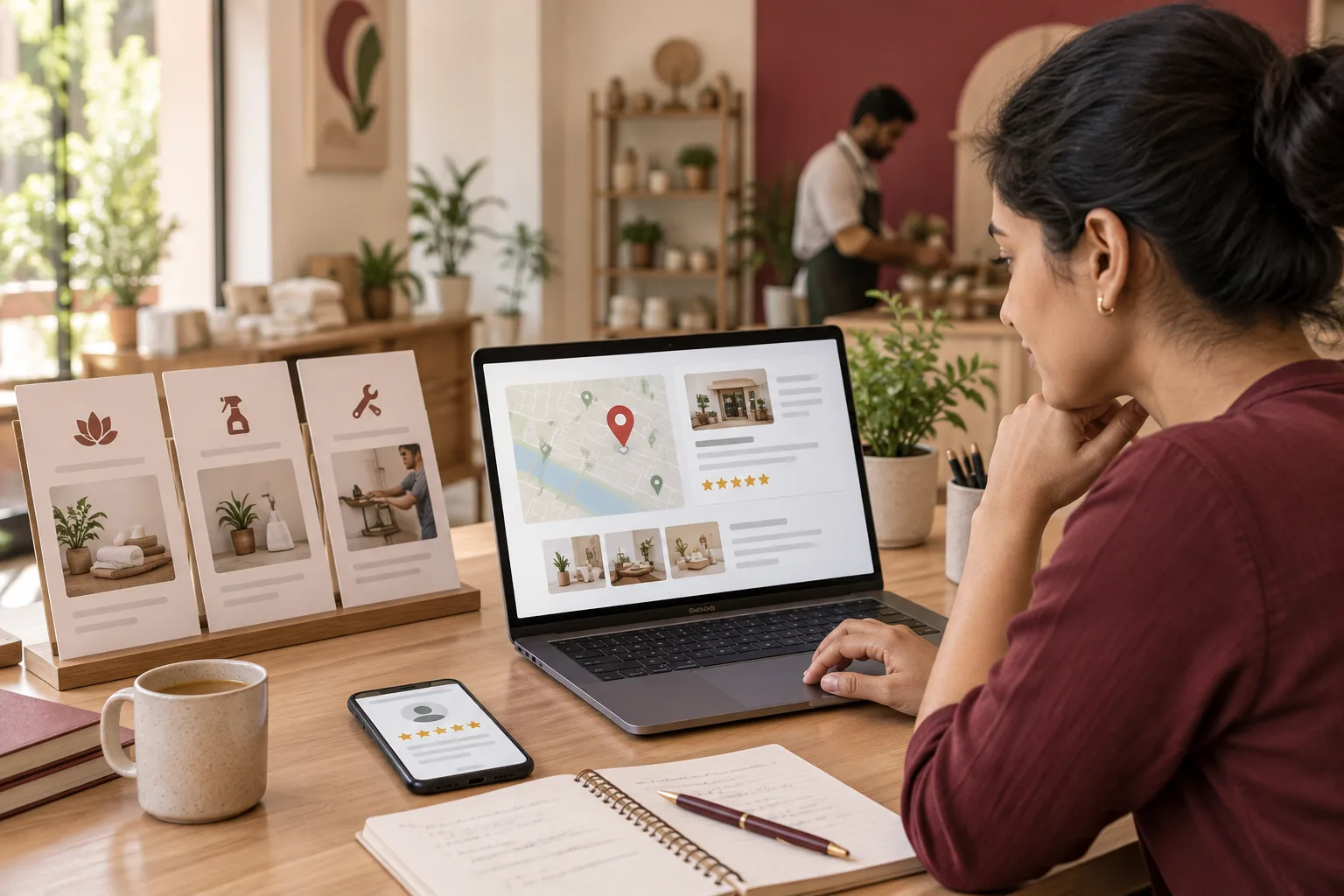 6 min read · 13 Jan 2026SEO for local businesses: how to become visible in your areaLocal visibility comes from the map result, a page for each service you sell and reviews, not the advertising most small businesses buy instead.
More for home cleaning companies
Everything else we would do for you.
Closest to this: leads and follow-up
Also for home cleaning companies
Or start from the overview: sales and marketing for home cleaning companies.
Your next practical step
Tell us what you are trying to grow, and we will read it before we call.
Eight short steps, mostly taps. Skip anything you would rather answer on the call.