Home cleaning companies · Lead generation
Bring in enquiries for the jobs you actually want more of.
Lead generation for a home cleaning company means attracting enquiries for jobs and localities you can serve well, not generic interest outside your area. GullySales caps the targeting to your real service radius and the jobs worth chasing, such as move-out cleans over routine ones.
Scope, fee, reporting and term are agreed in writing after we have read your brief and spoken to you.
What lead generation means
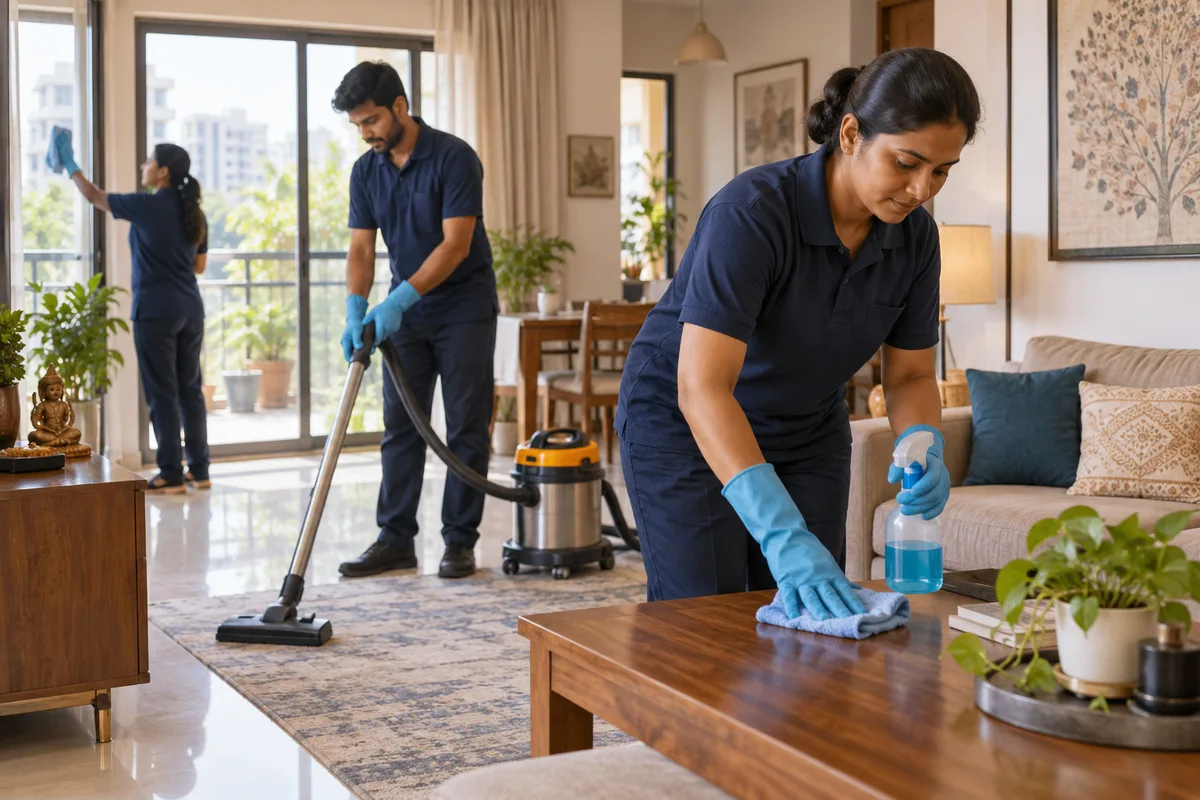
Lead generation is the combined work of every channel that brings in a new enquiry, whether from search, adverts, referrals or a stall at an exhibition. GullySales runs these channels together and reports the number of enquiries each one produced, not the activity behind it.
Also for home cleaning companies
- Follow-up systems for home cleaning companies
- CRM for home cleaning companies
- Apartment advertising for home cleaning companies
- Branding for home cleaning companies
- Buyer journey mapping for home cleaning companies
- Buyer personas for home cleaning companies
- Content marketing for home cleaning companies
- Digital marketing for home cleaning companies
Sales and marketing for home cleaning companies, the overview.
Last updated 5 Oct 2026.
For home cleaning companies
Where it usually goes wrong, and what we would do.
“Service radius filters leads before they arrive”
Advertising capped to the actual coverage area avoids enquiries you cannot fulfil and then have to decline.
“Higher-value jobs get their own campaign”
A move-out or post-construction clean is worth targeting separately from a routine weekly booking.
“Society tie-ups generate leads in bulk”
One agreement with an apartment complex's management can bring in more bookings than months of individual advertising.
What we do
What we deliver for home cleaning companies.
Every deliverable, what it covers for you, and the result it is there to produce. Nothing here is an extra.
Advertising capped to your real service radius
Targeting set to the locality you can actually staff and travel to, so campaigns stop producing enquiries you have to decline.
Result: Leads that arrive are ones you can actually serve.
A separate campaign for higher-value jobs
Its own targeting and messaging for move-out and post-construction cleaning, distinct from routine weekly booking campaigns.
Result: The jobs worth more attention get campaigns built for them.
A society and apartment complex outreach pack
A proposal document for pitching a cleaning tie-up to an apartment complex's management committee.
Result: One agreement can bring in more bookings than scattered advertising would.
A realistic lead target set with you
A lead volume estimate set from your service radius and current capacity, agreed before any campaign starts.
Result: You know what to expect instead of guessing at results.
A lead volume and source report
A count of enquiries by job type and source, checked against the baseline recorded at the start.
Result: You see which source is worth more budget going forward.
How the result is measured
- Enquiries generated
- Cost per enquiry
- Enquiries by source
Recorded as a baseline before work starts, so every later report has an honest comparison.
Where enquiries come from
The places a home cleaning company's enquiries arrive, and what to record at each.
- WhatsApp message asking for a deep clean quote
- Record the flat size, the floor, the locality, the date and the kind of job. Ask for three photographs, and reply with a price range and the visit date.
- Google Business Profile call
- Note the time, the locality and the job. Call back from the business number if it was missed, and tell the caller the next available slot.
- Move-in or move-out request from a tenant or an owner
- Write the handover date, the flat size and who pays. A move-out clean is often set by a deposit deadline, so ask the date first and confirm whether keys are available.
- Housing society manager or committee referral
- Record the society, the manager and the job. Offer a rate for several flats on the same day, and note the date the committee reviews it.
- Real estate agent or builder referral
- Note the agent, the property and the date of handover. Tell the agent the result, and ask for the next flat as they usually have several.
- Customer who rebooks after a first clean
- Record the first job, the date and any complaint. Message after a gap that suits the job, such as before a festival or a move, with the last price.
Who it is for
This is written for these home cleaning companies.
- Deep cleaning and one-time service providers
- Recurring home maintenance cleaning companies
- Sofa, carpet and upholstery cleaning specialists
- Move-in and move-out cleaning services
- Office and commercial cleaning contractors
- Society and apartment complex cleaning contracts
- Franchise-model cleaning companies
How it works
From your first message to the first report.
No open-ended retainer. Every step gives you something in writing.
First
Your brief
You tell us what you need in a few short steps: your business, what you want, where enquiries come from and how they are handled.
After the brief
A conversation and a written scope
We read it, then talk with whoever handles your enquiries. If you want our help, the scope, the fee and the reporting come in writing, and nothing starts before you have read them.
Before work starts
Baseline recorded
The numbers this work is meant to move, such as enquiries, quotations, orders, visits or renewals, written down so every later report has an honest comparison.
After the baseline
The first fix goes live
The fix we agreed to start with is put in place and measured against the baseline, whether that is a reply, a follow-up, a page, a listing or the handover between marketing and sales.
As agreed
Report against the baseline
What moved, what did not, and what changes next, in plain words. How often you get it is set in writing before work starts.
At renewal
Renew on the numbers
The term ends and you decide whether to continue from the results. The length is agreed in writing before anything starts.
How the lead generation work runs
- 1
Understand your capacity
We agree how many enquiries your sales team can actually handle well, so the system is not built to overwhelm it.
- 2
Audit current sources
We check what already brings in enquiries today, even informally, before adding anything new.
- 3
Strategise the channel mix
Content, search and paid channels are chosen based on where your buyers already look.
- 4
Implement capture and follow-up
Pages, forms and a follow-up process are built and connected end to end.
- 5
Measure and optimise
We track enquiry volume and quality and adjust the channel mix to match.
Why us
Why owners pick GullySales over an agency.
Marketing and sales, as one job
Most agencies stop at the enquiry. We also fix what happens after it: the reply, the follow-up, the quote and the CRM.
The person on the first call does the work
No account managers in between. You are never handed to someone you have not met.
A baseline before anything starts
Your numbers are written down on day one, so every later report compares against something honest.
The fee in writing, split three ways
Our time, your media spend and production on separate lines. You always see what goes to us.
No guarantees we cannot keep
The term is agreed in writing and never a default twelve months. We never promise a ranking or a lead count, because nobody controls those.
One office, and we say so
Nagarbhavi, Bengaluru. We work across India by call and WhatsApp and travel when a session needs to be in person.
#257, 3rd floor, Sri Nanjundeshwara Complex, Nagarbhavi 8th Block, Outer Ring Road. How we work.
Your brief
Tell us what you need, and we will read it before we call.
Eight short steps about your business, what you want and who decides. Most questions are a tap, and you can skip any you would rather answer on the call.
FAQ
Questions owners ask before they call.
Not here? More answers, or ask on WhatsApp.
How many leads should a small company expect monthly?
Will bookings come from the pages on their own, or do we still have to advertise?
A customer asks for a fixed price without a visit. Should we give one?
How do we handle a booking in a locality we do not cover?
How long is the contract?
How soon will we see results?
Who will actually do the work?
What do you need from us?
What if we are not happy with the work?
From the blog
Further reading for home cleaning companies.
 7 min read · 21 Sept 2026How to advertise to startup employeesThere is no tech park to buy. A forty person company sits above a bakery, so the audience is the neighbourhood, the delivery app and the coworking floor.
 7 min read · 21 Sept 2026How to advertise to apartment residentsGetting to apartment residents is a permission problem before it is a media problem. Learn who holds the gate, what the association will agree to, and what gets you banned.
 6 min read · 13 Jan 2026SEO for local businesses: how to become visible in your areaLocal visibility comes from the map result, a page for each service you sell and reviews, not the advertising most small businesses buy instead.
More for home cleaning companies
Everything else we would do for you.
Closest to this: leads and follow-up
Also for home cleaning companies
Or start from the overview: sales and marketing for home cleaning companies.
Your next practical step
Tell us what you are trying to grow, and we will read it before we call.
Eight short steps, mostly taps. Skip anything you would rather answer on the call.