Home cleaning companies · Public relations
Get the local press write-up that a listing alone cannot buy.
Public relations for a home cleaning company means local coverage, such as a feature on hygiene standards or a hiring drive, that builds trust ahead of a booking decision. GullySales pitches your actual practices, such as staff background checks, to local publications your customers already read.
Scope, fee, reporting and term are agreed in writing after we have read your brief and spoken to you.
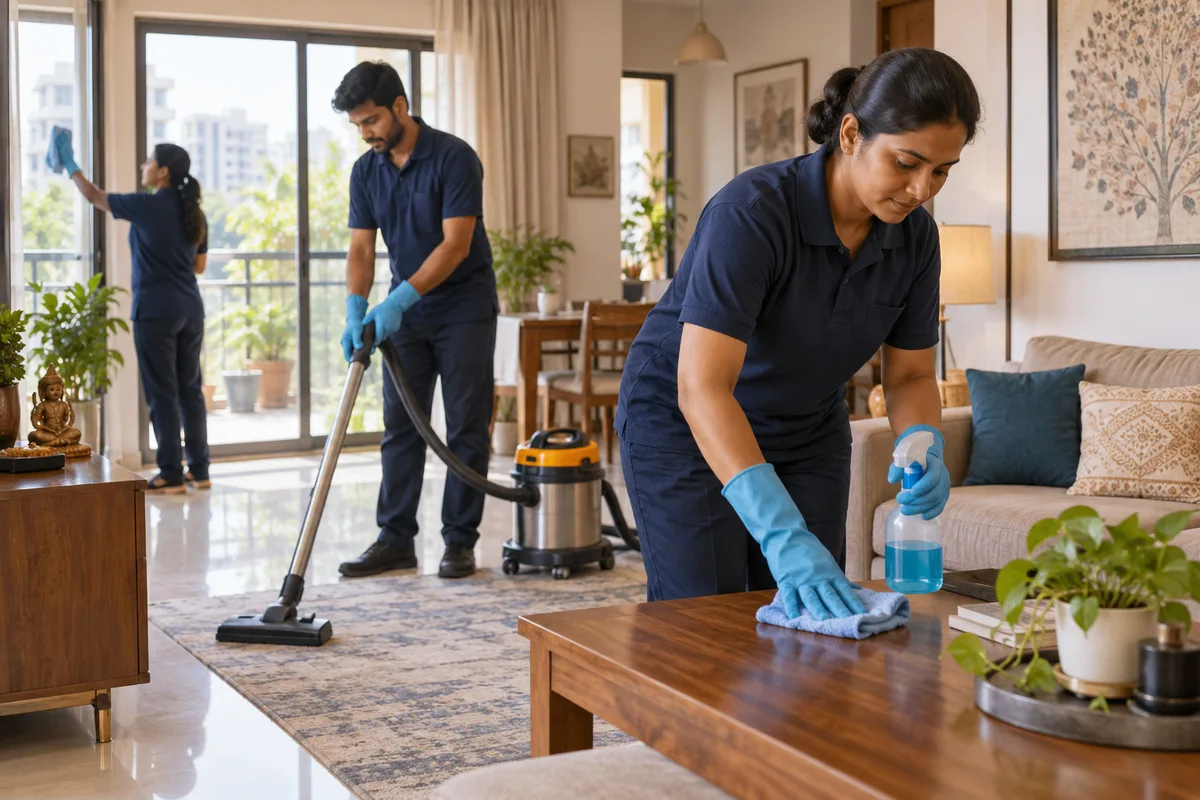
What public relations means
Public relations is getting your business covered by journalists, trade publications or local news, which carries more trust than an advert because a third party is saying it. GullySales pitches your story to the right publications and prepares your team for interviews when coverage is offered.
Also for home cleaning companies
- Reputation management for home cleaning companies
- Review generation for home cleaning companies
- Apartment advertising for home cleaning companies
- Branding for home cleaning companies
- Buyer journey mapping for home cleaning companies
- Buyer personas for home cleaning companies
- Content marketing for home cleaning companies
- Digital marketing for home cleaning companies
Sales and marketing for home cleaning companies, the overview.
Last updated 5 Oct 2026.
For home cleaning companies
Where it usually goes wrong, and what we would do.
“Hygiene stories carry the most weight”
A local feature on staff training and background checks addresses trust directly, more than general company news.
“Community involvement earns coverage”
Sponsoring a local cleanliness drive is a stronger press angle than a company profile piece.
“Coverage gets reused on the listing”
A press mention, once published, becomes trust content on the profile and website for months after.
What we do
What we deliver for home cleaning companies.
Every deliverable, what it covers for you, and the result it is there to produce. Nothing here is an extra.
Genuine story angles from your own business
Real angles worth pitching, such as a staff training or background-check drive, or a local hiring initiative.
Result: Coverage is built on something the company actually did.
Pitches for local publications customers actually read
Written pitch notes sent to hyperlocal press and community pages covering the neighbourhoods you serve.
Result: The story reaches the exact customers who might book next.
A community involvement plan worth covering
A simple plan for sponsoring or taking part in a local cleanliness or community drive, chosen for its genuine press angle.
Result: The company earns coverage a plain company profile would not.
A coverage log for the listing and website
Any published mention collected and displayed on the Business Profile and website once it appears.
Result: One piece of coverage keeps building trust long after it runs.
A review of pitches and coverage earned
A review of which pitches led to coverage, so future outreach goes to publications that actually respond.
Result: Effort goes to the outlets that actually cover the business.
How the result is measured
- Coverage secured
- Publication reach
- Enquiries after coverage
Recorded as a baseline before work starts, so every later report has an honest comparison.
What is worth telling the press
Stories a home cleaning company can tell a local paper truthfully.
- How you check your cleaners
- Describe how you vet staff, such as ID proof, police verification and a reference, only if you actually do it. A trust story needs a process a reader can picture.
- A hiring and training drive
- Training and employing women from nearby settlements, with a named training partner, is a local story. Check that those featured agree to be named and photographed.
- Deep cleaning before Diwali
- Offer a comment on cleaning a kitchen chimney, a sofa and a water tank before the festival. Keep the advice useful even to someone who never hires you.
- A society or clubhouse contract
- A contract with a gated community is worth mentioning. Ask the residents' association secretary for permission before you name the society.
- What a crew carries into a home
- Write one page on the machines, chemicals and protective gear a crew uses. Reporters like to see what actually enters a customer's home.
- An allegation posted online
- If a customer alleges damage or loss, reply once in public, ask for the job reference and move to a call. Keep the booking record and crew details ready.
Who it is for
This is written for these home cleaning companies.
- Deep cleaning and one-time service providers
- Recurring home maintenance cleaning companies
- Sofa, carpet and upholstery cleaning specialists
- Move-in and move-out cleaning services
- Office and commercial cleaning contractors
- Society and apartment complex cleaning contracts
- Franchise-model cleaning companies
How it works
From your first message to the first report.
No open-ended retainer. Every step gives you something in writing.
First
Your brief
You tell us what you need in a few short steps: your business, what you want, where enquiries come from and how they are handled.
After the brief
A conversation and a written scope
We read it, then talk with whoever handles your enquiries. If you want our help, the scope, the fee and the reporting come in writing, and nothing starts before you have read them.
Before work starts
Baseline recorded
The numbers this work is meant to move, such as enquiries, quotations, orders, visits or renewals, written down so every later report has an honest comparison.
After the baseline
The first fix goes live
The fix we agreed to start with is put in place and measured against the baseline, whether that is a reply, a follow-up, a page, a listing or the handover between marketing and sales.
As agreed
Report against the baseline
What moved, what did not, and what changes next, in plain words. How often you get it is set in writing before work starts.
At renewal
Renew on the numbers
The term ends and you decide whether to continue from the results. The length is agreed in writing before anything starts.
How the public relations work runs
- 1
Understand what is newsworthy
We identify genuine stories in your business, since manufactured news rarely earns real coverage.
- 2
Audit relevant press
We research which journalists and publications actually cover your industry or locality.
- 3
Prepare the pitch
A release or pitch is written specifically for the target publication, not sent as a mass broadcast.
- 4
Approach and follow up
Journalists are approached directly, with a reasonable follow-up rather than a single unanswered email.
- 5
Measure and prepare ahead
Coverage is tracked, and a communications plan is kept ready for any significant matter that may need a public response.
Why us
Why owners pick GullySales over an agency.
Marketing and sales, as one job
Most agencies stop at the enquiry. We also fix what happens after it: the reply, the follow-up, the quote and the CRM.
The person on the first call does the work
No account managers in between. You are never handed to someone you have not met.
A baseline before anything starts
Your numbers are written down on day one, so every later report compares against something honest.
The fee in writing, split three ways
Our time, your media spend and production on separate lines. You always see what goes to us.
No guarantees we cannot keep
The term is agreed in writing and never a default twelve months. We never promise a ranking or a lead count, because nobody controls those.
One office, and we say so
Nagarbhavi, Bengaluru. We work across India by call and WhatsApp and travel when a session needs to be in person.
#257, 3rd floor, Sri Nanjundeshwara Complex, Nagarbhavi 8th Block, Outer Ring Road. How we work.
Your brief
Tell us what you need, and we will read it before we call.
Eight short steps about your business, what you want and who decides. Most questions are a tap, and you can skip any you would rather answer on the call.
FAQ
Questions owners ask before they call.
Not here? More answers, or ask on WhatsApp.
Is PR realistic for a small local business?
How does this differ from advertising?
Who should speak for the company if a reporter calls about a complaint?
Can we pay a local page to post about our hygiene practices?
How much does it cost?
How long is the contract?
How soon will we see results?
Who will actually do the work?
What do you need from us?
What if we are not happy with the work?
From the blog
Further reading for home cleaning companies.
 7 min read · 21 Sept 2026How to advertise to startup employeesThere is no tech park to buy. A forty person company sits above a bakery, so the audience is the neighbourhood, the delivery app and the coworking floor.
 7 min read · 21 Sept 2026How to advertise to apartment residentsGetting to apartment residents is a permission problem before it is a media problem. Learn who holds the gate, what the association will agree to, and what gets you banned.
 6 min read · 13 Jan 2026SEO for local businesses: how to become visible in your areaLocal visibility comes from the map result, a page for each service you sell and reviews, not the advertising most small businesses buy instead.
More for home cleaning companies
Everything else we would do for you.
Closest to this: reputation
Also for home cleaning companies
Or start from the overview: sales and marketing for home cleaning companies.
Your next practical step
Tell us what you are trying to grow, and we will read it before we call.
Eight short steps, mostly taps. Skip anything you would rather answer on the call.