Locksmiths · Marketing strategy
Decide how much effort goes to emergencies versus planned upgrades.
A marketing strategy for a locksmith sets how much attention goes to emergency call visibility versus planned work like digital locks and security contracts, based on which pays better.
Scope, fee, reporting and term are agreed in writing after we have read your brief and spoken to you.
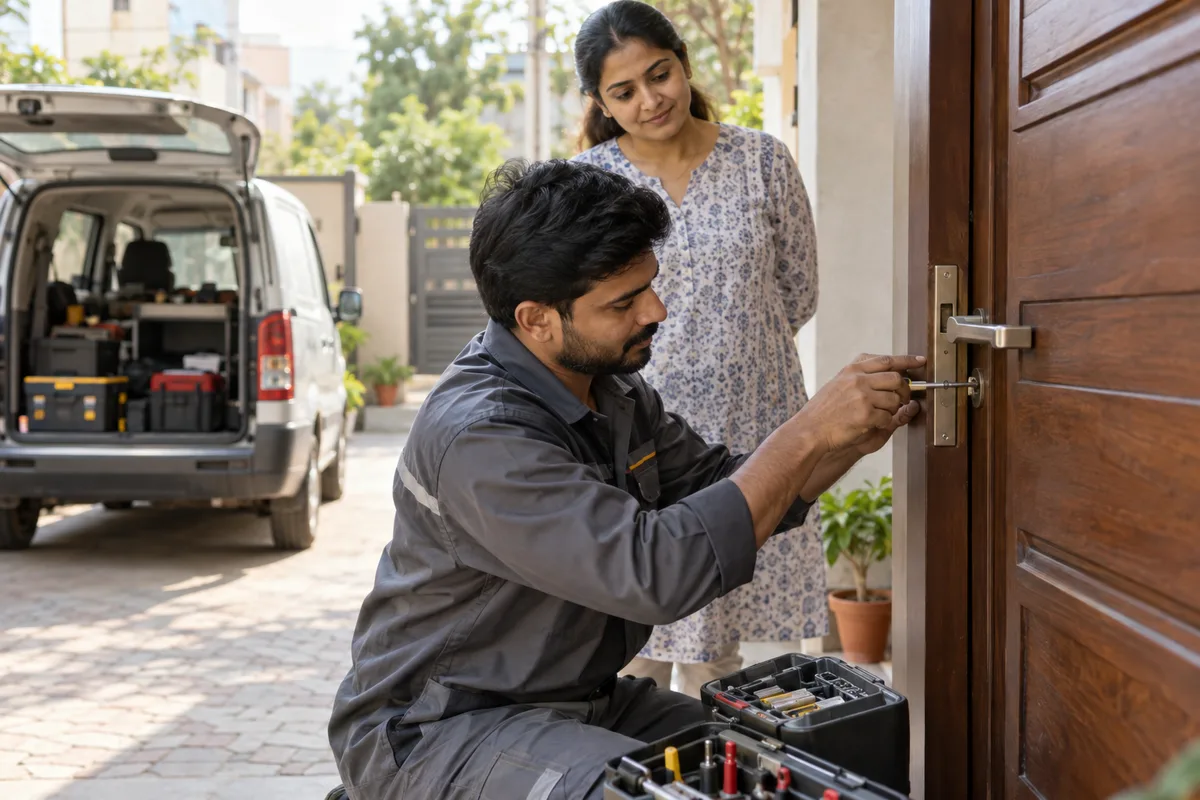
What marketing strategy means
Marketing strategy is the plan for which channels to use, in what order and with what budget. This way, marketing spend is aimed at a goal instead of tried one channel at a time. GullySales sets this plan after the first conversation, based on where your buyers actually search and decide.
Last updated 5 Oct 2026.
For locksmiths
Where it usually goes wrong, and what we would do.
“Emergency visibility is the foundation, not the plan”
Ranking for near me searches brings in calls, but planned work usually carries better margins worth building toward.
“Society and commercial contracts deserve their own push”
A single signed contract can be worth more than months of individual emergency calls.
“The plan is reviewed against actual job data”
Which searches actually convert to paid jobs should decide next quarter's focus, not assumptions.
What we do
What we deliver for locksmiths.
Every deliverable, what it covers for you, and the result it is there to produce. Nothing here is an extra.
A written split between emergency and planned effort
A plan setting how much attention goes to emergency call visibility versus building toward higher-margin planned and contract work.
Result: Effort stops going entirely to whichever call rang last.
A contract pursuit plan for societies and offices
A short target list of apartment complexes and commercial buildings worth a direct approach for a standing service agreement.
Result: The business chases a few large wins instead of only small calls.
A review point tied to job data
A short review of which searches, referrals or contracts actually turned into paid jobs, used to decide where to focus next.
Result: The plan follows what is actually working, not a guess.
A one-page written plan for a single technician
A simple, one-page plan even a solo locksmith can follow, covering where to focus time between emergencies and planned work.
Result: A busy day still has a plan behind it, not just reaction.
How the result is measured
- Enquiries against target
- Cost per enquiry
- Channel contribution to revenue
Recorded as a baseline before work starts, so every later report has an honest comparison.
What to decide first
What a locksmith decides about calls, areas and proof before paying for any listing.
- Emergency calls or planned jobs
- Look at the last jobs by type and by profit per hour. Lockouts bring urgency, but digital lock fitting and door repair can be booked and priced properly. Decide how many hours go to each.
- The areas you cover at night
- Mark the localities you can reach safely and quickly after dark. Say only those, and decline the rest politely, since a late call from far away ends in a rushed job and a dispute.
- The lock types you lead with
- Pick between mortise locks, digital locks, car keys and safes. Name the types you stock and fit often, so a customer finds the right person, and does not call for a job you will refer elsewhere.
- What proof of ownership you ask for
- Decide what you check before opening a door or cutting a car key, such as an ID and a proof of address. Say it on the listing and at the call. It protects you and reassures the customer.
- How you state the price
- Agree a call-out charge and a range for common jobs, and say them on the phone. A price given in advance prevents the argument at the door and the review that follows.
- The societies and offices worth a visit
- List apartment societies and office managers nearby who have used you. Choose a few to visit with a simple offer for lock repairs, and note who manages the contract.
Who it is for
This is written for these locksmiths.
- Emergency and 24-hour locksmiths
- Automotive locksmiths and key programming specialists
- Residential lock and security installers
- Commercial and office locksmith services
- Safe installation and repair specialists
- Smart lock and digital security installers
- Society and RWA-contracted locksmiths
How it works
From your first message to the first report.
No open-ended retainer. Every step gives you something in writing.
First
Your brief
You tell us what you need in a few short steps: your business, what you want, where enquiries come from and how they are handled.
After the brief
A conversation and a written scope
We read it, then talk with whoever handles your enquiries. If you want our help, the scope, the fee and the reporting come in writing, and nothing starts before you have read them.
Before work starts
Baseline recorded
The numbers this work is meant to move, such as enquiries, quotations, orders, visits or renewals, written down so every later report has an honest comparison.
After the baseline
The first fix goes live
The fix we agreed to start with is put in place and measured against the baseline, whether that is a reply, a follow-up, a page, a listing or the handover between marketing and sales.
As agreed
Report against the baseline
What moved, what did not, and what changes next, in plain words. How often you get it is set in writing before work starts.
At renewal
Renew on the numbers
The term ends and you decide whether to continue from the results. The length is agreed in writing before anything starts.
How the marketing strategy work runs
- 1
Understand business goals
We start with what the business needs to achieve this year, in revenue and growth terms, not marketing terms.
- 2
Audit current activity
We review every current marketing activity and what it has actually produced.
- 3
Strategise the plan
Channels, messaging and budget are set based on the goals and what we find in your business, not habit or competitor imitation.
- 4
Implement the roadmap
The plan is broken into an execution roadmap, either run by GullySales, your own team, or both.
- 5
Measure against milestones
Progress is checked against the plan's milestones, with adjustments made as the year unfolds.
Why us
Why owners pick GullySales over an agency.
Marketing and sales, as one job
Most agencies stop at the enquiry. We also fix what happens after it: the reply, the follow-up, the quote and the CRM.
The person on the first call does the work
No account managers in between. You are never handed to someone you have not met.
A baseline before anything starts
Your numbers are written down on day one, so every later report compares against something honest.
The fee in writing, split three ways
Our time, your media spend and production on separate lines. You always see what goes to us.
No guarantees we cannot keep
The term is agreed in writing and never a default twelve months. We never promise a ranking or a lead count, because nobody controls those.
One office, and we say so
Nagarbhavi, Bengaluru. We work across India by call and WhatsApp and travel when a session needs to be in person.
#257, 3rd floor, Sri Nanjundeshwara Complex, Nagarbhavi 8th Block, Outer Ring Road. How we work.
Your brief
Tell us what you need, and we will read it before we call.
Eight short steps about your business, what you want and who decides. Most questions are a tap, and you can skip any you would rather answer on the call.
FAQ
Questions owners ask before they call.
Not here? More answers, or ask on WhatsApp.
How much budget should go to emergencies?
How often should the plan be looked at again?
Should I answer every night call, or set hours?
I work alone. How do I plan for a slow week?
How long is the contract?
How soon will we see results?
Who will actually do the work?
What do you need from us?
What if we are not happy with the work?

More for locksmiths
Everything else we would do for you.
Closest to this: strategy and research
Also for locksmiths
Or start from the overview: sales and marketing for locksmiths.
Your next practical step
Tell us what you are trying to grow, and we will read it before we call.
Eight short steps, mostly taps. Skip anything you would rather answer on the call.