Pest control companies · Content marketing
Answer the safety question the mother was going to ask anyway.
Content marketing for a pest control company settles a household's worry and a restaurant's paperwork: what the chemical does, how long to stay out, what an inspector wants to see. GullySales writes that material, checks it against the product labels you use, and keeps every claim inside them.
Scope, fee, reporting and term are agreed in writing after we have read your brief and spoken to you.
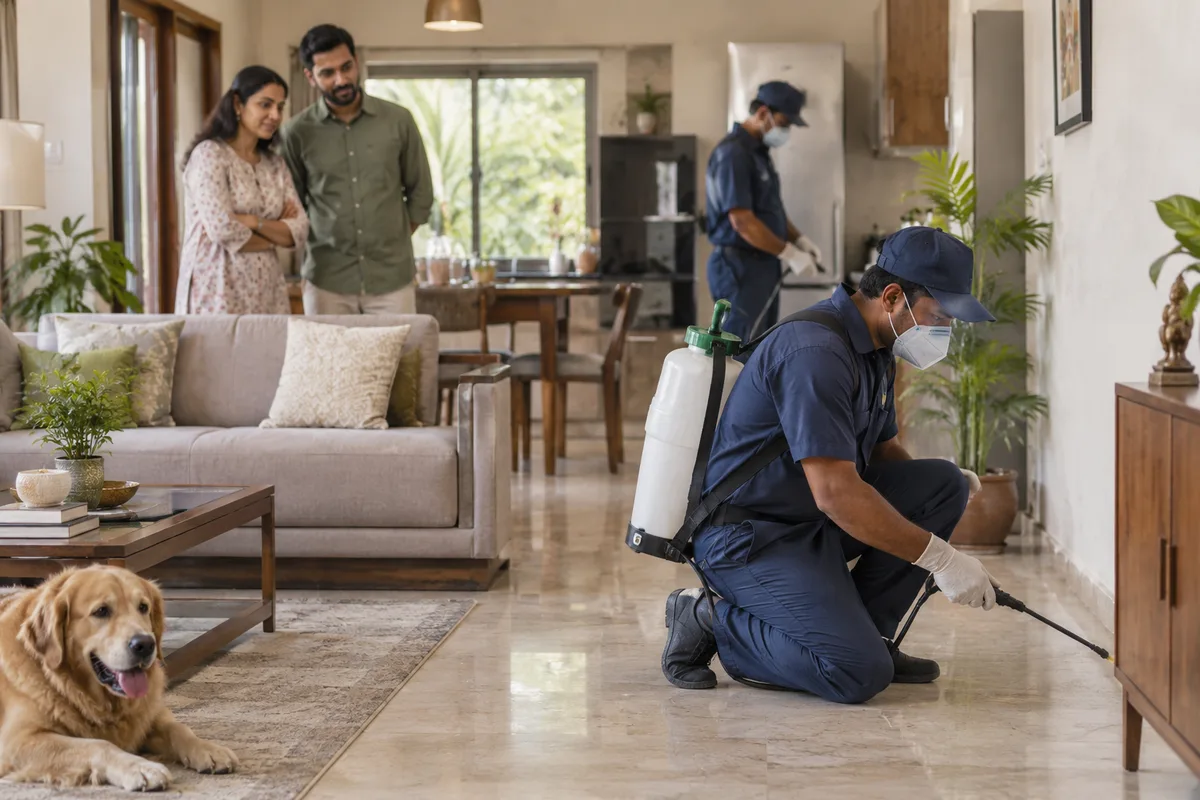
What content marketing means
Content marketing is writing articles, guides and pages that answer the questions buyers search before they are ready to enquire. This makes your business visible and trusted before the first call. GullySales plans this content from the first conversation onward, choosing topics that match real search demand rather than guesses.
Also for pest control companies
- Social media marketing for pest control companies
- Apartment advertising for pest control companies
- SEO for pest control companies
- PPC advertising for pest control companies
- Lead generation for pest control companies
- Digital marketing for pest control companies
- Reputation management for pest control companies
- Local SEO for pest control companies
Sales and marketing for pest control companies, the overview.
Last updated 5 Oct 2026.
For pest control companies
Where it usually goes wrong, and what we would do.
“The most-read page you will write is about safety”
How long a room stays empty, what to do with a cat, whether a pregnant woman should leave the flat. More households read that than read anything about your treatments.
“Restaurants want documents, not persuasion”
A manager preparing for an inspection wants to see what a service log looks like and what gets filed. Show the format and the proposal half writes itself.
“Identification pages catch the urgent search”
People cannot tell a bed bug from a carpet beetle, or termite mud tubes from ant trails. A page with clear photographs reaches them at the moment they are looking.
“Every claim has to match the label on the drum”
What a product is approved for is set by its label and its registration, not by your website. Writing beyond that puts your own licence at risk, so your technical staff check the page and your licensing authority has the final word.
What we do
What we deliver for pest control companies.
Every deliverable, what it covers for you, and the result it is there to produce. Nothing here is an extra.
A safety page for each treatment
Re-entry time, pets, aquariums, food, children and pregnancy, written from the labels of the products your technicians actually carry.
Result: The worried household books instead of hesitating.
Identification guides with real photographs
Termite mud tubes, bed bug signs, rodent droppings and the common cockroach species, photographed on your own jobs rather than taken from a stock library.
Result: The midnight searcher lands on your page.
Documentation material for commercial buyers
A sample service log, a visit schedule and the paperwork a food-safety inspection asks for, shown rather than described.
Result: The manager can picture what he is buying.
Season guides published before the season
Monsoon termite and mosquito preparation, and what a household can reasonably do themselves, out weeks before the rains.
Result: The page is ranking when people start looking.
Claims checked against labels and registration
Every statement about what a product treats read against its label and approval, with your technical staff signing it off before publication.
Result: Nothing on the site puts your licence at risk.
A note on what each guide produced
Visits, enquiries and bookings traced to each page, set against the figures from before the writing started.
Result: You can see which worry is worth writing about.
How the result is measured
- Pages published
- Organic traffic
- Enquiries from content pages
Recorded as a baseline before work starts, so every later report has an honest comparison.
Questions buyers ask first
The questions a household or a restaurant asks before booking a treatment, and the page that answers each.
- Is the treatment safe for children, pets and food?
- A safety page per treatment. State the type of chemical or method, how long to stay out, how food and utensils are covered, and what the label says. Do not write that anything is completely safe.
- How do I tell termites from flying ants, and cockroaches from other pests?
- An identification guide with clear photographs. Show the signs on wood, walls and drains, and what a technician inspects. Say when a photo is enough and when a visit is needed.
- Do I need a termite treatment before or after construction?
- A termite page that separates pre-construction and post-construction work. Explain drilling, injection and what the warranty covers, in general terms, and what the owner must keep clear.
- What does a restaurant or a kitchen need documented?
- A commercial page. List the visit schedule, treatment record, chemicals used, service reports and the contact for a food safety audit. Show a sample sheet with names removed.
- How should I prepare my home before the technician comes?
- A preparation sheet by pest. Cover emptying cupboards, covering food, removing fish tanks and plants, and how long to stay out. Give the same sheet to the customer at booking.
- Will the pests come back, and what does an AMC cover?
- A page on AMC scope. Describe the visits, which pests are covered, what a repeat call costs, and what the customer must do, such as fixing a leaking tap. Say what the contract cannot control.
Who it is for
This is written for these pest control companies.
- Residential pest control operators
- Termite treatment specialists
- Commercial AMC providers for restaurants and hotels
- Warehouse and industrial pest control contractors
- Mosquito fogging and municipal contract operators
- Multi-technician city-wide pest control companies
How it works
From your first message to the first report.
No open-ended retainer. Every step gives you something in writing.
First
Your brief
You tell us what you need in a few short steps: your business, what you want, where enquiries come from and how they are handled.
After the brief
A conversation and a written scope
We read it, then talk with whoever handles your enquiries. If you want our help, the scope, the fee and the reporting come in writing, and nothing starts before you have read them.
Before work starts
Baseline recorded
The numbers this work is meant to move, such as enquiries, quotations, orders, visits or renewals, written down so every later report has an honest comparison.
After the baseline
The first fix goes live
The fix we agreed to start with is put in place and measured against the baseline, whether that is a reply, a follow-up, a page, a listing or the handover between marketing and sales.
As agreed
Report against the baseline
What moved, what did not, and what changes next, in plain words. How often you get it is set in writing before work starts.
At renewal
Renew on the numbers
The term ends and you decide whether to continue from the results. The length is agreed in writing before anything starts.
How the content marketing work runs
- 1
Confirm the plan
Topics and formats for the coming month are confirmed against the content strategy.
- 2
Produce and review
Content is written or filmed, then reviewed by someone who knows your trade before it goes out.
- 3
Publish and distribute
Finished content is published to the site and pushed through the channels your buyers actually use.
- 4
Track enquiries
Enquiries are traced back to content where a direct line exists, and reported honestly where it does not.
- 5
Report and adjust
We report results and adjust the next topics based on what actually worked.
Why us
Why owners pick GullySales over an agency.
Marketing and sales, as one job
Most agencies stop at the enquiry. We also fix what happens after it: the reply, the follow-up, the quote and the CRM.
The person on the first call does the work
No account managers in between. You are never handed to someone you have not met.
A baseline before anything starts
Your numbers are written down on day one, so every later report compares against something honest.
The fee in writing, split three ways
Our time, your media spend and production on separate lines. You always see what goes to us.
No guarantees we cannot keep
The term is agreed in writing and never a default twelve months. We never promise a ranking or a lead count, because nobody controls those.
One office, and we say so
Nagarbhavi, Bengaluru. We work across India by call and WhatsApp and travel when a session needs to be in person.
#257, 3rd floor, Sri Nanjundeshwara Complex, Nagarbhavi 8th Block, Outer Ring Road. How we work.
Your brief
Tell us what you need, and we will read it before we call.
Eight short steps about your business, what you want and who decides. Most questions are a tap, and you can skip any you would rather answer on the call.
FAQ
Questions owners ask before they call.
Not here? More answers, or ask on WhatsApp.
Can we say a treatment is completely safe for children?
Who writes this when we have nobody for marketing?
Should each page say which pest it covers, or just pest control?
Why publish before the season starts?
How much does it cost?
How long is the contract?
How soon will we see results?
Who will actually do the work?
What do you need from us?
What if we are not happy with the work?
From the blog
Further reading for pest control companies.
 7 min read · 22 May 2026How to get security contracts, and win cleaning and facility tendersSecurity, cleaning, pest control, painting and water treatment contracts are won on compliance papers, site references and the renewal you keep, not on the lowest rate alone.
 6 min read · 6 May 2026AMC renewal: how to sell and renew annual maintenance contractsMost AMCs lapse because nobody asks in time, not because customers refuse. Start the renewal 60 days early, show the service record, and sell the AMC at installation.
 7 min read · 20 Jan 2026What is answer engine optimisation?Answer engine optimisation means being the source quoted at the top of the page, by naming the question as a heading and answering it in the first forty words.
More for pest control companies
Everything else we would do for you.
Closest to this: content and social
Also for pest control companies
Or start from the overview: sales and marketing for pest control companies.
Your next practical step
Tell us what you are trying to grow, and we will read it before we call.
Eight short steps, mostly taps. Skip anything you would rather answer on the call.