Handyman and home maintenance services · Buyer journey
Know what a flat owner is thinking at each step, from the first drip to the second booking.
Buyer journey mapping for a handyman business means writing down what a customer does between noticing a fault and choosing who to call, and what they do after the repair. GullySales maps it from your own enquiry records and your technicians' stories, then fixes the weakest step.
Scope, fee, reporting and term are agreed in writing after we have read your brief and spoken to you.
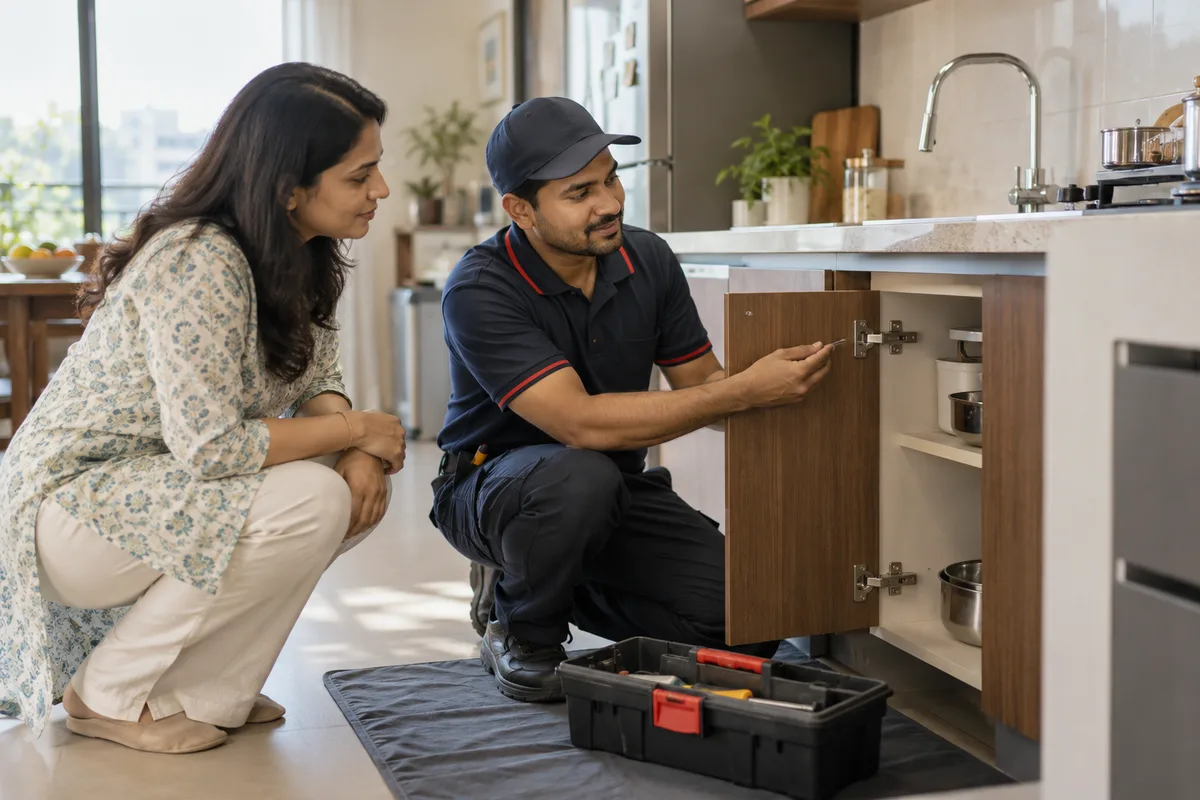
What buyer journey means
The buyer journey is the sequence of steps a customer actually takes, from first hearing about you to deciding to buy, which is rarely a single visit or call. GullySales maps this sequence for your business and checks that something useful happens at each step instead of only at the final call.
Also for handyman and home maintenance services
- Buyer persona for handyman services
- Digital marketing for handyman services
- SEO for handyman and home maintenance services
- Local SEO for handyman and home maintenance services
- Pay per click advertising for handyman and home maintenance services
- Reputation management for handyman and home maintenance services
- Content marketing for handyman and home maintenance services
- Social media marketing for handyman and home maintenance services
Sales and marketing for handyman and home maintenance services, the overview.
Last updated 14 Nov 2026.
For handyman and home maintenance services
Where it usually goes wrong, and what we would do.
“The decision takes minutes for a leak and weeks for a renovation”
A single page and routine for both loses the one in a hurry and bores the one who is planning.
“The customer asks others before calling”
A neighbour, a WhatsApp group or the building manager is asked first, and a firm absent from those conversations is not on the list.
“The journey ends at the invoice”
The customer is not asked for a review, not reminded of a service and not told what to do if the fault returns.
What we do
What we deliver for handyman and home maintenance services.
The work available for this need. We agree the deliverables and responsibilities for your engagement in writing.
A journey map from your own records
A written map of the steps a customer took, taken from the enquiry sheet, call log and conversations with technicians.
Result: You see where customers actually drop out.
Two routes, urgent and planned
A separate path for a leak or a tripped supply and for a planned job like waterproofing or a wardrobe, each with its own pages and replies.
Result: Each customer is met in the way they are buying.
What to have ready at each step
A short list for each stage: what the customer asks and what you show them.
Result: Nothing is missing when the customer looks.
A check of where enquiries are lost
The point where calls go unanswered, quotes go quiet or visits do not convert, recorded against the baseline.
Result: You know which step to fix first.
Changes tested on one step at a time
One fix made, then measured against the baseline before the next.
Result: You can tell what worked.
How the result is measured
- Drop-off rate by step
- Time from first contact to sale
- Steps with no content
Recorded as a baseline before work starts, so every later report has an honest comparison.
Stages of this buyer's journey
A flat owner passes through the same stages every time, but the pace and the questions change with the job.
- Notices the fault
- A drip, a trip or a jammed door. The owner first tries a quick fix, then asks the family. Be findable at this point with a page for the symptom, not only the job.
- Asks around and searches
- The owner asks a neighbour or a WhatsApp group, then searches. Your Business Profile, your page for the job and a reply on the group are what they see.
- Compares two or three
- They compare ratings, a call and the first reply. The business that answers with a clear next step, a visit slot and what the visit covers wins.
- Calls or messages
- The first question is when someone can come. Have a plain answer ready, a rule for the area you cover and a request for a photograph.
- Visit and quote
- The technician finds the cause and gives a written quote. The customer shows it to a spouse or landlord. Send the quote in a form that can be forwarded.
- After the repair
- The customer pays and moves on. Ask whether it is fine, send the review link and note when a service is due, so the second call is yours.
Who it is for
This is written for these handyman and home maintenance services.
- Single-trade plumbers and electricians
- Carpenters and furniture fixers
- Painters and waterproofing teams
- Multi-skill handyman firms
- AC and appliance repair teams
- Home AMC providers for flats and villas
- Property maintenance for landlords and PGs
- Pre-move-in and post-handover snagging teams
Before you decide
When this may not be the right fit.
- The firm has few repeat customers, so a map of what a flat owner thinks at each step would rest on guesses.
- Nobody records the source of an enquiry, so the map could not show where the drop-offs happen.
- The owner wants more calls today, and a journey map changes nothing until the steps are acted on.
Before you decide
Agree the work. Know how to judge it.
Buyer journey mapping for handyman and home maintenance services: use these checks to prepare, choose the scope, and review what changes.
Bring the right evidence
Write the decision the research must support, such as entering a market or choosing a buyer group. Separate what you know from sales records from what the team currently assumes.
Make the scope clear
Agree which buyers to speak to, which sources to review, and what access you can provide. Include lost enquiries and people who chose another supplier, where they are willing to take part.
Check the work in use
Look for source dates, sample limitations, and evidence that disagrees with the preferred answer. A recommendation should show how it follows from the findings.
Know when to change course
Do not treat a few positive conversations as proof of demand. Test the proposed offer with an actual buying decision before committing to a wider launch.
These are discussion points, not a fixed package. GullySales confirms the deliverables, responsibilities, fee, and term in writing after reading your brief and speaking with you.
Before we start
What to have ready before the work starts.
The records, access and decisions this work needs from handyman and home maintenance services. Anything missing is noted in the written scope, with who will supply it.
- Notes of recent customer conversations
- Bring any messages or notes showing how customers described the fault and why they chose you. They show the first trigger. If they are missing, we ask the desk to start noting them, and the map begins from memory.
- Time with a technician at a visit
- The visit holds answers about the customer's worries. Allow us to sit in on a call or a visit, with the customer's permission. If that is impossible, we rely on the technician's account, which is useful but second-hand.
- Knowledge of landlord and tenant cases
- Tell us which jobs involve a landlord who is not on site or a tenant who needs approval. These cases change the route. Without them, the map shows one buyer where there are two.
- The enquiry sheet or call log
- To find where enquiries are lost, we need a record with at least the date, source and outcome. A phone call log is enough to start. Without it, we choose the weak step by judgement, and mistakes are likelier.
- A change you are willing to test
- Be ready to alter one thing, such as the callback rule or the quote message, and leave the rest. If you want to change everything at once, we cannot tell what worked, and the exercise teaches nothing.
How it works
How the buyer journey work runs
The work itself, in order. How an engagement starts, from your brief to a written scope, is set out on our method page.
- 1
Read old enquiries for the first trigger
We go through enquiry records, messages and technicians' stories to see what started each search: a leak at night, a tenant moving out, a flat handed over with defects. You tell us what you remember customers saying at the door. We sort them into urgent and planned, since the two routes behave differently.
- 2
Sit with the desk and a technician
We spend time with the person who answers calls and with a technician who attends the visit. They tell us what the customer already knows, what they are afraid of, and what they ask before agreeing. This conversation adds detail that records cannot show, such as the silence while a customer decides whether a stranger may enter an empty flat, and it is written down step by step. We also ask what the customer was holding when the door opened, since that shows what they had tried before calling.
- 3
Draw the urgent and planned routes
We draw two simple routes: the person with a sudden fault who calls within minutes, and the household planning a repaint or wardrobe who compares quotes. Each has its own steps, doors and doubts. You check the drawings against your experience and correct what looks wrong.
- 4
Mark who else is in the decision
For some jobs, someone else is involved: a landlord who approves cost, a spouse, a society secretary, an elder at home. We mark them on each route and note what they need to hear. You tell us when you meet them in person, and what answer settles them best.
- 5
Find the weakest step and change only that
Using the enquiry sheet, we see where enquiries drop: before the call, after the quote, after the visit. We pick the one weakest step and change it, such as the quote wording or the callback. You approve the change, and nothing else is touched until we see its effect. We write the change in a line on the sheet with its date, so that a later rise or fall in enquiries can be tied to what was altered and not to a guess made months afterwards.
- 6
Read the changed step against earlier figures
We compare the enquiries reaching the next step now with the count taken before the change, in calls, quotes and booked visits. You decide whether the change stays, goes or moves to the next weakest step. We make no promise about the size of the result.
Where this fits
Three pieces of sales work, in this order.
This work sits inside sales process design, at stage 1, prospecting and lead generation. The audit comes before it, and sales management keeps it running.
Step 1
Sales audit
Find where deals are being lost and what to fix first.
Start here if you cannot say where orders are lost.
Step 2 · you are here
Sales process design
One written way to sell, from first enquiry to repeat order.
Start here if every salesperson sells differently.
Step 3
Sales management
A target, a review routine and someone who owns the number.
Start here if the team has targets and no routine.
FAQ
Questions owners ask before they call.
Not here? More answers, or ask on WhatsApp.
How long does a customer take to decide?
Who else is involved in the decision?
What about customers who go quiet after a quote?
How do we find where customers drop out?
How do we know how long a customer takes to decide?
Can the map change as the firm grows?
How much does it cost?
How long is the contract?
Who will actually do the work?
What do you need from us?
From the blog
Further reading for handyman and home maintenance services.
 5 min read · 18 Aug 2026Getting steady work from apartments and resident associationsHow a home service contractor wins steady work from apartments and resident associations: a one-page profile, a trial job, a named escalation contact.
 5 min read · 17 Jul 2026Wording a warranty or guarantee that the customer believes and you can keepA plain-words home service warranty template: what is covered, for how long, what is not and how to claim, so customers trust it and crews can honour it.
 5 min read · 4 Jul 2026A job register that turns completed work into repeat workA job register for a home service firm: the columns that matter, how to fill it on the day and how a next-due date becomes a reason to call.
More for handyman and home maintenance services
Related work to consider.
Closest to this: strategy and research
Also for handyman and home maintenance services
- SEO for handyman and home maintenance services
- Local SEO for handyman and home maintenance services
- Pay per click advertising for handyman and home maintenance services
- Reputation management for handyman and home maintenance services
- Content marketing for handyman and home maintenance services
- Social media marketing for handyman and home maintenance services
Or start from the overview: sales and marketing for handyman and home maintenance services.
Your next practical step
Tell us what you are trying to grow, and we will read it before we call.
Eight short steps, mostly taps. Skip anything you would rather answer on the call.